







The India-US trade deal comes at a critical moment not only for bilateral relations, but amid a broader churn in the global political economy. While the fine print of the agreement is yet to emerge, the initial impression suggests that India may not have conceded significant ground. Crucially, the deal arrives at a time when preventing disruption to sectors asymmetrically dependent on the US market was essential, thereby averting a potential hard landing for the Indian economy.
At one level, the agreement in principle is symbolic of the underlying trust that managed to endure a period of pronounced political turbulence in the relationship. At another, it reflects a calculated jostling between two large economies seeking to safeguard their respective domestic interests and geoeconomic positioning. The deal marks the end of a phase in which two decades of steady investment in trust-building gave way to a period of strain. More critically, this phase had pushed questions of geopolitics, regional balancing in the Indo-Pacific, and perhaps most importantly, strategic trust to the back burner. In that sense, the agreement was much needed to restore momentum at a time when global conflicts are intensifying, and protectionism is once again on the rise.
Nothing Is To Be Taken For Granted
One of the most important lessons from the past six months of intense negotiations and strain with the United States is that, for India, nothing in geopolitics can be taken for granted. Every nation must continuously curate and defend its own interests. It is, however, unfortunate that a protectionist America seems to be closing the gate on long-standing conversations around open economies and free trade. When the world's largest economy adopts the kind of tariff-centric behaviour that the United States has recently displayed, the effects ripple across the global system, impacting emerging and consequential economies most acutely. Donald Trump's approach to negotiations, his transactional tactics, and his disregard for normative and institutional frameworks offer a stark lesson for the world. For India, the experience of the last six months should be particularly instructive in hindsight.
The India-US relationship had, until recently, been anchored in strong political ties between two democracies, a deep diaspora connection, technology transfer, a robust defence partnership, and a growing great-power resonance - an alignment that took clearer shape since the George W. Bush administration, if not earlier. Subsequent administrations of Clinton, Obama, Trump in his first term, and Biden expended considerable political capital in nurturing the relationship. Business and investment flows followed, further consolidating the partnership. Trump's first presidency, while widely viewed as an aberration from textbook governance, nevertheless offered early signals of disruption for India, most notably its removal from the Generalized System of Preferences (GSP). His policy reversals on climate and global governance now appear less anomalous and more symptomatic of a deeper rupture that fully unfolded in his second term. Yet, despite these disruptions, Trump's first term was not overtly antagonistic toward India and largely aligned with Indian interests globally and in the Indo-Pacific. His second term, however, proved to be the proverbial eye of the storm.
New Realities
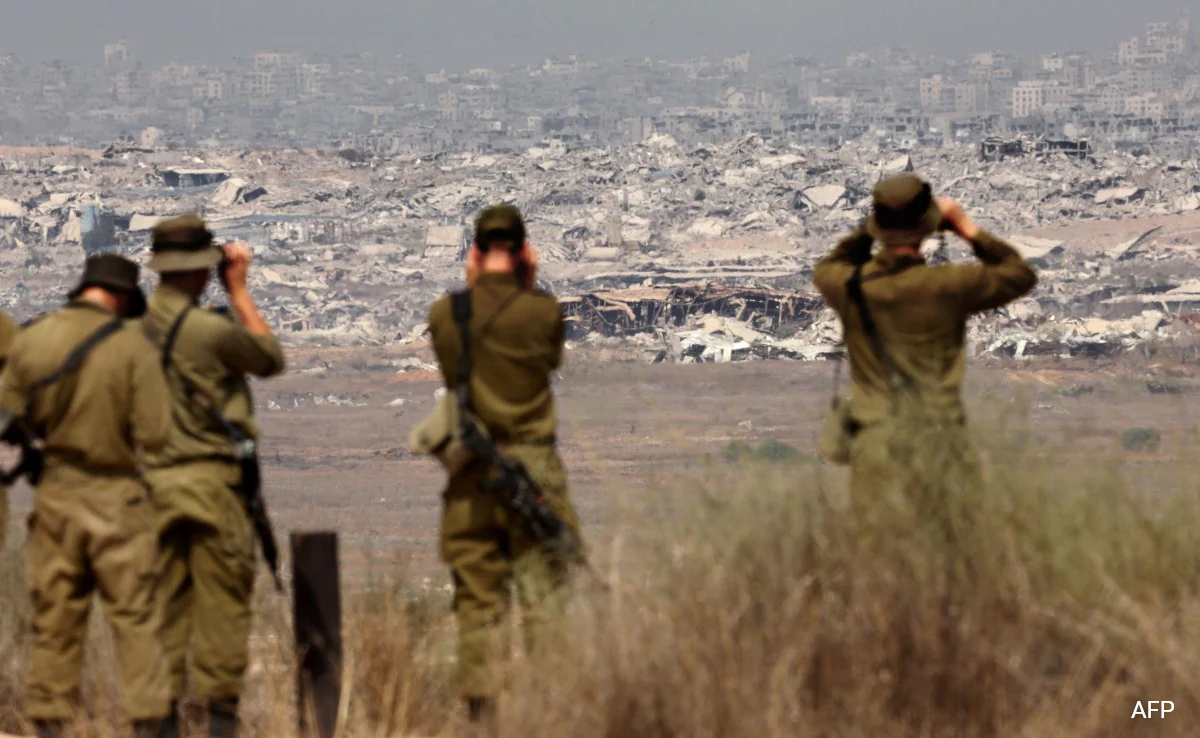
For India, the recent economic jostling with the United States has come at a glass-half-full moment. While global conflicts such as in Ukraine and Gaza provide some context for Trump's assertive behaviour, India's own rapid economic ascent has also altered power dynamics, not only with the United States but with other major powers as well. India's economic and geopolitical categorisation is shifting rapidly, driven by robust growth projections that place it among the fastest-growing large economies. As India climbs the power ladder, friction with established powers is inevitable, bringing new realities into a relationship that previously operated on different assumptions.
The past six months have thus served as a meaningful stress test for the India-US relationship. They reveal not only that India is now viewed differently by major powers, but also that tactical geoeconomics, which is a Trumpian forte, cannot rest on trust alone. It requires the scaffolding of contingencies forged through moments of tension.
Going forward, the India-US relationship is likely to be viewed through two distinct lenses: pre-Trump and post-Trump. Not everything about this transition is necessarily negative. While the new realities may be uncomfortable for some in India, a pragmatic assessment suggests that the ground has shifted. One such reality is the imposition of an 18% tariff on Indian exports to the United States. Although these tariffs are not India-specific and in fact leave India among the least-tariffed economies in the Indo-Pacific, they nonetheless represent a structural change in the bilateral relationship. It is difficult to imagine a future US president with the political will or domestic support to fully reverse this new baseline. India and the United States will now have to move forward within this altered framework.
The political agreement on the trade deal provides the necessary comfort on either side that was needed to assuage the domestic tensions in both countries, which are connected by a strong diaspora. The agreement could also help guide the domestic narrative, particularly in the United States, where nativist churn in the political discourse targeted at Indians from the American hard right may be chipping away at the foundations of the India-US relationship. The actual challenge now lies in implementing the promise of the trade deal.
Disclaimer: These are the personal opinions of the author


