Trump Tariffs: Talks Are Welcome, But India Shouldn't Give In To Bullying
India values its relationship with the United States. But friendship must be built on mutual respect, not unilateral demands. We cannot accept a framework where one side dictates terms and the other is expected to comply without question.
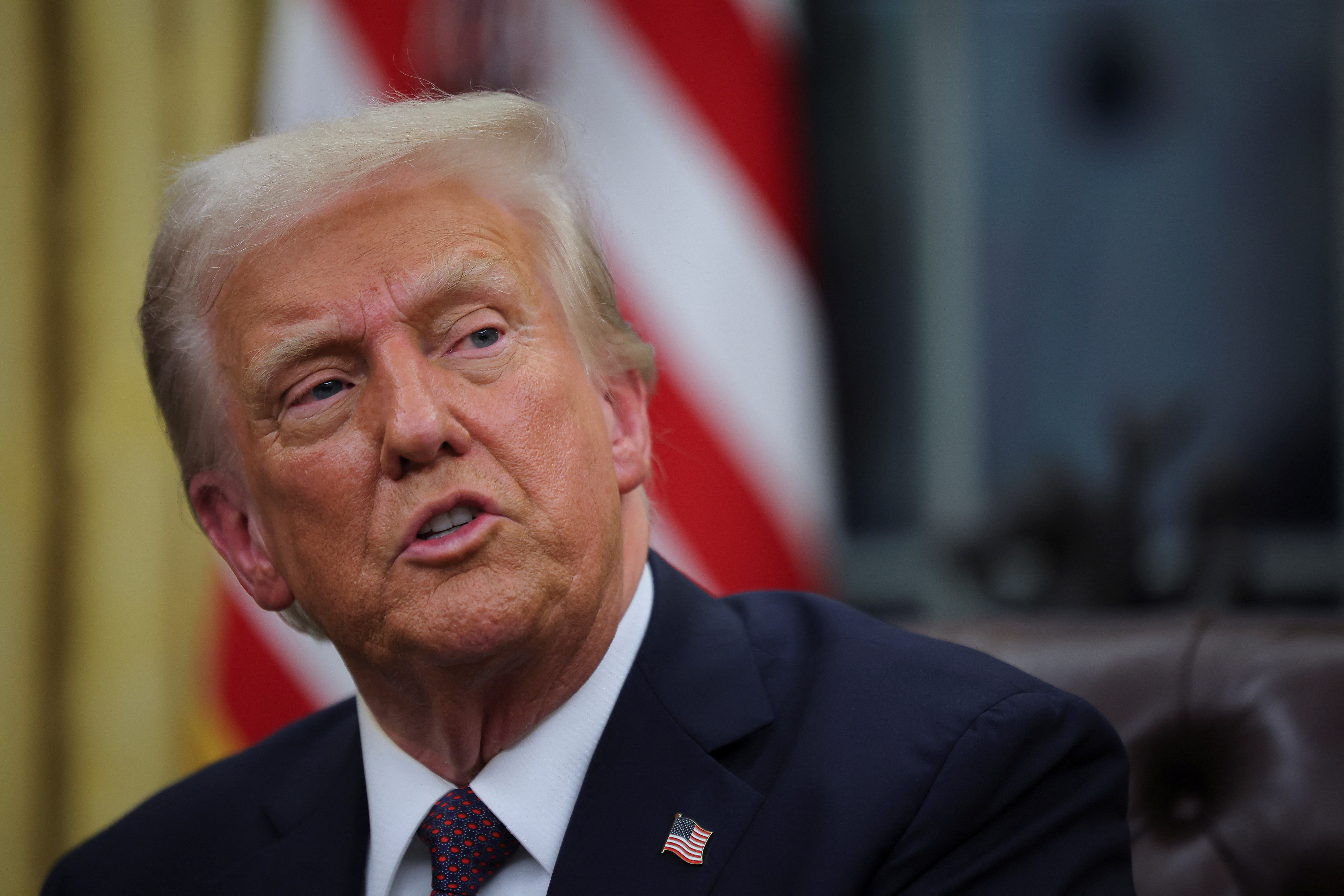
The recent announcement by the United States to impose a 25% tariff - along with a further 25% penalty for buying oil from Russia, making a total of 50% - on Indian exports is not merely a trade manoeuvre. It is a moment of reckoning for India's economic diplomacy. While some may interpret this move as a bargaining tactic in the midst of ongoing negotiations, we must not underestimate its potential impact. If implemented in full, these measures could severely damage our export economy and undermine the very foundation of our strategic partnership with the United States.
Let us be clear: the American market is significant. Our exports to the US alone amount to nearly $90 billion. A dramatic drop in access could cost us up to half a percentage point of GDP - a blow we cannot afford in a fragile global economic climate. But while the stakes are high, so too must be our resolve.
Be Prepared To Walk Away
India is not a supplicant at the global table. We are a proud and self-respecting nation with legitimate interests and our own red lines. Our negotiators must be empowered to seek the best possible deal, but they must also be prepared to walk away if the terms are unreasonable. We cannot - and will not - sacrifice the livelihoods of 700 million Indians dependent on agriculture simply to appease foreign demands. A responsible partner nation would understand that, especially if it is a democracy driven by its own influential constituencies. For some reason, US President Donald Trump chooses not to understand, and says he doesn't care. His disparaging remarks about the "dead" Indian economy are the equivalent of a schoolyard bully telling a smaller child that "your mother is ugly". It is meant to demean and belittle, not to be taken literally. But we must take the US President seriously.
Mr Trump's negotiating tactics may be idiosyncratic, but there is still a negotiation going on. The United States must understand that trade is a two-way street. Our average tariff on American goods stands at a modest 17%. Some items have already come down further. If US manufacturers find the Indian market challenging, they must look inward at their pricing and competitiveness. After all, consumers everywhere buy what they can afford, and India is no exception.
The Hypocrisy
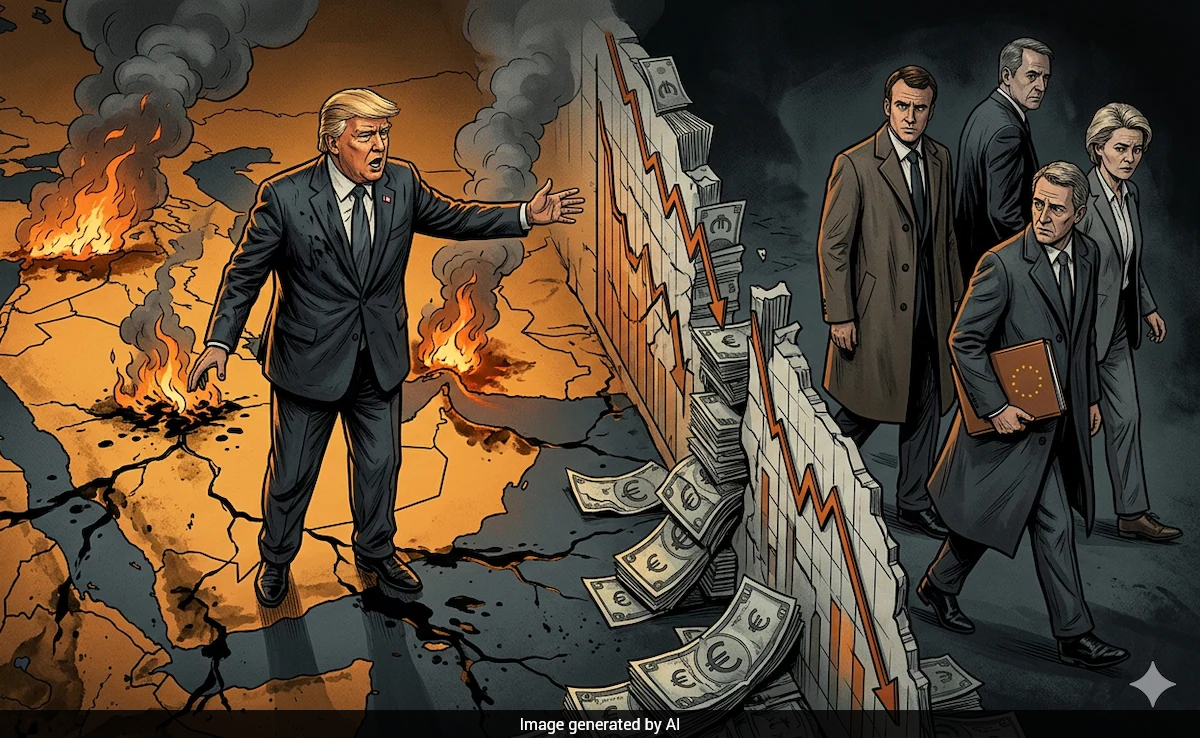
Moreover, the notion that India should be penalised for its energy trade with Russia is both perplexing and hypocritical. China buys far more oil and gas from Russia - not to mention trading a whole host of other items -- than we do, but they have been given a 90-day negotiating window, while we have only 21 days. From August 27, in other words, Indian goods in the US will be subject to a 50% tariff while Chinese goods come in at 30%. What does that say about Mr Trump's priorities? What happened to the "strategic relationship" with India, and the US' geopolitical rivalry with China?
What's more, the European Union buys oil and gas from Russia too - again, more than India does - and this has not been a factor in the US-EU trade talks. For that matter, the United States itself imports about $2 billion worth of fertilizers a year from Russia, pays over $1.4 billion annually for uranium hexafluoride and another $1.8 billion for palladium (needed for catalytic converters) from Russia. US trade with Russia in the first five months of this year alone (January-May 2025) stands at $2.4 billion - at which rate, in a twelve-month period, one can safely assume the US will pump nearly $6 billion into Russian coffers this year. How can Mr Trump argue that India's money is "fuelling Russia's war machine in Ukraine", but his American dollars are not?
Strategic Ambiguity Isn't A Virtue
The US also continues to engage with Pakistan in energy exploration, the quest for rare earth minerals, and now cryptocurrency - despite Pakistan's well-documented history of incubating terrorism and harbouring, as well as deploying, terrorists. If Washington believes there is oil to be found in Pakistan, I wish them luck. But let us not pretend that strategic ambiguity is a virtue when it is selectively applied.
India values its relationship with the United States. We share democratic values, strategic interests, and a history of cooperation. Four million Americans trace their descent to our land. But friendship must be built on mutual respect, not unilateral demands. Reasonable conversation among partners is essential. We cannot accept a framework where one side dictates terms and the other is expected to comply without question.
We Have Options
Fortunately, India is not without options. We have concluded a trade deal with the United Kingdom, are negotiating with the European Union, and are exploring partnerships with other nations. If the American market becomes untenable, we will diversify. That is the strength of India - we are not wholly dependent on any single export destination.
In this moment, we must rally behind our negotiators. They carry the weight of our national interest, and they must be given both the courage and the clarity to defend it. Flexibility is a virtue, but it has its limits. India must not buckle under pressure. We must walk into these negotiations with open minds - but also with open eyes.
If a fair deal is possible, let us embrace it. If not, let us walk away with our dignity intact. There will always be other horizons to explore.
(Shashi Tharoor is an author, former diplomat, and Member of Parliament from Thiruvananthapuram, Kerala, since 2009)
Disclaimer: These are the personal opinions of the author
-
Opinion | Trump's Favourite Field Marshal: How Munir Became The President's Best Man

Pakistan and the United States are not obvious analogues. And yet, their respective leaders have made a comparison inevitable today.
-
A Missile On One Soldier's Shoulder Could Ground The US Air War In Iran
Iran shot down US jets while China denied arming Tehran. But reports of a Chinese spy satellite being used by Iran, the viral F-35 tutorial from a Chinese engineer, and now 1,000+ MANPADs reportedly on their way to the war suggests otherwise.
-
Opinion | Amid Trump's War On The World, How Effective Really Is India's Strategic Autonomy?
India cannot mechanistically base its positions on preferred international norms, unmindful of its own direct interests.
-
Opinion | In Stalin's Tamil Nadu vs Delhi Pitch, Flashbacks From A 2014 Jayalalithaa Episode
In 2014, Jayalalithaa had posed the question to the Tamil Nadu electorate,"Gujarat Modiyaa Tamil Nadu odu intha ladyaa"(Gujarat's Modi or this lady of Tamil Nadu), and tasted electoral success, winning 37 of the 39 seats in the state.
-
'Help', Said Trump In Iran. Why US' European Allies Hesitated, Walked Away
47 days into the war, Europe has rejected Trump's attacks on Iran on the back of $25B Hormuz blockade shock that spiked inflation to 2.5% and prompted 59% of EU voters to call the strikes illegal (71% Spain), while Trump's Pope spat draws ire from Italy.
-
Assassination That Took 20 Years: Spies, Missed Chances, Then A Final Moment
Before Osama bin Laden became the global face of transnational terrorism, there was another figure-more elusive, less theatrical, but arguably more influential in the evolution of modern guerrilla warfare. He was Imad Mughniyeh.
-
The Malacca Gambit: How China Oil-Choke Strategy Could Backfire On Trump
US President Donald Trump seems to be weaponising oil chokepoints - Venezuela, Hormuz, and Malacca - to pressure China, but Beijing's pipelines, reserves, and shadow fleets mean the real test is which side dares escalate further.
-
Opinion | 38% vs 18%: How Bengal Exposes The Biggest Irony Of Women's Reservation
Bengal with its duality - 38% women in Parliament versus 18% in the state contest - captures the core tension of the Bill better than any other example.
-
Opinion | Mines, Submarines, Drones: Why World's Mightiest Navy Won't Get Too Close To Hormuz
Iran is relying on the symmetric advantage of geography to fight against the brute power of the world's largest and most powerful navy, the US.
-
'Tawakkul al-Allah': Meet Sheikh Moussa, The Man Israel Can't Move
Sheikh Moussa refuses to leave his family home in Beirut's Dahieh despite decades of Israeli missile strikes. His faith - tawakkul al-Allah - keeps him rooted amid rubble, memories, and a doctrine designed to break Israel's rivals.