To Just Welcome The 'Immigrant' Is Not The Point - By Shashi Tharoor
Nations have the right to regulate entry, to balance openness with cohesion. But the tone of the current moment suggests something more corrosive - a retreat not just from policy generosity, but from moral imagination.
There was a time - not so long ago - when the image of the United States was inseparable from the idea of arrival. The Statue of Liberty, torch aloft, stood not merely as a monument but as a promise: that the tired, the poor, the huddled masses yearning to breathe free might find refuge and renewal on its shores. That promise, however imperfectly kept, shaped the moral imagination of the twentieth century. Today, it is fading.
Across the Western world, a new sentiment is sweeping through political discourse and public life - a hardening of borders, not just physical, but psychological. Immigration, once framed as enrichment, is increasingly cast as erosion. The United States, long mythologised as a nation of immigrants, now finds its reputation for openness under strain. Europe, with its layered histories of colonial entanglement and postwar reconstruction, is riven by tensions over asylum seekers, refugees, and migrant labour. The rhetoric has sharpened; the welcome has waned.
A Cultural Shift
This shift is not merely political - it is cultural. The anxiety is not about immigration in the abstract, but about visible immigrants: those whose skin colour, dress, language, or religious practice mark them as 'other'. The unease is not with movement, but with difference. A Sikh turban, a hijab, a West African accent, a Latin American surname, a brown skin - these have become lightning rods for a deeper discomfort, one that reflects white anxieties about identity, belonging, and the fear of cultural difference and dilution.
In Europe, the influx of refugees from Syria, Afghanistan, and sub-Saharan Africa has tested the limits of liberal tolerance. Germany's bold welcome in 2015 now seems a distant memory, as far-right parties gain ground by stoking fears of demographic change and cultural displacement. France wrestles with its secular ideals and the visibility of Islam in public life. The UK, post-Brexit, has turned inward, its immigration debates entangled with questions of sovereignty and national character.
The American Anxiety
In the United States, the southern border has become a theatre of political spectacle. Migrants from Central America, fleeing violence and poverty, are met not with compassion but with suspicion. The language of invasion, once confined to fringe discourse, now echoes in mainstream politics. Even legal immigration - once a bipartisan consensus - is increasingly viewed through a lens of zero-sum competition.
What explains this retreat from openness? Part of the answer lies in economic vulnerability. Globalisation, for all its aggregate gains, has left many communities feeling abandoned: factories shuttered, wages stagnated, and the promise of upward mobility dimmed. In such contexts, immigrants become scapegoats - symbols of a system that seems to reward outsiders while neglecting insiders.
But the deeper story is cultural. David Goodhart's influential thesis of the "Somewheres" versus the "Anywheres" offers a compelling frame. The "Anywheres" - mobile, educated, cosmopolitan - thrive in a borderless world. They speak the language of diversity, fluid identity, and global citizenship. The "Somewheres" - rooted in one place, one religion, one language and one culture - feel alienated by these shifts. Their values are local, their identities inherited, their sense of belonging tied to tradition and territory.
Somewheres vs Anywheres
In recent years, the "Somewheres" have found their voice. From Brexit to Trumpism, from the rise of nationalist parties across Western Europe to the open assaults on "political correctness", the momentum has swung toward those who feel left behind by the influx of foreigners. Immigration becomes the fault line - not because of what immigrants do, but because of what they represent: change, complexity, and the erosion of familiar norms.
This is not to say that all resistance to immigration is xenophobic. Nations have the right to regulate entry, to balance openness with cohesion. But the tone of the current moment suggests something more corrosive - a retreat not just from policy generosity, but from moral imagination. The idea that strangers might enrich us, that difference might deepen our humanity, is giving way to a politics of fear and exclusion.
The Countries That May Come Out Stable
And yet, paradoxically, some of the countries most resistant to immigration may weather this moment with greater stability. Japan, with its demographic challenges and cultural homogeneity, has long maintained strict immigration controls. Hungary, under Viktor Orbán, has positioned itself as a bastion of Christian Europe, rejecting refugee quotas and embracing ethno-nationalist rhetoric. These nations, by virtue of their insularity, may avoid the social tensions that more open societies now confront. But at what cost?
Insularity may offer short-term calm, but it risks long-term stagnation. Innovation, dynamism, and cultural vitality often emerge from encounter-from the friction and fusion of different ways of being. Many of the great cities of the world - New York, London, Paris, Toronto - are not great despite their diversity, but because of it. To turn away from that is to turn away from the future.
Still, the future feels uncertain. The pandemic, the wars in Ukraine and Gaza, the climate crisis - all have intensified the instinct to "circle the wagons", to protect what is familiar. Borders are back - not just on maps, but in minds. The dream of a global village has given way to gated communities of the nation-state.
The End Of Globalisation
Is this the end of globalisation? Perhaps not. Trade continues, ideas circulate, and digital connectivity defies geography. But the ethos of globalidation - the belief in shared humanity, in porous identities, in the equal moral worth of the migrant and the refugee - is under siege. Even in India, as the current crusade against "ghuspethiyas" (infiltrators) from Bangladesh and Myanmar suggests, anti-immigrant fervour is at its peak.
In this moment, the challenge is not merely to defend immigration as a human reality, but to reclaim the narrative. To remind ourselves that migration is not an aberration but a constant of human history. To recall that every culture is a palimpsest of movement and mingling. To accept that the stranger is not a threat, but a mirror - reflecting our own capacity for generosity, curiosity, and growth.
Building Borders
The world may be retreating from cosmopolitanism and diversity, but it need not collapse into fear and xenophopbia. The task ahead is to build bridges - not just across borders, but across sensibilities. To speak to the "Somewheres" without condescension, and to affirm the "Anywheres" without arrogance. To craft a politics that is rooted yet open, proud yet plural.
For in the end, the question for all of us is not whether we welcome the immigrant. It is whether we recognise ourselves in them.
(Shashi Tharoor has been a Member of Parliament from Thiruvananthapuram, Kerala, since 2009. He is a published author and a former diplomat.)
Disclaimer: These are the personal opinions of the author
-
Hit Songs, Empty Pockets: The Hidden Math Behind India's Viral Music Boom

Over 80,000 brands and five lakh creators in India make branded content. The opportunity is worth around Rs 1,500 crore.
-
Opinion | Great 'Exceptions': How The Oil India Was Attacked For Is The Oil Trump Now Seeks
A law written to punish the buyers of Russian oil was suspended by the US to protect a purchase of Russian oil. India spent fourteen months being lectured for less.
-
Opinion | Louis Vuitton Loot, Torched Cars: France Protests Have An Unlikely Beneficiary
It's an unbelievable moment. Crowds looting the most exclusive stores in Paris, including the famed Luis Vuitton. But what's behind this meltdown?
-
Blog: Kolkata Didn't Learn From 2015. Eleven Years Later, It Proved To Be Fatal
The City of Joy isn't a stranger to crowd control. Be it during Pujo or Christmas at Park Street, Eden Gardens cricket matches, or Derbies between Mohun Bagan and East Bengal. But during Pujo, the entire city is on alert.
-
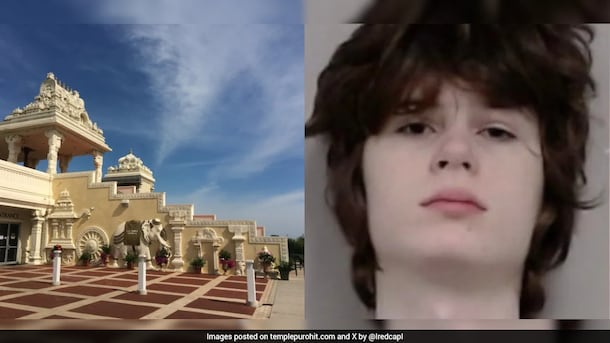
Opinion | Slurs, Threats, Now A Temple Attack Plot: When Did America Become So Hostile To Indians?
The rising tide of anti-India, anti-Hindu, and racist attacks serves as a stark reminder that economic prosperity does not automatically guarantee social immunity from bigotry.
-
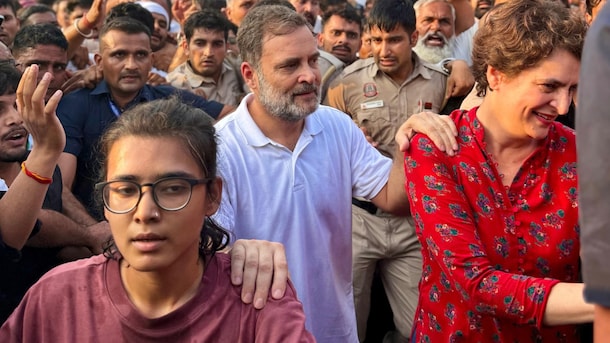
A Step Behind Neha Bora: What Rahul Gandhi's Gesture Says About Congress' Gen-Z Pitch
At INDIA bloc's march to Supreme Court, Rahul Gandhi placed himself a step behind two women, hands resting on their shoulders. One was his sister Priyanka. The one on his right was Neha Bora. Here's what the image means for the protest wave now, and for Rahul's politics in general.
-
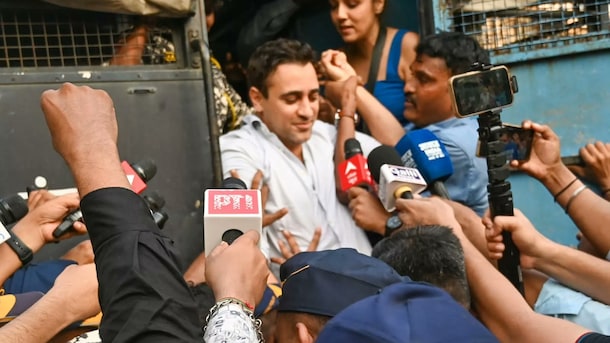
Opinion | Imran Khan, And The Perils Of Having An 'Opinion' In Bollywood
The reality of the industry is quite grimy. More often than not, its inhabitants have been fairweather friends, happy to sing the praises of whoever is in a position of authority.
-
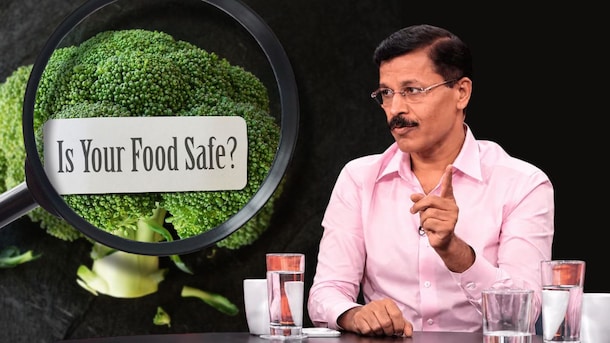
Exclusive: India's Food Safety Problem Goes Beyond Just Dirty Kitchens - By Tukaram Mundhe
On World Food Day, Maharashtra's Commissioner of Food Safety explains why instead of taking stopgap measures, the entire supply chain in India needs to be held accountable and made transparent.
-
Opinion | India Has Enough Coal. So Why Are Power Plants Running Short? A 76 Million 'Crunch'
As of October 5, as many as 82 of the 191 thermal plants monitored by the Central Electricity Authority were in the 'critical' category
-
Opinion | Starlink, India, And Why Elon Musk Must Know His Billionaire Tantrums Won't Work
India should neither be intimidated by Musk's global influence nor distracted by his theatrics.