Opinion | India Faces A BRICS Challenge. Can It Find A Way Through?
The Delhi Summit is being held at a challenging time. Such circumstances have not been encountered since the BRICS Summits started in 2009 in Russia
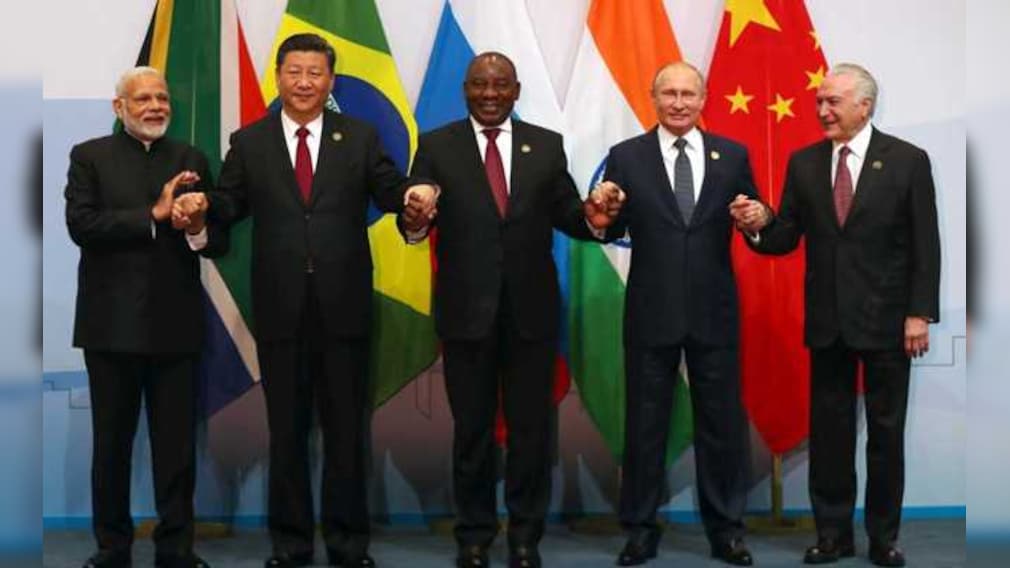
India will be hosting the 18th BRICS Summit in New Delhi on September 12-13, 2026. This will be the fourth time that India will be hosting this summit, the earlier three occasions having been in 2012, 2016, and 2021.
This is a momentous occasion for India because its next turn to host the summit will be after ten years, as the new cycle with members inducted recently in 2024 and 2025 will start from 2028. India has hence put in a great deal of effort and invested considerable political capital to ensure that it is a successful event, with a consensus New Delhi Declaration and substantive outcomes expected on issues of trade, commerce, development cooperation, climate change, alternative trade payment arrangements, etc.
This is also a consequential moment for the BRICS as a nascent but ambitious grouping of EMDCs (Emerging Markets and Developing Countries), as it has never faced a challenge of the nature it is facing today. The expansion of the Organization from five to 11 members took place two years ago. Before the new members had the time to integrate themselves with the parent body, the grouping was confronted with a war in which three of its members were pitted on opposite sides. While the expansion has potentially increased the heft of the body in several ways, it has also presented a huge problem - of formulating a consensus on some of the most divisive geopolitical issues of today. The outcome of the Delhi Summit will thus have a huge impact on the credibility and future evolution of the organisation.
A Tough Time
The Delhi Summit is being held at a particularly challenging time. Such circumstances have not been encountered since the BRICS Summits started in 2009 in Yekaterinburg, Russia. There are two ongoing conflicts the world faces. The first, between Russia and Ukraine, has been going on since February 2022. All the summits of the grouping since that year have debated and dealt with this conflict in their declarations. The task was simple as Russia's adversary(ies) in the conflict - Ukraine, the US, and Europe - are not members of the grouping.
The second conflict between Iran and US-Israel, which started in February this year, has three adversaries who are members of the BRICS grouping: Iran, Saudi Arabia, and the UAE. It would hence be particularly demanding for the BRICS membership to bridge the schism between them and arrive at a mutually acceptable formulation. It may be recalled that the meeting of BRICS foreign ministers, which took place in May 2026 in New Delhi, could not issue a consensus-based joint declaration because the expanded BRICS membership brought competing geopolitical alignments and divergent priorities, particularly the US-Iran conflict and the Palestine issue, to the negotiating table. While the political foreign policy track faced procedural and substantive obstacles on geopolitical consensus, functional and socio-economic tracks during India's BRICS presidency have successfully produced negotiated consensus documents.
How BRICS Has Changed
The most important objective of the grouping has been to reform the global economic architecture and get a greater voice and space for large emerging economies as their individual and combined economic heft and clout increased. Subsequently, it has subsumed the wider interests of the Global South.
The New Development Bank (NDB) and a Contingent Reserve Arrangement (CRA) were established in 2015.
Because of the weaponisation of western financial institutions and to take advantage of the facilities under the NDB and CRA, a large number of developing countries sought to join this grouping. A major expansion took place at the Johannesburg Summit in 2023, when five members (UAE, Saudi Arabia, Iran, Egypt, and Ethiopia) were inducted in 2024. Indonesia joined in 2025.
With this addition, the total population of the BRICS became 49% of the global population, oil output amounted to 40% of global production, and the GDP (in PPP terms) of these countries rose to 40% of the global value, as against 28% of the Western G7 grouping. In addition, these countries also contain large quantities of mineral resources, including rare earths and critical minerals, thereby potentially significantly enhancing their economic and political leverage on the global platforms. But such leverage would accrue to the BRICS members only if they act together and work on the basis of consensus, especially when confronted with formidable obstacles like today's.
What Happened Under India's Chairship
India's Chairship is centered on the four pillars of resilience, innovation, cooperation, and sustainability. Since assuming the Chairship, India has organised over 350 meetings, including the meeting of BRICS ministers of Foreign Affairs/International Relations, the meeting of BRICS National Security Advisers, ministerial meetings, and Sherpa and Head of Agency-level meetings. So far, twenty-two meetings of BRICS Ministers (Foreign Ministers, Finance, Industry, Trade, Energy, Agriculture, Communication, Environment, Health, Education, Disaster, Sports, Science, Technology & Innovation, Transport, Justice, Women, Labor & Employment, Culture, Youth, Tourism, National Security Advisors, Urbanization Forum) have been held, which have resulted in Ministerial Declarations and Outcome Documents representing consensus on several matters across the tracks.
Additionally, eight meetings at the Head of Agency level have been concluded, in which operational and technical BRICS cooperation of the respective tracks were deliberated. Moreover, several others, including the First-ever MSMEs Forum, a Friendship Cities Conclave, Culture Festival, Meetings of the BRICS Business Council, BRICS Think Tanks Council, Academic Forum, and Civil BRICS Council, have been held under India's Chairship.
Some of the key outcomes emerging from the BRICS Ministerials and Meetings include BRICS Centers of Excellence on Agro-Ecology, BRICS Mission for Healthy Lifestyle, Expert Working Group on Traditional, Complementary and Integrative Medicine, Mainstreaming Traditional Knowledge, Advancing Sustainable Lifestyles, Skilling, Smart Grids and Energy Storage, Startup Innovation Fund, Cooperation on Global Value Chains, Technology Cooperation, and many more.
Will A Declaration Come About?
It stands to reason that none of the countries that have worked so assiduously over the last year would want their endeavours to fail and to allow the huge number of far-reaching, people-centric decisions, so diligently and painstakingly reached, be thrown by the wayside. The challenge is, however, to devise a language on the US-Iran conflict that would be acceptable to all the warring party members of BRICS, viz. Iran, the UAE, and Saudi Arabia.
India has considerable experience in dealing with such seemingly intractable and insurmountable hurdles. It was able to accomplish this in 2023 with the G20 Summit, producing a consensus Leaders' Declaration on the first day when all the naysayers had written off the possibility of such an outcome. India was able to achieve this with the cooperation and support of all the G20 members, particularly Brazil, Indonesia, and South Africa, which wanted the G20 and India to succeed.
In the BRICS forum, too, India enjoys a huge measure of support from all the member states with whom it has excellent relations, with the exception of perhaps China, though with it, too, India's relations are steadily normalising. All member states, including Brazil, South Africa, Indonesia, Egypt, Russia, and others, can be expected to fully support India's efforts to work with Iran, the UAE, and Saudi Arabia to arrive at a mutually acceptable composition.
In addition to supporting India in this exercise, all BRICS members would be keen to ensure that BRICS, as a recently expanded grouping, not only survives but continues to get stronger, more reliable, and credible as a platform. Even as far as China is concerned, while it would not have any desire to see India emerge successfully from this difficult and demanding situation, it would also be interested in ensuring that the BRICS-Plus format is able to demonstrate its viability by putting aside individual differences and accepting a language that would meet the most fundamental interests of the three powers that are pitted against each other. A consensus declaration, hence, is not only the need of the hour but an imperative.
(Amb. Ashok Sajjanhar was with the IFS for over three decades. He was the ambassador of India to Kazakhstan, Sweden, and Latvia, and has worked in diplomatic positions in Washington, DC, Brussels, Moscow, Geneva, Tehran, Dhaka, and Bangkok)
Disclaimer: These are the personal opinions of the author
-
Opinion | Why The Jauhar Scene In Padmaavat Needs To Be Seen For What It Does

The practice of 'jauhar' was certainly abolished long ago. But that does not mean that it should be romanticised or glorified in mass culture.
-
Opinion | Sachin Pilot's Long Wait Is Over. Can Congress Finally Use Him?
The grand old party is now betting that the man who turned 'waiting' into a virtue can deliver Punjab
-
Ground Report | Sunlight Is A Luxury In Delhi Students' Hub Where Building Collapse Killed 7
The civic infrastructure in Delhi's Satya Niketan hasn't caught up with the pace of development and appears to be crumbling under the weight of the influx of tenants and the greed of landlords.
-
Mayawati's Tough Love: Nephew Akash Anand Benched Again. What It Means For BSP
Akash Anand, the 31-year-old foreign-educated nephew of BSP boss Mayawati, finds himself out of favour, for at least the third time in three years, with the latest turn coming in Lucknow on September 3.
-
Blog | Why You Should Care Whether Schrodinger's Cat Is Dead Or Alive
Imagine going on a romantic Alpine getaway and returning with the equation that runs the modern world. The only snag: nobody can quite agree on what it says about reality.
-
Promote, Punish, Repeat: Decoding Mayawati's Akash Anand Puzzle
The development in the BSP is unprecedented. Never before has any Indian party elevated a family member and dumped him or her unceremoniously thrice within a span of three years.
-
Opinion | Nepal Needs $5 Billion To Rebuild. World's Climate Fund Doesn't Have Even 10% Of It
The fund caps support at USD 20 million per project; Nepal needs two hundred times that. And the board is not scheduled to sit until December.
-
Opinion | The Rise Of Indians In US Is Making Some Americans Very, Very Angry
A new report released yesterday shows how Indians are now among the biggest targets of racist attacks in America.
-
Opinion | China, Pak, A Stalled India Visit: How Signals From Bangladesh Are Getting Louder
A fighter jet deal with China, interest in Pakistan's military bloc, and a 'stalled' visit to India - all in a month. Bangladesh's drift is getting harder to ignore.
-
Opinion | Indus Treaty, Hague, And Pakistan's Endless Search For Leverage Over India
If the IWT survived all the trials in the past, it is because India's threshold of tolerance had been unusually high. But Pakistan must know that it can't arm-twist India through international pressure.