Opinion | The 'Ten-Year Itch' in India-US Defence Relations
Hugs and personal equations between leaders do not make a nation a country of consequence. The fact is that the US would not part with critical technologies, despite all the acronym-rich pacts and treaties being signed.
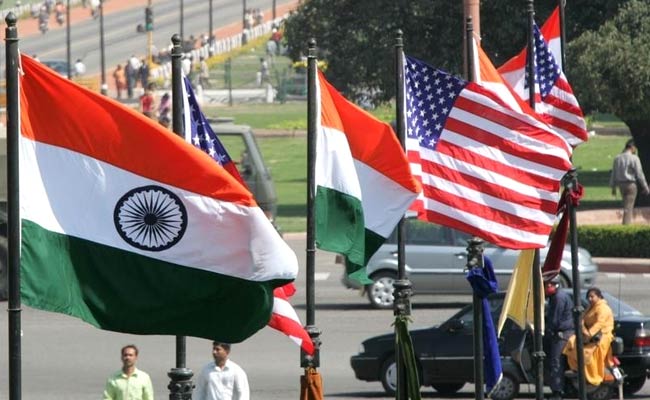
It's the ten-year itch again! India and the US signed a ten-year framework last month for the US-India ‘Major Defence Partnership', signalling, as many in the media put it, “stable ties in the India-US defence sector”. To watchers in the Indian strategic circuit, however, it is ‘yawn-time' once again.
Human memory may be short, but it is not so imbecile as to inhibit differentiation between historical experience and political hyperbole. In matters of national interests, no country is indispensable. This is especially true if one side of the pact is a superpower and the other has an acutely adverse power gradient. The India-US defence relationship can be analysed through four historical periods.
The Beginning Of The Soviet Friendship
In the 1950s, over-riding India's misgivings, the US brought Pakistan into its sphere of influence through the South East Asia Treaty Organisation and Central Treaty Organisation treaties; meant to oppose the spread of communism, the fact is that modern American arms like Patton tanks and F-86 Sabre and F-104 Starfighters were used by Pakistan against India in the 1965 and 1971 wars. India's attempts to get modern assets fructified - after the US refused to sell modern aircraft after the disastrous 1962 war with China - when the Soviet Union stepped in with the MiG-21 fighter, initiating a stable, dependable and long-term relationship with the USSR (and then Russia).
The 1970s and ‘80s are coloured by the memory of the US Navy's 7th fleet, led by the aircraft carrier USS Enterprise entering the Bay of Bengal in support of Pakistan's debauchery in East Pakistan. It took a decade for the relations to stabilise and, come the 1990s, the Indian media and the political establishment went gaga over the ‘Kicklighter proposal' of setting up an India-US defence technology group. This writer was doing his staff course in the US in 1992 and mentioned this in a paper as proof of an improvement in our defence relationship. “Who is Kicklighter?” asked the American officers (Admiral Kicklighter was the Commander of US Pacific Command)! The fact that India did not figure in the security and ‘friendship' environment of US policymakers was driven home. Later events have only confirmed that.
Remember The Not-So-Great '90s?
India's friend, the Soviet Union, collapsed in the 1990s. But what stands out for New Delhi in that decade is the American-led wide-ranging, multi-sectorial sanctions following India's nuclear tests in 1998. The beginning of the 21st century started a thaw, with both countries calling each other ‘natural allies' due to their democratic traditions. Many deals for transport aircraft and helicopters for the Indian Air Force (IAF), artillery guns for the Army and naval equipment were signed - and US defence companies made handsome monies through these contracts. The standout deal was the 2008 India-US nuclear agreement, but a simple question begs an answer: for all the brouhaha of those years, what extraordinary event has actually matured on ground from the nuclear deal that was termed ‘pathbreaking?'
And then came the ‘India-US Defence Technology and Trade Initiative' (DTTI) of 2012, trumpeted as something that would cut bureaucracy and enhance cooperation in niche areas. Pushed by the US Under Secretary of Defence Ashton Carter, it was to enhance cooperation by overcoming impediments created by the bureaucratic structures of the two countries. To do that, the nodal officers were high-ranking officials: the Secretary of Defence Production from India and the Under Secretary for Defence Acquisition for the US side. The giveaways, however, were the listed four ‘pathfinder' technologies - chemical and biological warfare clothing, mobile hybrid power systems, hand-held UAVs and roll-on roll-off ISR modules for C-130J aircraft. These, in layman's terms, were chicken-feed compared to the promised cutting-edge technology.
Don't Fall For It
Later, seven working groups were formed under the Defence Technology and Trade Initiative (DTTI) - once again with media fanfare - but all have only resulted in numerous seminars, meetings and international travel for officials. In between, India was declared a Major Defence Partner in 2016, and in August 2018 was accorded Strategic Trade Authority Tier 1 (STA-1) status that, on paper, allowed US manufacturers to sell dual-use technology to New Delhi. The iCET (Initiative on Critical and Emerging Technologies) followed in 2022; the fact remains that the US (or for that matter, any country) would not part with critical technologies, despite all these acronym-rich pacts and treaties being signed.
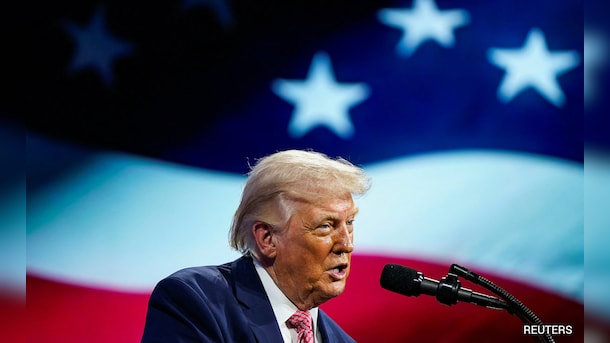
And now comes the ‘Major Defence Partnership' agreement signed by Defence Minister Rajnath Singh and Pete Hegseth, US Secretary of War. But this was followed immediately with US-China rapprochement through the Trump-Xi Jinping meeting in South Korea on October 30. Only people with a blinkered sense of history would not see the negative import for India of the US disaffirming China as being its “most consequential strategic competitor”, as enunciated in its 2022 National Defense Strategy document. Pete Hegseth, after the Trump-XI Jinping meeting, tweeted that “….peace, stability, and good relations are the best path for our two great and strong countries. As President Trump said, his historic “G2 meeting” set the tone for everlasting peace and success for the U.S. and China.”
Take A Hard Look
India's importance seen through the American strategic vision prism, thus, stays blurred, especially with the recent re-flowering of US-Pakistan relations, too. If any proof of American arm-twisting was needed, then one has to recollect the delay in the supply of F-404 engines for the Tejas aircraft programme - a tactic that started during the Biden administration and continued by the Trump presidency till recently.
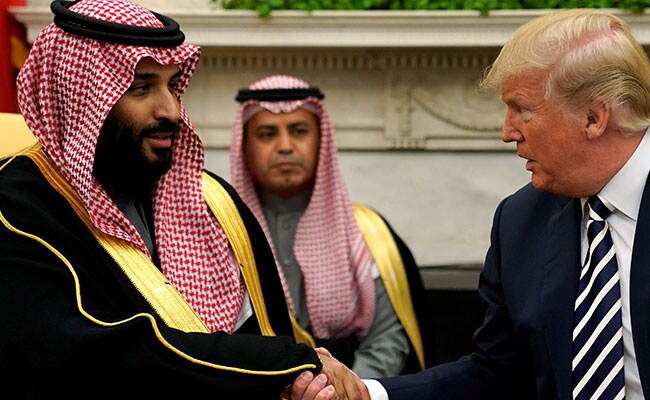
Hugs and personal equations between leaders do not make a nation a country of consequence, as the powerful will pivot, cross-pivot and re-pivot at will, to guard their strategic interests. New Delhi must juggle the available monies with it and commit more to security-related priorities in the coming 2026 budget, whose planning would have begun by now. The truth needs to be faced head-on. Infusion of American technology as an enabler in the 'aatmanirbharta' (self-reliance) campaign is a non-starter; it was, and will always be, a crutch that can be removed at will by the incumbent in the White House. Indigenous R&D is the only way forward.
(The author is former Additional Director General, Centre for Air Power Studies, and a retired Air Vice Marshal of the Indian Air Force)
Disclaimer: These are the personal opinions of the author
-
Opinion | Trump's Iran War Is About To Become Someone Else's Problem Soon

Start alone, end alone - that may be the harshest lesson for Trump as he now tries to dash for the door in Iran.
-
What Happens If Iran War Actually Ends In 2 Weeks: The Challenges Ahead
Trump said the war could end in two weeks sans a deal to re-open the Hormuz. Analysts say it could take six to weight weeks more for oil flows to normalise, with each extra week of fighting adding seven to 14 days of recovery.
-
Opinion | Why 2 Gulf States Want Iran War To Continue - Even As They're Battered By It
If Trump withdraws from this war, the UAE, Saudi Arabia and other Gulf countries would be left to face the music alone, with an angrier, fiercer, and possibly more vengeful Iran.
-
Opinion | Why A 'Defeat' Is Now Essential For The Disoriented Left In Kerala
Power and arrogance have turned the Left in Kerala into what it once fought against. It now needs to lose its last bastion to cleanse itself of its maladies.
-
Opinion | On April Fools' Day, A Reality Check For US, Iran And The World
The paradox is this: Iran wins simply by surviving, while the US must achieve a far more overwhelmingly convincing result to claim success.
-
Opinion | Pakistan, And The One Big Difference Between 'Broker' And 'Mediator'
Neither Washington nor Tehran appears willing to invest Pakistan with the political capital required for mediation.
-
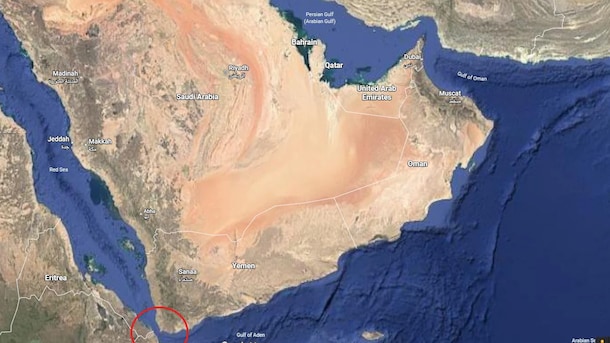
Houthis Threaten Strait No 2 As Iran War Expands. What It Means For India
Yemen's Houthi rebels have opened a second front in the Iran war, threatening Bab al-Mandab just as the Strait of Hormuz comes under pressure, and squeezing one of the world's most important oil corridors from both ends.
-
Europe Split Over Trump's Iran War, Spain Leads Defiance
Europe is sharply divided on how to view fighting in West Asia and subsequent pressure on the global energy trade, which has seen fuel and gas prices increases worldwide.
-
Opinion | Zagros To Dasht-e-Lut, Why Iran's Terrain Could Be A Challenge For US Ground Troops
Iran is often called a 'fortress' owing to its formidable mountain ranges, which virtually form a wall to its North, West and South.
-
More Fighting, Deaths, Oil Prices: 4 Worrying Points If US Invades Iran
In case of a ground invasion, US troops will likely be forced to fight on multiple fronts - Iran proxies Houthis in Yemen, Hezbollah in Lebanon, and Hamas in Gaza, as well as smaller Shiite militia in Iraq and Bahrain.