Opinion | The Story Of RSS And Left: Why One Flourished, And Other Perished
Between Jyoti Basu's lost opportunity and Vajpayee's brief triumph lies the story of modern India - of one movement that adapted its faith to politics, and another that failed to adapt its politics to faith.
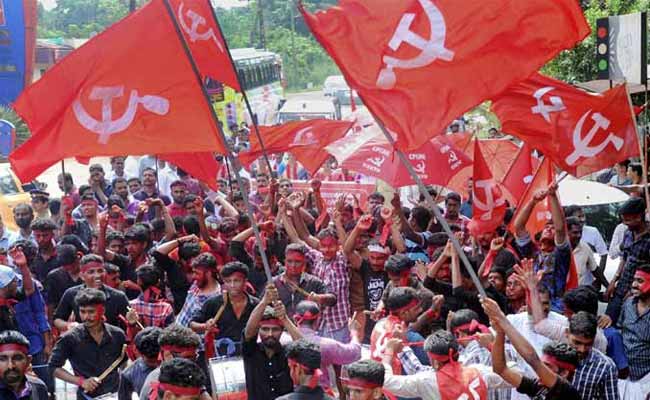
Few years in India's political history have carried the weight of 1996. It was the year when two movements born in 1925 - the Rashtriya Swayamsevak Sangh (RSS) and the Communist Party of India (CPI) - finally broke onto divergent highways. From that moment, the Sangh Parivar's political wing, the Bharatiya Janata Party (BJP), began a relentless march towards dominance, while the Communist movement entered a long and largely unbroken retreat.
What emerged over the next three decades has been not merely an electoral contrast but an existential distinction - one movement embedding itself into India's cultural nerve, the other receding into ideological isolation.
The 1996 general elections marked the BJP's coming of age. Riding on post-Babri polarisation and Congress fatigue, it leapt from two seats in 1984 to 161 - the largest bloc in Parliament. Atal Bihari Vajpayee's 13-day government, though brief, legitimised the Hindu Right's national ambitions. It also marked a strategic shift - from agitation to governance - as the RSS's decades of cadre-building and cultural groundwork anchored the BJP's transformation into a disciplined, broad-based political force.
The Left's 'Historic Blunder'
If 1996 was a moment of ascent for the BJP, it was one of abdication for the Communists. Jyoti Basu, the long-serving Chief Minister of West Bengal, had come within a whisker of becoming India's first Communist Prime Minister - only to be denied the post by his own party. The CPI(M) politburo rejected the proposal, reasoning that Basu's continuance as West Bengal's Chief Minister outweighed the prospect of him heading a broad coalition of centrist and Left-leaning parties at the Centre.
A disappointed Basu publicly termed the decision a "historic blunder" - a rare instance of him defying the party's strict discipline. Any other leader might have faced reprimand, but Basu's stature placed him beyond reproach.
By the time Basu withdrew from public life, he had acquired many descriptions - "a sahib in a dhoti", "a pragmatic patriarch", "a Marxist by conviction, a liberal democrat in practice". Yet the epithet that perhaps captures him most accurately is his own: a realist constrained by a dogmatic system. In a 2004 interview, reflecting on the "historic blunder", Basu said, "Such an opportunity does not come often. Even if we had lasted one year, people would have understood who we are and what we stand for. In many places, they don't even know what we are all about."
Beginning Of The End?
Basu's words sound prophetic now - not only about his party's missed opportunity, but about the entire trajectory of the Indian Left.
Of course, the Left's story did not end with Basu's inability to become Prime Minister. The Left, though weakened, would sporadically assume relevance in shaping national politics through the late 1990s and early 2000s. Its influence was particularly visible during the UPA years, when the CPI(M)'s firm opposition to the 2008 Indo-US Nuclear Deal under Manmohan Singh's government almost derailed the agreement. The episode underscored that even without power, the Left retained leverage - acting as a moral compass and policy counterweight within India's parliamentary democracy.
Two Worldviews
However, in a larger context, the contrast between Vajpayee's 13 days in power and Basu's missed moment encapsulates two worldviews. For the BJP, power was a means to advance a larger civilisational project - the cultural unification of India under Hindutva. For the Communists, power was a potential compromise, a deviation from purity. One embraced pragmatism as strategy, the other feared it as betrayal.
As political theorist Aditya Nigam observes, "The Communists lived almost hand-to-mouth, protesting on the streets every day, expecting the imminent revolution to arrive and tiring themselves out; the RSS, on the other hand, like the tortoise in the fable, went slow and steady." The Communists, Nigam feels, "had no imagination of what to do in 'non-revolutionary times' - which is most of the time."
Patience vs Paralysis
Within two years of 1996, the BJP returned stronger. Vajpayee's National Democratic Alliance (NDA) formed the government in 1998 and again in 1999, ushering in a stable Right-wing era. Governance - from nuclear tests to telecom reforms - demonstrated that the BJP could manage a modern economy while retaining its cultural moorings. The RSS's patient groundwork paid off: it had built an army of ideological workers who viewed politics as service to the nation rather than mere competition for office.
The Communists, meanwhile, turned inward. Despite ruling Kerala and West Bengal, they became prisoners of their own success. Marxism, already intellectually elite, grew bureaucratic in power. Basu's West Bengal stagnated under rigid policies and a decaying party structure. What had once been a revolutionary vanguard was now a state bureaucracy, alienated from the workers and peasants it claimed to represent.
As Nigam reflects, "While the RSS managed to gradually swallow up every opposition... the Communists excelled in expelling from their ranks every bit of dissent and criticism, ostracising them [critics] and were happy with their 24-carat purity of a constantly diminishing sect."
The crucial difference lay in cultural strategy. The RSS pursued long-term social transformation - shaping values, community life, and education - while the Communists treated culture as secondary. Left ideals thrived in literature and theatre but the party often reduced art to propaganda. The Sangh, through shakhas and festivals, embedded ideology in daily life. The RSS grasped what the Communists ignored - "that the time of culture and the time of politics are not the same," as Nigam observes.
The Great Divergence Intensifies
The decades following 1996 tell the story of consolidation on one side and decreasing significance on the other. The BJP's current membership is in hundreds of millions, making it the largest political party in the world. The CPI(M) barely crosses a million. Financially, the BJP's 2023-24 income was over ₹4,300 crore; the Left, reliant on local collections, barely registers in national finance reports. In West Bengal, once the Left's fortress, the CPI(M) went from ruling uninterrupted for 34 years to winning zero seats in 2021. Kerala, under Pinarayi Vijayan, remains its last prominent bastion.
The Left's retreat from national dominance, however, has not entirely erased its presence from India's political and moral fabric. Even today, its voice emerges in movements for social justice, labour rights, secularism, and climate equity. The party's intellectual influence continues to shape academic, activist, and regional politics - reminding India that while power may have shifted, the contest of ideas endures.
The Left Simply Couldn't Adapt
In some ways, the tragedy of Indian Communism lies in its virtue. The ideological purity that denied Jyoti Basu the Prime Minister's chair also denied the Left flexibility to adapt. Refusing compromise became refusing evolution. Had the Left embraced Dalit, Bahujan, Adivasi, and women's movements, its story might have been different. Meanwhile, the RSS's patient civilisational mission built a lasting "shadow state" grounded in character training, service, and cultural influence.
In hindsight, 1996 was not simply an election year. It was the hinge on which India's ideological future turned - between the pragmatism of power and the paralysis of purity. Vajpayee's 13 days in power legitimised a movement that now defines the republic. Basu's refusal to rule symbolised a movement that mistook inflexibility for integrity.
Almost 30 years later, the BJP-RSS complex stands as a monument to organisational patience, cultural entrenchment, and ideological adaptation. The Communists remain a lesson in what happens when conviction refuses to meet context. Between Basu's lost opportunity and Vajpayee's brief triumph lies the story of modern India - of one movement that adapted its faith to politics, and another that failed to adapt its politics to faith.
(Rasheed Kidwai is an author, columnist and a conversation curator)
Disclaimer: These are the personal opinions of the author
-
Opinion | What Ashley Tellis 'Spying' Allegation Should Tell India About Chinese 'Influence Ops'

Two separate cases underscore one of the most serious challenges that open democracies are facing today in managing Chinese aggressive tactics when it comes to influence operations.
-
Opinion | Who Moved My Tech?
The business of technology has rewired the very logic of market behaviour, rewarding first movers and creation of dependencies more than even revenue and returns.
-
As India Sticks To Death By Hanging, A Look At Execution Methods Across The World
Close to three-quarters of the world, including almost all developed countries, have abolished capital punishment either in law or in practice, but 55 nations still retain and implement the death penalty.
-
Opinion | US-China Trade War Has Turned Into A Full-Blown Siege, And India Is Stuck
Beijing's export controls, timed before diplomacy, reveal insecurity more than strength. By weaponising minerals, China has reminded the world why diversification is destiny.
-
Opinion | If Political Parties Fear POSH, The Problem Really Is Something Else
If women in India cannot be safe within the organisations that send them to Parliament and assemblies, the promise of democracy becomes hollow.
-
Opinion | Trump's Gaza Plan: Ushering "Peace for Our Time" In West Asia?
The long-elusive ceasefire is only the opening overture of a fiendishly complicated serial act. Seasoned observers of the region advise taking it with a ladleful of salt.
-
Opinion | The Northeasterner: Indian, Until Someone Needs A Punchline - By Vir Sanghvi
The racism we casually throw at those from the North East is not so different - or any less offensive - from the racism that Indians face in the West. Yet, we remain blind to it.
-
Opinion | The 'Real' Message To Trump And Pak In Taliban Minister's India Visit
To Trump, Taliban has made it clear that it is in no mood to rekindle American presence in Afghanistan. And to Pakistan, it seems to be signalling a newfound independence in its policies and activities.
-
Tata Trusts Infighting Over Board Seats. NDTV Explains What Happened And Why
Tata Trusts owns around 66 per cent of Tata Sons, which is the Tata Group's investments holding company.
-
Opinion | To Just Welcome The 'Immigrant' Is Not The Point - By Shashi Tharoor
Nations have the right to regulate entry, to balance openness with cohesion. But the tone of the current moment suggests something more corrosive - a retreat not just from policy generosity, but from moral imagination.