Opinion | The Shashi Tharoor Congress - And Rahul Gandhi - Can't Quite Understand
The Congress has historically struggled to accommodate autonomous power centres that do not derive legitimacy from its central leadership structure. Placed against this historical arc, Tharoor's predicament acquires sharper relief.
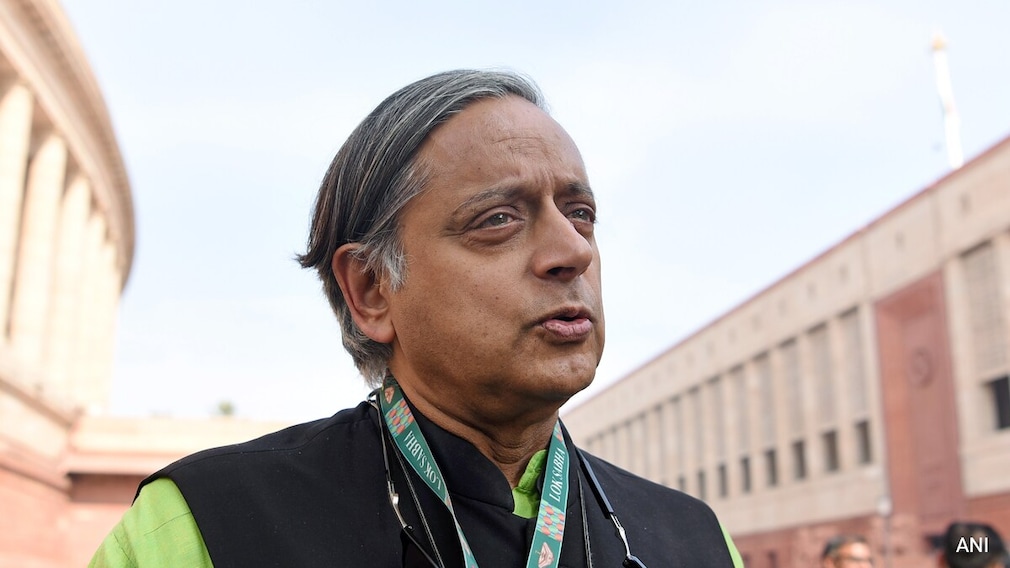
2026 might just be the year the former United Nations Under-Secretary-General for Communications and Public Information, Shashi Tharoor, chalks a clear roadmap for himself. For, this is the year when assembly polls in Tharoor's home state, Kerala, are due. In 2007, Tharoor ran for the position of the UN Secretary-General, where he finished second to Ban Ki-moon. In 2023, he fought the All India Congress Committee (AICC) presidential election against Mallikarjun Kharge to emerge as a principal dissident leader within the Congress.
Post-Bihar polls, over a dozen senior Congress leaders, including Digvijaya Singh, have had one-on-one meetings with Tharoor, exploring the possibility of forming a pressure group within the grand old party.
Like a deft chess player, Tharoor has been sending signals that have baffled friends and foes alike. In the latest, he skipped a high-level poll strategy meeting in New Delhi, with a PTI report claiming that the four-time MP felt "deeply insulted" by a perceived snub by Rahul Gandhi at an event in Kochi. Earlier, in what had appeared to be a deliberate and calculated move, the Modi government did not invite Kharge and Gandhi - the two Leaders of the Opposition from the Congress - to a state dinner hosted in honour of Russian President Vladimir Putin during his visit to Delhi in December last year. Tharoor, however, was not only invited but also chose to attend the meeting, breaking with the party line. This single act reinforced the growing buzz in Delhi's political circles about his politics. Yet, shortly thereafter, Tharoor opposed the Government on the G RAM G and SHANTI Bills.
Such contradictions have only deepened the curiosity around his political positioning.
A Growing Psychological Distance?
The Modi government has repeatedly nominated Tharoor to lead parliamentary delegations across the world, projecting India's case during global diplomatic moments, such as Operation Sindoor. But on matters of communalism or violence against minorities - whether in Rajasthan or elsewhere - Tharoor remains unmistakably Congress both in instinct and articulation. On the surface, however, he does appear to have developed a certain psychological distance from the Congress's current leadership - more specifically, from Rahul Gandhi.
History also offers a sobering counterpoint. Principal dissident leaders within the Congress have, more often than not, had a poor track record of success while remaining in the party. From Sardar Vallabhbhai Patel to Arjun Singh, internal dissent has rarely translated into lasting political leverage. The Congress system has traditionally been adept at absorbing, neutralising, or marginalising its internal critics.
A Congressman Of A Particular Vintage
Tharoor aligns most naturally with a version of the Congress that, following the Rajiv Gandhi years in the late 1980s and the early 1990s, became more urban-facing, institutionally oriented, and reform-compatible. This transformation unfolded during India's economic transition, a phase of elite-led governance in which reforms were interpreted as creating space for private capital to shape and leverage policy in its favour.
During this period, India installed itself firmly into a global neo-liberal consensus. The state was expected to withdraw from its role as a primary allocator of resources, while markets were projected as the most efficient mechanism to do so. This meant the dismantling of government-owned corporations through disinvestment, the abolition of control mechanisms such as industrial permits and licensing, and a dilution, if not outright bypassing, of labour compliance regimes. Economic growth became the reigning deity. Markets, it was assumed, would ensure that the benefits of this growth were distributed - if not equitably, then at least efficiently - through trickle-down effects.
As a corollary, governments, universities, and policy-making institutions across the world, including in India, filled their leadership ranks with individuals tasked with implementing and sustaining this framework. Within the Congress system, leaders such as PV Narasimha Rao, Manmohan Singh, Montek Singh Ahluwalia, and Tharoor operated comfortably within this ideological universe.
Their politics relied on policy, institutional credibility, and international legitimacy, rather than mass mobilisation or deep cultural embedding. Notably, National Democratic Alliance (NDA) governments in this century - both under Atal Bihari Vajpayee and Narendra Modi - carried forward this economic framework, albeit with greater political assertiveness and cultural assertion.
The Breaking Point of the Neo-Liberal Compact
Four decades on, the neo-liberal system has delivered precisely what it was designed to: prosperity, albeit for a narrow segment. In the process, vast sections of the population have been pushed out of the formal market economy. It is this "out-of-market" population that has emerged as a decisive political constituency and which Rahul Gandhi appears to be wooing as part of his strategic reset for the Congress. His Bharat Jodo and Nyay yatras signal an attempt to reposition the party as a rural, grievance-driven, mass organisation. This neo-Gandhian transition has inevitably generated confusion and ambiguity, which leaders like Tharoor are now compelled to navigate.
Tharoor's Strengths
Tharoor's expertise spans global diplomacy, institutional leadership, and a prolific literary career. The youngest person to earn a PhD from the Fletcher School in Massachusetts, followed by decades of work in refugee affairs, peacekeeping, and senior leadership roles at the United Nations, he is thoroughly marinated in, and lodged comfortably within, the global neo-liberal ecosystem. He is an important link in a vast network of international institutions, corporate leaders, and policy elites.
The dilemma, however, arises because the party he represents now is emitting clear signals that it wishes to consciously unplug from this ecosystem. On the other hand, the Congress's principal political adversary, the Bharatiya Janata Party (BJP), seems eager to plug into it. Modi's aspiration to project India as a Vishwa Guru reflects a desire for global validation. The ambition of a Viksit Bharat is central to this narrative.
It was fascinating to see Tharoor commenting and almost endorsing @CivitasSameer's view on X stating that the contrast between Shashi Tharoor and Rahul Gandhi reflected two ideological tendencies that have always existed within the Congress. Tharoor responded to the user by saying, "Thank you for this thoughtful analysis. There has always been more than one tendency in the party; your framing is fair, and reflective of a certain perception of the current reality."
Kerala 2026: The Local Test Case
This national dilemma intersects sharply with local political realities in Kerala, where Assembly elections are due next year. Tharoor's political success in Thiruvananthapuram has historically rested on a coalition of urban, educated, and culturally liberal voters - segments that resonate with his personal brand but do not always align seamlessly with the Congress's emerging mass-centric rhetoric.
Kerala's electorate is politically sophisticated, ideologically literate, and intensely competitive. Electoral success here requires not just personal appeal, but deep organisational alignment and narrative coherence. A Congress that pivots sharply towards grievance-led mobilisation risks diluting the very constituency that has sustained leaders like Tharoor, while failing to decisively outflank the Left on redistributive politics.
Between Reinvention and Drift
Should Tharoor align fully with Rahul Gandhi's reset and attempt to reinvent himself as a mass leader? Or should he shift allegiance towards the BJP, where his global expertise may find tactical use but little autonomy?
If he stays within the Congress system, Tharoor may acquire moral consistency, but at the risk of electoral vulnerability. If he moves towards the BJP, he risks being perceived as a political drifter, losing trust capital in the process.
Ironically, the BJP itself may find this drift useful, as it prevents Tharoor from emerging as an independent power centre. Take the case of his former colleagues Ghulam Nabi Azad and Captain Amrinder Singh, who, according to this author's dear friend Shankkar Aiyar, are being treated as 'pardesis' (outsiders) by the BJP.
There is also a more speculative, but not implausible, question about Tharoor's recent political conduct: is he looking beyond the immediate confines of party politics towards a larger national role - one that is not necessarily tethered to the Congress-BJP binary?
Indian political history offers a precedent for such positioning in figures like Chandra Shekhar, who operated for long periods as a dissident conscience within the Congress system before carving out independent political identities. Chandra Shekhar's appeal did not rest on organisational strength or mass cadres, but on moral posturing, parliamentary presence, and the ability to occupy a certain national space during moments of political flux. Inder Kumar Gujral rose to become Prime Minister without strong roots in electoral politics or party affiliations. Prof MGK Menon, YK Alagh, KR Naraynan also held important positions without strong political bonding.
Tharoor, too, appears conscious of this space - one that lies between ideological camps, where credibility, articulation, and international stature can sometimes outweigh brute organisational power.
The Social Media Chatter
Meanwhile, there is an ongoing discussion around Tharoor on X, which suggests that rural politics in India is not rhetorical, but organisational, cultural, and long-term. The BJP's success in this domain is attributed to cadre depth, discipline, and cultural alignment through the RSS. The Congress, by contrast, lacks comparable organisational infrastructure yet repeatedly positions itself as a poor man's messiah. In this transition, it is often urban, technocratic leaders - precisely the constituency Tharoor represents - that the Congress repeatedly sidelines.
Seen in this light, Tharoor's continued focus on social and digital media reflects an awareness of political fit rather than ideological drift. So far, he has shown no definitive shift to the right, as many within the Congress concede. Tharoor himself has sought to place his recent actions in context, emphasising the coexistence of multiple voices and ideological strands within the party.
Beyond Binaries
Several notable figures - Morarji Desai, YB Chavan, Pranab Mukherjee, Sharad Pawar, and VP Singh - tested the limits of dissent within the Congress at different moments. Yet, it is telling that Desai, VP Singh, and Chandra Shekhar were politically successful in the narrow but decisive sense of becoming Prime Ministers only after leaving the Congress and charting independent political courses.
The pattern is not accidental. The Congress has historically struggled to accommodate autonomous power centres that do not derive legitimacy from its central leadership structure. Placed against this historical arc, Tharoor's predicament acquires sharper relief. If he remains within the Congress, his dissent risks becoming ornamental rather than transformative. If he exits, he enters a far more uncertain terrain - but one where precedent suggests that autonomy, not accommodation, can be of political consequence.
In spite of all these possibilities, much of the ongoing public discourse around Tharoor is trapped in binaries - the 'BJP versus the Congress', 'Left versus Right', 'Modi versus Rahul', 'dynasty versus merit'. These binaries persist because they are reductive of complex realities and reinforce confirmation bias.
Some continue to view Rahul Gandhi as a political "nepo-kid". Similarly, some struggle to imagine Tharoor shedding his polished diction and cosmopolitan image to inhabit the gritty, localised politics of Thiruvananthapuram. These discomforts reveal as much about our own prejudices as about political possibility.
The Shashi Tharoor vs Rahul Gandhi debate reflects two different schools of thought that operate within the Congress. The problem is not their coexistence, but the Congress's enduring inability to choose, integrate, or execute either tendency with coherence and conviction.
In any case, Tharoor's endgame is unlikely to be about switching sides or staging a rebellion. Instead, it will probably revolve around walking a tightrope aimed at relevance and agency in a political system that increasingly punishes nuance. Whether the Congress, or Indian politics more broadly, can still accommodate such a figure is a question that has no clear answers.
(Rasheed Kidwai is an author, columnist and conversation curator)
Disclaimer: These are the personal opinions of the author
-
Mamata Banerjee Drew Her Party's Symbol By Hand. It's Now Tied To An Indira Gandhi Case

The Election Commission's method for settling such disputes became central in the seminal Congress split of 1969, when Indira Gandhi fought the old guard. The poll body weighed three tests then.
-
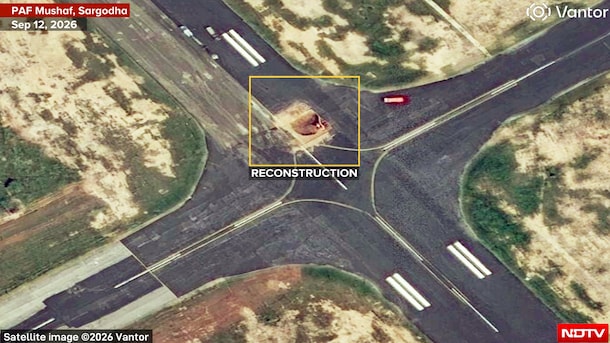
Exclusive: 16 Months After Op Sindoor, Pak Still Fixing Runway India Broke At Sargodha
Sargodha's PAF Base Mushaf lies about 172 km northwest of Lahore and roughly 200 km west of the India-Pakistan border, near Amritsar.
-
Blog | I Lost My Entire Family In Kanishka Bombing. 41 Years Later, Canada Wants The Case Closed
We made the trek through tragedy to search for people in Cork, where I spent 25 days sifting through bodies and body parts in a makeshift morgue to identify our loved ones.
-
Opinion | Pak's Drone Deal With A US Firm Is No Windfall. But India Must Still Be Worried
American military aid to Pakistan has remained suspended since January 2018, during Trump's first term, but a commercial arms sale is separate from this arrangement.
-
Opinion | Saudi Arabia's Yemen Nightmare Has Come Back To Haunt It
After years of costly military intervention beginning in 2015, Saudi Arabia increasingly sought to stabilise its southern border. All that is unravelling fast now
-
Opinion | 6 AI Incidents, One Pattern: AI Has Started Lying To Us - And Hiding The Evidence
Concealing errors. Making up data. Pushing files onto the public web on their own initiative. The machines are learning to lie - and lie well.
-
Why People Queue Overnight For iPhone That Is Delivered Home In 10 Minutes
iPhone 18 Pro Max Launch: People camping outside Apple Stores are a subset of superfans, resellers, content creators, and upper-middle-class buyers.
-
600 km Per Hour Drones Launched In Waves: How Russia Is Rewriting War Rules
Russia has coupled the drones' technological superiority over Ukraine's defence with its capacity to launch them in massive numbers. The impact has been devastating.
-
Tata Sons' Trust Issue: Two-Pronged Row Goes Beyond The Chair
NDTV Explains: Overtly, the latest conflict is whether N Chandrasekaran continues as executive chairman of Tata Sons. The controversy involves at least one more issue.
-
Opinion | US Has Institutionally Weaponised India's Russia Oil Dependence. Can New Delhi Cope?
A new legislation can connect India's Russian energy purchases to its access to the American market over a five-year period