Opinion | All Talk, No Take-Off: The Reality Of Pakistan's JF-17 Hype
Pakistan's politically charged statements about its JF-17 jets make little sense given how the source-based discussions and expressions of interest it is boasting of are not cemented in finalised agreements.
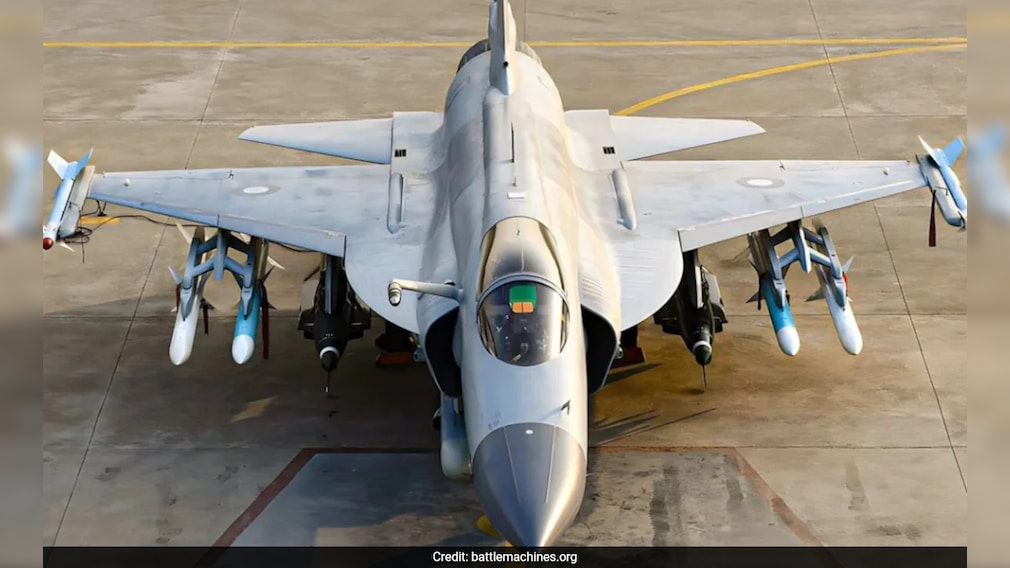
Pakistan's defence export industry received a noticeable platform in recent months, with the JF-17 Thunder Block III emerging at the heart of military negotiations extending to Southeast Asia, West Asia, and Africa. The origins of this momentum can be traced to Azerbaijan beginning deliveries of its first units in October 2025, making it the third foreign operator of the JF-17. This was followed by Myanmar's order in 2015 and Nigeria's induction of the jet in 2021. The trajectory accelerated further in December 2025, when the Libyan National Army (LNA) and Pakistan announced a defence deal that reportedly included JF-17s. Joining the list of countries that have shown interest are Bangladesh, Indonesia and Iraq, while Saudi Arabia is reported to be exploring unconventional arrangements such as converting approximately USD 2 billion in existing Pakistani debt into a fleet of fighter jets.
The spotlight Pakistan presently finds itself under, particularly in the aftermath of the May 2025 conflict with India, is less about a single jet and more about a broader rebranding effort. The developments appear to be an attempt by a security-centric and economically weak state to reposition itself from a traditional defence client to a potential defence exporter. In that context, Pakistan's military aviation industry is advancing as an instrument of economic relief and a vehicle for strategic posturing. These ambitions are underpinned by official statements, with Pakistan's Minister for Defence Production, Raza Hayat Haraj, reportedly confirming Islamabad's active negotiations with 'several countries' for JF-17 Thunder jets' sale.
Pipe Dreams
That said, these source-based discussions, expressions of interests, and politically-charged statements are not cemented in finalised agreements. Defence sales, especially involving combat aircraft, are capital-intensive, protracted processes that require a robust and reliable production capacity. These are further complicated by factors like training, sustainment packages, and post-delivery spare parts and upgrade services. As such, the expansion of Pakistan's military-industrial complex can be judged by its ability to convert palpable diplomatic rhetoric into concrete defence partnerships. Separately, the co-development of the 4.5-generation JF-17 with China informs both ambition and structural restraints in this area. The potential for defence deals to be complicated is further identified by the requirement for Beijing's consent for any export contract, thereby placing Pakistan's ambitions within the restrictions of its industrial and political relationship with China.
These deals should also be viewed through the lens of Pakistan's underlying defence-industrial capacity. Pakistan's economic challenges, foreign exchange limitations, and high dependency on external supporters are likely to create hurdles in its ability to meet long-term obligations related to spare parts exports, maintenance infrastructure, and overall operational support. The country's military-industrial complex also remains restrained with nominal private sector integration.
Exploiting The Vulnerable
Potentially in acknowledgement of its own position, Pakistan seems to be targeting a niche market - conflict-ridden and economically fragile countries seeking affordable alternatives to Western and Russian suppliers. For many of these countries, Western deals are chained by political conditionalities, sanctions risks, and rights' scrutiny, while Russian platforms face supply chain disruptions in light of its conflict with Ukraine. This leaves a small room for Pakistan's pitch of cost-effective jets with fewer political prerequisites in the global arms market.
However, this pitch falls short considering that the Chinese People's Liberation Army Air Force (PLAAF) itself does not induct the JF-17, despite co-producing the aircraft. This has not prevented Pakistan from presenting the May 2025 conflict with India as a sales pitch to potential buyers in the global arms market. This is especially evident in Pakistani officials' statements citing the jet's combat performance as proof of industrial credibility; Pakistan claimed to have shot down Indian jets, specifically advancing the narrative of Chinese-Pakistani hardware achieving escalation dominance over French-made Rafale and Russia's S-400 defence systems. The Indian government has not provided any details on aircraft losses in the conflict. Nonetheless, for Pakistan, projecting advantage over India or parity with its bigger adversary serves both purposes - domestic legitimacy and international signalling.
India Should Be Careful, But Not Anxious
For India, there is no cause for immediate alarm. The countries currently showing interest in or engaging in defence deals with Pakistan are not Indian adversaries, and nor do they possess the capacity to alter the power-balance in the subcontinent. Nevertheless, New Delhi will remain wary of the increasing engagements between Pakistan and Bangladesh through various channels - now including talks of defence deals - since the fall of the Sheikh Hasina government in 2024. For Pakistan, such agreements with Dhaka offer avenues to build bridges without engaging directly on sensitive issues of the 1971 partition or historical grievances.
Most importantly, media visibility should not overshadow the prevailing economic and political realities in Pakistan. Even if a handful of JF-17 deals do materialise, they severely lack the capacity to generate the revenue required to stabilise Pakistan's economic crises or meaningfully boost Pakistan's defence-industrial base. Ultimately, Pakistan's aspirational position and reputation in the defence market will depend on its capacity and consistency rather than rhetoric and media memorandums.
(Aishwaria Sonavane is a research analyst at the Takshashila Institution)
Disclaimer: These are the personal opinions of the author
-
Opinion | The 'AIPC' Was Once Congress' Boldest Idea. What Happened To It?

Tharoor, to Chakravarti, to Yaskhi now, the fate of a Congress 'experiment' that started in 2017 will tell you a lot
-
Woman Biker Hit, Air Force Veteran Attacked: The Lawlessness In Gurugram
What gives confidence to some elements in Gurugram to break the law again and again in full public view and on camera?
-
Opinion | When The Feed Braves The Flood
NDTV drops the 24x7 and stakes its next chapter on presence as it inaugurates a new identity
-
The Politics Of Blue: Why Akhilesh Yadav-vs-Mayawati Over A Colour Is Just One Shade Of History
A movie starring Rajinikanth tells us how colours can carry meaning beyond what meets the eye. The latest row over Akhilesh Yadav's party adopting blue, and Mayawati objecting, can be a starting point for understanding the many shades of history.
-
2 Indians Survived 9/11, Then American Justice System Became Their Nightmare
Pulled off a Texas train hours after 9/11, two Indian men were plunged into America's largest terror manhunt.
-
Opinion | Building BRICS In New Delhi
For India as the host nation, chairing the summit tests the core tenet of its modern foreign policy: strategic autonomy.
-
Can India 'Mediate' Between Iran And UAE At BRICS? Gulf Envoy Suggested It Once
At the very start of the Israel-US war on Iran, it was a UAE diplomat who had suggested as much.
-
I Went Looking For A PG In Delhi's Kamla Nagar. Here's What I Found
In every PG visited by NDTV in Delhi's Kamla Nagar, the conversation began with amenities. Nothing in the sales pitch was about how secure the building was.