Opinion | The Miami 'Purge': India Must Decide Its Seat As Trump 'Restructures' The G20
The restructuring of G20 reflects Trump's transactional worldview and his administration's impatience with multilateral forums that require consensus-building with developing economies.
US Secretary of State Marco Rubio has announced that the United States will host a remodeled G20 summit in Miami in November 2026, timed to coincide with America's 250th anniversary: the announcement and its rationale demand careful attention from Indian policymakers.
Rubio disinvited South Africa, the outgoing chair, quoting its promotion of what he termed "grievance politics, redistribution, and failed ideologies". Poland was invited instead, praised for its free-market policies. The four proposed working groups - deregulation, secure energy supply chains, AI governance, and countering aid dependency - reflect a clear shift in priorities. Notably absent are mechanisms for climate finance, debt relief, and technology transfer for developing economies.
This is a significant departure from the current G20 framework, which accounts for 85% of global GDP and two-thirds of the world's population. The proposed restructuring would tilt the forum decisively toward OECD countries, with developing nations participating only on terms that are considerably different.
Trump's Calculus
The restructuring reflects Trump's transactional worldview and his administration's impatience with multilateral forums that require consensus-building with developing economies. From Washington's perspective, the G20 has become unwieldy, and too focused on issues like climate finance and debt relief that the US views as tangential to economic growth. The "New G20" is designed to be more manageable and aligned with American priorities. At this forum, the US can advance its agenda without extensive negotiation with countries it considers economic competitors or ideological opponents.
For India, the implications are substantial. South Africa's exclusion carries symbolic weight - India has historically supported South Africa and had successfully championed the African Union's permanent G20 membership in 2023. The natural response from many quarters has been to express solidarity with South Africa and consider rejecting the new format.
However, India's economic interests require a more pragmatic assessment.
Each additional percentage point of US tariffs costs Indian exporters approximately ₹8,000 crore. Semiconductor supply-chain agreements are critical for planned fabrication plants in Gujarat and Assam. AI governance frameworks will determine whether Indian technology firms can access major markets. These are not abstract concerns - they directly affect employment and economic growth.
India faces a strategic choice, but walking away is not a viable option. The question is how to engage.
India has demonstrated effective diplomacy within the G20 framework before. In 2023, despite initial resistance from G7 members, India secured a permanent seat for the African Union. It also successfully included language on biofuels and debt in the Delhi Declaration, even though Western nations were reluctant. These outcomes were achieved through persistent negotiation from within the system, not through boycotts.
A similar approach is warranted now.
A Practical Framework
India should accept the Miami invitation promptly and send a substantial delegation. Simultaneously, it should coordinate with like-minded nations such as South Africa, Brazil, Egypt, Nigeria, and Indonesia to establish a standard negotiating position before the summit.
Crucially, India should also leverage its strengthened relationship with the European Union. European capitals are likely to be ambivalent about Trump's restructuring as they benefit from OECD representation but also depend on G20 legitimacy to enhance their global influence. France and Germany, in particular, have invested in partnerships with developing economies and may be receptive to preserving the forum's inclusive character. By quietly coordinating with EU members, India can build a coalition spanning the Global North and South, making it considerably harder for Washington to push through a narrower agenda.
Three objectives should guide India's participation:
- First, observer status for the African Union must be preserved. This was a hard-won achievement that reflects changing global economic realities. Reversing it would damage the forum's legitimacy.
- Second, debt restructuring and climate finance must remain on the agenda with specific, measurable commitments. These issues affect billions of people and cannot be sidelined simply because they are politically inconvenient for some members.
- Third, developing countries must have guaranteed representation in the forum's structure. This could take the form of rotating guest memberships with at least two developing nations participating each year, including South Africa in 2026.
These are not maximalist demands. They represent the minimum threshold for a forum that claims to represent the global economy.
India should make clear, through diplomatic channels rather than public statements, that without meaningful accommodation on these points, a significant group of G20 members may establish parallel mechanisms, potentially through BRICS, which India chairs in 2026. This is not a threat; it is a practical assessment of alternatives if the existing framework becomes non-functional.
Why This Approach Serves India's Interests
India's G20 strategy is a critical confluence of economic interests and diplomatic objectives. Active participation secures India access to vital economic negotiations and partnerships, while coordination with the Global South amplifies its negotiating position, preventing the forum from becoming solely a vehicle for OECD priorities.
However, the balance is delicate. New Delhi must secure tangible economic gains for its workers and businesses while simultaneously ensuring the G20 remains a legitimate forum where developing countries have genuine voice and influence. Abandoning the Global South for pure expediency would undermine decades of diplomatic capital and India's claim to leadership. Conversely, purely symbolic gestures that sacrifice economic benefits are unsustainable.
These principles and interests are not inherently contradictory. An inclusive G20 is more stable and legitimate, serving India's long-term economic agenda. India's responsibility towards developing nations is best fulfilled by securing actual policy outcomes that benefit them, which can only be achieved through engaged participation, not boycott or isolation.
The G20's value lies in gathering major economies. If the table shrinks, alternative, fragmented forums will emerge, a cost the US must weigh. India's role is to clarify these costs while remaining at the table, balancing firmness on core issues with flexibility on secondary matters. This demands pre-summit coalition building and disciplined coordination.
Influence is gained through participation, not absence. India has successfully reshaped the G20 from within before. The path forward is strategic engagement aimed at preserving a forum that, despite its flaws, is essential for global economic coordination. This is the mechanism by which India can best serve both its national interests and the interests of the developing world.
(The author is a Former Visiting Fellow of the U.S. National Defense University and alumnus of the University of Wyoming. His current research interests include US domestic politics and foreign policy)
Disclaimer: These are the personal opinions of the author
-
Mamata Banerjee Drew Her Party's Symbol By Hand. It's Now Tied To An Indira Gandhi Case

The Election Commission's method for settling such disputes became central in the seminal Congress split of 1969, when Indira Gandhi fought the old guard. The poll body weighed three tests then.
-
Bruised, Limping, Unbowed: Sia Says She Will Be Back On The Bike Soon
There was pain in Sia's steps, anger in her words, and something else - a quiet determination that the road would not be taken away from her.
-
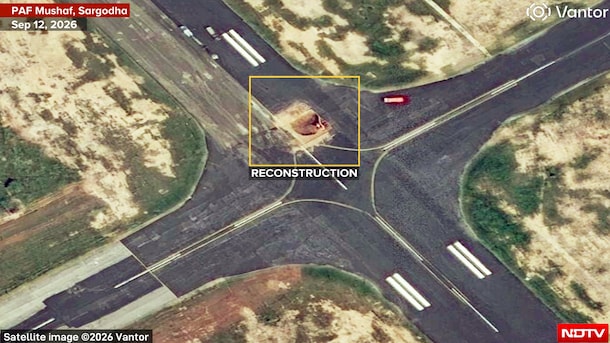
Exclusive: 16 Months After Op Sindoor, Pak Still Fixing Runway India Broke At Sargodha
Sargodha's PAF Base Mushaf lies about 172 km northwest of Lahore and roughly 200 km west of the India-Pakistan border, near Amritsar.
-
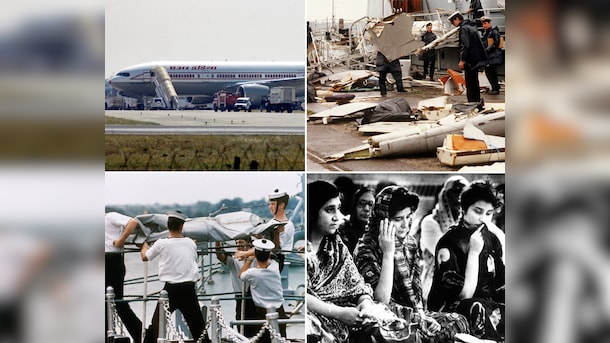
Blog | I Lost My Entire Family In Kanishka Bombing. 41 Years Later, Canada Wants The Case Closed
We made the trek through tragedy to search for people in Cork, where I spent 25 days sifting through bodies and body parts in a makeshift morgue to identify our loved ones.
-
Opinion | Pak's Drone Deal With A US Firm Is No Windfall. But India Must Still Be Worried
American military aid to Pakistan has remained suspended since January 2018, during Trump's first term, but a commercial arms sale is separate from this arrangement.
-
Opinion | Saudi Arabia's Yemen Nightmare Has Come Back To Haunt It
After years of costly military intervention beginning in 2015, Saudi Arabia increasingly sought to stabilise its southern border. All that is unravelling fast now
-
Opinion | 6 AI Incidents, One Pattern: AI Has Started Lying To Us - And Hiding The Evidence
Concealing errors. Making up data. Pushing files onto the public web on their own initiative. The machines are learning to lie - and lie well.
-
Why People Queue Overnight For iPhone That Is Delivered Home In 10 Minutes
iPhone 18 Pro Max Launch: People camping outside Apple Stores are a subset of superfans, resellers, content creators, and upper-middle-class buyers.
-
600 km Per Hour Drones Launched In Waves: How Russia Is Rewriting War Rules
Russia has coupled the drones' technological superiority over Ukraine's defence with its capacity to launch them in massive numbers. The impact has been devastating.
-
Tata Sons' Trust Issue: Two-Pronged Row Goes Beyond The Chair
NDTV Explains: Overtly, the latest conflict is whether N Chandrasekaran continues as executive chairman of Tata Sons. The controversy involves at least one more issue.