Opinion | The Little-Known Story Of How Russia Gave Sonia Gandhi Her Name - And Changed Her Family's Fate
On Sonia Gandhi's 79th birthday, author Rasheed Kidwai throws light on her childhood, her father's years as a prisoner of war, and her early days in a little town in Italy.
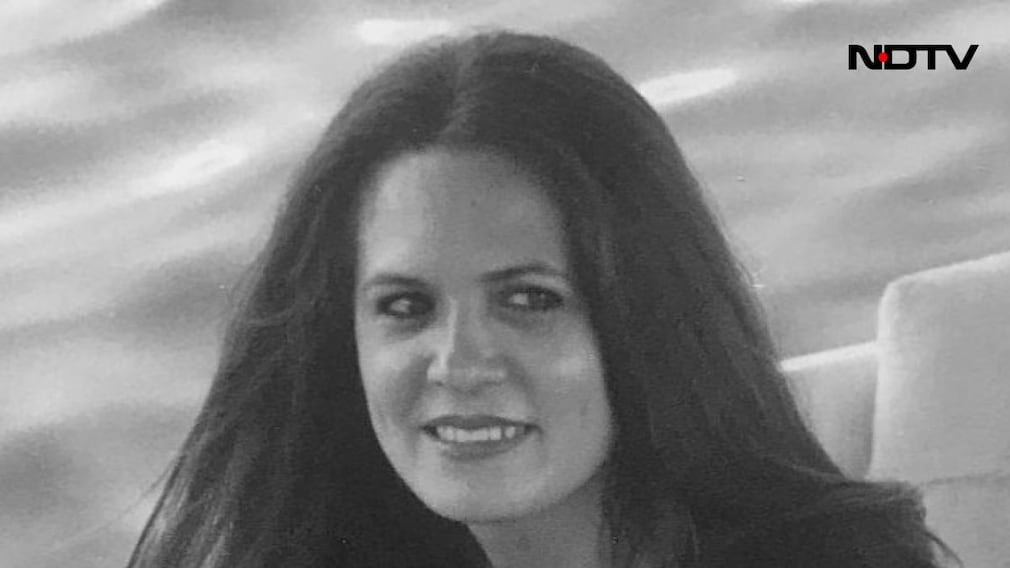
The inability of the Gandhis to meet Russian president Vladimir Putin during his recent visit to New Delhi would likely have upset Sonia Gandhi, too, though for reasons non-political as well. For she, in particular, shares special ties with a country that her husband's family befriended and where her father was once a prisoner of war.
Sonia, who turns 79 today, received a special birthday message fourteen years ago from the then Russian President, Dmitry Medvedev (currently Deputy Chairperson of the Security Council of Russia and Putin's foremost champion). "You [Sonia] carry on the Gandhi family's legacy, working consistently to strengthen democracy, further India's social and economic development, and improve the international security system and global order, and these efforts have won you great confidence from your people and much respect and influence around the world," Medvedev wrote in the letter, adding, "Russia values highly your contribution to preserving and building on the longstanding traditions of friendship between our countries and your efforts in taking us to a new level in our relations - that of a privileged strategic partnership."
A Letter For A 'Personal Loss'
The goodwill went both ways. In 2017, in an unusual gesture, Sonia, as the longest serving president of the Indian National Congress, penned a personal condolence letter grieving the death of ambassador Alexander Kadakin. Describing it as a "personal loss", she wrote, "For me and my family, the passing away of Alexander Kadakin's death is a personal loss. Prime Ministers Indira Gandhi and Rajiv Gandhi held him in high esteem and valued his friendship." The letter was addressed to the then Russian minister-counsellor Anatoly V Kargapolov at the New Delhi-based Russian embassy.
Both diplomatic and political sources in the national capital noticed this unusual gesture by a political party in opposition. "It shows her high personal regard for ambassador Kadakin, who was a personal friend of Rajiv Gandhi," recalled an old-timer in the Congress. Sonia said she remembered Kadakin for his "large-hearted personality, his deep love for India" and "his ability to strike up a real rapport with a wide cross-section of Indians [which] won him countless friends in our country". "He embodied all the warmth, generosity and steadfastness of the Russian soul," she said, adding, "For him India, where he breathed his last, was truly a second home."
The War Years
Sonia's love for Russia, however, was forged in childhood itself. Her father, Stephano Maino, had been a young man when, during World War II, he slung a rifle on his shoulder and marched into Russia with the invading Italian forces. He was detained in the towns of Vladimir and Suzdal for several years, until three Russian women helped him escape. A grateful Stephano named his daughters after the three benefactors: Sonia, Nadia and Anushka.
In his book, diplomat-turned-politician Natwar Singh recounted a trip to Russia he undertook with Sonia in 2005. According to Singh, who was the External Affairs Minister then, they went to a town called Vladimir by helicopter after official meetings concluded. He was amused by the decision to visit this little-known town. "We [Sonia and Natwar] left for Vladimir town in the afternoon by helicopter. I was at a loss why Sonia Gandhi was visiting an obscure medieval town. Soon, we arrived at an unkempt courtyard, the main building had been a church, now converted into a museum. Inside, we came to an octagonal room. One of the walls were stuck with paper slips. Sonia was much interested in these. She reads Russian and obviously was looking for something. ‘Natwar, my father was a prisoner of war here during the World War II. He [Stefano Maino] escaped, walking all the way to Italy'. She was deeply moved. This was for her a very special moment, I listened. Any comment would have been banal and inappropriate," Singh wrote in Walking With Lions - Tales From A Diplomatic Past, which came out in early 2013.
The 'Cenerentola'
Born on December 9, 1946, in Orbassano in northern Italy, Sonia, as the second daughter in her family, was their little princess, their 'Cenerentola', or Cinderella. The nickname was not entirely fortuitous. Unlike her sisters, Nadia and Anushka, Sonia wanted to be different. She was ambitious, even if she spoke little about her dreams. As a young girl, she was never comfortable in the dusty industrial town on the outskirts of Turin where she grew up. When Sonia lived in Orbassano, the town was a muddle of apartment blocks and houses that had come up in the early 1950s as a result of the post-war boom in northern Italy. It was too undemanding and modest for a Cenerentola. She was a good student but not an exceptional one, except in her gift for languages. She could converse easily in Spanish and Russian, and today is proficient not just in these languages but also in Italian, Hindi and English.
The credit for teaching Sonia the Russian language goes to her father, who had fought in the country with the Germans. He was deeply influenced by Russia's language, culture and food, and loved the country. He was hard-working and disciplined, a quality that he passed on to his family, especially Sonia. As a self-made man who had been through some tough times, he took pride in providing for his family. He had come to Orbassano from Asiago in the Veneto region as a poor mason and made good in a small construction business through his dedication. Stephano brought up his daughters in the traditional Catholic way and was wary of foreigners. Naturally, was not particularly charmed when Sonia informed him about tying the knot with the Indian Prime Minister's son.
(Rasheed Kidwai is an author, columnist and conversation curator)
Disclaimer: These are the personal opinions of the author
-
From Aircraft To Lives: Why "Friendly Fire" Can Be Such A Big Enemy

There is not even a millimetre of room for error in judgment - and this is one of the biggest contributors to friendly fire incidents
-
Opinion | Gulf Confronts An Ugly Truth About Aligning With America
That Iran is attacking bases and other sites in the UAE, Qatar, Bahrain, Saudi Arabia - even Oman - has caused disillusionment in these countries, which thought that they were protected by the US. They are now learning they're not.
-
Cheap Drones, Claude AI, Cyberattacks: Behind US-Israel's 'New' War On Iran
Cyber warfare, Claude, cheap drones - as the US and Israel jointly pound Iran, and Tehran hits back by dragging West Asia into a regional war, are these the backbone of a new kind of military conflict?
-
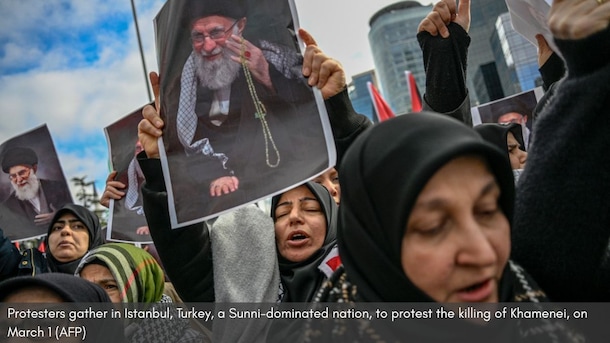
Opinion | How Khamenei's Killing Is Doing Exactly The Opposite Of What US-Israel Wanted
What Israel and the US have done is make Khamenei, who was running a country dealing with extreme economic hardships, protests and internal strife, a martyr. His killing has united Shias and Sunnis across the globe in anger.
-
NDTV Explainer: How Is A Supreme Leader Chosen, Who Will Succeed Khamenei
Khamenei, who ruled for 36 years, built Iran into a powerful anti-United States force, projecting military influence across the Middle East while suppressing repeated domestic unrest with force.
-
Opinion | Who Gets The 'Peace Prize' Now, Mr Trump - The Drones Or The Bombers?
A president who returned to the White House on the promise of ending 'Forever Wars' - and wanted a Nobel Peace Prize, no less - now presides over the largest American military build-up in the region since the infamous Iraq war.
-
Opinion | 'Insider' Info? Why US-Israel Couldn't Have Struck Khamenei Without Help
The only way actionable intelligence would reach Israel and the US on Khamenei's whereabouts, movements, and schedules, is if the calls were coming from inside the house itself.
-
Exclusive: How War In A Narrow Sea Could Reshape Global Economy Overnight
NDTV speaks to industry experts to gauge the impact of a major international conflict on the global shipping industry.
-
Opinion | What's Driving Pakistan-Afghanistan War? Islamabad's Never-Ending Cycle Of Insecurity
Islamabad has accused Kabul of drifting into an "India colony", a charge that was further sharpened following Afghan Foreign Minister Amir Khan Muttaqi's visit to New Delhi last year