Opinion | The Greenland 'Secret' Trump Doesn't Quite Like Talking About
Rare earths, billionaires, and the soft rebranding of a land grab - the reality behind Trump's Greenland threats.
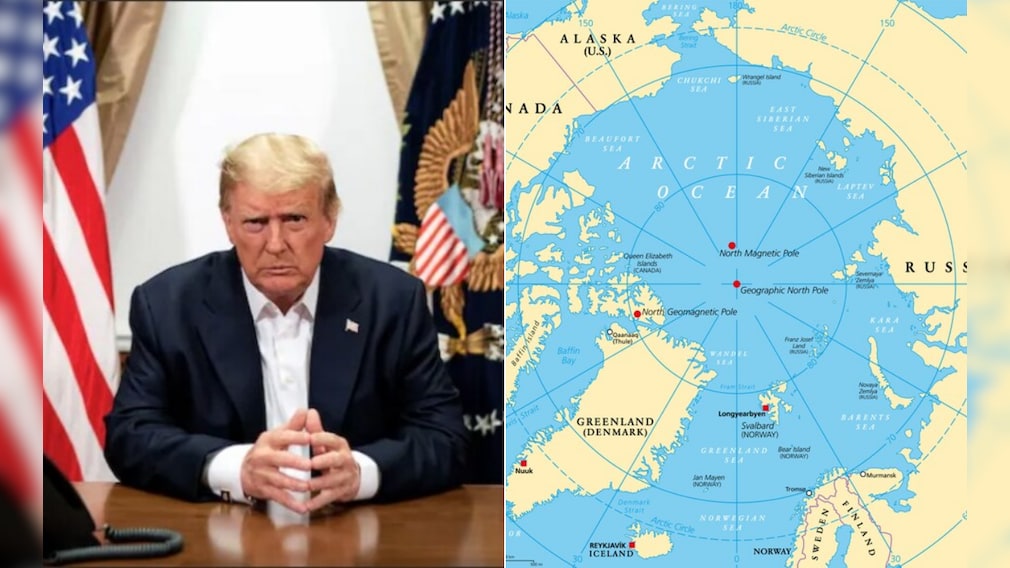
At Davos, US President Donald Trump's remarks on Greenland were the most awaited. In the event, however, he backed off from the threat of force to get the largest island on earth.
But the issue is far from over. That extremely fragile and incredibly beautiful region has always been under severe US threat, with Washington showing little regard for its people - or for its sovereignty, or for any of the things that matter, like the rapidly melting ice cap. In 1968, it was one of the first regions to experience a near nuclear disaster, as a nuclear-armed B-52 bomber crashed near the Thule Air Base, an incident that left plutonium-laced debris scattered across miles of Arctic sea ice. Ten years before that, a permanently insecure United States had positioned nuclear weapons there as a reaction to the Soviets. Declassified documents now show that Denmark knew that, but did nothing. Unsurprising, since Denmark itself was a colonizer, with interest in the mining resources there rather than the people.
Now, it has all come back to bite.
Greenland Matters To Us Here
Here's the thing for all the rest of us. Greenland's health matters hugely. It is melting at its fastest rate in 12,000 years. That's an existential threat for the low-lying Maldives, for instance, which could disappear entirely as sea levels rise, or even for low-lying Bangladesh. It's another thing Dhaka, at least for now, is more concerned about burning up all political opposition.
An Ugly History
Greenland was first inhabited by the Inuit, from Asia, and Vikings who farmed the area. The latter were eventually pushed out, till the Danish colonised the area together with a bunch of missionaries. The Inuit were forced out, with their women forcibly made to adopt intrauterine birth control measures at least till 1991. Then there was the mining for aluminium, all of which makes for some very repulsive reading. Greenland was made a full part of Denmark without consulting anyone in 1953, but transitioned to self-rule in 2009, which gives it control over everything except defence, foreign policy, and, oddly, judiciary. That means all laws have to go through a Danish once-over.
It gets worse, with not just the accident-prone B-52 crash spewing radioactive waste, but the fact that Denmark probably knew about these nuclear overflights and still chose to go with diplomatic blindness. Also, in the background to the World War, the Danish Ambassador gave the US unlimited military access to the island, which included stationing of nuclear weapons there for a brief period. In short, while Denmark refused nuclear weapons on its own territory, it was fine with them being placed in Greenland, with a wink and a nod.
Everyone Has Wanted Greenland, Always
Early US Presidents, from Eisenhower onwards, all briefly considered 'buying' Greenland, but did not, since they had total access anyway. This was after a treaty of April 1951, which, while confirming Danish sovereignty, delineated three "defense areas" for use by the United States, with additional areas subject to future negotiations " ...in accordance with NATO plans". Consistent with that broad guidance, the US would be free to operate its bases as it saw fit, including the movement of "supplies" and with no restrictions on its access to airspace over Greenland.
Meanwhile, the US got a permanent Space base at Thule - now known as Pituffik - which, according to reports, is being rapidly overhauled, including the runway and associated infrastructure. That includes Early Warnings over near-Earth space as well, with base officials claiming they can find a softball-sized metal from 3,000 miles away. But again, that capability is already there. Trump doesn't need to grab Greenland to sustain it. Denmark would hardly object.
The Threat From Russia And China
So the big question: why does Trump, who has demand-based access to almost all of Greenland, want to do a land grab?
The major reason - apparently - is that the Arctic has opened up due to rapid global warming. That means not just Russian but even Chinese ships making their way through the Northwest passage via Alaska into the Atlantic. Or so it is feared. In September last year, two of those ubiquitous Chinese "research vessels" entered the Extended continental shelf of the US through this route, leading the US Coast Guard to react together with an air component. The Chinese ships were part of five icebreaker ships deployed in a show of Arctic strength for the first time.
But all this is still a long way from posing any kind of threat to the US. The Russian presence, with nuclear-powered ice breakers as well as a powerful military capability, has also been there for some time and is not something new for Trump to get excited about. And considering Russia was hardly even mentioned in the US National Security Strategy, there is general agreement that it poses little threat. Besides, as part of Denmark, Greenland is covered by Article 5 of the NATO Treaty. Any grabbing by outside powers would see a strong reaction. Washington, therefore, has little excuse on the 'security' front.
Big Biz Wins, As Usual
Now consider the Forbes reports that show how US bigwigs are already invested in Greenland in its coveted Rare Earths elements (REE). Jeff Bezos, Bill Gates, and Michael Bloomberg have invested in Greenland. Ronald Lauder, heir to the Estee Lauder fortune, is also an investor. According to John Bolton, former White House national security adviser, Lauder pushed for the acquisition of Greenland in 2018. So, at least one push seems to be coming from the 'big biz'. There is also concerning news about these businesses getting local politicians involved. Greenland holds an estimated 1.5 million metric tonnes of rare earth element reserves, according to the US Geological Survey comparable to US reserves, and more than Canada and South Africa. That's a lot. The US's 'Critical Minerals Corporation' has already signed up for the Tanbreez project in south Greenland, said to hold one of the largest heavy rare-earth elements on earth. That was signed in 2025.
There's another angle. In June 2025, the EU designated the Amitsoq graphite project in Greenland as a 'Strategic Project' under its Critical Raw Materials Act, underscoring its importance for building supply chain resilience. But hold hard; China is already invested in Kvanefjeld, the largest rare-earth element site in the world, majority-owned by Australian company Greenland Minerals, but with China's Shenghe as it largest shareholder, which is committed to processing and marketing of minerals from this highly ecologically controversial site. That was signed in 2018. So, in some ways, Washington is late to this game and Trump's dismay is understandable. The trouble is that the fight is now neck-and-neck.
Greenlanders Are Done
There is a local independence movement of sorts, with a 2025 opinion poll indicating that 56% of Greenlanders are in favour of it, while 28% oppose it. That same poll also showed how 85% of responders didn't want Denmark to join the US. But that is likely to change, as Denmark alleges covert influence operations there by the US. This is entirely believable, too.
Ironically, the only way the Greenlanders can pay for their own country is through extraction of their resources. Remember, this is a country with near-zero agriculture, and though blessed with a huge diversity, there's nothing much to encash. It has now allowed aggressive oil exploration, with some 13 off-shore projects in the pipeline. That's not terribly good for the sensitive environment either.
Either way, Greenlanders are quite literally caught between the devil and the deep. Trump in his speech still frames Greenland as an issue of 'international security' for the 'good guys' against a bunch of baddies, even as he continues to run down Europeans - who for long depended, rather happily, on American power for security. The message simply is 'shape up or ship out'.
The Lesson For India
For Delhi, this is another lesson in reality politics, earlier cloaked in soft diplomatese. As the AI race heats up, time to list out our own mineral priorities, inside and outside the country, and go after them, fists swinging.
Meanwhile, our multi-alignment has shifted from strategic choice to hard reality, as frenemies abound. Staying low and moving fast should be the motto for the next few years.
(Dr Tara Kartha is a former Director, National Security Council Secretariat)
Disclaimer: These are the personal opinions of the author
-
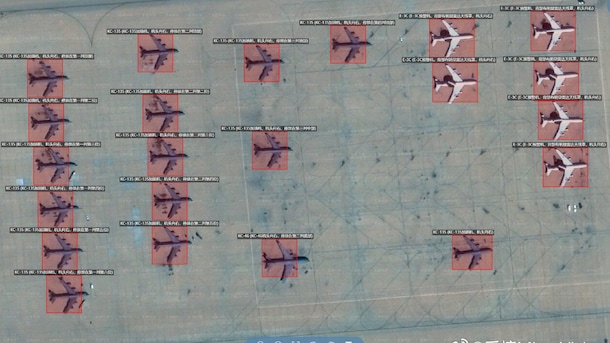
China's Eyes In Space Exposed US War Machine Before 1st Bomb Fell In Iran War

The pictures showed aircraft parked on runways, transport planes arriving at desert airfields and carrier decks crowded with fighters somewhere in the Mediterranean. Yet each image carried an unusual level of detail -- not in English, but in Mandarin.
-
Opinion | Is The Gulf Now Questioning Its US Ties - And The American 'Guarantee'?
Doubts are bound to follow if even the US, the mightiest of the militaries and with 13 major military bases in the region, could not protect it against only one opposing nation - Iran.
-
Opinion | The Country That Buys 90% Of Iran's Oil Is Still Not Panicking. Here's Why
Beijing has spent two decades preparing to answer: what happens when the Strait of Hormuz closes?
-
With Missiles Carrying 1,000 kg Explosives, A New Tactical Phase For Iran
Iran dropped a bombshell on Sunday after a senior Revolutionary Guard commander vowed to only launch missiles with explosives of 1,000kg or more
-
The Beast Of Kandahar: How One Captured Drone Changed Modern Warfare
One December day in 2011, a Sentinel mission ended in a moment that would reshape the global drone arms race. Instead of returning to its base in Afghanistan, the Sentinel landed inside Iran.
-
Trump Started War Against Iran. He's Still Figuring Out How It Ends
The US-Israel campaign began with coordinated strikes in Tehran and the killing of Iran's Supreme Leader Ayatollah Ali Khamenei on the first day.
-
Opinion | A $10 Billion Threat: How Exposed India Really May Be To Middle East's Oil Crisis
Every $10 increase in the price of Brent crude could widen India's current account deficit by roughly 0.3 to 0.4% of GDP, translating into over USD 10 billion in additional import expenditure.
-
Opinion | Iran-Israel War And The Limits Of India's 'Strategic Autonomy'
India needs to figure out how to manage the fallout of the Middle East crisis without letting strategic autonomy start to look like a slogan.
-
Opinion | Can A Gen Z-Influencer-Rapper PM Really 'Change' Nepal?
Observers say it's high time the former mayor evolved and grew, as well as became more mature, diplomatic and friendly with journalists, opponents and, most importantly, friendly neighbours like India and China.