Blog | The Dantewada Massacre, And What India Needs To Do To Stay Maoist-Free
In 2010, I was Assistant Chief of the Air Staff controlling transport aircraft and helicopters, and on April 6 that year had to arrange An-32 aircraft to carry coffins of 75 CRPF jawans.
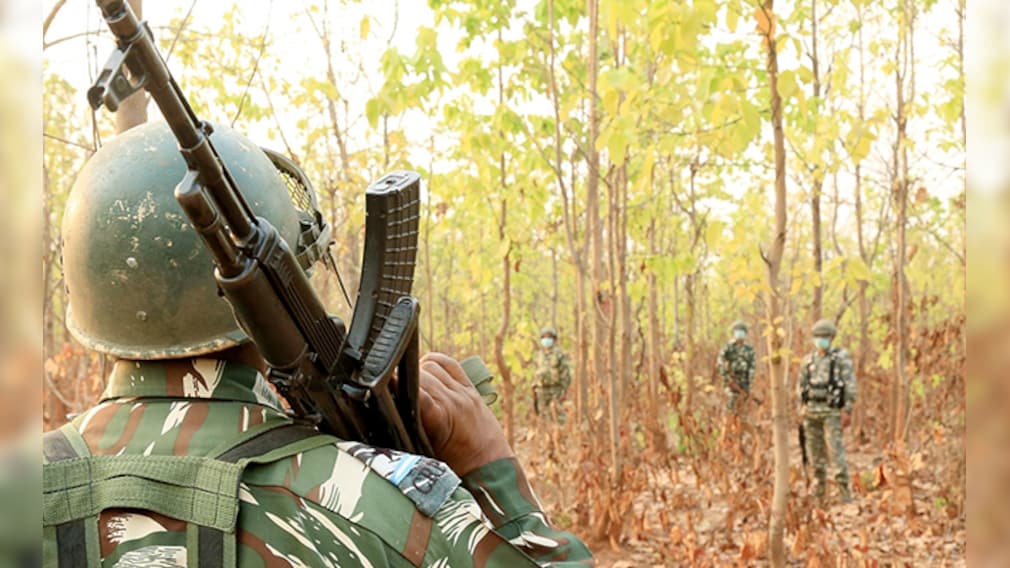
The government has announced that the Maoist menace has been 'wiped out' from the infamous 'Red Corridor', meeting the deadline of March 31 it had set for itself. While one can bask in the glory of this announcement, it must be remembered that the task of shaping a 'normal', threat-free life for those in the dense jungles of the far-and-beyond has just begun. This was driven home by an almost full-page 'In Memoriam' published today in a national newspaper by the Central Reserve Police Force (CRPF), which carried photographs of 75 of its jawans who were killed by Naxals in Bastar district this day, a decade and a half back. This touched a raw nerve in this writer.
My father was the Additional Collector of Bastar district in 1982-83 and based in Kanker, a name that got synonymous with Naxal activities later. The place was peaceful, like any other village in the hinterland of tribal India, and our visits there were wonderful. So, when the Naxal menace became acute at the beginning of this century, I asked my old man what had transformed that quiet place into one where the government writ did not run. His reply shocked me - "We kept sending reports that a parallel organisation had started taking root and political steps were needed urgently to curb it, but to no avail." The results came to haunt us in the coming years.
2010, Then 2013, Then 2017
In 2010, I was Assistant Chief of the Air Staff controlling transport aircraft and helicopters, and on April 6 that year had to arrange An-32 aircraft to carry coffins of 75 CRPF jawans. The mayhem that must have happened is difficult to imagine. The brave hearts of No 62 Battalion, who were on an anti-Naxal operation, were ambushed by a group of 500-plus Maoists positioned on high ground; the troopers, devoid of any reinforcements due to roads being booby-trapped with IEDs, fought for six hours before making the supreme sacrifice. That these large-scale killings were repeated on May 25, 2013, when 30 people lost their lives (including the Chattisgarh Congress leadership) and on April 24, 2017, when 26 CRPF jawans were killed, showed that, irrespective of the political party in power, the basics of governance had been given short shrift in the previous decades through political unprofessionalism.
The steely determination to tackle the Naxal challenge began head-on in 2006 with Prime Minister Dr Manmohan Singh declaring it as the biggest internal security threat. Police forces were pumped in, and the Indian Air Force provided helicopters from 2009 for non-kinetic tasks; it is noteworthy that, though the helicopters were armed, calls for their offensive use were firmly rejected by the government. The rules of engagement were crystal clear - while helicopters would not initiate any proactive kinetic action, they would act firmly in self-defence if fired upon; the belligerents on the ground were, after all, Indian citizens. It is to the credit of successive governments that the resolve to tackle the insurgency did not flag; in fact, it only went up.
Insurgency As A Cancer
An insurgency is like cancer. Even after its remission, the patient requires continuous tending in the long term to prevent its return. The lingering sub-surface threat lies in the famous Mao Tse Tung quote that insurgents are like fish in water - water being the local population. If the water is removed from the equation, the fish die. The villagers/tribals who call them the 'common man' must always see two aspects of official power favouring them: the government as a dependable provider of daily sustenance, and second, a deterrent capability that cannot be challenged by any alternate source of power. The insurgent 'fish' must be continuously denied a favourable human cocoon for sustenance.
So, what should the long-term strategy be? First, 'winning hearts and minds' of the populace is the cornerstone of any anti-insurgency plan. Improved education facilities for the young would go a long way in strengthening the psychological link with the rest of India. The extensive ingress of government machinery into the erstwhile Maoist strongholds and the widespread road infrastructure and communication facilities created must be improved further to cement governmental writ. As the entry of 'outsiders' into tribal areas increases, it is vital to ensure that tribal traditions and lands are not usurped by unscrupulous elements; the bottom line is that 'exploitation' of people indigenous to the area must be prevented at all costs.
Second, backing the administrative efforts should be deterrence, born of the gloved fist of the government's law-and-order machinery. Deterrence is built over time and is a 'process' of ensuring that an adversary follows one's guides without having to go kinetic - Sun Tzu termed it the 'acme of skill' for the warrior in conflict, but it is equally applicable in civil governance where the 'insurgent' is one's own citizen. In anti-insurgency action, the threat of retribution is more important than the actual implementation of punitive measures of law. The 'Sentencing Project', a 2010 study in the United States, stated that increasing the severity of a punishment does not have much effect on lawbreakers compared to an assurance of certainty of punishment. It is the surety that the government would come down heavily on the lawbreakers that would prevent the tribal populace of the erstwhile Red Corridor from again being coerced to become a sanctuary for any insurgent ideology.
Finally, insurgents are masters at playing political football. The drive to ensure an insurgency-free India must be a bipartisan effort, else gains made so far will be frittered away. The task of arranging aircraft to carry coffins must not befall anyone again.
(The author is a former Additional Director General, Centre for Air Power Studies, and a retired Air Vice Marshal of the Indian Air Force)
Disclaimer: These are the personal opinions of the author
-
The Real Story Of France's Unrest Is Getting Lost In A Storm Of Online Lies

A man cosplaying Napoleon on the streets, looting at luxury fashion stores like Dior, France is currently confronting one of its most serious episodes of civil unrest in years.
-
Opinion | The Last Bet? What Trump's 'Mother Of All Bombs' Could Actually Do To Iran
Can an MOAB deliver a decisive blow to Iran that may force it to surrender immediately, as Japan did after Hiroshima and Nagasaki in World War 2?
-
Hit Songs, Empty Pockets: The Hidden Math Behind India's Viral Music Boom
Over 80,000 brands and five lakh creators in India make branded content. The opportunity is worth around Rs 1,500 crore.
-
Opinion | Great 'Exceptions': How The Oil India Was Attacked For Is The Oil Trump Now Seeks
A law written to punish the buyers of Russian oil was suspended by the US to protect a purchase of Russian oil. India spent fourteen months being lectured for less.
-
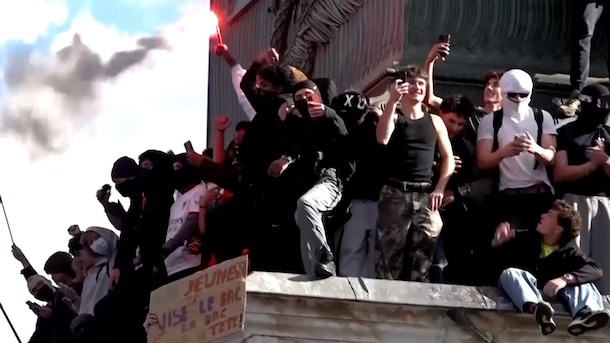
Opinion | Louis Vuitton Loot, Torched Cars: France Protests Have An Unlikely Beneficiary
It's an unbelievable moment. Crowds looting the most exclusive stores in Paris, including the famed Luis Vuitton. But what's behind this meltdown?
-
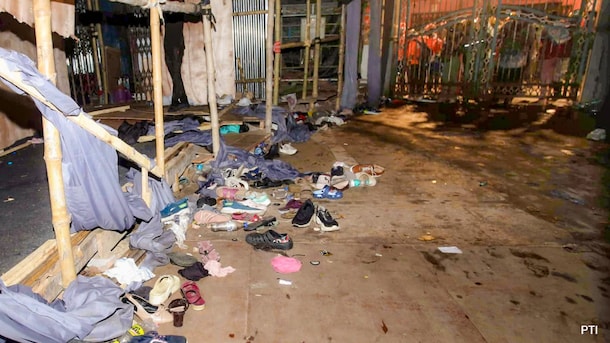
Blog: Kolkata Didn't Learn From 2015. Eleven Years Later, It Proved To Be Fatal
The City of Joy isn't a stranger to crowd control. Be it during Pujo or Christmas at Park Street, Eden Gardens cricket matches, or Derbies between Mohun Bagan and East Bengal. But during Pujo, the entire city is on alert.
-
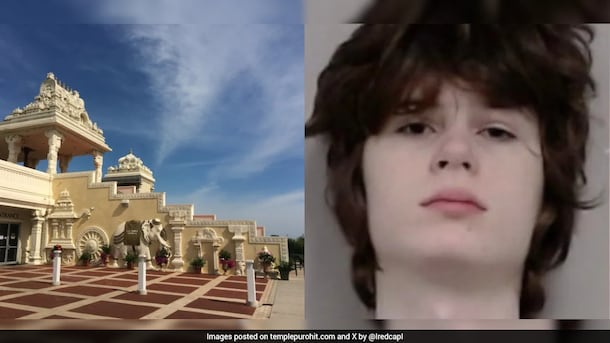
Opinion | Slurs, Threats, Now A Temple Attack Plot: When Did America Become So Hostile To Indians?
The rising tide of anti-India, anti-Hindu, and racist attacks serves as a stark reminder that economic prosperity does not automatically guarantee social immunity from bigotry.
-
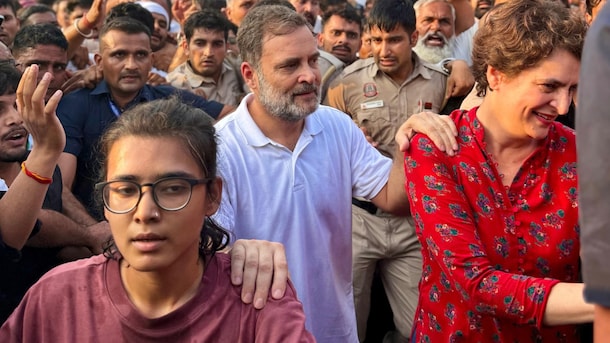
A Step Behind Neha Bora: What Rahul Gandhi's Gesture Says About Congress' Gen-Z Pitch
At INDIA bloc's march to Supreme Court, Rahul Gandhi placed himself a step behind two women, hands resting on their shoulders. One was his sister Priyanka. The one on his right was Neha Bora. Here's what the image means for the protest wave now, and for Rahul's politics in general.
-
Opinion | Imran Khan, And The Perils Of Having An 'Opinion' In Bollywood
The reality of the industry is quite grimy. More often than not, its inhabitants have been fairweather friends, happy to sing the praises of whoever is in a position of authority.
-
Exclusive: India's Food Safety Problem Goes Beyond Just Dirty Kitchens - By Tukaram Mundhe
On World Food Day, Maharashtra's Commissioner of Food Safety explains why instead of taking stopgap measures, the entire supply chain in India needs to be held accountable and made transparent.