Opinion | The Dangerous Logic Behind America's $1.25 Billion 'Mining' Deal With Pakistan
Rhetoric seems to have eclipsed the grim realities of Pakistan, once again.

When Pakistan's Field Marshal, General Asim Munir, presented a box of lustrous mineral samples to US President Donald Trump during his September visit to the White House, it became quite a spectacle - a token of shifting geopolitical directions. Munir's display of Pakistan's alleged mineral wealth has now been quickly followed by a commitment, with the Export-Import Bank of the United States (EXIM Bank) approving $1.25 billion in financing for the Reko Diq copper-gold mining project in Balochistan on December 10. This move crucially demonstrates one of America's most substantial economic engagements in Pakistan's critical mineral sector, a pivotal shift from its security-centric ties in the past.
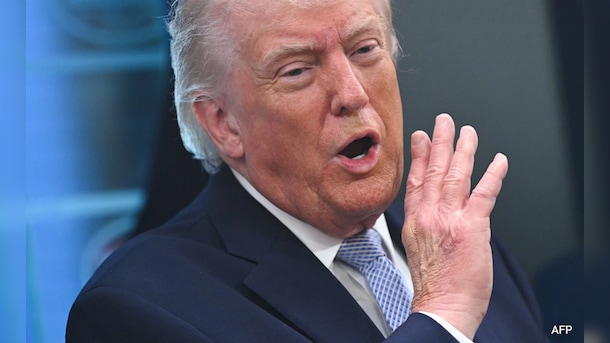
Donald Trump's sudden - and to many, surprising - embrace of Pakistan comes at a time when the India-US relationship remains fraught. While multiple factors have contributed to this shift, two stand out - Trump's increasingly transactional approach to India and Pakistan's well-timed lobbying efforts in Washington.
A 'Personal' Interest In Pak
Beyond the official strategic narrative, Trump's personal interest in Pakistan's minerals appears to be augmented by his close associates and family's direct involvement in related private sector ventures. Trump's instinct to treat diplomacy as business deals is, after all, widely established.
The conversation around Pakistan's mineral potential is often inflated by domestic and diplomatic rhetoric. For years, Pakistani leaders have cited the figure of $6 trillion in untapped critical mineral assets. However, this oft-repeated claim remains uncorroborated by internationally certified assessments, those required by global financial markets to determine a mine's economic viability. Much of Pakistan's resource base also faces significant infrastructural challenges and remains underdeveloped.
The substantial mineral wealth in Pakistan lies in gold and copper deposits, especially within the Reko Diq and Saindak mines in Chagai district of the largest Balochistan Province. Reko Diq, operated by Barrick Gold, is reported to contain billions of pounds of copper and millions of ounces of gold. While the company has reported plans to begin production by 2028, the timeline has been subjected to previous delays. This signals the complicated political and technical environment in which projects operate in Pakistan.
As the project progresses, the current excitement over the Reko Diq project will likely be dampened by the grim security realities of the location where the US intends to operate. Chagai, a district bordering Afghanistan and Iran, while less affected by insurgency compared to the southern coastal areas near Gwadar, does not remain immune to violence.
China's Not-So-Pretty Experience
The most lethal insurgent groups in the province, particularly the Balochistan Liberation Army (BLA) and the Balochistan Liberation Front (BLF), have an extensive operational presence in the province. The insurgency is rooted in deep grievances of political and economic marginalisation, compounded by resentment toward foreign-led economic projects. Chinese economic projects, in particular, are perceived by Baloch militants as tools of resource extraction benefiting the Punjabi-dominated Pakistani state. In that light, foreign projects and personnel have often been singled out as prime targets.
More recently, the security threat manifested in a suicide attack in Nokundi town of Chagai District in late November. The blast, carried out by a female suicide operative targeting the headquarters of a paramilitary force, occurred less than 50 kilometres from the Reko Diq and Saindak sites. The increasing use of female operatives in suicide blasts, a tactic previously employed by the BLA's Majeed Brigade, notably in the Karachi University bombing in 2022 that killed Chinese nationals, informs the expansion of the insurgency's operational scope. The timing and location of the incident should, therefore, be seen as a deliberate signal of the security challenges inherent in operating in the volatile province.
A Double Whammy For Pakistan
For Pakistan, its renewed relationship with the US presents a pleasant opening, at the moment. The primary benefit is, of course, the economic investment and securing a Western financial partner. Secondly, a critical gain for Pakistan lies in the potential for security support or grants to address militancy in the area; both Baloch groups and Islamist factions such as the Tehreek-e-Taliban Pakistan (TTP) are known to operate in the restive province. In the past, the US has been reluctant to support Islamabad against anti-Pakistan groups.
The Baloch separatists' anti-China sentiment is evidenced by repeated attacks against Chinese nationals working on the China-Pakistan Economic Corridor (CPEC) projects, particularly around Gwadar Port. The grievances among the Baloch community will make little distinction between the major foreign powers. The view that just like China, the US is a collaborator with the Pakistani state will likely make it a target of insurgent attacks. Akin to the pace of CPEC, major infrastructure and developmental projects, regardless of their designation as a national priority, will likely be protracted by heavy security challenges.
As the conversation around Pakistan's balancing act of two major powers grows, China's reaction to the US financing for Reko Diq is not one of panic or anxiety. This is rooted in Beijing's clear-eyed assessment of the relationship - China and Pakistan have a deep strategic, economic, and military relationship that transcends investment ties with the US.
As for India, any direct engagement with Pakistan's military, particularly if it leads to economic projects in sensitive regions, will be seen as strengthening the very establishment that New Delhi blames for regional instability. Nevertheless, given the unpredictable, transactional nature of Trump's foreign policy and fluid approach to strategic relations, India should maintain a wait-and-watch policy. Concurrently, New Delhi must continue to fortify its de-hyphenation policy with regard to Pakistan, insulating its bilateral ties with the US and other major powers from the hostile dynamics of New Delhi-Islamabad relations.
(Aishwaria Sonavane is a research analyst at the Takshashila Institution)
Disclaimer: These are the personal opinions of the author
-
Opinion | The Last Bet? What Trump's 'Mother Of All Bombs' Could Actually Do To Iran

Can an MOAB deliver a decisive blow to Iran that may force it to surrender immediately, as Japan did after Hiroshima and Nagasaki in World War 2?
-
Hit Songs, Empty Pockets: The Hidden Math Behind India's Viral Music Boom
Over 80,000 brands and five lakh creators in India make branded content. The opportunity is worth around Rs 1,500 crore.
-
Opinion | Great 'Exceptions': How The Oil India Was Attacked For Is The Oil Trump Now Seeks
A law written to punish the buyers of Russian oil was suspended by the US to protect a purchase of Russian oil. India spent fourteen months being lectured for less.
-
Opinion | Louis Vuitton Loot, Torched Cars: France Protests Have An Unlikely Beneficiary
It's an unbelievable moment. Crowds looting the most exclusive stores in Paris, including the famed Luis Vuitton. But what's behind this meltdown?
-
Blog: Kolkata Didn't Learn From 2015. Eleven Years Later, It Proved To Be Fatal
The City of Joy isn't a stranger to crowd control. Be it during Pujo or Christmas at Park Street, Eden Gardens cricket matches, or Derbies between Mohun Bagan and East Bengal. But during Pujo, the entire city is on alert.
-
Opinion | Slurs, Threats, Now A Temple Attack Plot: When Did America Become So Hostile To Indians?
The rising tide of anti-India, anti-Hindu, and racist attacks serves as a stark reminder that economic prosperity does not automatically guarantee social immunity from bigotry.
-
A Step Behind Neha Bora: What Rahul Gandhi's Gesture Says About Congress' Gen-Z Pitch
At INDIA bloc's march to Supreme Court, Rahul Gandhi placed himself a step behind two women, hands resting on their shoulders. One was his sister Priyanka. The one on his right was Neha Bora. Here's what the image means for the protest wave now, and for Rahul's politics in general.
-
Opinion | Imran Khan, And The Perils Of Having An 'Opinion' In Bollywood
The reality of the industry is quite grimy. More often than not, its inhabitants have been fairweather friends, happy to sing the praises of whoever is in a position of authority.
-
Exclusive: India's Food Safety Problem Goes Beyond Just Dirty Kitchens - By Tukaram Mundhe
On World Food Day, Maharashtra's Commissioner of Food Safety explains why instead of taking stopgap measures, the entire supply chain in India needs to be held accountable and made transparent.
-
Opinion | India Has Enough Coal. So Why Are Power Plants Running Short? A 76 Million 'Crunch'
As of October 5, as many as 82 of the 191 thermal plants monitored by the Central Electricity Authority were in the 'critical' category