Opinion | Why A TVK-NDA Alliance Is Just A BJP Fantasy
Politics is no stranger to unlikely alliances. But such "strange bedfellows" typically emerge after elections, when numbers dictate necessity.
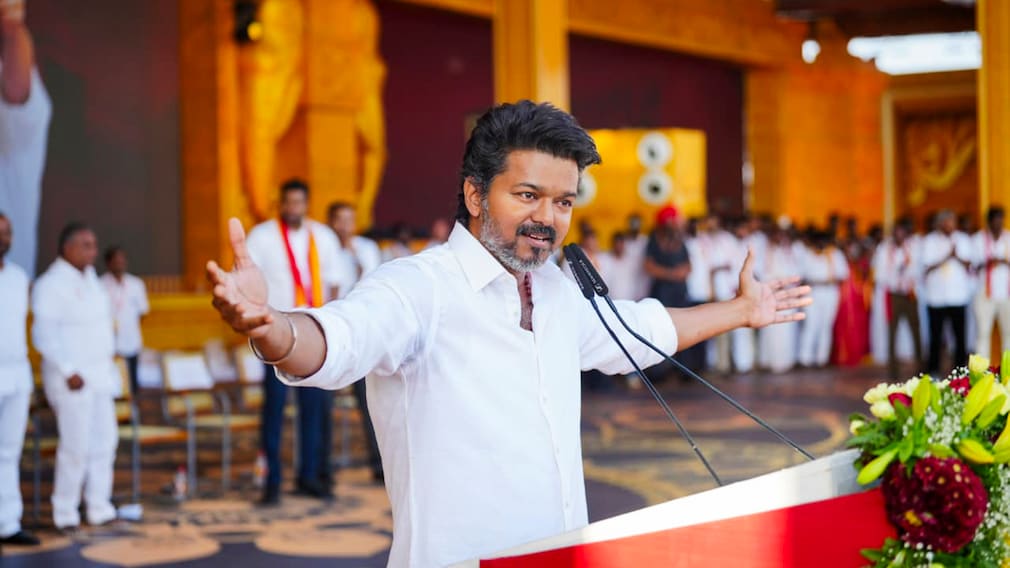
Over the past week, speculation around a possible alliance between Vijay's Tamilaga Vettri Kazhagam (TVK) and the Bharatiya Janata Party (BJP) has dominated the political chatter in Tamil Nadu. But even at first glance, the idea has always seemed more fantasy than feasible strategy.
The BJP has certainly done its part to keep the conversation alive. A noticeably softer stance towards Vijay following the Karur episode and repeated public statements about "keeping doors open" also pointed to a calibrated effort by the party. The transfer of the stampede case to the Central Bureau of Investigation (CBI) also led to the impression of Vijay being in the grip of the Centre.
It All Makes Sense...On Paper
The calculations are tempting. A consolidation of anti-DMK (Dravida Munnetra Kazhagam) votes - currently split between the TVK and the AIADMK (All India Anna Dravida Munnetra Kazhagam) - could, in theory, tilt the scales decisively. However, the leaders of the parties and their objectives mean that this could be a long shot, even if not an impossible one, pre-poll.
Start with the AIADMK. Under Edappadi K. Palaniswami, Leader of the Opposition and former Chief Minister, the party cannot afford to cede leadership. Doing so would be tantamount to political self-destruction. Tamil Nadu's electoral history has long been defined by a bipolar contest between the DMK and the AIADMK. To surrender that position is to risk irrelevance.
Then there is Vijay. His political appeal is built entirely around himself as the central figure - he is the leader voters are meant to rally behind. He has explicitly framed his campaign in those terms, even declaring that he is effectively "the candidate in all 234 constituencies". This is not the language of compromise. Vijay cannot play second fiddle - not to Palaniswami, and certainly not within a coalition led by the BJP. His politics demands primacy.
If these two factors explain why a TVK-AIADMK alliance has failed to materialise, the third obstacle is the BJP itself. Aligning with a national party carries electoral risks for Vijay, particularly among minority voters, who make up a significant share of Tamil Nadu's electorate. More importantly, such a move would hand the DMK a powerful narrative weapon - reinforcing its longstanding claim of being the sole defender of Tamil identity and state autonomy against the Centre.
These are not minor tactical disagreements; they are structural incompatibilities rooted in the core political identities of all three players.
Reality Is Much More Complex
Yes, surveys suggest that the TVK could command close to 20% of the vote. On paper, adding that to the NDA's base makes for a formidable base - perhaps even enough for a sweep. But elections are not spreadsheets. Ground realities are fluid, and voter behaviour rarely aligns neatly with hypothetical projections.
There is also growing speculation that the TVK could emerge as the principal challenger to the DMK, potentially displacing the AIADMK as the number-two force in the state. But this, too, remains uncertain. While Vijay's popularity is undeniable - arguably unmatched in Tamil Nadu today - translating star power into sustained electoral success is an entirely different challenge. Add to that the undercurrents of anti-incumbency against the DMK, and the electoral landscape becomes even more unpredictable.
Tamil Nadu And Pre-Poll Alliances
Of course, politics is no stranger to unlikely alliances. But such "strange bedfellows" typically emerge after elections, when numbers dictate necessity. Pre-poll alliances, especially in a state like Tamil Nadu, require ideological alignment, leadership clarity, and voter coherence, none of which exists in this case.
Much has been made of behind-the-scenes negotiations and of Palaniswami's refusal to budge on seat-sharing or leadership. But these are existential red lines, much more critical than mere negotiations.
The only theoretical glue that could bind these parties is the old adage: "the enemy of my enemy is my friend." Vijay sees the DMK as his primary adversary. So does the BJP. For the AIADMK, however, the priority is survival - not merely defeating the DMK, but retaining its own political relevance.
An Existential Dilemma For Palaniswami
For Palaniswami, the question is simple: what is the point of defeating the DMK if it only results in Vijay's ascent? His political future depends either on returning to power or, at the very least, remaining the principal opposition force. That imperative will shape every decision the AIADMK makes.
Could there still be informal, seat-level understandings? Possibly. Some strategists believe there may be quiet, tactical adjustments between the TVK and NDA candidates in select constituencies. But that falls far short of a formal alliance.
As the nomination deadline approaches, the contours of the election are becoming clearer. A dramatic realignment looks increasingly unlikely. Post-election scenarios may sure produce unexpected equations - especially in the event of a fractured mandate - but as things stand now, Tamil Nadu appears to be headed for a straightforward three-cornered contest between the DMK-led alliance, the NDA, and Vijay's TVK.
The idea of a TVK-NDA alliance makes for compelling headlines. In reality, it may end exactly there - at headlines.
(The author is Executive Editor, NDTV)
Disclaimer: These are the personal opinions of the author
-
Opinion | The Last Bet? What Trump's 'Mother Of All Bombs' Could Actually Do To Iran

Can an MOAB deliver a decisive blow to Iran that may force it to surrender immediately, as Japan did after Hiroshima and Nagasaki in World War 2?
-
Hit Songs, Empty Pockets: The Hidden Math Behind India's Viral Music Boom
Over 80,000 brands and five lakh creators in India make branded content. The opportunity is worth around Rs 1,500 crore.
-
Opinion | Great 'Exceptions': How The Oil India Was Attacked For Is The Oil Trump Now Seeks
A law written to punish the buyers of Russian oil was suspended by the US to protect a purchase of Russian oil. India spent fourteen months being lectured for less.
-
Opinion | Louis Vuitton Loot, Torched Cars: France Protests Have An Unlikely Beneficiary
It's an unbelievable moment. Crowds looting the most exclusive stores in Paris, including the famed Luis Vuitton. But what's behind this meltdown?
-
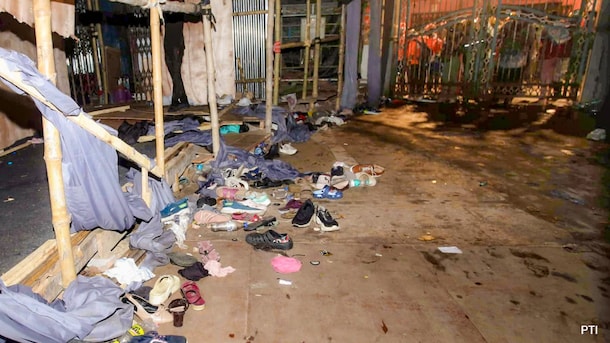
Blog: Kolkata Didn't Learn From 2015. Eleven Years Later, It Proved To Be Fatal
The City of Joy isn't a stranger to crowd control. Be it during Pujo or Christmas at Park Street, Eden Gardens cricket matches, or Derbies between Mohun Bagan and East Bengal. But during Pujo, the entire city is on alert.
-
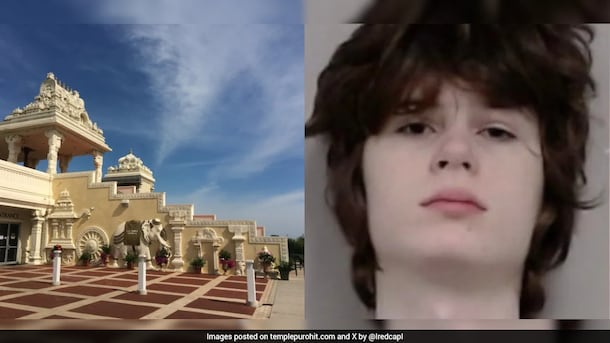
Opinion | Slurs, Threats, Now A Temple Attack Plot: When Did America Become So Hostile To Indians?
The rising tide of anti-India, anti-Hindu, and racist attacks serves as a stark reminder that economic prosperity does not automatically guarantee social immunity from bigotry.
-
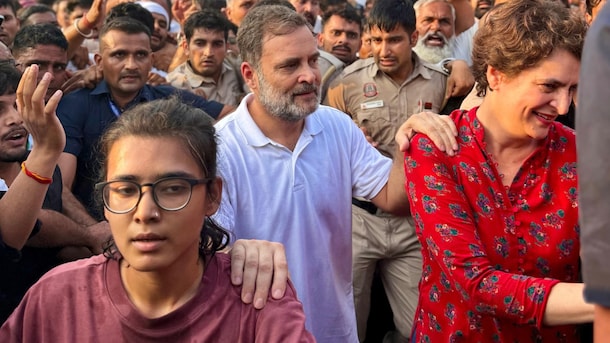
A Step Behind Neha Bora: What Rahul Gandhi's Gesture Says About Congress' Gen-Z Pitch
At INDIA bloc's march to Supreme Court, Rahul Gandhi placed himself a step behind two women, hands resting on their shoulders. One was his sister Priyanka. The one on his right was Neha Bora. Here's what the image means for the protest wave now, and for Rahul's politics in general.
-
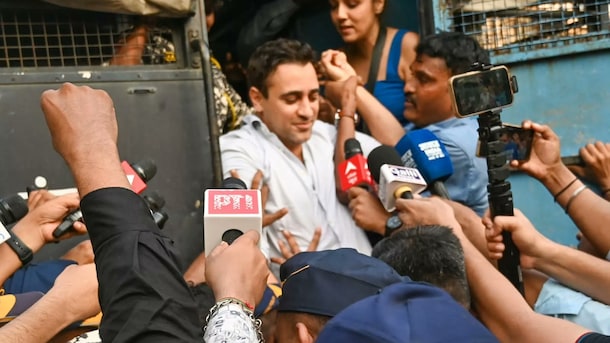
Opinion | Imran Khan, And The Perils Of Having An 'Opinion' In Bollywood
The reality of the industry is quite grimy. More often than not, its inhabitants have been fairweather friends, happy to sing the praises of whoever is in a position of authority.
-
Exclusive: India's Food Safety Problem Goes Beyond Just Dirty Kitchens - By Tukaram Mundhe
On World Food Day, Maharashtra's Commissioner of Food Safety explains why instead of taking stopgap measures, the entire supply chain in India needs to be held accountable and made transparent.
-
Opinion | India Has Enough Coal. So Why Are Power Plants Running Short? A 76 Million 'Crunch'
As of October 5, as many as 82 of the 191 thermal plants monitored by the Central Electricity Authority were in the 'critical' category