Opinion | The Vijay Paradox: How A 'Welfare State' Still Ended Up Dissatisfied
The TVK will have to go the extra mile to deliver the goods, over and above the DMK's slew of welfarist measures that were generally comfortable, but not enough. The voter simply said, 'Yeh Dil Maange More'.
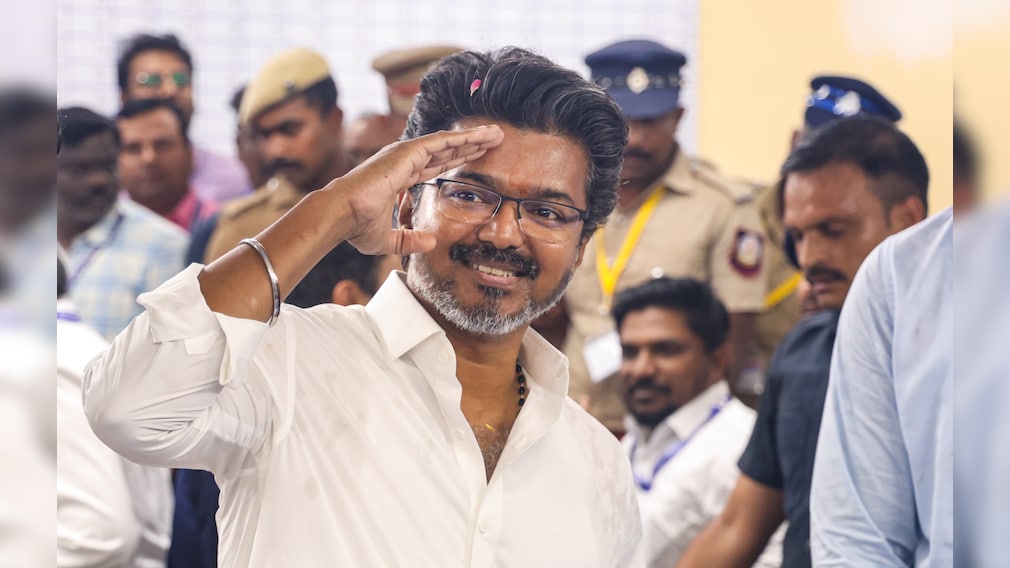
We know it is a case of anti-incumbency vote. We also know that Tamil Nadu is famous for turning movie stars into leading-edge politicians. But we need to look beyond these obvious cliches to figure out what the new normal is in the state's socio-economic dynamics. We need to deconstruct the much-discussed 'Gen Z' factor, under which a new generation of voters has catapulted into power a two-year-old toddler party in assembly elections.
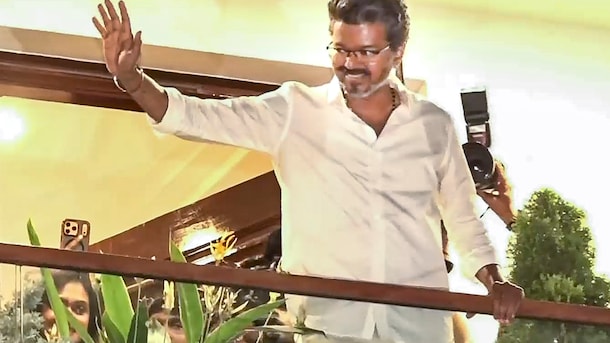
The huge mandate for C Joseph Vijay and his Tamilaga Vettri Kazhagam (TVK - or Tamil Nadu's Victory Organisation) is such that one has to see its timing, manner, context, and the demographics surrounding the vote that has given the party a majority only a few seats short of an absolute assembly mandate.
Reading the message of a mandate in an election, especially one in a parliamentary democracy, is akin to reading a tarot card that goes into the mystical ways of emotions, relationships, and intellect to predict moods and outcomes. In political terms, you could say that the TVK's surge is like a coming-of-age moment for Tamil Nadu. One is tempted to suggest that this may be the beginning of the end of feudal-era politics, in which kinships based on caste, community, or region are giving way to a broad-based mandate based not just on basic needs but on ambitions and aspirations.
As I told a panel discussion on NDTV, Vijay's arrival matches in political terms a Hindi punchline that went viral through an advertisement for Pepsi-Cola, popular when the movie star was rising in the 1990s: "Yeh dil maange more" (This heart wants more).
Look at the context. Tamil Nadu has seen about three decades of an IT revolution driven by computers, software, and the business process outsourcing (BPO) industries. There is a whole generation of digital natives in a state that has about 57 million voters, of which about 23 million - or about 25% - are below the age of 40. Smartphone penetration was about 92% a year ago. The state's population is around 85 million, while wireless subscriptions add up to 80 million. Clearly, the younger lot uses social media more. One humourist says elections in the last decade were about WhatsApp, while now they are about Instagram - where Vijay scores magnificently with a cult following. You are looking at a generation that has moved past a previous one that had to survive droughts, severe unemployment, distress migration, and security in relationships and marriages linked to blood relations and traditions.
As election day approached, packed special trains ferried hundreds of thousands of young voters from bustling industrial hubs like Chennai and Coimbatore to remote southern district towns and villages to cast their ballots. They carried not just the voter cards that enabled them to press a button on electronic voting machines (EVMs) but memories of conversations and memes on social media, and aspirations in the companies that they directly or indirectly worked with, such as Microsoft, Infosys Cognizant, Google and Amazon.
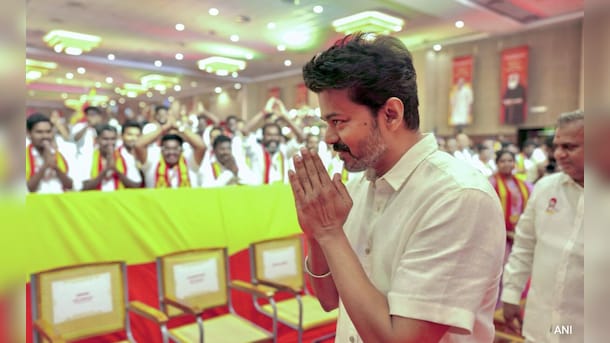
Read that with the fact that Vijay saluted the portrait of 'Periyar' Erode Venkatappa Ramasamy (EVR) Naicker as he started his political journey. Much is being made out by critics of EVR's controversial anti-Brahmin politics to suggest that the TVK is a break from the Dravida politics of the past because his party does not contain the word "Dravida", which has been a shorthand for non-Brahmin, Hindi-baiting, often atheistic core of the Dravida movement that EVR founded through his Justice Party in the British colonial era. It is true that Vijay is definitely shedding a lot of the Periyar-era baggage.
But what he has retained is EVR's rationalist core that questioned the existing social and political establishment. Status quo has not been fashionable in Tamil Nadu for nearly a century now.
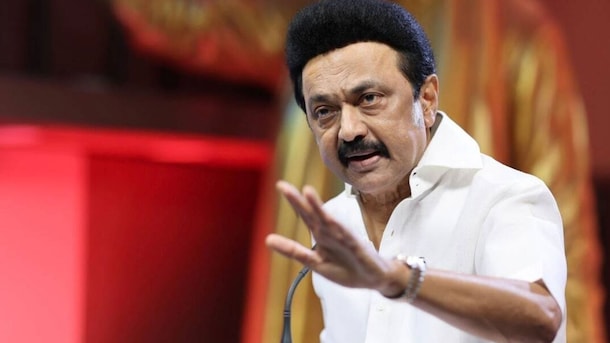
That questioning spirit has been repackaged for a Gen Z and/or Millennial bundle of aspirations, much of which will be tested in the coming days. The TVK has to go the extra mile to deliver the goods because the DMK (Dravida Munnetra Kazhagam) under MK Stalin had spread out a slew of welfarist and supportive measures and schemes spanning education, industry, startups, farming, and skill-building, which was good but not enough for the Gen Z voters who wanted more.
This could be because the game has shifted to a new normal, in which basic needs such as livelihoods, food, and clothing have been well taken care of. It is common to see in Tamil Nadu migrant workers from northern states like West Bengal and Bihar because locals are either better employed in jobs gained from higher education and migration to developed countries.
This new normal is one in which conversations have also gone beyond welfarist handouts and job opportunities. Dynastic politics, corruption, and an entrenched oligarchy of political families collectively signal to a new generation that they may have been short-changed. Liquor barons, sand mafia, illegal stone quarrying and rave parties are as much a part of social conversations as AI jobs.
Here is where the "Yeh dil maange more" appeal of a youthful, energetic Vijay kicks in. His rhetoric is embellished by punchlines and dance movements in which the gap between a political speech and a 30-second prime-time commercial gets blurred.
It is tempting to draw some corporate analogies to underline what Vijay's aspirational politics represent. Imagine a Sunder Pichai, born in Madurai and raised in Chennai, who now heads Google, one of the world's most towering technology companies. A Sundarapandian raised in Madurai cannot easily aspire for a similar leadership role in a DMK or even an AIADMK. Somewhere deep down, this helps Vijay's political promise.
Much like employees who seek stock options, leadership roles, and bonuses beyond the usual salary and an annual raise, the Gen Z voters of Tamil Nadu seem to have raised the bar. What happens next is something we need to watch carefully. After all, electoral politics is not a cola war.
(Madhavan Narayanan is a senior editor, writer and columnist with more than 30 years of experience, having worked for Reuters, The Economic Times, Business Standard, and Hindustan Times after starting out in the Times of India Group.
Disclaimer: These are the personal opinions of the author
-
Opinion | The Dam Breaks: Kerala Didn't Reject The Left, It Rejected What It Had Turned Into

As much as an anti-incumbency wave, the UDF's win is a sign of a 'moral correction' issued by voters against what the Left had become in its decade-long rule.
-
Opinion | Congress' Biggest Challenge For Kerala? Not Letting It Go Down The Karnataka Way
The Congress has to ensure this does not end up becoming another Rajasthan or Karnataka-like leadership tussle. In neighbouring Karnataka, the Congress finds itself split down the middle.
-
Opinion | Mamata Banerjee Brought Down The Left, But Never Quite Learnt From Its Fall
Mamata took over the Left's playbook 15 years ago, but failed to rework it to craft a new politics. In the end, the people of Bengal got more of the same: musclemen, corruption, and bad governance.
-
Opinion | MK Stalin: The Strongman Who Underestimated His Opponent - And Paid The Price
The DMK ecosystem kept dismissing Vijay's supporters as "tharkuris", that is, "idiots". It's this short-sightedness they are now paying for.
-
Left Behind? Left Not In Power In Any State For 1st Time In 50 Years
When the first elections were held in the country in 1951-52, it was the Communist Party of India that had the highest number of seats among Opposition parties in the Lok Sabha.
-
Opinion | Self-Inflicted Wounds? How Mamata Became The Architect Of Her Own Collapse
For a leader who built her identity on being the "sole protector" of Bengali sub-nationalism and the provider of a sprawling welfare state, the transition to the Opposition benches will be devastating.
-
Beaten In Their Backyards: Is This The End For Mamata Banerjee, MK Stalin?
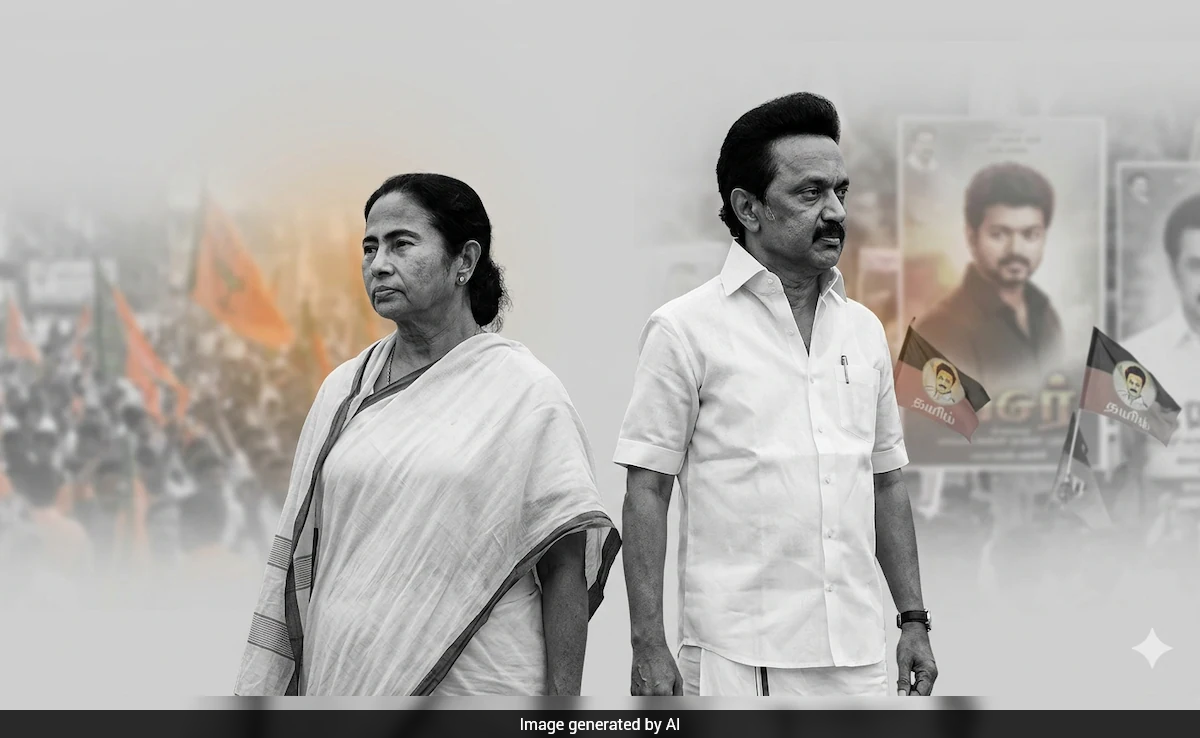
Mamata Banerjee and MK Stalin faced major defeats in their home states - the BJP made history by dominating Bengal and actor Vijay made history in Tamil Nadu with his successful cinema-to-politics jump.
-
Analysis | The V-Team: What Vijay's Game-Changing 'Cabinet Of Firsts' May Look Like
High-profile names such as KA Sengottaiyan and JCD Prabhakar are expected to provide the necessary experience ballast, while figures such as Aadhav Arjuna, KG Arunraj, and CTR Nirmal Kumar represent the new guard of strategic thinkers.
-
Opinion | What Our 'Liberals' Really Need To Understand About Bengal's Voters
When it comes to Bengal, 'liberal' standards tend to quickly bend. Principles are replaced by poetry. Accountability by abstraction. Cases that would provoke nationwide outrage elsewhere are treated with caution, sometimes even scepticism.