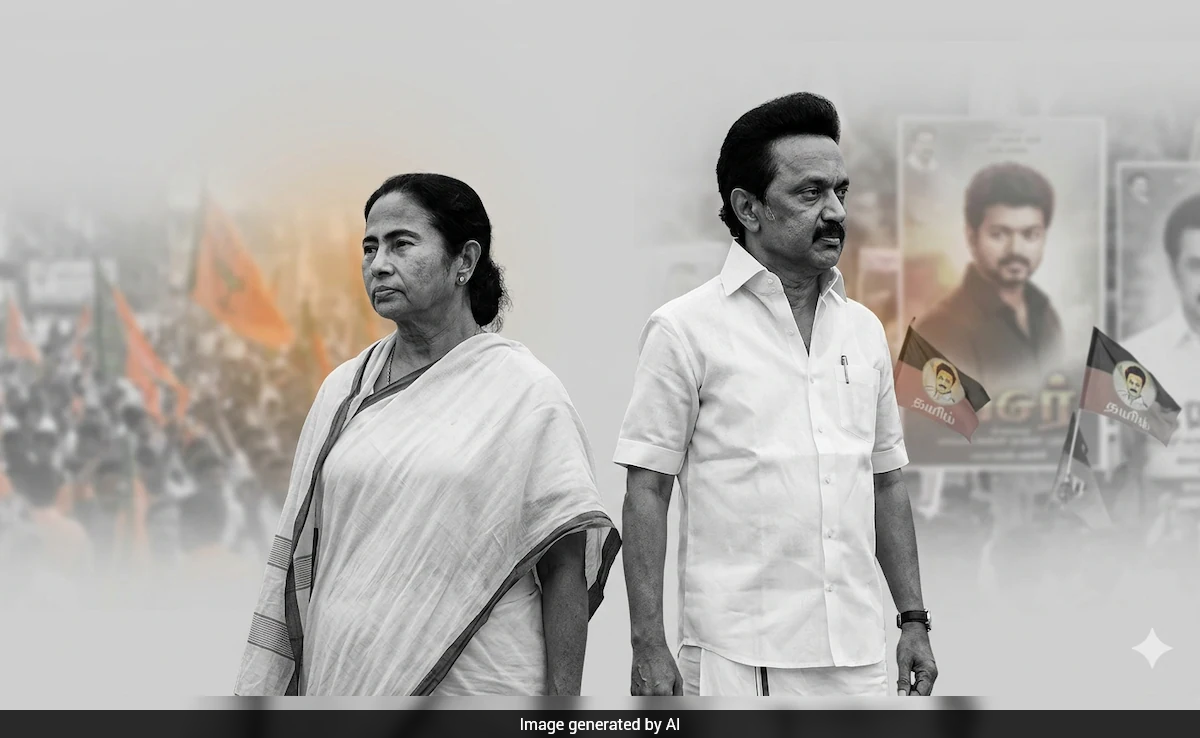
Opinion | MK Stalin: The Strongman Who Underestimated His Opponent - And Paid The Price
The DMK ecosystem kept dismissing Vijay's supporters as "tharkuris", that is, "idiots". It's this short-sightedness they are now paying for.
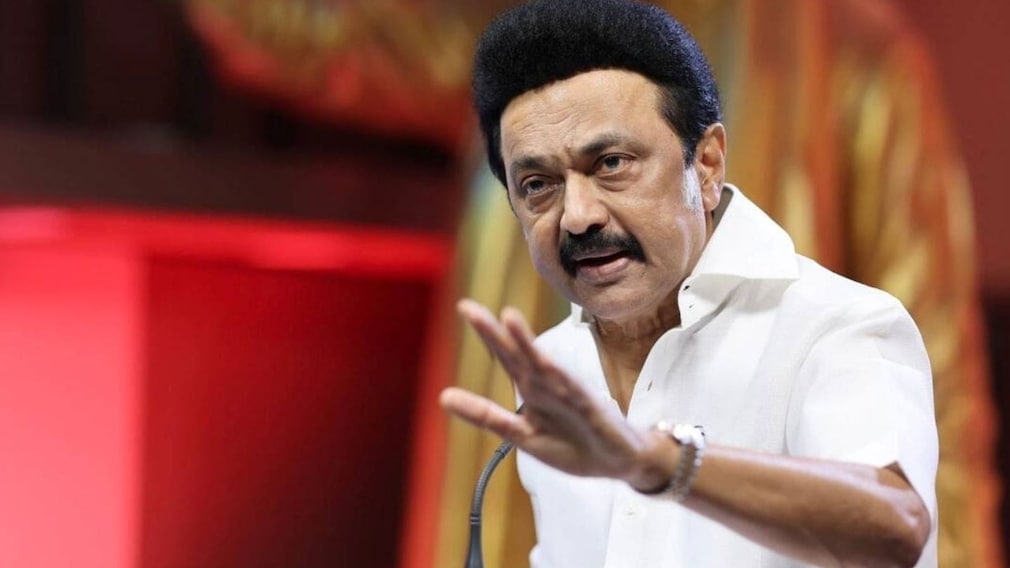
The year was 2011, when the DMK found itself demolished by the AIADMK in the Tamil Nadu assembly elections. That election, MK Stalin had moved from his traditional Thousand Lights seat to the newly created Kolathur constituency. Stalin was up against Saidai Duraisamy of the AIADMK, and it was a tense see-saw electoral battle as there were several delays during the counting process due to disputes over EVMs.
Meanwhile, at the Karunanidhi residence in Gopalapuram, the then DMK chief was anxious because Stalin's defeat would mean a rejection of the next-in-command of the party. It was only when Stalin finally scraped through by a margin of some 2,700-odd votes that his father heaved a sigh of relief, even though the party was voted out of power.
Kolathur Gives, Kolathur Takes
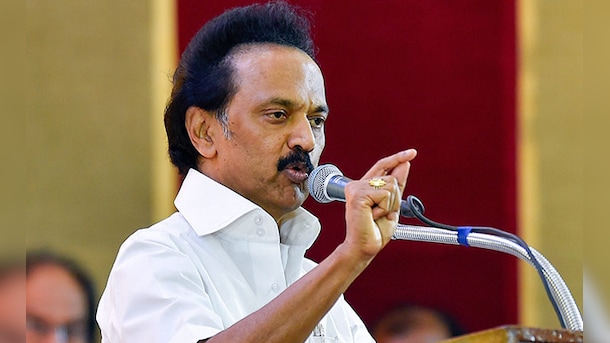
Fifteen years later, Kolathur gave Stalin heartache once again, keeping him worried through the course of Monday. This time, however, there was no good news at the end of the counting process. Stalin suffered the ignominy - like M Bhaktavatsalam, the last Congress chief minister of Tamil Nadu in 1967, and J Jayalalithaa in 1996 - of a sitting chief minister losing his own seat. VS Babu of the Tamilaga Vettri Kazhagam (TVK) defeated Stalin by 8,795 votes. Ironically, Babu is of the DMK DNA, having been a party MLA from Purasawalkam in 2006.
Stalin's defeat in Kolathur is more than just a lost seat; it is the collapse of the strongman image. During the election campaign, Stalin wore a black shirt, burnt copies of the delimitation bill and cast himself in the role of a Tamil Nadu warrior taking on the might of the Delhi Sultanate. Little did he realise that in his backyard in Kolathur, ensconced inside the DMK's Chennai fortress, the ground was slipping under his feet.
So, what went so horribly wrong for the DMK, considering that just three months ago, several opinion polls predicted that he would return as chief minister and achieve a feat even his celebrated father did not - that is, win a second consecutive term in office?
Udhayanidhi And Other Awkward Questions
The decision to elevate Udhayanidhi Stalin to the post of deputy Chief Minister presented the "dynastic politics" charge to his opponents on a platter. Therefore, when the DMK outsourced the job of attacking actor-turned-politician Vijay to the likes of Prakash Raj, it rang hollow. When Raj asked what work Vijay had done to deserve coming to power, people obviously asked the counter question - what did Udhayanidhi do to be elevated to the No. 2 position?
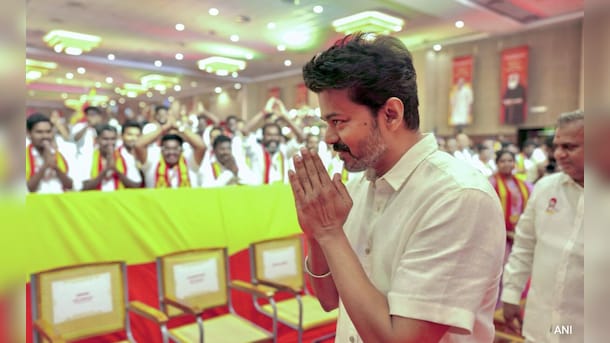
The second mistake Stalin made was to underestimate Vijay's star power. He treated Vijay as another Kamal Haasan who had just an urban appeal at best. When huge crowds thronged Vijay's roadshows, they were dismissed as crazy fans. By the time the DMK realised Vijay's aura transcended all divides - rural-urban, gender, caste, religion, social and economic status - enough holes had already been made in the DMK citadel.
Stalin thought the welfare template of the DMK regime was enough to make the electorate vote decisively for them for the fourth consecutive time since 2019. But what was different from the previous two Lok Sabha and one assembly election was the presence of a fresh political force - one that did not believe in bribing voters, one that did not mobilise crowds by paying money, or arrange tempos, liquor and biryani. The youth did not want freebies. They found the promise of an AI ministry, collateral-free education loans, anti-drug enforcement and start-up seed capital, more attractive. The Gen-Z gave the thumbs up to the empowerment promised by Vijay, rejecting Stalin's doles.
What really took away the women's vote from the DMK was the perception that the law and order situation was bad. The surge in drug-related crimes was the DMK's Achilles' heel. So, when Stalin spoke of the 'D-stock', referring to the Dravidian ideology of the party, critics lampooned it. For, 'D' in their book stood for 'drug culture', reportedly prevalent at every street corner.
Kill The Messenger
However, instead of remedying the situation, the DMK regime tried to control the narrative. Media management was put in place to ensure no negative news found its way into mainstream, digital and social media. Now, with the DMK out, many journalists are relieved that they will no longer be intimidated if they file a report or even put out a tweet critical of the government. There is a lesson there for ruling parties in other states in India.
In terms of strategy, the DMK used the template it had successfully employed and used in elections in the past. It kept trying to scare the voter, saying that AIADMK-BJP combine would mean that Chennai would be controlled by Delhi. But it was a line that no longer excited the voter because the voter had moved away from the DMK-AIADMK binary and started looking towards the new kid on the political block.
That Insurance Policy
When did it begin to look like Stalin was growing unsure about victory? When he went out of his way to include more than 20 parties in his alliance. The move was marketed as the trait of an 'accommodative' leader. It was not. It was an insurance policy the DMK was buying. In the end, the allies turned out to be paper tigers.
The choice of candidates was another. Take the example of Katpadi. While the DMK gave the ticket yet again to 87-year-old Durai Murugan (who lost), the TVK presented an alternative in the form of Dr M Sudhakar against him. The DMK ecosystem dismissed Vijay's supporters as ''tharkuris'' (idiots). But the fact of the matter was that several professionals with expertise in different fields have now won on TVK tickets.
In the revolving door of Tamil Nadu politics, Stalin is no stranger to defeat. But the latest one comes at a particularly inopportune time. A re-election would have meant passing the baton to his son, Udhayanidhi, during the course of the term. The Tamil Nadu assembly would now see two actor-turned-politicians facing off, Chief Minister Joseph Vijay vs Leader of Opposition Udhayanidhi Stalin.
Tamil Nadu is Cinema.
(The author is a senior journalist)
Disclaimer: These are the personal opinions of the author
-
Opinion | Mamata Banerjee Brought Down The Left, But Never Quite Learnt From Its Fall

Mamata took over the Left's playbook 15 years ago, but failed to rework it to craft a new politics. In the end, the people of Bengal got more of the same: musclemen, corruption, and bad governance.
-
Left Behind? Left Not In Power In Any State For 1st Time In 50 Years
When the first elections were held in the country in 1951-52, it was the Communist Party of India that had the highest number of seats among Opposition parties in the Lok Sabha.
-
Opinion | Self-Inflicted Wounds? How Mamata Became The Architect Of Her Own Collapse
For a leader who built her identity on being the "sole protector" of Bengali sub-nationalism and the provider of a sprawling welfare state, the transition to the Opposition benches will be devastating.
-
Beaten In Their Backyards: Is This The End For Mamata Banerjee, MK Stalin?
Mamata Banerjee and MK Stalin faced major defeats in their home states - the BJP made history by dominating Bengal and actor Vijay made history in Tamil Nadu with his successful cinema-to-politics jump.
-
Analysis | The V-Team: What Vijay's Game-Changing 'Cabinet Of Firsts' May Look Like
High-profile names such as KA Sengottaiyan and JCD Prabhakar are expected to provide the necessary experience ballast, while figures such as Aadhav Arjuna, KG Arunraj, and CTR Nirmal Kumar represent the new guard of strategic thinkers.
-
Opinion | What Our 'Liberals' Really Need To Understand About Bengal's Voters
When it comes to Bengal, 'liberal' standards tend to quickly bend. Principles are replaced by poetry. Accountability by abstraction. Cases that would provoke nationwide outrage elsewhere are treated with caution, sometimes even scepticism.
-
Anga-Banga-Kalinga: How BJP Completed Its Eastern India Arc
Election Results 2026: For the BJP, what is unfolding is the completion of a political corridor across the eastern flank of the country from Bihar to West Bengal to Odisha.
-
Opinion | The Rise Of Vijay, The Fall Of Stalin - And A Puzzle For Palaniswami
For the defeated Stalin, this verdict is almost a reminder of the misfortune that beset his father, who was brought down by Jayalalithaa in 1991, 2001 and 2011. Except that his father never lost an assembly seat.
-
Opinion | The 'Silent' Bengal Voter Was Always Keeping Score. Mamata Just Didn't See It
Bengal is not an easy audience. So if the saffron wave has broken in here, the deepest explanation is this: people did not vote only for a party. They voted for a different emotional contract.