Opinion | Sachin Pilot's Long Wait Is Over. Can Congress Finally Use Him?
The grand old party is now betting that the man who turned 'waiting' into a virtue can deliver Punjab
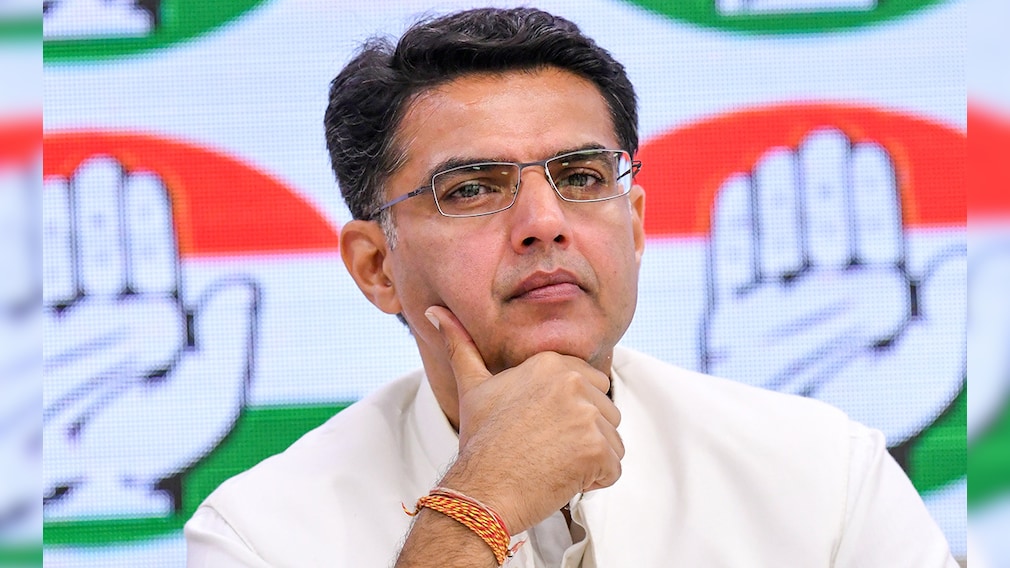
For a political party accustomed to managing competing ambitions, the latest organisational reshuffle of the Congress carries a message beyond the names on the appointment sheet. It is an attempt to answer a fundamental question confronting the grand old party: who can convert goodwill into votes, and who can rebuild an organisation where the Congress has lost its traditional advantage?
Among the changes announced by Congress President Mallikarjun Kharge, the appointment of Sachin Pilot as AICC General Secretary in-charge of Punjab stands out. It is not merely a state assignment, but a recognition of Pilot's endurance, acceptability, and ability to survive political turbulence without abandoning the party.
Within minutes of the announcement, Punjab Congress leaders across factions welcomed the decision. Former Chief Minister Charanjit Singh Channi, state Congress president Amarinder Singh Raja Warring Brar, and Gurdaspur MP Sukhjinder Singh Randhawa publicly congratulated Pilot. Randhawa's response was particularly noteworthy. He spoke about Pilot's experience, leadership, and connection with people - qualities that Punjab Congress workers believe the party needs urgently.
Patience As A Weapon
Sachin Pilot has a favourite expression that he often uses in extended conversations: "There are more ways than one to skin a cat". Pilot's political career has repeatedly demanded that quality.
In September 2022, many believed Sachin Pilot was finally within touching distance of becoming Rajasthan Chief Minister. Ashok Gehlot's attempt to contest the Congress presidential election had created an opening. The Congress leadership wanted a transition, and Pilot appeared to be the natural choice. But Rajasthan politics produced another twist.
Gehlot loyalists refused to attend the Congress Legislature Party meeting convened to discuss leadership change. The rebellion embarrassed the central leadership and effectively ended the possibility of an immediate transition. For many politicians, such a moment would have resulted in either rebellion or exit. Pilot chose neither.
He remained inside the Congress, continued organisational work, and maintained his relevance. That decision required political discipline.
The joke among sections of Congress supporters and other social groups where Pilot enjoys considerable goodwill is that he alone appeared to have faith in Rahul Gandhi's interpretation of Leo Tolstoy's famous line: "The two most powerful warriors are patience and time."
Rajesh Pilot's Legacy, To Sachin's Unfinished Journey
Sachin Pilot's story cannot be separated from the legacy of his father, Rajesh Pilot. The senior Pilot, a former Indian Air Force squadron leader, was among the most influential Congress leaders of his generation. As Minister of State for Home Affairs under Prime Minister PV Narasimha Rao, he developed a reputation for administrative ability and political confidence.
Old Congress hands still recall how Rajesh Pilot, operating from the Ministry of Home Affairs in South Block, commanded influence far beyond his formal position. He was one of those leaders who combined bureaucratic understanding with a mass political connect.
Sachin inherited several of those qualities: accessibility, quick wit, moderation, and an instinctive ability to connect across groups. His own first innings in politics was impressive. He became a Lok Sabha member at 26, became a Union Minister at 32, and barely a decade later, reached the position of Deputy Chief Minister of Rajasthan.
His appeal was not restricted to politics. In 2009, actor Abhishek Bachchan openly acknowledged that his look as politician Amol Arte in R. Balki's Paa was inspired partly by Sachin Pilot and Milind Deora.
The significance of that anecdote lies in what Pilot represented at the time: a new Congress politician, educated, urbane, articulate, and approachable. He looked like the face of a party attempting to bridge tradition and modernity.
Yet Pilot's image was never merely cosmetic. With an MBA from the University of Pennsylvania and experience as a Territorial Army officer, he developed a reputation inside the government as someone who could understand complex policy matters.
During his tenure as Minister for Corporate Affairs, his handling of files and policy discussions impressed senior ministers, including Prime Minister Manmohan Singh and Pranab Mukherjee, who at the time headed several Groups of Ministers. Bureaucrats found him prepared. Party workers found him accessible. The challenge was always political timing.
Punjab, in 2026, might finally provide an opportune time. Pilot's task will involve balancing competing leaders, rebuilding worker confidence, and preparing the party for a contest where no political formation can take victory for granted.
His success will also answer a larger question within Congress: whether patience, loyalty, and organisational commitment still have political value.
The Search For State-Level Warriors
The larger significance of the reshuffle lies in the Congress leadership's recognition of a political reality that has shaped Indian elections for decades: national narratives may win attention, but elections are ultimately won through state organisations, local leadership, and booth-level networks.
The Congress, historically, has succeeded when strong regional leaders complemented the central leadership rather than waiting indefinitely for directions from Delhi.
Indira Gandhi's Congress relied heavily on Chief Ministers and state-level satraps who could deliver elections. Rajiv Gandhi invested in a younger generation of leaders who represented a changing India. During Sonia Gandhi's presidency, figures such as Sheila Dikshit in Delhi, Madhavrao Scindia in Madhya Pradesh, Rajesh Pilot in Rajasthan, Pranab Mukherjee in West Bengal, and others played crucial roles in maintaining the party's political footprint.
The latest reshuffle suggests that Kharge and Rahul Gandhi are attempting a similar reconstruction: identifying leaders who can become political managers in difficult states rather than merely occupying organisational posts.
Randeep Singh Surjewala's responsibilities underline the Congress's attempt to deploy experienced organisational managers in politically demanding states. Surjewala has been one of the party's most visible national spokespersons and a key member of the Rahul Gandhi generation. Unlike many leaders who have remained confined to electoral politics, Surjewala has spent years managing communication, organisation, and political messaging.
His Gujarat assignment as General Secretary in-charge is among the most difficult challenges in Indian politics. The state has been the BJP's ideological and electoral fortress for over three decades. The task in Gujarat is, therefore, not about immediate electoral victory, but about rebuilding a party structure that has suffered from repeated defeats, strengthening district-level leadership, and creating a credible alternative narrative.
Surjewala's continuation as Karnataka in-charge is equally important. The state represents one of the Congress's biggest political assets before 2029. The party's 2023 victory under Siddaramaiah and DK Shivakumar ended the BJP's dominance in the southern state and demonstrated that the Congress could defeat the BJP in a direct contest.
The decision to send Sukhdeo Bhagat back to Chhattisgarh reflects the Congress's need for organisational rebuilding after its defeat. A tribal leader from Jharkhand with organisational experience, he represents the Congress's traditional strength among marginalised communities and grassroots workers. Bhagat's challenge will be to reconnect the organisation with the grassroots, rebuild morale among workers who experienced a sudden loss of power, and prepare the party for the long road back.
Maharashtra and Andhra Pradesh represent two very different Congress rebuilding challenges. Dr Sirivella Prasad's Maharashtra brief is about conversion: the Congress won 13 of the state's 48 Lok Sabha seats in 2024 as part of a strong Maha Vikas Aghadi performance, only to collapse to 16 seats in the Assembly election months later. Prasad, who was involved in the 2024 Maharashtra screening process, must understand that reversal, strengthen the party's own organisation within the MVA, and ensure Congress does not become merely the junior component of an alliance shaped by Uddhav Thackeray and Sharad Pawar.
PV Mohan's Andhra Pradesh assignment is closer to resurrection. Once a pillar of the UPA under YS Rajasekhara Reddy, the Congress was devastated by the 2014 bifurcation, Jagan Mohan Reddy's rise and the collapse of its old social coalition; it has failed to win a Lok Sabha or Assembly seat in the residual state since then. YS Sharmila has restored some visibility but not yet organisational heft. Mohan's task is to provide the structure behind the name - revive district units, reconnect with old Congress networks, identify younger leadership, and build a political case around issues such as bifurcation promises and special-category status.
At the other end of the spectrum, the appointment of Bhupesh Baghel as Congress in-charge of Assam is, in terms of optics at least, a demotion. The BJP has built a strong political base in the Northeast, particularly under Himanta Biswa Sarma's leadership. The Congress still retains pockets of influence but has struggled to match the BJP's organisational expansion. Baghel's assignment will require more than election management. He must rebuild confidence among workers, negotiate regional equations, and create a credible opposition narrative in a state where the Congress once had a dominant presence. But with Assam not being a priority state for the Congress right now, it could be a message that Baghel's most important days are behind him.
Posts Or Purpose?
The reshuffle, however, also leaves behind some uncomfortable questions.
Priyanka Gandhi Vadra continues as a general secretary without a clearly defined state responsibility. Given her public connect, campaign abilities, and symbolic importance within the Gandhi family, supporters argue that a more focused organisational role could help maximise her contribution.
Similarly, Mukul Wasnik, one of the Congress's most experienced organisational managers and a former Youth Congress president, continues as general secretary but without a prominent state charge. For a party that has often struggled with ambiguity in command structures, unclear responsibilities can create confusion both within the organisation and among workers.
The Congress's immediate challenge is not a shortage of leaders, but to convert them into accountable political managers.
The message from the reshuffle is clear: the party is no longer looking merely for representation or balance. It is looking for people who can deliver.
In the run-up to 2029, the Congress will need fewer passengers and more political generals.
(Rasheed Kidwai is an author, columnist, and conversation curator)
Disclaimer: These are the personal opinions of the author
-
Opinion | India Faces A BRICS Challenge. Can It Find A Way Through?

The Delhi Summit is being held at a challenging time. Such circumstances have not been encountered since the BRICS Summits started in 2009 in Russia
-
Opinion | Why The Jauhar Scene In Padmaavat Needs To Be Seen For What It Does
The practice of 'jauhar' was certainly abolished long ago. But that does not mean that it should be romanticised or glorified in mass culture.
-
Ground Report | Sunlight Is A Luxury In Delhi Students' Hub Where Building Collapse Killed 7
The civic infrastructure in Delhi's Satya Niketan hasn't caught up with the pace of development and appears to be crumbling under the weight of the influx of tenants and the greed of landlords.
-
Mayawati's Tough Love: Nephew Akash Anand Benched Again. What It Means For BSP
Akash Anand, the 31-year-old foreign-educated nephew of BSP boss Mayawati, finds himself out of favour, for at least the third time in three years, with the latest turn coming in Lucknow on September 3.
-
Blog | Why You Should Care Whether Schrodinger's Cat Is Dead Or Alive
Imagine going on a romantic Alpine getaway and returning with the equation that runs the modern world. The only snag: nobody can quite agree on what it says about reality.
-
Promote, Punish, Repeat: Decoding Mayawati's Akash Anand Puzzle
The development in the BSP is unprecedented. Never before has any Indian party elevated a family member and dumped him or her unceremoniously thrice within a span of three years.
-
Opinion | Nepal Needs $5 Billion To Rebuild. World's Climate Fund Doesn't Have Even 10% Of It
The fund caps support at USD 20 million per project; Nepal needs two hundred times that. And the board is not scheduled to sit until December.
-
Opinion | The Rise Of Indians In US Is Making Some Americans Very, Very Angry
A new report released yesterday shows how Indians are now among the biggest targets of racist attacks in America.
-
Opinion | China, Pak, A Stalled India Visit: How Signals From Bangladesh Are Getting Louder
A fighter jet deal with China, interest in Pakistan's military bloc, and a 'stalled' visit to India - all in a month. Bangladesh's drift is getting harder to ignore.
-
Opinion | Indus Treaty, Hague, And Pakistan's Endless Search For Leverage Over India
If the IWT survived all the trials in the past, it is because India's threshold of tolerance had been unusually high. But Pakistan must know that it can't arm-twist India through international pressure.