Opinion | Iran Requires a Regime Change, Just Not The Kind America Wants
Trump's dreams of effecting a regime change in Iran need to be considered along two factors related to the power structures within Iran, both of which US seems indifferent to.
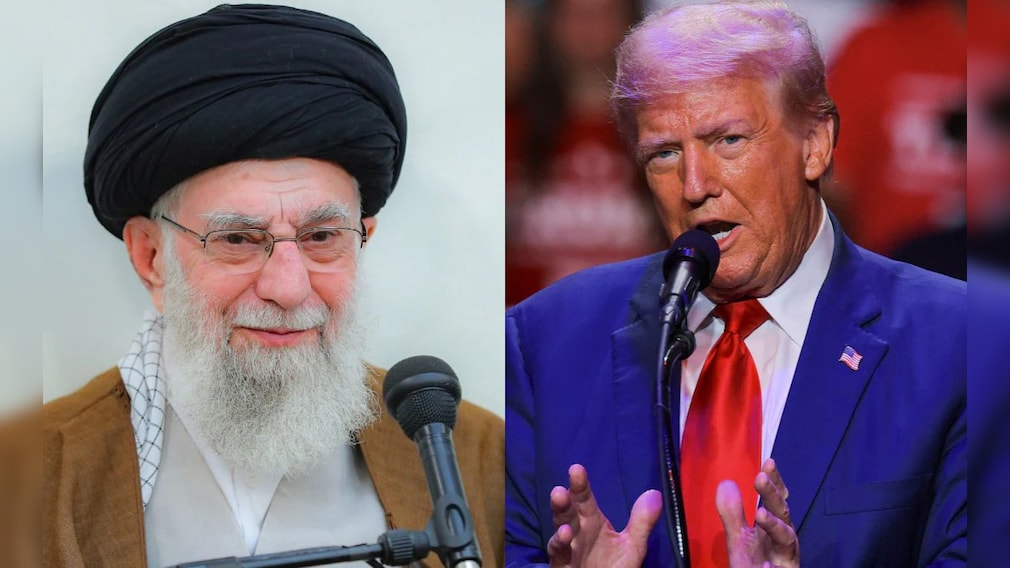
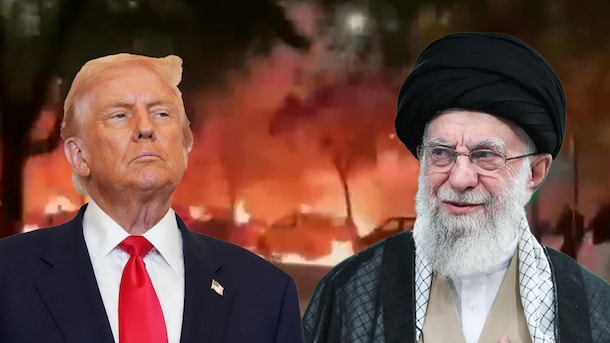
War clouds over Iran are getting darker. American military assets are finally in position, with America's aircraft carrier USS Abraham Lincoln arriving in the area over the past few days. President Donald Trump renewed his threat on January 28 when he said on his 'Truth Social' platform, "A massive Armada is heading to Iran.... Hopefully Iran will quickly "Come to the Table" and negotiate a fair and equitable deal - NO NUCLEAR WEAPONS...Time is running out."
Iran was quick to respond, shooting a warning that, if attacked, it would retaliate "like never before".
Why is the US issuing repeated threats of war against Iran? Why now? Can the US and Israel successfully trigger a regime change in Tehran? Questions abound, but answers are few.
The 'Lesson' US Wants To Teach
The US is trying to exploit the opportunity created by internal protests in Iran as an excuse to 'teach a lesson' to the Iranian regime and, hopefully, force a regime change. Reacting to the internal protests in Iran in December last year, triggered mostly over economic issues and the sudden collapse of the value of Rial, Trump declared that if Iran "shoots and violently kills peaceful protesters", the US would "come to their rescue", adding that America was "locked and loaded and ready to go". Later, as the protests spread, he even declared open support for the demonstrators, saying "Iranian Patriots, KEEP PROTESTING - TAKE OVER YOUR INSTITUTIONS!!!... HELP IS ON ITS WAY."
The "help", however, never arrived, and the Iranian regime, which had displayed tremendous restraint towards the protests in the initial days, cracked down heavily once it became clear that it was being supported and sponsored heavily by external agencies. The recovery of hundreds of Starlink telephones from within Iran also confirmed the involvement of American, and, possibly, Israeli assets.
A Costly Undertaking
Israel maintains that a regime change is the only option if the threat to its national security from Iran and its proxies has to be permanently eliminated. After its successful strikes over the nuclear sites in Iran during the twelve-day war in June 2025, the resolve has become even more stronger. There is a sense that now is the time when Iran is at its weakest and a strong strike, targeting the heart of the regime, coupled with an internal resistance, could do the job. Plus, intelligence assessments in the West point to three distinct threads, prompting Israel and the US to think of an early strike.
One, there is a massive restructuring and rebuild taking place within the Iranian armed forces. While the ballistic missile inventory is increasing in size and effectiveness, there is a definite push towards strengthening its air defences as well as speedy procurement of weapon platforms from Russia and China. Iran has taken a stand that it will no longer wait for a strike to take place and may instead launch a pre-emptive attack, if it's forced to. This shift in strategy was signalled by the Iran's Defence Council, a new body established by the Supreme National Security Council (SNSC) following the 12-day war in June 2025, which declared that "Within the framework of legitimate defence, the Islamic Republic of Iran does not confine itself to responding only after an action has occurred; it considers tangible signs of threat as part of the security equation." It added, "If a threat is detected, pre-emptive strikes will be carried out to neutralize it before the enemy can execute their plan."
Secondly, Iran's nuclear programme is still alive and is already being revived, at new sites. Iran still has around 400 kg of highly enriched Uranium (enriched up to 60%), well concealed. So, the nuclear threat still remains.
Thirdly, the regional dynamics are rapidly changing. Hezbollah is on a quiet revival. Iraq is getting Nouri Al-Maliki back as the Prime Minister, who has been favourably disposed to Iran in his previous terms. The regional players, including heavyweights such as Saudi Arabia, the UAE, Turkey, Qatar and Egypt, are not willing to support any military strike on Iran.
Learn From The Others
The whole argument of effecting a regime change in Iran needs to be considered along two factors. One is that Iran is not an autocratic single-leader regime such as Libya under Gaddafi, Iraq under Saddam Hussein, Syria under Assad or even Afghanistan under the Taliban. Even there, after toppling the dictators, the outcomes were hardly satisfying. Libya remains a fragmented country even 15 years after Gaddafi's assassination, Iraq has witnessed a painful transition and still cannot be called fully stabilised, Syria had to endure a 13-year civil war before Assad was finally toppled, and Afghanistan was a disgraceful chapter for American forces.
Secondly, unlike the countries mentioned above, Iran has a well-established structure of governance and power. Although the Supreme Leader exercises ultimate authority, there are layers within layers, all interwoven so closely that merely eliminating the Supreme Leader is unlikely to bring about a regime change.
A Complex Web Of Power
A brief overview of the various constitutional arrangements within Iran may offer some clues. Iran's constitution vests the highest powers with the Supreme Leader. The Supreme leader is assisted and advised by several other constitutional bodies in executing various functions of the constitution. A candidate fighting for the post of President is cleared to fight the election by a 'Guardian Council'. This council, in turn, consists of 12 members, six clerics directly appointed by the Supreme Leader, and six jurists nominated by the Judiciary. The Head of Judiciary is, however, appointed by the Supreme Leader. Finally, the Supreme Leader himself is appointed by an 'Assembly of Experts', a body of 86 members, all of them clerics. And who appoints the Assembly of Experts? Direct elections, with candidates being cleared by the Guardian Council. So, the supposed highest constitutional body - the Assembly of Experts, which appoints the Supreme Leader - constitutes members whose candidature is cleared by the Guardian Council, which in turn has its members directly or indirectly appointed by the Supreme Leader.
Such a complex web of constitutional bodies is fairly unique in the world. It not only gives the Supreme Leader the ultimate say in everything but also explains how Iran's well-spread and distributed power structure makes a regime change extremely difficult. When the Islamic Revolutionary Guard Corps (IRGC) is added to the mix, the challenge becomes even more formidable. For, the IRGC is the only paramilitary force in the world that has its own army, navy, air force and a missile force. Its numbers are often shrouded in secrecy, but estimates suggest that it is much larger than the Iranian Armed Forces. And, most importantly, it swears its allegiance only to the Supreme Leader.
Change Within The Regime
Responding to a question recently about who would take over Iran if the Supreme Leader goes, US Secretary of State Marcio Rubio was quoted as saying, "No one knows who would take over. So, I don't think anyone can give you a simple answer as to what happens next in Iran if the Supreme Leader and the regime were to fall, other than the hope that there would be some ability to have somebody within their systems, that you could work towards a similar transition."
It is clearly evident that the US is unsure of the outcome of any military operation. It knows that a fractured and almost non-existent political opposition in Iran, coupled with the IRGC, Iranian armed Forces and a police body still loyal to the regime, poses an extremely difficult situation. Plus, the likelihood of some Iranian missiles escaping the air defence umbrella and causing damage and casualties to American bases and in Israel is not an acceptable outcome, given their low threshold of tolerance to casualties from 'away wars'.
What is the option then? For Iran as well as the US and Israel, the more viable option is to negotiate a change within the regime. The current Supreme Leader has been in power since 1989 and is now old and ailing at 86 years of age. In the past, there have been frequent reports of his deteriorating health. During the twelve-day war in June 2025, there were reports that he had already nominated his successor lest he be assassinated. Therefore, it is not a question of 'if' but 'when' the succession will take place. For Iran and the US, this is a possible off-ramp from the heightened tensions.
The earlier heir to the throne, the Late President Ebrahim Raisi, was seen as a protege of the Supreme Leader and tipped by many to take over as the Supreme Leader after Ali Hosseini Khamenei. However, his death in a plane crash in May 2024 has upset the plans. In the current circumstances, it is likely that a younger leader may take over the reins and the personal animosity between the current Supreme Leader Ali Hosseini Khamenei may give way to a more pragmatic and modern relationship. Also, after 36 years of one template, a new leader with fresh and new ideas may usher in the critical economic and social reforms so badly required in Iran.
Is US Delusional?
The threat of war is unlikely to draw down soon. With the huge military buildup, it will be very difficult for American forces to thin out without a viable 'off-ramp'. With all major countries, including Saudi Arabia, the UAE and others refusing the use of their airspace for any military operation against Iran, the US may find it difficult not only to launch the initial strikes with total freedom but also to sustain the momentum thereafter. Also, Turkey is not only mediating talks but has, in fact, announced its support for Iran in case of any military threat. Hezbollah Secretary General Sheikh Naim Qassem as well as the Supreme Islamic Shia Council of Lebanon also backed the Iranian regime as they addressed a solidarity rally in Dahiyeh recently.
Trump's approach rests on the assumption that an overwhelming military action targeting the leadership, infrastructure and critical assets can reshape Iran's political order. But with only a few countries ready to support it, a full-fledged war may result in chaos, instability and unacceptable casualties to Israel and the US. For the US, this could end up as yet another example of strategic overreach like Afghanistan. Iran cannot be defeated only from the air. If US-led forces could not overpower Afghanistan despite 20 years of unhindered operations, then Iran is definitely a much harder nut to crack.
Israel is also looking at removing the final hurdle. With the last hostage having been recovered from Gaza on January 26, Israeli PM Benjamin Netanyahu has fulfilled one of the major goals of the Gaza war. Given the elections slated for later in the year, Israel would not like to let go of this opportunity to settle the Iran question once and for all.
Yes, there is a regime change required in Iran, but a change within the regime is more practical. The US needs to accept that reality, and recalibrate.
(The author is a Foreign Policy Expert and a Senior Research Consultant at Chintan Research Foundation, New Delhi)
Disclaimer: These are the personal opinions of the author
-
Opinion | Beyond Ajit Pawar: What Happens To Sharad Pawar's 'Succession' Plan Now?

If Pawar fails to produce one last rabbit from his hat to revive his party after the massive loss of Ajit Pawar, the BJP juggernaut is bound to move in to occupy spaces vacated by the NCP.
-
Opinion | Ajit Pawar: The Politician Who Didn't Pretend
Ajit Pawar bent over backwards to be in power; when there, he commandeered it to work for the public while helping his party, of course.
-
NDTV Exclusive: The Hunters Of Lyman - Inside Ukraine's Deadliest Drone Unit
In an exhaustive interview with NDTV, drone pilots and operators from Ukraine's Signum Batallion go into details about drone warfare and what happens on the frontlines.
-
Ten Minutes From Kanpur, The Plane Crash That Killed Madhavrao Scindia
On September 30, 2001, the Congress lost one of its brightest leaders, Madhavrao Scindia, in a plane crash 10 minutes from Kanpur
-
Ajit Pawar, The No-Nonsense 'Dada' Of Maharashtra Politics
A seasoned politician, Ajit Pawar never hid his ambition he wanted to become Chief Minister of Maharashtra. Only, he never realised that dream, falling a step short an incredible six times.
-
Blog | "I'll Be Chief Minister, You'll See": The Many Dreams Of Ajit Pawar
Ajit Pawar, unlike most other politicians who mask their pursuit of power with pious claims of 'public service', wore his ambition on his sleeve.
-
Opinion | The Shashi Tharoor Congress - And Rahul Gandhi - Can't Quite Understand
The Congress has historically struggled to accommodate autonomous power centres that do not derive legitimacy from its central leadership structure. Placed against this historical arc, Tharoor's predicament acquires sharper relief.
-
Aircraft Carriers And Fighter Jets: US Preps For Iran Attack, Israel Watches
Trump has repeatedly threatened military action against Iran over the protesters' deaths, even claiming American pressure had forced Iran to cancel plans to execute thousands of people.
-
Bangladesh Planning New Barrage On Padma River As Farrakka Talks Stall
The Bangladesh Water Development Board (BWDB) is now preparing to implement the long-delayed Padma Barrage project at a cost of 50,443.64 crore Taka.
-
Beyond Ikkis, Border 2 - The Lesser-Known Story Of A Two-Time War Veteran
Directed by Sriram Raghavan, Ikkis (meaning 21) focuses on the life of Second Lieutenant Arun Khetarpal of The Poona Horse.