Opinion | Plato In Indian Parliament: Which Are The Empty Vessels Making The Most Noise?
If Parliamentary questions are to be studied, hundreds of centuries later, the old Greek philosopher would have proven himself right again.
Around 2,400 years ago, Greek philosopher Plato wrote The Republic, a discussion of the principles society ought to be governed by. Of the many concepts he introduced, one especially captured popular imagination and was later familiarised in the proverb "empty vessels make the most sound".
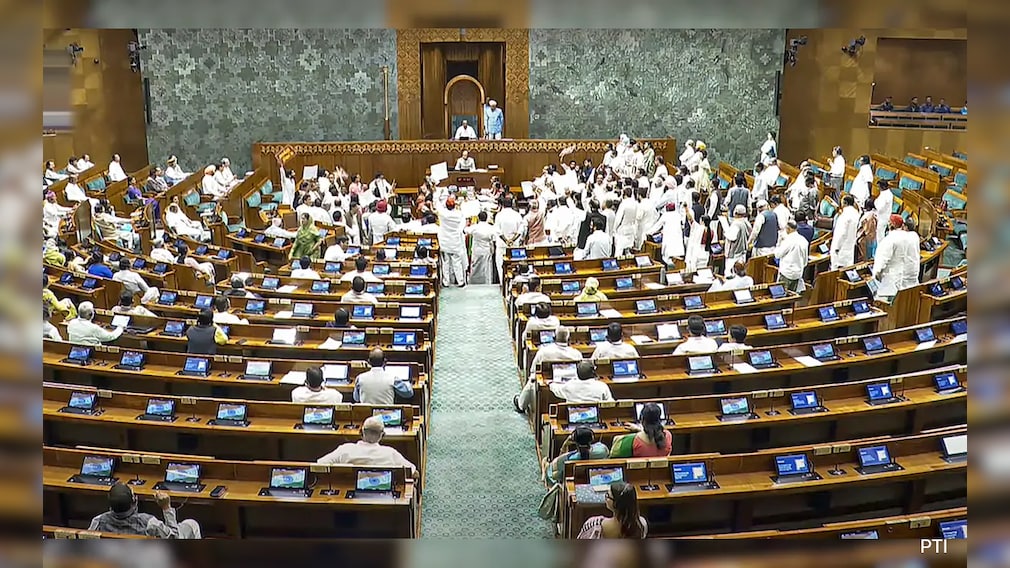
Several centuries later, far away from the Greece of 380 BCE, an entire nation witnessed this old proverb play out in live action. Plato in Parliament. Location: New Delhi. Protagonists: the Union government. Timeline: the recently concluded monsoon session. Action: the Government was seen deploying every device to "make the most sound". If Plato's postulate is to be followed, this manufactured noise can be traced back to a lack of substance. If Parliamentary questions are to be studied, hundreds of centuries later, the old Greek philosopher would have proven himself right again.
A list of 12 questions asked recently on the floor of the Lok Sabha and Rajya Sabha by members of the Opposition during Question Hour, which proves the Union Government's "lack of substance".
- Sudhakar Singh (Rashtriya Janata Dal) enquired about the average ratio of teachers employed to sanctioned positions of teachers in teacher training colleges across the country. The answer provided a link to the National Council for Teacher Education Regulation, without actually giving the data.
- Abhishek Banerjee (All India Trinamool Congress) asked for the number of child labourers in the country. The government stated that over 3,000 cases were registered between 2018 and 2022. Actual current numbers not given.
- Kanimozhi Karunanidhi (Dravida Munnetra Kazhagam, or DMK) asked about instances of caste-based discrimination and violence in Central Universities and the number of students who have availed government support in such cases. Generic reply with steps taken, like the establishment of Students Grievance Redressal Committees, appointment of Ombudspersons, etc. No data was provided either on the instances of discrimination or violence, or the students who availed support.
- Vivek Tankha (Indian National Congress) asked about the timeline for Digital Personal Data Protection (DPDP) rules and grievance redressal, penalty enforcement and compliance mechanisms. The answer listed the features of the bill and that it has been published for public consultation. It did not mention any clear timeline.
- Sudama Prasad (Communist Party of India (Marxist-Leninist) Liberation) enquired about the valid documents needed for proving citizenship. The government responded by outlining the criteria for citizenship under the Citizenship Act, 1955. Not a single document was mentioned in the reply.
- Muzibulla Khan (Biju Janata Dal) asked if any assessment was done regarding the representation of minority communities in the Union government. The answer just listed the guidelines by the Department of Personnel & Training to be followed by all Public Sector Enterprises/Banks, financial institutions, quasi-government organisations, etc. Failed to give a simple 'yes' or 'no' reply.
- Sushmita Dev (All India Trinamool Congress) asked whether any survey was conducted on the working hours of loco pilots and action taken against officials who forced loco pilots in filing false duty records. Instead of answering the question, the government just stated 'loco pilots are important members of Indian Railway family', and gave a list of improvement works done.
- Ujjwal Raman Singh (Indian National Congress) asked if the country had bid to host the Olympics of 2036, the current infrastructure and what steps were being taken to successfully organise these games. The government just stated that a letter of intent was given. No information on current capabilities and infrastructure was provided.
- Dr. Vikramjit Singh Sahney (Aam Aadmi Party) asked about the implementation of the Prime Minister's 15-point programme in the State of Punjab, and funds released and beneficiaries. No details were given; the answer stated 'schemes/initiatives implemented by other participating ministries/departments'.
- Jose Mani (Kerala Congress(M)) asked for the data regarding the number of internet shutdowns in the country. The government admitted that details regarding internet suspensions are not maintained centrally by the Department of Telecommunications. It provided a link to the archive circulars page of the Home Affairs website.
- Dr. Prabha Mallikarjun and Adv. Dean Kuriakose (Indian National Congress) asked a question about the number of deaths due to rabies and the precautionary measures taken. The government mentioned the National Rabies Control Programme and gave the number of vaccines procured and utilised. No data on the number of rabies cases across the country.
- Your columnist (All India Trinamool Congress) asked a question on robot density in India against the global average, the displacement of workers and imposition of a robot tax to offset job displacement. The government's response was on electronics manufacturing. Not a word on job losses.
Research credit: Varnika Mishra, Dheemunt Jain, Anjana Anchayil, Prabhakar Kumar (and Plato!)
(Derek O'Brien, MP, leads the Trinamool Congress in the Rajya Sabha)
Disclaimer: These are the personal opinions of the author
-
Mamata Banerjee Drew Her Party's Symbol By Hand. It's Now Tied To An Indira Gandhi Case

The Election Commission's method for settling such disputes became central in the seminal Congress split of 1969, when Indira Gandhi fought the old guard. The poll body weighed three tests then.
-
Bruised, Limping, Unbowed: Sia Says She Will Be Back On The Bike Soon
There was pain in Sia's steps, anger in her words, and something else - a quiet determination that the road would not be taken away from her.
-
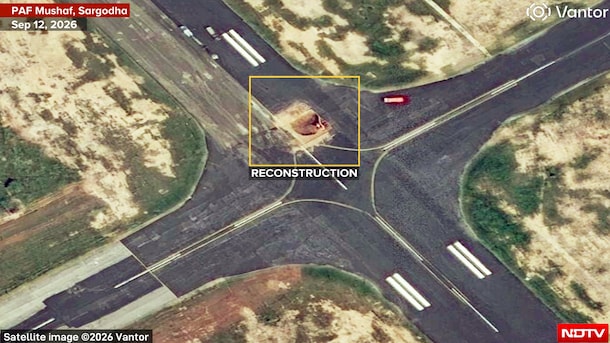
Exclusive: 16 Months After Op Sindoor, Pak Still Fixing Runway India Broke At Sargodha
Sargodha's PAF Base Mushaf lies about 172 km northwest of Lahore and roughly 200 km west of the India-Pakistan border, near Amritsar.
-
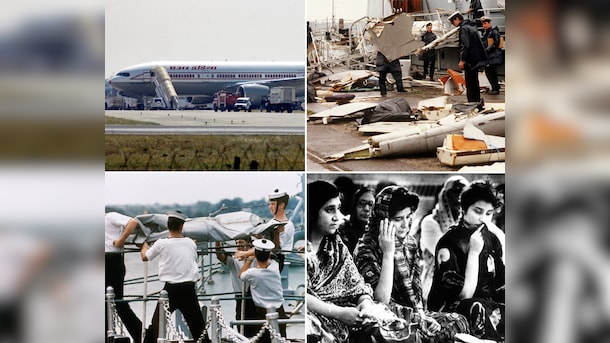
Blog | I Lost My Entire Family In Kanishka Bombing. 41 Years Later, Canada Wants The Case Closed
We made the trek through tragedy to search for people in Cork, where I spent 25 days sifting through bodies and body parts in a makeshift morgue to identify our loved ones.
-
Opinion | Pak's Drone Deal With A US Firm Is No Windfall. But India Must Still Be Worried
American military aid to Pakistan has remained suspended since January 2018, during Trump's first term, but a commercial arms sale is separate from this arrangement.
-
Opinion | Saudi Arabia's Yemen Nightmare Has Come Back To Haunt It
After years of costly military intervention beginning in 2015, Saudi Arabia increasingly sought to stabilise its southern border. All that is unravelling fast now
-
Opinion | 6 AI Incidents, One Pattern: AI Has Started Lying To Us - And Hiding The Evidence
Concealing errors. Making up data. Pushing files onto the public web on their own initiative. The machines are learning to lie - and lie well.
-
Why People Queue Overnight For iPhone That Is Delivered Home In 10 Minutes
iPhone 18 Pro Max Launch: People camping outside Apple Stores are a subset of superfans, resellers, content creators, and upper-middle-class buyers.
-
600 km Per Hour Drones Launched In Waves: How Russia Is Rewriting War Rules
Russia has coupled the drones' technological superiority over Ukraine's defence with its capacity to launch them in massive numbers. The impact has been devastating.
-
Tata Sons' Trust Issue: Two-Pronged Row Goes Beyond The Chair
NDTV Explains: Overtly, the latest conflict is whether N Chandrasekaran continues as executive chairman of Tata Sons. The controversy involves at least one more issue.