






The minute Suryakumar Yadav and his team decided not to shake hands with their Pakistani counterparts in the Asia Cup in September last year, it was clear that something had changed irrevocably. On-field relations between the two teams would perhaps never be the same again. The no-handshake policy now seems set in stone, including for the women cricketers and the junior players. In the ongoing ICC U-19 World Cup in Zimbabwe, the Indian and Pakistan captains didn't shake hands after the toss in their Super Six match. For many, that is unfortunate. For many others, it's the way it should be. In fact, many Indian fans would actually be happy that Pakistan have decided to boycott their group stage match in the upcoming men's T20 World Cup, because often the majority sentiment in India is, “We shouldn't play with them at all.”
Again, cricket is the main loser here.
When It All Started
That sentiment moulded itself into reality in 2013. That was the last time India and Pakistan played bilateral cricket (Pakistan's 2012-13 white-ball tour of India, which featured two T20Is and three ODIs, was their last bilateral engagement). Though the two teams have been playing in multi-nation tournaments organised by the ICC or the Asian Cricket Council (ACC) since then, another big bone of contention over multiple tournaments has been where they should play - or rather not play - when the tournament is being hosted by either country. That problem was also solved, at least till 2027, when a tripartite agreement was signed stating that India and Pakistan would meet only on neutral ground to play cricket for ICC events. And in that context, the fact that Sri Lanka was chosen as a co-host with India for the next edition of the men's T20 World Cup was fortuitous.
Now, Pakistan are on the verge of breaking that agreement. But what exactly is the endgame here?
It's unfortunate from a cricketing and fan perspective, but Bangladesh are not going to be brought back into the World Cup fold for this edition, Scotland have officially replaced the Bangla Tigers, and no other cricket Board has expressed dissatisfaction. No one else, except for Pakistan. One does wonder if this has anything to do with the fact that after Sheikh Hasina was forced to resign, flee Bangladesh and take refuge in India, relations between Pakistan and its former eastern wing, Bangladesh, improved, while those between Bangladesh and India were strained. At the ICC meeting that was called to discuss the Bangladesh situation, the Pakistan Cricket Board (PCB) was the only full-member Board that backed Bangladesh's demand to play their matches at a neutral venue - Sri Lanka. What most people understood was that the demand was a problematic one, mainly because of the timing. But there were other factors as well.
The Reality Of This 'Protest'
No official reason has been given for the decision made by the Pakistan government not to allow their team to play against India. But it's clear as day that Pakistan have decided to “boycott” the match with India to disrupt things. One of their biggest grievances has been that India is being given “preferential treatment” because their demands of not travelling to Pakistan for global tournaments and playing in neutral venues have been entertained by the ICC, while those of Bangladesh recently were not. This approach completely overlooks the nuances. Even the most apolitical cricket fan in India would probably be of the opinion that it's downright strange to be playing cricket in a country that India almost went into a full-scale war with recently, after the Pahalgam attack. A neutral venue for all India-Pakistan matches makes the most amount of sense. And as far as the recent Bangladesh fiasco is concerned, there were no credible or verifiable threats against the Bangladesh team, officials or fans in India, as per independent security assessments. There was absolutely no reason to shift their matches. For Pakistan, however, this was an opportunity to throw down the gauntlet.
But what they must realise is that this hardline stance is only going to backfire. Yes, the ICC might suffer financially, but going ahead, because of this decision, Pakistan cricket overall might have to suffer.
So, what is it exactly that Pakistan is trying to do?
The Gameplan
For a long time, we have been hearing how the India-Pakistan matches generate the fuel that propels ICC tournaments. And it is true - from a financial and economic point of view. Not surprisingly, the two countries have always been placed in the same group/pool since 2012 (the last time they were in different groups was in the 2011 ODI World Cup, but played against each other in the semi-finals, which attracted 495 million global viewers). This, of course, ensures at least one, if not more, India-Pakistan match. This is done in the most matter-of-fact way, making sure that the economics of a global cricket tournament is kept sacrosanct. The men's clashes between the two countries were tagged ‘the mother of all cricket battles' because they attract the maximum eyeballs in international cricket, thereby spiking broadcaster interest in acquiring ICC rights for a full cycle, which these days features multiple World Cups. Also, with interest in women's cricket also growing in India, India-Pakistan clashes across both genders are premium properties for broadcasters when it comes to selling advertisement slots. According to reports, for the media rights for the 2024-2027 cycle, for which Indian host broadcaster JioStar paid the ICC around USD 3 billion, every India-Pakistan match has an estimated revenue generation value of around USD 250 million or over Rs. 2,256 crore.
Needless to say, given Pakistan have decided to forfeit their group stage match with India in the upcoming T20 World Cup, the financial repercussions for the key stakeholders will be immense. According to reports, a 10-second slot for commercials for an India-Pakistan match goes for as much as Rs 40 lakh. In other words, the host broadcaster is likely to lose up to Rs 250 crore in advertising revenue. And it is exactly this money-spinning factor that Pakistan is trying to hold hostage while sending the message that an India vs Pakistan match is a key revenue-generator because of both teams, and not one. Some might argue that this was the last card that Pakistan could play, because from here on, unless there is a dramatic U-turn, there will be no turning back.
Risking It All For Some Chest-Thumping
But this is a very, very dangerous game to play. There is no doubt that the ripple effects will be felt across the cricketing ecosystem. In the long run, however, it will be Pakistan who will be wounded the most by this, because they could be left bleeding from not one but multiple cuts - hefty fines, potential legal action and maybe even a ban?
A World Cup is usually a big revenue-generator for the ICC and, in turn, feeds the revenue-sharing model that benefits all the member nations. In the case of an unforeseen circumstance - like a team pulling out of select matches, which the ICC's usual extensive cancellation insurance might not cover - the ICC will, in all probability, recover its losses from the cut that is given to that country. Pakistan's slice of ICC's global annual revenue pie is 5.75%, which in any given year is in the hundreds of crores. They are putting that in jeopardy, along with the health of the entire sport in the country.
The ICC's Very Clear Stand
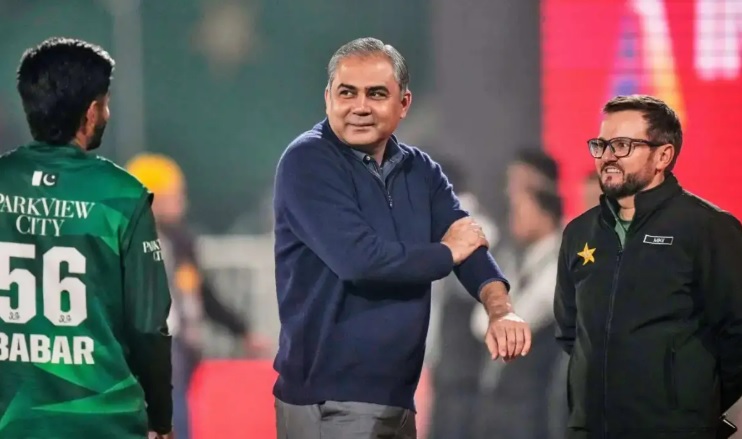
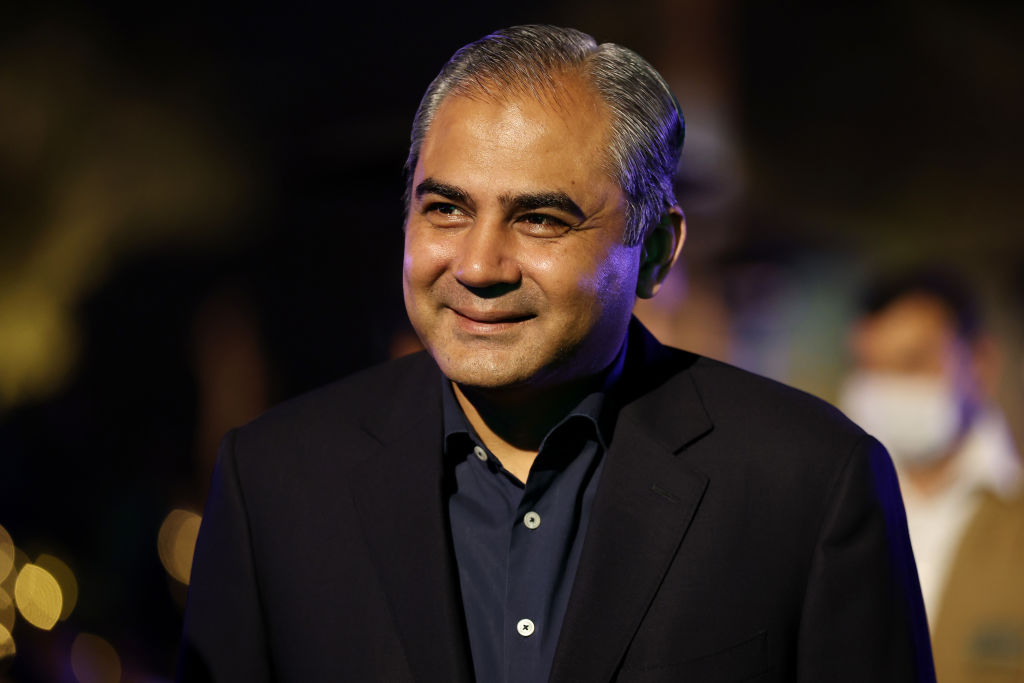
The statement the ICC issued after the Pakistan government's announcement on X had a very clear message: “The ICC hopes that the PCB will consider the significant and long-term implications for cricket in its own country as this is likely to impact the global cricket ecosystem, which it is itself a member and beneficiary of.” The Chairman of the PCB, Mohsin Naqvi, who has stated in the past that cricket and politics should be kept apart, is also the Interior Minister of Pakistan. And while Pakistan's boycott is being presented as a government decision, what role the PCB had to play in things becoming this complicated is also something to be considered. After all, discussions in the Pakistani corridors of power have clearly been going on for a while. On January 24, the day Bangladesh were formally removed from the World Cup by the ICC, Mohsin Naqvi was quoted as saying, “Our stance [on whether Pakistan will play the World Cup or not] will be what the government of Pakistan instructs me [to do]. It's the government's decision. We obey them, not the ICC.” Somewhere in that statement is a veiled dig at the Board of Control for Cricket in India (BCCI), whose officials have in the past said that India can't play Pakistan without the government's clearance.
It's very important for those who are making the decisions in Pakistan to remember that a boycott will not hurt India. But it could well alienate Pakistan in world cricket.
The Irony Of Pak's Tantrums
What is also interesting to note is that while this drama unfolds, other India-Pakistan matches are still going on. The two teams played each other in the ongoing U-19 World Cup in the Super Six stage on February 1, the same day that the decision to boycott the India fixture was announced. The two countries are scheduled to play against each other in the Women's Asia Cup Rising Stars, too, where the A teams of eight countries will participate. India A and Pakistan A are in the same group and are scheduled to play on February 15 in Bangkok, the same day that India and Pakistan were originally scheduled to play in the T20 World Cup; this match is still very much on.
The India vs Pakistan group stage match at the upcoming World Cup is scheduled for February 15. Is a Pakistan U-turn still on the cards? Maybe. After all, what will Pakistan's stance be if they are to play India in the semi-finals or the final? Will they realistically say no to that, too? Only Pakistan knows.
(The author is a former sports editor and primetime sports news anchor. He is currently a columnist, features writer and stage actor.)
Disclaimer: These are the personal opinions of the author


