Opinion | Pakistan's Ever-Running Saudi 'Lifeline' Has Its Limits
There is a gap between what Pakistan seeks from its Gulf partners and their willingness to offer it.
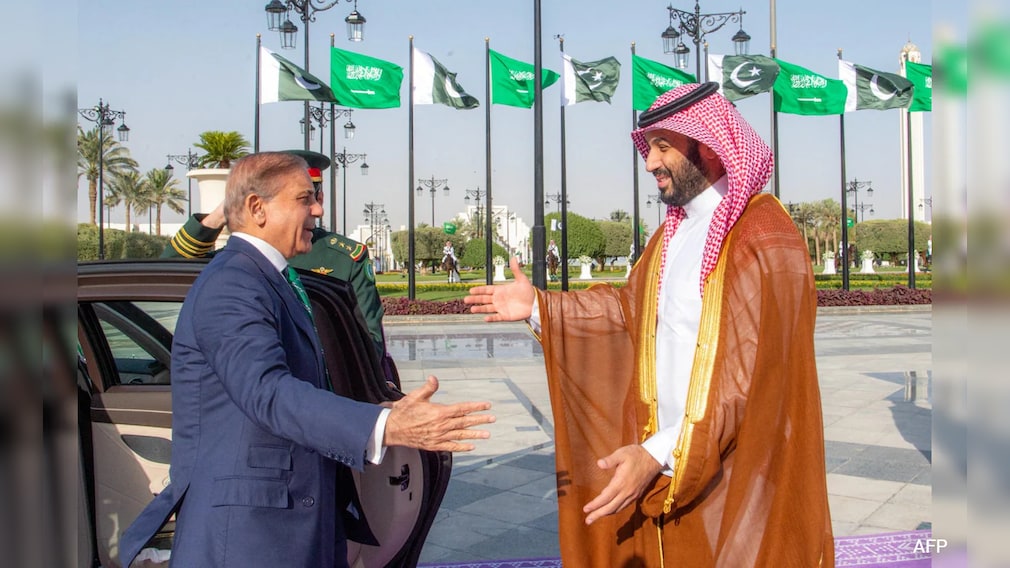
Pakistan's announcement of Saudi Arabia extending a fresh financial aid of an additional USD 3 billion is being framed as a geopolitical achievement, and with good reason. The funds arrived with a decision to extend an existing USD 5 billion deposit for an expanded term, thus replacing the annual rollover arrangement. The breakthrough reportedly followed a series of high-level engagements, including a meeting between Pakistan's Finance Minister Muhammad Aurangzeb, the governor of the State Bank, Pakistan's envoy to the US, and Saudi Arabia's foreign minister on the sidelines of the International Monetary Fund (IMF) and World Bank Spring Meetings in Washington. The loan is expected to help Pakistan achieve its target of taking its reserves to USD 18 billion by the end of the fiscal year.
The Timing
The Pakistani minister acknowledged that the financial aid came at a critical juncture for Pakistan's external financial requirements, as it will reinforce foreign exchange reserves and support external accounts. This also comes amid strict obligations under the current International Monetary Fund (IMF)-supported loan programme. The announcement comes at a time when Pakistan was due to repay a total of USD 3.5 billion in debt to the UAE by the end of April, after the Gulf nation ended its rollover support; Pakistan's reserves stood at USD 16.4 billion as of March 27.
In January, while addressing exporters and businessmen in Islamabad, Pakistan Prime Minister Shehbaz Sharif had said, "seeking foreign loans had forced Pakistan to 'bow' its head and make compromises at the cost of self-respect". "How should I describe the way we requested loans from friendly countries? The friendly countries didn't disappoint us. But the one who goes to seek a loan has their head bowed. When you go seeking loans, you pay the price at the cost of your self-respect. You have to compromise... Sometimes, an undue demand may come up, and you have to implement it even when there is no reason to fulfil it."
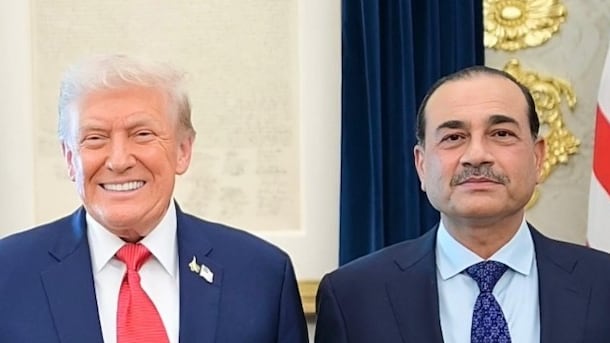
The timing of the recent announcement is not incidental, with Pakistan's economic reprieve arriving as the country finds itself playing an unusually key role as a mediator in the West Asian conflict between Iran and the US and Israel. The combination of its Islamic credentials, ties with stakeholders, and Pakistan army chief Field Marshal Asim Munir's cultivation of a personal rapport with US President Donald Trump has opened a space for Pakistan to function as an interlocutor.
Mediation For Personal Gains?
While the durable influence of this mediation and its outcome is yet to play out, the optics signal attempts to convert current strategic positioning into domestic gains. That said, to treat this announcement as a consequential movement in the longer arc of the Saudi Arabia-Pakistan relationship would be short-sighted.
Historically, Pakistan has served as a security partner to Saudi Arabia in return for the Kingdom's financial assistance in times of acute balance-of-payments situations. For instance, Pakistan stationed approximately 10,000 Pakistani troops in Saudi Arabia in return for USD 1 billion in economic aid. Saudi Arabia further offered concessional loans to Pakistan to fortify its military in the late 1970s.
The immediate gains for Pakistan are clear. Saudi Arabia's recent support acts as a short-term stabiliser for an economically fragile Pakistan. It further reinforces Pakistan's standing as a state that retains strategic relevance despite internal weaknesses. Internationally, Pakistan is punching above its economic weight by leveraging its strategic assets to compensate for its structural issues.
The Rentier Model
That said, Pakistan's utility as a security provider to Saudi Arabia as an interlocutor in the West Asian conflict will not translate into long-term resilience. The vicious cycle of external dependence, with recurring financial inflows rather than facilitating structural reforms, is unlikely to alter Pakistan's deep-rooted reality. However, this will not prevent Pakistan's significance from diminishing for Saudi Arabia, especially amid insecurities among the Gulf countries towards the US's ability to provide security guarantees.
Pakistan's geostrategic location and its rentier state model have worked favourably. Added to this is its status as the Muslim world's only nuclear power and religious linkages. Additionally, its significant labour force also remains crucial to Gulf economies.
While security and economic relationships have historically persisted, tectonic shifts in the geopolitical landscape will sustain a gap between what Pakistan seeks from its Gulf partners and their willingness to offer it in an interest-driven foreign policy environment. In the context of Pakistan's dispute with India, Saudi Arabia is unlikely to take a partisan stand on the Kashmir conflict - this was seen in the Kingdom's mediatory role in the recent Pakistan-Taliban conflict
Stuck In A Loop
As such, the latest development is less of a transformative moment and more a continuation of an established system. It highlights Pakistan's sustained relevance in West Asia; it also underscores structural shortcomings of its financial, governance, and bureaucratic infrastructure. Even as the country gains geopolitical momentum, its economic weaknesses will limit its strategic potential. The question is not how Pakistan secures external support but its ability to fundamentally recalibrate the use of this support. Thanks to its reluctance (or inability?) to address structural deficits that necessitate periodic bailouts, Pakistan will likely remain locked in a loop where geostrategic significance compensates for domestic underperformance. Therefore, its ties with Saudi Arabia will remain more asymmetric than Islamabad would prefer.
(Aishwaria Sonavane is a research analyst at the Takshashila Institution)
Disclaimer: These are the personal opinions of the author
-
The 60-Day Clock That May Stop Trump's Iran War, And How He Could Ignore It

Under the War Powers Resolution, also called the War Powers Act, an American president who has activated the armed forces without Congressional approval has 60 days to stand down.
-
Opinion | Iran Was Giving Trump The Best Deal America Ever Had. Why He Walked Away From It
The JCPOA is dead. The Oman negotiations failed. Islamabad shows little promise. What is left for US and Iran now?
-
1 War, 3 Bills: UAE's Bailout, Iran's $270 Billion, Trump's Off-Ramp Search
The Wall Street Journal said the UAE has sought a financial guarantee from the US for damage sustained during the war on Iran, a demand that could open Washington to financial contagion, with other Gulf countries joining the queue for payouts.
-
Analysis | Can Donald Trump Face An 'Arrest Warrant' - Like Netanyahu And Putin?
No one in living memory imagined a moment when the world would seriously debate the possibility of an American president being dragged before a court. Has it come now?
-
US' $240 Million Drone Over Cuba That's Strangling China's Oil Supply
From Venezuela to Hormuz to Malacca, the US has made three moves to strangle China's oil. Now a $240M drone over Cuba signals move four — and Trump wants the island. The chessboard is almost complete.
-
Opinion | Amir Hamza Attack Was A Symptom. A Deadlier Storm Is Brewing Within Lashkar
There is an ongoing power struggle within Lashkar for the top spot, which may lead to new terrorists wanting to 'prove' themselves. The obvious means? India.
-
Noida Turns 50: How The Planned City Outgrew Its Initial Brief
Noida's growth has been steady. This created trust. And trust attracted capital. Today, Noida is no longer just a supporting player in the NCR story.
-
Opinion | Trump's Favourite Field Marshal: How Munir Became The President's Best Man
Pakistan and the United States are not obvious analogues. And yet, their respective leaders have made a comparison inevitable today.
-
A Missile On One Soldier's Shoulder Could Ground The US Air War In Iran
Iran shot down US jets while China denied arming Tehran. But reports of a Chinese spy satellite being used by Iran, the viral F-35 tutorial from a Chinese engineer, and now 1,000+ MANPADs reportedly on their way to the war suggests otherwise.
-
Opinion | Amid Trump's War On The World, How Effective Really Is India's Strategic Autonomy?
India cannot mechanistically base its positions on preferred international norms, unmindful of its own direct interests.