Opinion | Pak's Great Game: What Rawalpindi Really Wants From Its War With Afghanistan
Get the US in and get the money for itself - that's Pakistan's single-point agenda. And it's doing everything it can to achieve this.
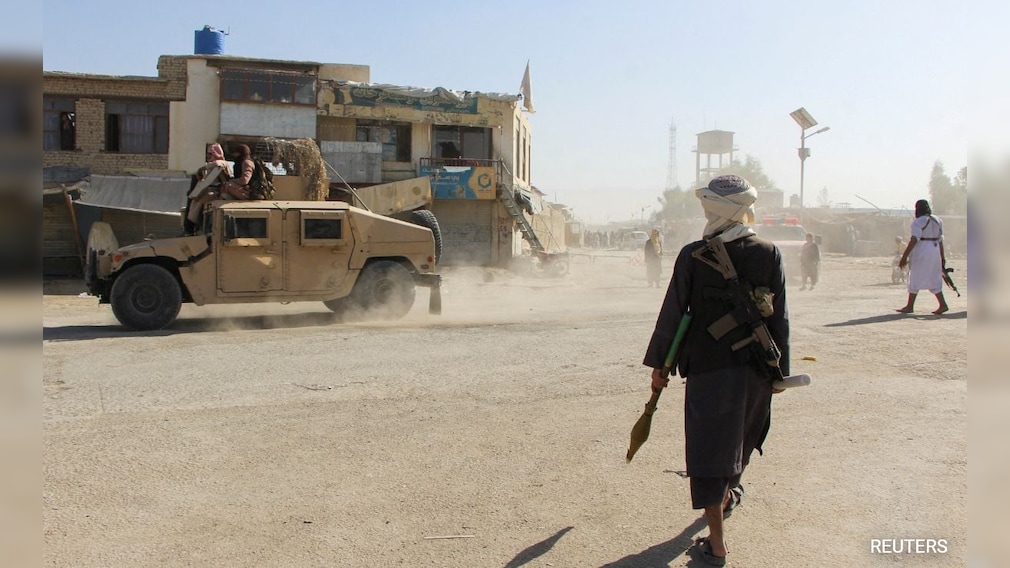
The trouble is that war-making has become almost the norm these days, what with the conflicts in Ukraine, Gaza, and now Afghanistan and Pakistan. What was possibly the first ever aerial bombing of Afghanistan by Pakistan has led to a sudden escalation of the situation into near-war condition, after decades of insurgency and sponsored terrorism. Not that those two don't continue; they do. While one side is a master of the game in the former, even defeating a superpower, the other has got so accustomed to sponsoring terror that it seems unable to stop.
It is now common knowledge that Pakistan chose to hit Kabul and Paktia on October 9, with drone attacks on the very day that Taliban's Acting Foreign Minister, Amir Khan Muttaqi, was being feted in Delhi. Since then, violence has snowballed, with Pakistan attacking via air alleged Tehrik-e-Taliban camps across the border and one such strike even killing members of a local cricket team at Urgon district. That led to Afghanistan pulling out of a tri-nation cricket series. That this happened hours after a 48-hour truce was set to expire underlines Rawalpindi's clear intent to escalate. In all fairness, however, there was also a suicide attack on the same day that killed 17 Pakistani soldiers in one fell swoop. That was claimed by the Tehrik-e-Taliban Pakistan (TTP). It is unclear which came first, but the result is that the two countries are now at war.
The Pattern Of Violence
True, that Pakistan has taken a beating. Its Centre for Research and Security Studies reports a 46% rise in violence, with the first three quarters seeing more of it than the whole of last year.
What led to this is not difficult to fathom. Pakistan's counter-terrorism tactics have followed set patterns. A faction of the Islamic State of Khorasan (IS-K) suddenly declared war on Baloch and others such as the Pashtuns and their leaders, including the charismatic and entirely non-violent Mehrang Baloch and Manzoon Pashteen, who lead the peaceful Pashtun Tahaffuz Movement (PTM). This was followed by a specific audio threat.
This is a striking shift in itself. The IS-K has been present in Balochistan for years, specifically in the Mastung and Khuzdar areas, where it had usually targeted churches and shrines, and then several Jamiat Ulema Islami (Fazlur) leaders. JUI(F) leader Fazlur Rehman has, in fact, also incurred the wrath of the army for warning repeatedly against attacking Afghanistan.
Now it seems the Pakistan army is against the Baloch. Even a schoolkid would be able to fathom that Pakistan's agencies are using the IS-K to hit the Baloch. The IS-K is also present in Khyber Pakhtunkhwa, around Peshawar and Bajaur area, and across in Nuristan and Kunar. No wonder then that Afghans hit Bahramcha, a route long used for not just insurgents but also drugs and human smugglers and the like. Pakistan, too, used a barrage of drones to hit Afghan border areas, mainly Paktia, but faced an almost equally fierce onslaught with suicide attacks on a police training school and against paramilitary forces.
A Dicey Ceasefire
On October 19, the Qatar Foreign Ministry put out a ceasefire agreement mediated also by Turkey - reportedly with its intelligence chief present too, together with defence and intelligence chiefs from warring sides. While Mullah Yakub and Minister Khwaja Asif are seen in the picture, Pakistan's intelligence Chief, Lt Gen Asim Malik attended the meet too, with presumably Abdul Haq, his Talibani counterpart. The agreement, calling for follow-up meetings to implement a ceasefire, was roundly criticised by Afghans on social media for its reference to a ‘border'.
In fact, the Afghan Deputy Defence Minister has been warning that if Afghanistan declared someone an invader by religious decree - which presumably would be done by the Amir Hibatullah - Pakistan would have no defence even till Indian borders. Pakistan's Khwaja Asif, in turn, warned all Afghans to leave the country, adding that Kabul leaders were “sitting in India's lap”.
Within this narrative of blaming Afghanistan and now India, it's important to consider that all TTP leaders, from founder Baitullah who was born in Landi Dhok in Bannu, to Hakimullah born in Jandola, Fazlullah in Swat and Noor Wali Mehsud in Tiarza, were from Pakistan, just like their cohorts. All grew from the crucible of the Afghan war and were once part of the Pakistan-backed Taliban that took over Kabul. They also sheltered the Taliban, mostly in Waziristan, which is why giving them up would be anathema to the Afghans.
The Final Message
The ironic fact is that the messaging from the Pakistan army completely copied the Indian positions as it warned of a "new normal", spoke of precision strikes only against civilians, and reserved the right - through its over-articulate defence minister - to carry this further. Field Marshal Munir also chose to give another warning of nuclear war against India for reasons unknown, at least immediately.
Some explanation for these threats may lie in US President Donald Trump's claims that it would be “easy” for him to solve the war. That needs to be examined carefully. Getting the US back into the picture has been Rawalpindi's single-point agenda for years, with a former National Security Advisor even making that plea in a prominent journal. That means not just pressure on the Taliban but also plenty of dollars for Pakistan.
Pak Will Do What It Wants
So, expect that Islamabad will do everything in its power to get Bagram for the US, even if it means escalating the war with Afghanistan to much higher levels and using much heavier conventional weapons. This is what the Pakistan army does best, even if it means a disaster for the rest of the country. The Khyber Pakhtunkhwa Chief Minister, Sohail Afridi, a stalwart of Imran Khan's party and who is from the grassroots, recently called for a 'grand jirga' so that the people of this region could decide peace for themselves. That was a message to Rawalpindi that it had done enough damage, and that it should leave the people alone. But that's not the army's way. It dislikes anyone doing anything on their own, however beneficial. It will, therefore, retain its sole agenda: get the US in and get the money for itself. Others can - sometimes quite literally - burn in hell.
(Dr Tara Kartha is a former Director, National Security Council Secretariat)
Disclaimer: These are the personal opinions of the author
-
How El Nino And Warming Oceans Could Shape Earth's Climate In 2027

From changing ocean currents to extreme weather, scientists are watching a combination of climate signals that could influence temperatures, rainfall and ecosystems in the months ahead.
-
Blog | Nana Patekar, And The Sharp, Lasting Sting Of His 'Plain-Speak'
"Subah ghar se niklo, bheed ka hissa bano..." Nana Patekar's characters often spoke with the bluntness of men who had little patience for pretence. Just like Nana himself.
-
Opinion | Pakistan's Saudi Pact Is Now Entering Dangerous Territory - As Expected
On October 5, the ministers of the pact's member states met in Riyadh for an emergency session and agreed to move to a 'practical implementation' of the defence commitments.
-
Hindu ka khoon-Musalman ka khoon? Nana Patekar's Krantiveer Questions Still Hang
Krantiveer was released in 1994, after the communal violence that had scarred Bombay and other parts of India. Nana's voice carried the pain of every riot, every broken home
-
'SIR' In America Too? India Cue In Trump's Mass Citizenship Check For Voters
Having got the nod from the US Supreme Court, Donald Trump's push for a voter roll "cleanup" puts citizenship at its centre. Arguments for India's Special Intensive Revision (SIR) have also centred on "illegal immigrants". Data remains scarce. Let's map the similarities and the nuance.
-
Opinion | Gyanesh Kumar Row May Be Doing Something Unthinkable For India's 'Lost' Opposition
There seems to be a greater willingness within the Opposition to accept Rahul Gandhi's leadership, at least on the SIR controversy. But the INDIA bloc itself seems to be undergoing a strange renewal.
-
Opinion | flydubai Hijack, And How Syria's Descent Into 'Jihadism' Has Now Become Everyone's Problem
Al Hammimi, the Omani pilot who tried to crash a plane with 175 passengers on September 30, is a symptom of Syria's long-raging sectarian and extremist fire that has now reached far beyond Syria's borders.
-
"Feel Deeply Abandoned By World": Tales Of Loss And Separation From Gaza
For Gazans, who have lived through the horrors of the last three years, life means a continuing encounter with impermanence and the repeated discovery that a home, a friendship, a livelihood, a familiar life and even one's former self can become things that exist only in memory.
-
Opinion | Gurugram Techie Suicide: Why Does A Woman Asking For Alimony Enrage Us So?
Social media, with its spectacular disregard for facts, turns one man's tragedy into an indictment of all women. The recent death of 28-year-old techie has become precisely that.