Opinion | Pak Blames India For 'Losing' Afghanistan. Numbers Tell A Different Story
As relations between India and Afghanistan continue to be defined economically, it is Pakistan that will be the loser, perhaps an unintended consequence of its own inability to be a good neighbour.
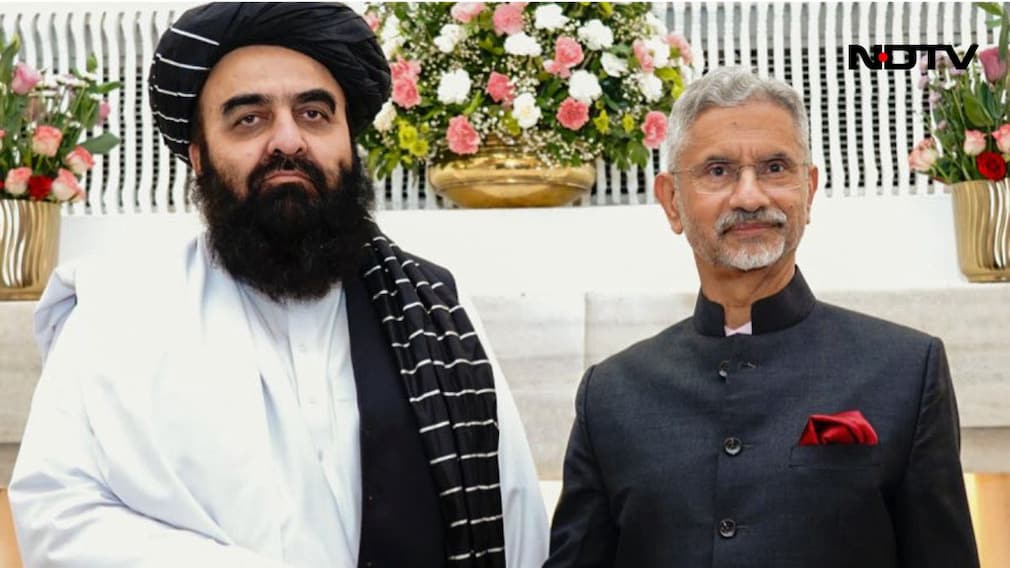
So finally, a Taliban diplomat is officially in charge in Delhi. The Taliban's newly appointed ambassador to India, Noor Ahmad Noor, took charge of the Afghan Embassy in Delhi last week. A statement issued by the Taliban's embassy in India on Monday said he met Anand Prakash, Joint Secretary of the Pakistan, Afghanistan, Iran Division at the Ministry of External Affairs, with discussions focusing on strengthening political and trade ties, including easing visa procedures.
Interestingly, just about a year ago, on January 8, India's Foreign Secretary Vikram Misri had met Muttaqi, the Taliban foreign minister, in Dubai for "detailed discussions" on bilateral relations. This was the first high-level meeting between the two sides following the Taliban's sweep to power in Kabul in August 2021; it came after a gap of four years. Following the meeting, the Taliban Foreign Ministry termed New Delhi a “significant regional partner.” By then, the rift between the Taliban and Pakistan had come to the fore - it was a time when Pakistan had launched airstrikes in Afghanistan's bordering regions to flush out terrorists, but which, according to the Taliban, had instead ended up claiming more civilian lives. The spokesperson for the Indian Ministry of External Affairs had criticised the Pakistani air strike on Afghanistan and the loss of civilian lives.
A Slew Of Visits
Since then, ties between India - which had been reluctant till then to extend recognition to the Taliban - and the Taliban have been dynamically developing. Three high-level visits have taken place by Taliban officials to Delhi in quick succession. The acting Taliban foreign minister, Mullah Amir Khan Muttaqi, visited India in October, followed by trade minister Haji Nooruddin Azizi, and, more recently, in December, the acting Health Minister Noor Jalal Jalali. New Delhi announced that it was upgrading its representative office in Kabul to a full-fledged embassy. And now, it has welcomed the first official Taliban envoy to be stationed in Delhi.
Noori's arrival coincided with a diatribe by the Pakistani Information Minister, Attaullah Tarar. Lashing out at the growing diplomatic engagement between the Taliban and India, he questioned the nature of their cooperation. While accusing the Taliban of allowing Afghan soil to be used for attacks against Pakistan, funded by “foreign designs”, he bluntly asked, “What kind of Islam is this where you take money from India to carry out explosions here?”
Islamabad continues to accuse the Taliban and India of supporting Baloch separatist groups and the Tehreek-e-Taliban Pakistan (TTP).
Pak Needs To Look Within
The accusations come as Pakistan faces a surge in militant violence, with over 5,000 terror incidents reported in 2025. However, to allege that India was behind them is a pathetic reflection of Pakistan's own desperation. After all, even in a world of constant geopolitical realignments and strategic shifts, the speed with which India-Taliban and Pakistan-Taliban relations have redefined themselves is rare. The only consistency is that Islamabad continues to be at odds with whoever happens to be in power in Kabul.
The appointment of Noor Ahmad Noor is significant for the Taliban's efforts to expand diplomatic presence abroad and gain greater international engagement. In this, India is neither the first nor the only country to accept a Taliban envoy. It is following a regional consensus. China was technically the first one to accept an official Taliban envoy in Beijing, followed by Moscow, Tashkent, Astana, Jakarta, and, of course, Pakistan.
India's View
In fact, Afghanistan is perhaps the only foreign policy success for India in its turbulent neighbourhood. As Bangladesh deepens relations with Pakistan, whose intelligence and army are now actively playing a role in bilateral relations, India's presence in Afghanistan gives it strategic depth there. On the other hand, India, as recently stated by External Affairs Minister S Jaishankar, is continuing with its time-tested humanitarian and people-centric approach to Afghanistan, building on the already existing goodwill in the country towards India.
But cultivating ties with the Taliban also opens up enormous economic opportunities for India. Afghanistan requires massive investments in almost all sectors of the country. It is seeking India's help and expertise in textiles and pharmaceuticals, but requires investment and technology in its trillion-dollar mining and infrastructure sectors, in some of which India has successfully implemented under the previous government.
The Trade Data
Pakistan's frequent closure of its borders with Afghanistan and weaponisation of trade and transit routes have forced Afghanistan to seek greater trade and activities through other routes and countries, and India has won hands down here. Afghanistan has rerouted much of its trade away from Pakistan to trade with Central Asia and Iran, and through the Chabahar port with India. It has also started substituting many items earlier sourced from Pakistan with exports from elsewhere. Pharma is the top sector where the Taliban is replacing many items sourced from Pakistan with those from India. Even as Pakistan's trade with Afghanistan has dipped, the latter's trade with India has soared. The crisis has badly hurt transit trade between Afghanistan and Pakistan, which has already fallen from $6.7 billion in FY23 to $1.01 billion in FY25. With economic ties still suspended, bilateral trade fell to $594 million in the first half of the 2025-2026 fiscal year, down from $1.26 billion in the same period of 2024-2025.
Conversely, data from Afghanistan's trade ministry shows that India has emerged as Afghanistan's largest export market in October 2025 - that is, exactly during the same period when the border with Pakistan has been closed - importing goods worth $103.9 million of Afghanistan's total exports of $274.9 million.
Suspension Of Trade With Pak
Speaking to Radio Hurriyat, a Taliban-affiliated outlet, Zabihullah Mujahid, the Taliban's chief spokesperson, said significant progress had been made in relations with New Delhi and that the trend was expected to continue. He said that the Taliban values its relations with India and wants to expand cooperation, particularly in healthcare and commerce, thanking India for its humanitarian assistance, including the supply of vaccines, medicines and food aid, and said Afghanistan's needs require stronger bilateral relations. Meanwhile, the Taliban have suspended trade with Pakistan totally and have refused to open the border till such time that Pakistan significantly improves relations, putting the onus for the reopening of the borders on the latter.
This is another source of angst for Pakistan, with its conflict with the Taliban becoming an economic one now.
While border closures with Pakistan have brought considerable losses to Afghanistan, the loss for Pakistani traders has been greater. Pakistani exporters are reportedly losing an estimated $177 million per month due to restricted cross-border trade. Besides, the disruption of Afghanistan's transit trade through Karachi Port has also resulted in losses for Pakistani transport companies, warehouses, port activities, transit revenues, etc. While Pakistan has now called for the reopening of border crossings, Afghanistan seems to be in no hurry to do so, demanding that any such resumption be within a framework of strict conditions.
It's About Timing
India, on the other hand, has been doing more than just filling the gaps left behind by the Af-Pak conflict in the supply of commodities to Afghanistan. While actively using the Chabahar port for trade with and for sending cargo to Afghanistan, it has also decided to activate air corridors between Indian cities and Kabul. This has not only reduced Afghanistan's dependence on Pakistan, but such economic activity will also incentivise the Taliban to ensure stability for India's trade with Central Asia, to which Pakistan has always played the spoilsport. In turn, Afghanistan will be able to realise its potential as a trade hub in the region, bypassing Pakistan.
It is, thus, clear that recalibrated relations between all three - India, Afghanistan, and Pakistan - will now continue to be increasingly defined economically. And it is Pakistan that will be the loser - perhaps an unintended consequence of its enduring inability to be a good neighbour.
(The author is a senior journalist)
Disclaimer: These are the personal opinions of the author
-
Opinion | Why The Saudi-Pak-Turkey Defence Pact May Actually Be An 'Intel' Network

Rather than a NATO-like construct, the Mecca pact may evolve to become something like the West's Five Eyes alliance.
-
The Real Story Of France's Unrest Is Getting Lost In A Storm Of Online Lies
A man cosplaying Napoleon on the streets, looting at luxury fashion stores like Dior, France is currently confronting one of its most serious episodes of civil unrest in years.
-
Opinion | The Last Bet? What Trump's 'Mother Of All Bombs' Could Actually Do To Iran
Can an MOAB deliver a decisive blow to Iran that may force it to surrender immediately, as Japan did after Hiroshima and Nagasaki in World War 2?
-
Hit Songs, Empty Pockets: The Hidden Math Behind India's Viral Music Boom
Over 80,000 brands and five lakh creators in India make branded content. The opportunity is worth around Rs 1,500 crore.
-
Opinion | Great 'Exceptions': How The Oil India Was Attacked For Is The Oil Trump Now Seeks
A law written to punish the buyers of Russian oil was suspended by the US to protect a purchase of Russian oil. India spent fourteen months being lectured for less.
-
Opinion | Louis Vuitton Loot, Torched Cars: France Protests Have An Unlikely Beneficiary
It's an unbelievable moment. Crowds looting the most exclusive stores in Paris, including the famed Luis Vuitton. But what's behind this meltdown?
-
Blog: Kolkata Didn't Learn From 2015. Eleven Years Later, It Proved To Be Fatal
The City of Joy isn't a stranger to crowd control. Be it during Pujo or Christmas at Park Street, Eden Gardens cricket matches, or Derbies between Mohun Bagan and East Bengal. But during Pujo, the entire city is on alert.
-
Opinion | Slurs, Threats, Now A Temple Attack Plot: When Did America Become So Hostile To Indians?
The rising tide of anti-India, anti-Hindu, and racist attacks serves as a stark reminder that economic prosperity does not automatically guarantee social immunity from bigotry.
-
A Step Behind Neha Bora: What Rahul Gandhi's Gesture Says About Congress' Gen-Z Pitch
At INDIA bloc's march to Supreme Court, Rahul Gandhi placed himself a step behind two women, hands resting on their shoulders. One was his sister Priyanka. The one on his right was Neha Bora. Here's what the image means for the protest wave now, and for Rahul's politics in general.