Opinion | Pak 'Impostors' To Jamaat Trolls: What's Going On With Bangladesh Social Media?
The largest single spends on social media were from DailyNews24, which masquerades as a news organisation but is, in reality, a Jamaat organ. The second and fourth spenders are also Jamaat sites.
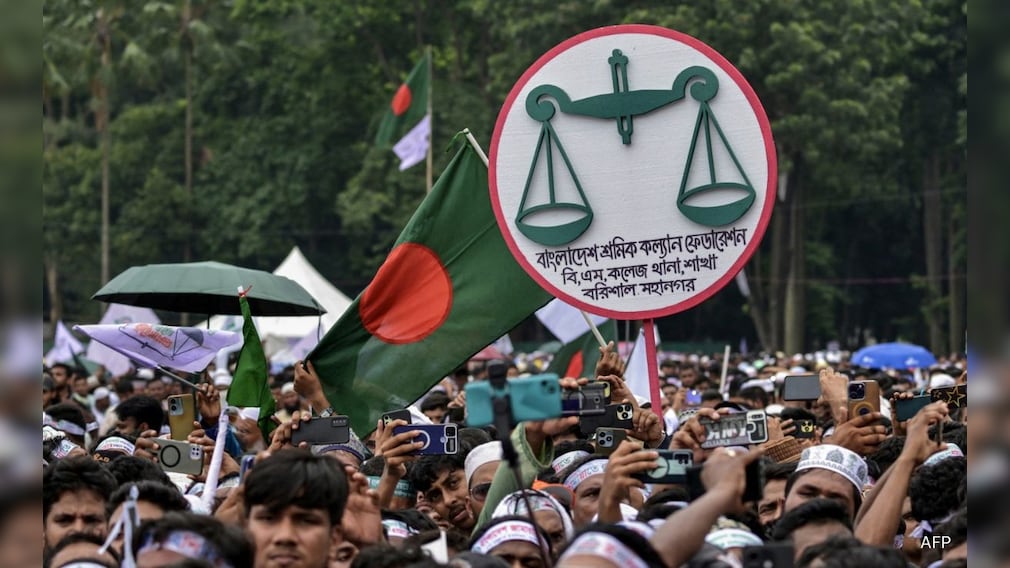
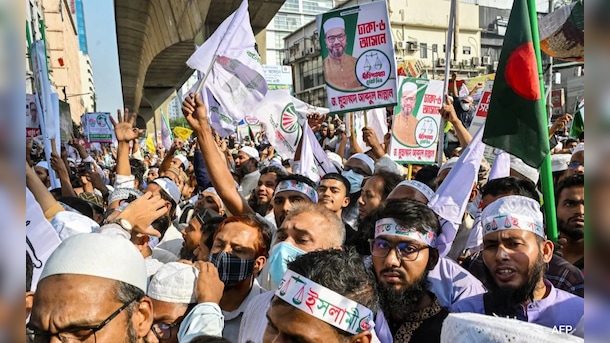
There's a lot of talk nowadays on 'cognitive warfare' in future wars and how hostile countries are likely to use it. In Bangladesh, it is happening in real time. Its elections witnessed unprecedented social media influence operations across platforms, dangerous in a country with 99% mobile penetration and an educated youth. The good part is that a watchful Bangladesh media called out those involved, naming and shaming many. The bad part is that the manipulation has already led to trouble after elections, with more to come.
Who's Spending The Most
It's not that social media use is unusual in political campaigning. It's just that this time, it was used across the board, with major parties spending an estimated Taka 2.5 crore on social media, primarily Facebook campaigns. A reputed tracking site, Who Targets Me, analysed Facebook and Instagram, among other platforms, and noted that the Bangladesh Nationalist Party (BNP) had 234 pages, accounting for 54% of spending.
It was closely followed by the Jamaat, which used 199 linked pages accounting for 38% of the total. Others were pretty much flat-lined. But examination of data shows that the largest single spends were from DailyNews24, which masquerades as a news organisation but is, in reality, a Jamaat organ. The second and fourth spenders are also Jamaat sites. Again, all this is generally acceptable, except that it points to a lot of money in Jamaat's hands.
What is concerning, however, is data computed by The Daily Star on deepfakes, text, videos, photocards and a variety of tools used to spread 'news' bypassing traditional media. The BBC also noted highly sophisticated AI content showing 'news anchors' and uniformed 'officers' delivering highly slanted messages. One such clip was viewed 8 million times. Disinformation was rampant the whole day of the voting. Unsurprisingly, 65% was by entities that appear aligned with the Jamaat, according to The Daily Star's findings.
As for the Awami League, it trailed at 21.2%, pro-BNP groups at 7%, and the National Citizen Party (NCP) at just 3%. That's surprising for a youthful segment, which would presumably have been the most competent to use social media. But then, the NCP seems to have been manipulated extensively. Its cadres won just five seats even as the Jamaat's student wing took university after university in elections. So, at least one factor that explains Jamaat's rise from some 11-odd seats to its record high of 68 is its huge social media 'outreach'.
Even so, all this is in the past. What is worrying is the spate of disinformation that has continued post-elections.
The Mayhem Continues
Even as media on the ground warn of dangerous levels of street anger, a reputed fact-checking site has reported a surge in public opinion that the Jamaat was cheated out of elections. The basis for this were the alleged narrow margins between the BNP and Jamaat candidates; some said that at one place it was as low as 53 votes and that some 57 seats were 'stolen' from the party. Reliable fact-checks show no such narrow margins; even those seats where the vote gap was just around 5,000 were fewer than 22 in number.
Ironically, even then, it was the BNP that suffered, not the Jamaat. The result of all this is that the Jamaat chief is being castigated for accepting an election purportedly manipulated by the 'deep state'. Unsurprisingly, Shafiqur Rehman noted hurt among his cadres and declared that the election was riddled with "inconsistencies" and that there was a lack of transparency from the Election Commission.
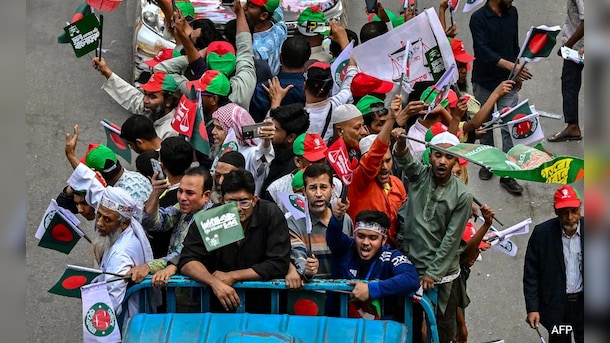
In short, such 'cognitive' wars may end up throwing a political head into a dangerous situation, especially since the recipients of such content are mainly in the age group of 25-34 years, urban, and, in many cases, seething with anger.
The Add-on: Hate Against India
Add to all this a layer of anti-India networks. An analysis observes how outlets like Bangla Vision (506K subscribers) spread false rumours about India, even downgrading Op Sindoor in their content. The recently reopened Amar Des, run by publisher and editor Mahmudur Rehman - eulogised, oddly, in a Ghana news source - is also backing the 'Indian domination' narrative. Rehman, who returned recently from exile in Turkey after the Awami League had allegedly framed cases against him, was closely aligned with the July 24 uprising. His Facebook page, now seemingly rebranded as Political Lens (658K followers), recently put out reports about how Jamaat leaders' houses were torched by BNP workers.
Overall, the anti-India sentiment in Bangladesh has, unsurprisingly, skyrocketed after the recent, entirely unnecessary, hysteria against Shah Rukh Khan and Mustafizur Rehman, wherein Jamaat handles effectively milked the incident to whip up anti-India anger. Notably, most BNP handles were silent on the issue. Also evident were Pakistanis parading as Bangladeshis to push their own narrative.
In sum, the war is now on social media, and seemingly unstoppable. At one level, it could be argued that it is beyond the control of governments, despite almost every state, including Bangladeshi authorities, issuing strict guidelines on the use of social media during elections. The key concern, however, is that there is money behind these webpages, social media handles and trolls who are used as pawns in a political warfare. The spread is alarming, both within and without Bangladesh. The state strategy has to understand that diplomacy is no longer restricted to well-appointed conference rooms. It's out there, too, on the web.
(Tara Kartha was Director, National Security Council Secretariat)
Disclaimer: These are the personal opinions of the author
-
Opinion | 'Team Rahul' And 'Team Priyanka': Inside Congress' Plans For Kerala And Assam

The two siblings don't function at cross-purposes or differ on key ideological issues. However, in practice, they are often seen following slightly different 'chaal, chalan, chehra', as they say, from each other.
-
Opinion | Sonia-Rahul To Maken, Why Mani Shankar Aiyar Keeps Ditching His Verbal 'Filter'
The former Rajya Sabha parliamentarian used to joke that in the time of Rajiv Gandhi, he was on "arsh" (cloud nine), while in the UPA regime under Sonia Gandhi, he was brought down to "farsh" (ground).
-
Opinion | Pakistan Cricket And Lessons In How To Destroy A Sport, Completely
In March last year, I had written about why Pakistan cricket is in ruins - simply because it is its own worst enemy. Pakistan just proved that again yesterday.
-
Opinion | Can Tarique Rahman Really Undo The 'Yunus' Damage To India-Bangladesh Ties?
Will Tarique Rahman as Prime Minister be willing to take hard steps, even reverse some decisions of the Yunus regime, looking ahead to ensure peace and stability along the more than 4,000-kilometre-long border between India and Bangladesh?
-
Private Jets, Powerful Names, And Sex Offender Jeffrey Epstein's Fortress Of Silence
Jeffrey Epstein, who pled guilty to child sex offences and faced federal sex trafficking charges, died August 10, 2019, in his New York prison cell while awaiting trial.
-
Opinion | Bangladesh Polls: What Are Jamaat And Yunus Planning Next?
Yunus's motivations across the board indicate that he's not likely to be 'retiring' soon. This election is a quiet - and overlooked - win for the Jamaat, too.
-
Blog | Goodbye, South Block: From Child Visitor To Secretary, The Corridors That Made Me
It was 1951. My mother had just joined the Government of India as a mid-level officer, three years after independence. Decades later, I would serve in the South Block. Today, they are repositories of a 75-year-long history - personal and national.
-
What Tarique Rahman's Win Means For India
India's focus is on capability and intent, specifically on the new Bangladesh government cooperating on issues like border control and infiltration and maintaining the balance of power in the South Asia region.
-
Opinion | The JF-17 'Hype': How Pak Is Pushing A Jet That's More Noise Than Substance
Even if the JF-17 may seem like a popular choice for many nations, interoperability is not exportable, nor is effective warfighting capability.
-
Opinion | Inside India's High-Stakes Push For Buying A Record 114 Rafales
If the power of such a huge purchase does not put New Delhi in the driver's seat to fast-track acquisition of technology, then nothing else will.