On A Friend's Death And Dying With Dignity - By Shashi Tharoor
Last Wednesday, I received an email that turned me inside out. It came from a friend of thirty-five years. His message began warmly, praising my latest essay, but then turned devastating. "If all goes well, by next Monday I will be no more," he wrote.
Last Wednesday, I received an email that turned me inside out. It came from a friend of thirty-five years: David Malone, a man I had first known in his days as a Canadian diplomat at the United Nations, later as Canada's Ambassador to India, then as Rector of the United Nations University in Tokyo, and always as a writer and speaker of rare clarity and insight. His message began warmly, praising my latest essay, but then turned devastating:
"This prompts me to let you know that, if all goes well, by next Monday I will be no more ... In Canada, we have a right to die, and it applies to Alzheimer's ... but one can only get a fatal injection, as I hope to do next Monday, after being verified as still lucid and thus on one's deathbed to be able to advocate for the vaccination ... you know how grim [Alzheimer's disease] can be. So , because I can here in Canada, am taking a short-cut."
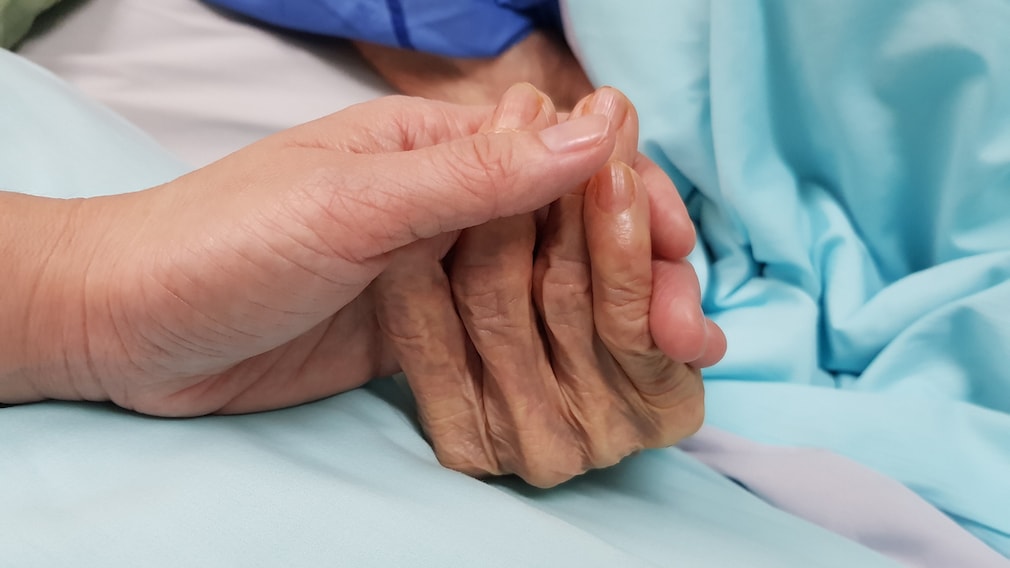
David explained that after prostate cancer, he had been diagnosed with Alzheimer's disease. Though spared physical pain, he faced the inexorable decline of mind and memory. In Canada, the law permits medically assisted dying for those with Alzheimer's, but only while they are still lucid enough to consent. David had chosen to take that path.
When Death Arrives
He added, "I'll have several very nice friends around me when all of that happens in my own home." And then came a typically gracious ending addressing his appreciation and good wishes to me, made all the more poignant by coming from a man staring death in the face.
I replied instantly, struggling to reconcile the brilliance, humanity, and warmth that defined him with the prospect of his imminent absence. I asked him to consider fighting on, to give science a chance, to resist surrender. Yet, I also respected his right to decide. I asked if I might call him to talk - even while realising that I would be hearing his voice one last time.
David hesitated - he explained that international calls confused him now - but eventually gave me a number and a window of time when he could speak. I was on a flight at the time, so I sought an alternative. We finally spoke on Saturday, two days before his scheduled departure from this world. It was one of the most emotionally painful conversations I have ever had. When it ended, I wrote to him:
"It was so wonderful and so moving speaking to you, David. Thank you for all that you are and have been, and for those precious thirteen minutes for our farewell call. I will always cherish memories of your brilliant mind, your large heart, and your gift for friendship... I will think of you in a better place after Monday, and may your soul rest peacefully in the arms of God."
What David's Going Means
David's life was one of service, intellect, and friendship. He embodied the skilled diplomat's gift for listening, the rigorous scholar's gift for clarity, and the human gift for kindness. His departure is not only a personal loss but a reminder of the fragility of all that we value in one another: wit, warmth, and the capacity to connect.
Yet, his choice also compels reflection. In electing to end his life before Alzheimer's could erase his lucidity, David asserted a final act of agency. He refused to let disease dictate the terms of his existence. For him, dignity lay not in prolongation of life at all costs but in choosing the moment when farewell would be conscious, deliberate, and surrounded by friends.
Death is the one certainty we all share, yet it remains the hardest to confront. We cling to life not only for ourselves but for those who love us, fearing the rupture of bonds that matter to us, indeed define us. No one who cares for another human being is prepared to accept the finality of their demise. We want them to live on, if only for all that they mean to us. But David's farewell reminds me that mortality is not only an end; it can also be a culmination. To die lucid, grateful, and in the company of friends is, in its own way, a triumph over the indignities of decline and the inexorable triumph of death.
His decision raises profound questions to which I have no answer: is life valuable only when it can be prolonged, or also when it can be concluded with dignity? Is the preservation of memory and mind essential to personhood, and if so, what does it mean when those fade? Does life then become meaningless and death preferable?
David's answer was clear. He chose to leave while he was still himself. In doing so, he left his friends not with the image of a man diminished, but with the memory of a person who remained brilliant, humane, and generous to the last.
Heartbreak, Inspiration
For me, David's farewell is both heartbreaking and inspiring. It is heartbreak because I will miss his voice, his wit, his friendship, his energy. It is inspiration because he faced death with courage, clarity, and grace - and with the lucidity characteristic of his razor-sharp intellect. He took a decision few of us will have the courage to take and one that one wishes, with all one's heart, never to have to contemplate.
Religious people might object that life is a gift from God and not ours to either bestow or take away. But must we then suffer on, with a mind bereft of the consciousness that makes us who we are? In choosing to leave with dignity, at our own time and on our own terms, are we surrendering to death or conquering it?
In the end, the measure of a life is not how long it lasts, but how deeply it touches others. David's life and work, his ideas and friendships, his intellectual range and clarity, touched mine profoundly, and I know it touched countless others across continents and institutions. His departure is a reminder that while death is inevitable, friendship, memory, ideas, words and the thoughts that embody them, endure.
David Malone led a full life, wrote his own script, and chose his own exit. It is wrong to define his life solely by the manner of its ending. Let those of us who remain, whether we agree with his decision or not, learn to admire his courage - the courage to decide not only how to live, but how, when the time comes, to embrace death as a choice, and not as a circumstance over which we have no control.
(Shashi Tharoor has been a Member of Parliament from Thiruvananthapuram, Kerala, since 2009. He is an author and a former diplomat)
Disclaimer: These are the personal opinions of the author
-
Opinion | Imran Khan, And The Perils Of Having An 'Opinion' In Bollywood

The reality of the industry is quite grimy. More often than not, its inhabitants have been fairweather friends, happy to sing the praises of whoever is in a position of authority.
-
Exclusive: India's Food Safety Problem Goes Beyond Just Dirty Kitchens - By Tukaram Mundhe
On World Food Day, Maharashtra's Commissioner of Food Safety explains why instead of taking stopgap measures, the entire supply chain in India needs to be held accountable and made transparent.
-
Opinion | India Has Enough Coal. So Why Are Power Plants Running Short? A 76 Million 'Crunch'
As of October 5, as many as 82 of the 191 thermal plants monitored by the Central Electricity Authority were in the 'critical' category
-
A Step Behind Neha Bora: What Rahul Gandhi's Gesture Says About Congress' Gen-Z Pitch
At INDIA bloc's march to Supreme Court, Rahul Gandhi placed himself a step behind two women, hands resting on their shoulders. One was his sister Priyanka. The one on his right was Neha Bora. Here's what the image means for the protest wave now, and for Rahul's politics in general.
-
Opinion | Starlink, India, And Why Elon Musk Must Know His Billionaire Tantrums Won't Work
India should neither be intimidated by Musk's global influence nor distracted by his theatrics.
-
Blog | 'Baap Da Brat': Kerala Mini Cooper Crash, And Why 'Daddy' Can't Keep Saving You
There are three things you should never underestimate in India: the power of 'jugaad', the elasticity of the law, and the confidence of a 'Baap da Brat' who believes his Papa Posh can fix absolutely anything.
-
Opinion | 'Say Our Name': Why A Tiny Island Nation Wants The World To Get Its Name Right
Standing before the UN hall of nations, Naoero President David Adeang asked the world to unlearn its comfortable habits and speak a restored truth.
-
TVS Succession Row Explained: Why Venu Srinivasan's Family Is Divided Over Wealth
TVS Family Dispute: TVS Holdings is a key entity because it owns a controlling stake in TVS Motor Company. It owns 50.26% of TVS Motor.
-
Opinion | The US Is Showing India Just How Cheap Its 'Friendship' Is
Can local talent fully replace Indian contribution? Why is the US leading in setting up Global Capability Centres in India - over 60% - and pocketing the IP?
-
Jantar Mantar Tells Time. The Clock Just Stopped On Its Time As An Iconic Protest Site
On Monday, October 12, 2026, Delhi Police denotified Jantar Mantar Road as a designated site for demonstrations. The Supreme Court had given it a nudge. Here's how history met politics on that street for decades.