Mumbai's 'Marathi' Test For Cabbies, And The Art Of Fixing The Wrong Problems
All these years, India's financial capital has worked just fine without a Marathi mandate for its taxiwallahs. Whose problem is the new language rule actually solving now?
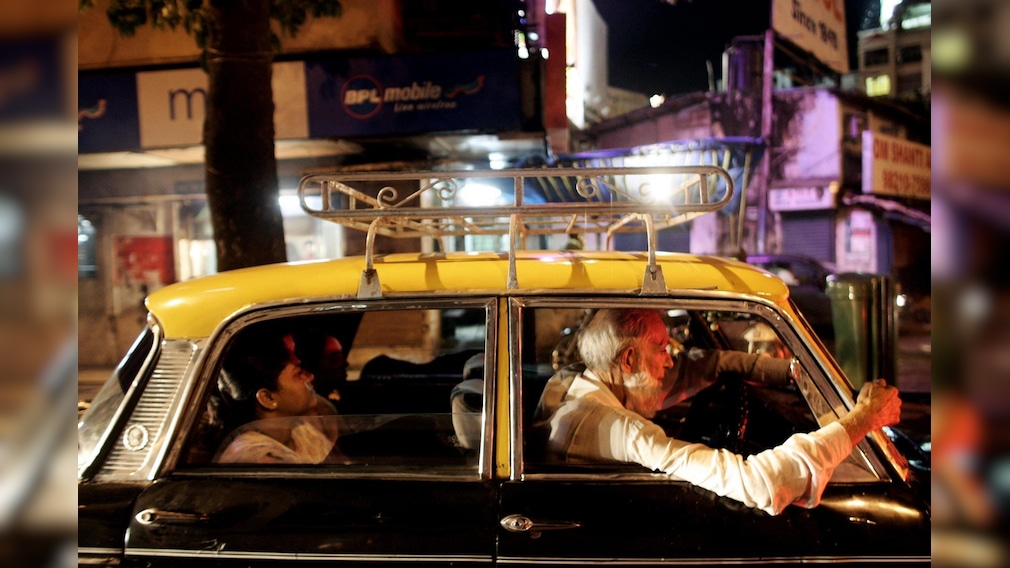
Mumbai has long possessed the legendary, slightly chaotic ability to absorb every dialect, dish, and economic refugee that lands upon its humid shores. It is a city whose soul is forged in transit, fuelled by cutting chai, and sustained by an army of auto-rickshaw and taxi drivers navigating standard traffic jams while keeping up a running commentary on local politics.
Recently, however, the Maharashtra state government threw a linguistic spanner into the gears by insisting that non-Marathi-speaking cab and auto drivers undergo formal language training to master the local tongue. The deadline arrived, rain disrupted the classes, and political factions immediately demanded a grace period, not out of a sudden bout of leniency, but because the monsoon managed to drown the logistics before the grammar lessons could fully sink in. The controversy highlights a classic urban tension: is this policy a reasonable expectation of basic integration, or is it unnecessary provincial chest-thumping that undermines the financial capital's famous cosmopolitanism?
A Valid Argument - Almost
To understand the impulse behind the directive, one must first empathise with the anxieties of local cultural preservation. Language in India is rarely just a tool for commerce; it is an inheritance, a flag, and, occasionally, a battlefield. The argument for requiring transit workers to learn Marathi rests on a straightforward, pragmatic premise. If you are operating a public service within a state, possessing a rudimentary grasp of the state's primary language is not a tyrannical demand; it is a courtesy to the millions of local residents who use those services daily. When a commuter steps into a yellow-and-black taxi after a long day in the suburbs, negotiating a fare or explaining a shortcut shouldn't require complex pantomime or an emergency translation app.
Proponents of the new rule can reasonably argue that expecting a driver to learn basic vocabulary, to understand and specify directions, numbers, or addresses (and also to offer polite greetings, but cabbies are not usually known for those!) is hardly an oppressive act of cultural erasure. It is simply the baseline of civic integration, ensuring that the local culture is respected rather than treated as an inconvenient background detail in its own home.
Yet, the moment one shifts focus from civil courtesy to mandatory enforcement, the logic begins to wobble under the weight of Mumbai's economic reality. The city did not become India's financial locomotive by enforcing strict linguistic purity at the entry gates. It thrived precisely because a driver from Uttar Pradesh, a passenger from Bengal, and a street vendor from Bihar could communicate in a fluid, grammatical mutant known as 'Bambaiya Hindi', a vernacular constructed almost entirely out of shared survival instincts, a collective disregard for the niceties of grammar, and expressive hand gestures. Demanding formal Marathi proficiency transforms an informal, working solution into an administrative hurdle.
Only In Mumbai
The irony of the situation is heightened by the administrative rollout itself: a state mandate issued at the peak of the monsoon season and promptly derailed by heavy rains, leading politicians to plead for a hundred-day extension so drivers can learn how to say "straight ahead" in proper Marathi. The entire episode captures the theatre of Indian governance, where grand cultural crusades inevitably collide with the mundane reality of flooded schoolhouses and missing instructors.
Critics also reasonably point out that targeting cab and auto drivers carries a whiff of selective enforcement, if not outright class bias. The corporate boardrooms of Bandra-Kurla Complex and the luxury high-rises of Worli are populated by international executives, bankers, and tech entrepreneurs who haven't mastered a single sentence of Marathi - they might even order a 'vada pav' in Hindi - yet no one threatens to revoke their permits or mandate afternoon grammar classes. The burden of carrying the torch of regional heritage falls disproportionately on those at the bottom of the economic ladder, who are already working fourteen-hour shifts in stifling heat.
Some of Mumbai's taxi drivers could well benefit from remedial driving lessons, but putting them into a classroom feels less like an attempt at genuine cultural enrichment and more like political theatre designed to appease local vote-banks during election cycles. When regional pride becomes an entry barrier to basic livelihood, cosmopolitanism gives way to parochialism, signalling to the rest of the country that Mumbai's famous openness comes with fine print written strictly in the local script.
Whose Anxieties?
And yet, framing the debate as a stark choice between total open-market globalisation and narrow nativism misses the pragmatic middle ground where Mumbai actually lives. A middle-class commuter navigating the city's streets does not require a driver to quote seventeenth-century Marathi poetry; they simply need to get to the station without a communication breakdown. Likewise, a driver attempting to make a living has little interest in ideological debates over sub-national identity; they simply want to earn their daily fare without fear of harassment or bureaucratic penalties. The reasonable resolution lies not in rigid mandates backed by immediate punitive measures, nor in the arrogant dismissiveness that treats local languages as irrelevant or obsolete. The solution rests in low-stakes, accessible, and practical language familiarisation that aids communication without threatening livelihoods.
Ultimately, Mumbai's strength has never been uniformity, but its remarkable capacity to absorb diversity and invent commonalities out of chaos. People will always learn the rudiments of any language they absolutely need, out of sheer necessity. Rarely will they achieve a certifiable level of fluency in it; all they need is enough to get by. That much of Marathi, I dare say, most taxi drivers know already, just enough to be able to ask for directions from a bunch of locals at a street corner. And, of course, it is more important for them to know the roads than to know the language.
A Self-Assured Metropolis
The city's identity is robust enough to survive non-native drivers, just as regional culture is resilient enough to thrive without relying on mandatory language requirements. If the state government genuinely wishes to promote Marathi, the path lies through gentle encouragement, accessible learning resources, and mutual respect, rather than rigid deadlines that get washed away by the first heavy shower of the monsoon season. As for taxi drivers, a checklist of key Marathi phrases and expressions made available along with your driving license, for example, would go a long way. Or maybe, a basic instructional app that the taxi-wallahs could download on their phones, listen to, and learn from while they are cruising around looking for customers?
Until then, as drivers scramble to learn their Marathi verbs and politicians argue over extension periods, passengers will continue doing what they have always done in Mumbai: jumping into the nearest rickshaw, offering a mix of Hindi, Marathi, and English, and hoping the driver knows a shortcut around the traffic to get you to your destination. I'm just waiting for the day the Maharashtra state government requires passengers to speak in Marathi too...
(Shashi Tharoor has been a Member of Parliament from Thiruvananthapuram, Kerala, since 2009. He is a celebrated author and a former diplomat)
Disclaimer: These are the personal opinions of the author
-
Congress Falls Back On A Fullback: Where Pargat Singh Fits In The Punjab Poll Play

Vijay Inder Singla, a Hindu face, was reportedly the frontrunner before the Congress replaced one Jat Sikh with another as its Punjab unit chief. How far does such arithmetic work in the state's politics? Pargat's appointment holds some of the answers.
-
Why Doesn't Congress Boycott If Polls Are "Fixed"? Answer Lies Beyond Rahul Gandhi's "Distraction" Quip
The starkest demand for a boycott has come from outside the political Opposition, from the Cockroach Janta Party. But does a boycott help? Here's what research, examples, and expert analysis tell us.
-
'Sully' To Gimli, Sioux To Patna: When Pilots Got It Unbelievably Right
Captain Smit Machchhar fought off his co-pilot after being stabbed and opened the cockpit door, saving 174 people.
-
Opinion | Are Saudi Arabia And UAE Reuniting Again After 10 Years?
On Tuesday, the UAE's Vice President, Deputy Prime Minister and Chairman of the Presidential Court, Mansour bin Zayed, met Saudi Crown Prince Mohammed bin Salman.
-
Opinion | 'Lies, Damned Lies, Statistics': On The Controversy Around India's GDP Growth Figures
The debate is less about a single figure than about a decade-long erosion of trust in official statistics.
-
Opinion | Why India Cannot Keep 'Overestimating' Its Value To Washington
Some of India's value to Washington came from the tension between the US and China. That is changing now.
-
Opinion | India Has A 'Lobbying' Problem In Washington, And It Has Come Back To Haunt It
While the EU, Japan, the UK and South Korea secured quick deals, India's efforts were getting drained in prolonged negotiations and the wrong kind of lobbying.
-
India Is Getting Old Before Getting Rich, Will Turn 'Aged' In 16 Years: Moody's
Countries with the steepest fertility declines today will age the fastest in the coming decades. India's drop has been steep.
-
Opinion | Why Does Trump Want To Sell Arms To A US 'Adversary'? Inside His Strange Bargain
Trump's aides maintain that no such offer had been made. But the story points to a larger strategy