Blog | Madhav Gadgil: The 'Durable Optimist' Who Believed Science, Too, Has Obligations
Gadgil, despite decades of frustration and bureaucratic sidelining, believed that people could organise, that knowledge could travel, and that democracy, however delayed, could still correct its course.
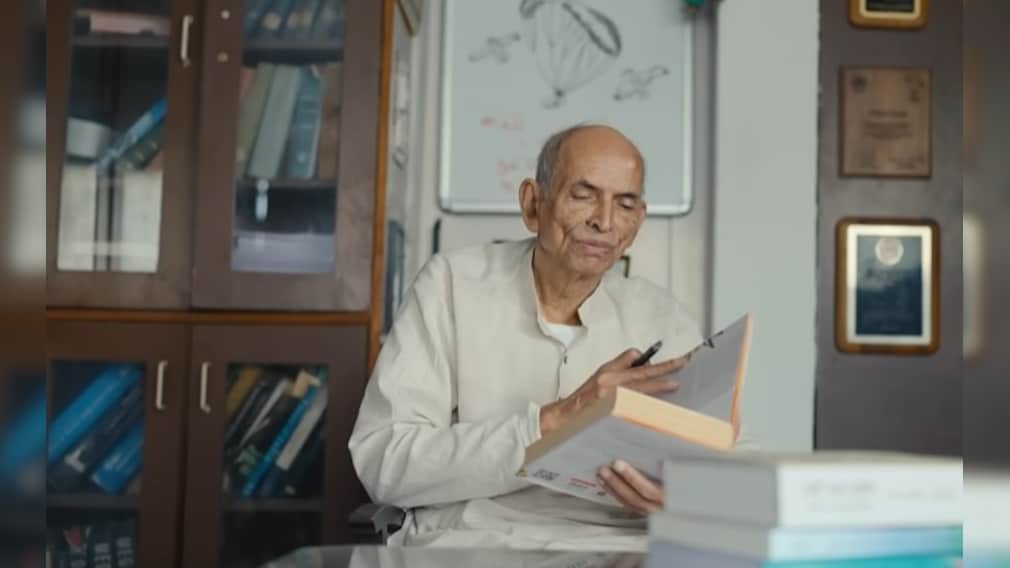
The last time I spoke to Madhav Gadgil was not in a forest or a committee room, where we usually met for interviews, but on the phone, amid the eruption of public protests in Kerala against the Western Ghats Ecology Expert Panel (WGEEP) report he had chaired in 2011. He spoke softly, almost diffidently, about what he had learnt from the field. I, less restrained, ranted about the misinformation being spread by vested interests among villages in the high ranges of Idukki.
It did not take long for us to realise we were circling the same truth from different directions, that India's environmental crises cannot be understood from the lens of ecology, not through history alone, but only by patiently weaving together an understanding of 'nature-people-equity' for the future. That synthesis was, in many ways, the story of Madhav Gadgil's life.
What Brought Gadgil Back To India
Born in Pune, educated in Bombay (now Mumbai) and then at Harvard, where he studied biology under EO Wilson, Gadgil could easily have built a distinguished academic career in the United States. Instead, in the early 1970s, he and his wife, atmospheric scientist Sulochana Gadgil, returned to India, determined to build knowledge where it mattered most. It was a choice rooted not in nationalism, but in conscience.
At the Indian Institute of Science (IISs), Bengaluru, then under the leadership of Satish Dhawan, the Gadgils found a home. Sulochana helped establish the Centre for Atmospheric Sciences and reshaped India's understanding of the monsoon. Madhav Gadgil founded the Centre for Ecological Sciences, which went on to train generations of ecologists. Much of India's environmental scholarship today carries his intellectual DNA, often unacknowledged.
The Man Who Saw Forests - And People
Madhav Gadgil began, as many ecologists do, with animals and equations. But the forests he studied were never empty spaces. They were inhabited landscapes, dense with human histories and everyday struggles. In and around national parks, he encountered repeated conflicts between forest departments, conservationists, Adivasis, peasants and pastoralists. What disturbed him was not only ecological damage but the systematic bias of state policy where forests are managed for timber and revenue, not for livelihoods, justice or long-term sustainability.
This moral clarity owed much to his father, economist DR Gadgil, an admirer of Ambedkar and a civil liberties advocate. From him, Madhav inherited a deep distrust of unchecked authority and a lifelong concern with inequality. Science, for Gadgil, was never neutral. It had obligations.
Gadgil was not a performative public intellectual. But when he spoke on issues he had studied, from forest rights, bureaucratic arrogance, to the contractor-politician-official nexus, he could be devastatingly direct. His authority came not from volume, but from knowledge painstakingly earned, often from peasants, pastoralists and forest-dwellers themselves. He listened first, theorised later.
The Explosive Western Ghats Report
This ethic found its fullest public expression in the WGEEP report of 2011. Written in a tone that was both rigorous and democratic, the report mapped fragile forests and steep slopes, warned against mining and reckless infrastructure, and argued for decentralised, participatory decision-making through panchayats and local communities. It was prescient without being alarmist, radical only in its fidelity to evidence.
The backlash was swift and vicious. Vested interests mobilised fear and misinformation, successor committees steadily diluted the report's recommendations. Yet, the report resonated with large sections of the public, who recognised its basic common sense. Had its recommendations been taken seriously, the devastating floods and landslides that have since ravaged Kerala, Karnataka and Goa, and most recently claimed hundreds of lives in Wayanad, might well have been mitigated.
The Western Ghats panel was no aberration. From the Save Silent Valley movement in the late 1970s to interventions in Bastar in the 1980s, from efforts to reform the Botanical and Zoological Surveys of India to shaping debates on forest governance, Gadgil consistently bridged science and public policy. He helped place people, not just species, at the centre of conservation.
People's Scientist
Recognition for this kind of science came late, and often from outside India. Over the years, Gadgil received the Volvo Environment Prize, the Tyler Prize for Environmental Achievement, and India's Padma Bhushan. In 2024, the United Nations Environment Programme named him a Champion of the Earth, describing him as a "people's scientist" who fused ecological rigour with democratic rights. The description is apt.
What remains most striking, however, is his temperament. Despite decades of frustration and bureaucratic sidelining, he remained, by his own phrase, a "durable optimist". He believed that people could organise, that knowledge could travel, and that democracy, however delayed, could still correct its course.
Madhav Gadgil's life was devoted to scholarship in its noblest sense: curious, critical and compassionate. In a republic where "sustainable development" increasingly cloaks casino capitalism, Gadgil stood as a sentinel. He shaped grassroots environmentalism in India not by commanding it, but by giving it intellectual depth and ethical clarity and arming it with facts and fairness.
Committees crumble, reports rot in cupboards, but Madhav Gadgil's motto of weaving 'nature-people-equity' endures - in forests reclaiming hillsides, in youth blocking bulldozers, and in the stubborn hope that science, allied with justice, can still speak truth to power.
(Shailendra Yashwant is an independent journalist and researcher documenting forest, wildlife, and the environmental politics, shaping conservation and land use in South Asia)
-
Opinion | 450 Missile, 2,000 Drone Attacks Later, Why Is UAE Still Not Fighting Iran?

The UAE is Iran's second-largest trading partner and also home to roughly half a million Iranians. Why, then, has it absorbed more fire than any other Gulf state?
-
In Numbers: How Has India Kept Fuel Prices Low Even As Europe Sees 70% Spikes?
India imports 88% of its crude. Why then is it not seeing massive price hikes for fuel and LPG? Inside the unique strategy it's following...
-
Opinion | India Just Decided To Let Chinese Capital In Again. But There's A Catch
In March 2026, India eased regulations that had restricted Chinese capital in local companies, in a development that marks New Delhi's cautious approach towards capital flows from Beijing.
-
Trump's Iran 'Knocked Out' Claim Blown Up By US Intel On Missiles, Drones
Donald Trump claimed this week the war would end in two to three weeks as he threatened to send Iran back to the Dark Ages. But based on these reports the fighting is far from over, even if US President wants to push a contrary narrative.
-
Opinion | Rs 30 Petrol Hike To Currency Crisis, What Oil At $150 Can Really Do To The World
At $125 per barrel, petrol and diesel retail prices will need to rise by Rs 8-14 per litre. At $150 - which experts think is now likely - these figures could touch Rs 26-30 per litre.
-
Opinion | The Problem With Trump's Fantasy Of A 'Crippled' Iran
Even a relatively insulated US economy cannot entirely escape the ripple effects of sustained disruptions in one of the world's most critical energy corridors.
-
Opinion | Trump's Iran War Is About To Become Someone Else's Problem Soon
Start alone, end alone - that may be the harshest lesson for Trump as he now tries to dash for the door in Iran.
-
What Happens If Iran War Actually Ends In 2 Weeks: The Challenges Ahead
Trump said the war could end in two weeks sans a deal to re-open the Hormuz. Analysts say it could take six to weight weeks more for oil flows to normalise, with each extra week of fighting adding seven to 14 days of recovery.
-
Opinion | Why 2 Gulf States Want Iran War To Continue - Even As They're Battered By It
If Trump withdraws from this war, the UAE, Saudi Arabia and other Gulf countries would be left to face the music alone, with an angrier, fiercer, and possibly more vengeful Iran.