Opinion | Lamborghini Crash To Dying In Pits, Many Ways To Cheapen Life In India
Systemic indifference in India is no longer an abstract concern; it is a lived reality inscribed on urban landscapes and, increasingly, on citizens' bodies.
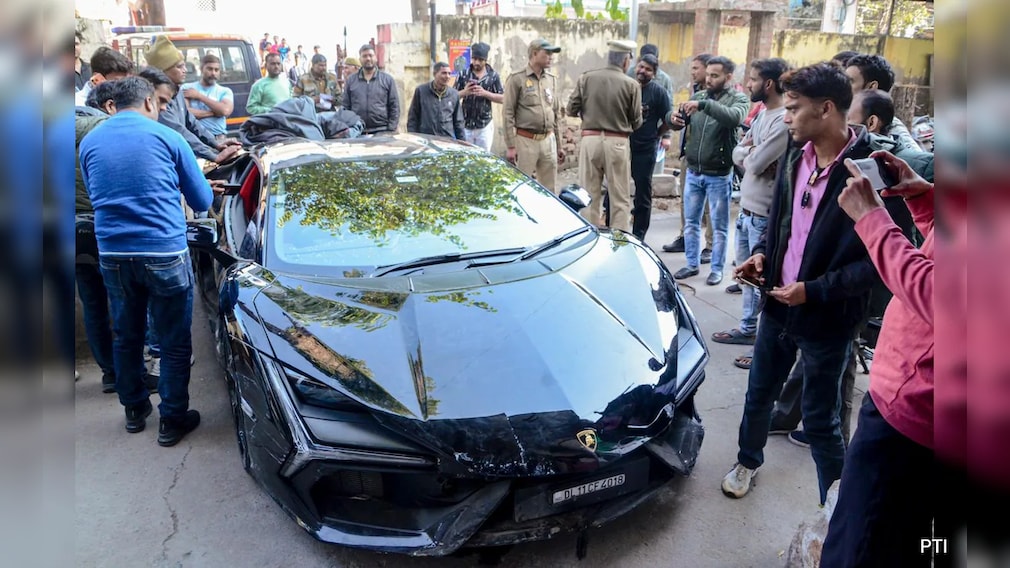
Moody's latest report has given yet another reason to the Indian government and bureaucracy to celebrate. The forecast pegs India's real GDP growth at 6.4% for FY2027, the fastest in G20 countries. Let's tell this to the men recently claimed by infrastructural and empathy hellholes in the National Capital Region - or those left injured as a power-drunk (and actually drunk) Lamborghini driver ploughed into pedestrians and vehicles in an upscale locality in Kanpur. Let's share these shining statistics with their families. Perhaps that would bring them solace after their loved ones succumbed to a reality that no "real GDP" has been able to alter.
Also note the recent deaths of two men in the NCR region, one who died after falling into an open construction pit in Noida, and another who lay dead in a pit for hours in Delhi after he plunged into a 14-foot-deep pit dug for water works. These are not freak accidents. They are symptomatic of a deeper governance crisis marked by bureaucratic indifference, substandard public works, and a pervasive culture of zero accountability. In the case of the Lamborghini crash, the driver, Shivam Mishra - a tobacco baron's son - tried to flee right after the crash and was shielded by his team of bouncers. The FIR initially registered by the police failed to even name him, but was later updated after public backlash. As of now, he remains in a Delhi hospital and hasn't been arrested. Anyone who has lived in India long enough could guess the fate of such cases.
Same Old, Same Old
Systemic apathy in India is no longer an abstract sociological concern; it is a lived reality inscribed on urban landscapes and, increasingly, on citizens' bodies. This erosion of substantive citizenship hollows out the very foundations of nation-building.
Political theorist TH Marshall's conception of citizenship emphasises not merely formal legal status but the effective enjoyment of civil, political, and social rights. The state's ability to provide safe infrastructure, basic services, and protection from preventable harm is central to substantive citizenship. When citizens die because open pits remain unbarricaded for years, drains are left uncovered, or public agencies evade responsibility, the promise of citizenship is reduced to a constitutional abstraction.
All three cases mentioned above starkly illustrate this deficit. The two victims fell into unmarked excavations or drains that lacked warning signage, barricades, or lighting. These are basic safety measures mandated under municipal and public works guidelines. Media investigations revealed that these hazards were not recent developments but had existed for extended periods despite complaints from local residents. In the Lamborghini crash, blame is still being assigned. Across the three incidents, responsibility has been diffused across agencies, each outdoing the other in deflecting blame. This fragmentation of responsibility is a defining feature of systemic apathy: when accountability is so dispersed that it effectively disappears.
No Isolated Incidents
Such incidents must be understood within a broader pattern of political and bureaucratic failure. Data from the National Crime Records Bureau consistently show that India records among the highest numbers of accidental deaths globally, with urban centres like Delhi accounting for a disproportionately high share of fatalities linked to road accidents, construction hazards, and unsafe public spaces. We play with death on an everyday basis amidst chronic neglect in urban governance. It takes no genius to realise that Indian bureaucratic systems prioritise procedural compliance over outcome-based accountability. Files move, tenders are floated, guidelines are issued, palms are greased, and people continue to die.
Max Weber's ideal bureaucracy was meant to ensure predictability, impartiality, and efficiency. In practice, the Indian bureaucracy often exhibits what sociologists term ritualism: adherence to rules divorced from purpose. Safety audits become paperwork exercises; inspections are conducted without enforcement; disciplinary action, when it occurs, is symbolic rather than transformative. Officials may be suspended after a death, but systemic reforms rarely follow. This reinforces a culture in which loss or damage to life is treated as an unfortunate but acceptable externality of development. Hence, the weakest link is scapegoated, should there be outrage.
When citizens must rely on outrage after tragedy, rather than institutional safeguards, to elicit state response, democratic legitimacy erodes. Governance becomes reactive rather than preventive. Reforms become spectacle-driven rather than care-oriented. The consequences for citizenship are profound. Niraja Gopal Jayal has argued that Indian citizenship is increasingly fractured, with rights unevenly realised across class and social location. Infrastructure deaths disproportionately affect ordinary commuters, informal workers, and residents of peripheral urban areas. These groups are doomed with limited political voice. When such deaths recur without meaningful accountability, citizens internalise the message that their lives are negotiable. This breeds not only anger but also resignation, a corrosive form of apathy that weakens democratic engagement and trust in institutions.
Care As A Mere Concept
Equally damaging is the erosion of what philosophers and social theorists describe as a culture of care. Axel Honneth's theory of recognition emphasises that institutions play a central role in affirming individuals as worthy of concern and protection. Indifferent governance communicates the opposite: that citizens are merely users of infrastructure, not rights-bearing members of a moral community. The repeated spectacle of preventable deaths and injuries, followed by bureaucratic buck-passing and political indifference, signals a failure of institutional recognition. Over time, this undermines social cohesion by normalising apathy. This happens not only within the state but within society at large.
This state of affairs also stunts nation-building, a project that depends not just on economic growth or political stability but on shared ethical commitments towards justice and care. Sociologist Luciano Gallino reminds us that citizenship entails duties as much as rights. There exist the reciprocal obligations of citizens towards each other and towards the state. Societies that fail to realise these mutual obligations risk fragmentation rather than solidarity. And these fragments can rarely be put together by the glue of GDP.
(Nishtha Gautam is a Delhi-based author and academic. She's currently researching Nationalism at Jindal School of International Affairs)
Disclaimer: These are the personal opinions of the author
-
Opinion | 450 Missile, 2,000 Drone Attacks Later, Why Is UAE Still Not Fighting Iran?

The UAE is Iran's second-largest trading partner and also home to roughly half a million Iranians. Why, then, has it absorbed more fire than any other Gulf state?
-
In Numbers: How Has India Kept Fuel Prices Low Even As Europe Sees 70% Spikes?
India imports 88% of its crude. Why then is it not seeing massive price hikes for fuel and LPG? Inside the unique strategy it's following...
-
Opinion | India Just Decided To Let Chinese Capital In Again. But There's A Catch
In March 2026, India eased regulations that had restricted Chinese capital in local companies, in a development that marks New Delhi's cautious approach towards capital flows from Beijing.
-
Trump's Iran 'Knocked Out' Claim Blown Up By US Intel On Missiles, Drones
Donald Trump claimed this week the war would end in two to three weeks as he threatened to send Iran back to the Dark Ages. But based on these reports the fighting is far from over, even if US President wants to push a contrary narrative.
-
Opinion | Rs 30 Petrol Hike To Currency Crisis, What Oil At $150 Can Really Do To The World
At $125 per barrel, petrol and diesel retail prices will need to rise by Rs 8-14 per litre. At $150 - which experts think is now likely - these figures could touch Rs 26-30 per litre.
-
Opinion | The Problem With Trump's Fantasy Of A 'Crippled' Iran
Even a relatively insulated US economy cannot entirely escape the ripple effects of sustained disruptions in one of the world's most critical energy corridors.
-
Opinion | Trump's Iran War Is About To Become Someone Else's Problem Soon
Start alone, end alone - that may be the harshest lesson for Trump as he now tries to dash for the door in Iran.
-
What Happens If Iran War Actually Ends In 2 Weeks: The Challenges Ahead
Trump said the war could end in two weeks sans a deal to re-open the Hormuz. Analysts say it could take six to weight weeks more for oil flows to normalise, with each extra week of fighting adding seven to 14 days of recovery.
-
Opinion | Why 2 Gulf States Want Iran War To Continue - Even As They're Battered By It
If Trump withdraws from this war, the UAE, Saudi Arabia and other Gulf countries would be left to face the music alone, with an angrier, fiercer, and possibly more vengeful Iran.