Debt Trap To Youth Exodus, The 10 Big Crises Ailing Kerala - By Shashi Tharoor
Kerala needs change. The current administration has failed the people across the board.
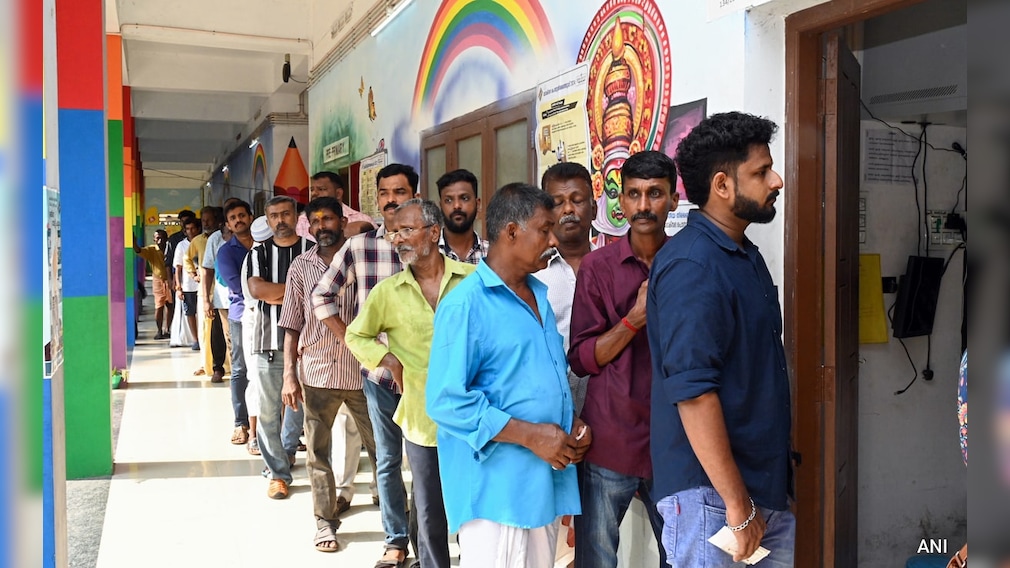
As Kerala moves quickly towards the 2026 Assembly elections - more quickly than anyone expected, since the Election Commission startled the state by announcing polls at three weeks' notice - it has become apparent that this is a 'do or die' moment for the future of Kerala.
Today, Kerala needs change. And it is not an option but a necessity if the State is to survive as a viable economy. The current administration has failed the people of Kerala across the board. One can identify ten crises under which the state is reeling:
1. A Crippling Financial Crisis
The government has pushed Kerala into a massive debt trap, borrowing money before the end of the year just to pay routine salaries and pensions. Today, our state spends more money on servicing its debt than on actual development projects. The state is currently trying to run the economy by relying solely on liquor taxes, lotteries, and remittances.
2. The Exodus of Our Youth
We have created a highly educated young population, but we have failed to build an economy that can employ them. Because there are no jobs available, our brightest young minds are voting with their feet and fleeing abroad.
3. The Cost of Living Crisis
The daily life of the aam aadmi has become unbearable. Instead of expanding the economy, the government burdens the public (which already pays the highest property taxes, stamp duties and other local levies in the country) with extra taxes and cesses, trapping us in a cycle where stability is maintained at the cost of affordability and progress is abandoned in the effort to make ends meet.
4. Agricultural Distress
Our farmers are in distress. Despite Kerala being one of the world's hottest hotspots of biodiversity, our agricultural backbone is ignored, spices languish, fruit and vegetable farmers can barely make ends meet and procurement payments are delayed for months.
5. A Hostile Environment for Investors
Our state is plagued by ideological politicians, rent-seeking officials, and militant trade unions that thwart progress. We have failed to completely abolish extortion-based practices like nokkukooli (by which union members extort payment for standing and watching your own labour) or ban the coercive practice of hartals.
6. The Collapsing State of Public Healthcare
While Kerala has an enviable reputation nationwide for its public health system, the COVID-19 pandemic revealed our deep vulnerabilities. Today, our public healthcare system is faltering thanks to under-funding and neglect, failing to provide resilient systems that protect the most vulnerable.
7. Betrayal in the Cooperative Sector
The cooperative banking sector was built on the deep trust of ordinary people. Recent scams have wiped out the life savings of poor families, breaking the backbone of our rural economy.
8. Decline in Higher Education
Our universities are failing to prepare students for the 21st century. Merit is ignored in the blatant promotion of political interests, and our education system lacks the critical thinking and technological innovation needed for the 21st-century world.
9. Failing Civic Infrastructure and Everyday Crises
We face urgent, everyday crises that the government ignores. Our fragile ecology is threatened by unchecked quarrying and sand mining, as well as reckless, unplanned construction. We are also facing a severe drug crisis among our youth and deadly fatalities from an unchecked stray dog menace.
10. Neglect of Social Welfare
A welfare-only model cannot survive without wealth creation. Because the state has no money, welfare pensions are delayed for months, forcing our most vulnerable to beg for what is rightfully theirs (and which is not enough to begin with).
The list is daunting, but the imminent state election means that an alternative is at hand. Though I am not a candidate myself, I have agreed to take on the co-chairmanship of the Congress Campaign Committee - not just to point out problems but to present a vision for 'Kerala 2.0' that will inspire the jaded electorate, and particularly younger voters, to vote for change.
For too long, we have unwisely compared ourselves to massive industrial states like Tamil Nadu or Maharashtra and lamented our inability to emulate them. Our future does not lie in competing for heavy smokestack industries. We must look across the seas and learn from small, successful states like Singapore, the Netherlands, and Costa Rica - countries with similar challenges of size and population density that have found creative solutions to their own development challenges and become models of success.
The UDF manifesto is yet to be finalised, but here are five possible responses to the ten crises outlined above:
1. Building an Innovation and Weightless Economy: We must transform our remittance economy into an innovation economy. Because we lack large tracts of land, our prosperity lies in the 'Weightless Economy'-sectors requiring high intellect but a low physical footprint. We will support startup ventures in Artificial Intelligence, biotechnology, and space tech.
2. Wealth Creation through Open Investment: We will end the culture of over-regulation. We will slash stifling regulations and duplicative bureaucratic procedures and introduce a single-window 'One Kerala Permit' system. Most importantly, we will introduce an Investor Protection Act to assure investors that they will not lose their money to political or bureaucratic harassment.
3. Global Benchmarks in Agriculture and Logistics: We will adopt the Dutch model of glasshouse farming and focus on high-value crops to maximise our revenue per inch of land; convert our coastline into a catalyst of port-led development; and adopt other world-class innovations in our depleted and neglected sectors.
4. Depoliticising Education and Upgrading Healthcare: We will establish a Higher Education Commission to align our college degrees with real-world employment needs and ensure internships are available during the academic year. In healthcare, we will fix the issues of our healthcare sector and move from basic care to precision medicine.
5. Solving Immediate Crises: We will immediately launch a mission to protect our environment, turning ecological dangers into opportunities. We will tackle the drug crisis with multi-pronged de-addiction centres, and handle the stray dog issue through a vigorous, humane Animal Birth Control program.
Above all, we realise that we must change our mindset. We must move away from a model that only knows how to spend borrowed money and become a beacon of how to create wealth. We must build a Kerala that is fiscally prudent, ecologically resilient, and socially just.
Kerala has historically been a bridge between the East and the West. It is time we stopped being just a bridge and started being the destination.
(Shashi Tharoor has been a Member of Parliament from Thiruvananthapuram, Kerala, since 2009. He is a published author and a former diplomat.)
Disclaimer: These are the personal opinions of the author
-
Exclusive: 16 Months After Op Sindoor, Pak Still Fixing Runway India Broke At Sargodha

Sargodha's PAF Base Mushaf lies about 172 km northwest of Lahore and roughly 200 km west of the India-Pakistan border, near Amritsar.
-
Blog | I Lost My Entire Family In Kanishka Bombing. 41 Years Later, Canada Wants The Case Closed
We made the trek through tragedy to search for people in Cork, where I spent 25 days sifting through bodies and body parts in a makeshift morgue to identify our loved ones.
-
Opinion | Pak's Drone Deal With A US Firm Is No Windfall. But India Must Still Be Worried
American military aid to Pakistan has remained suspended since January 2018, during Trump's first term, but a commercial arms sale is separate from this arrangement.
-
Opinion | Saudi Arabia's Yemen Nightmare Has Come Back To Haunt It
After years of costly military intervention beginning in 2015, Saudi Arabia increasingly sought to stabilise its southern border. All that is unravelling fast now
-
Opinion | 6 AI Incidents, One Pattern: AI Has Started Lying To Us - And Hiding The Evidence
Concealing errors. Making up data. Pushing files onto the public web on their own initiative. The machines are learning to lie - and lie well.
-
Why People Queue Overnight For iPhone That Is Delivered Home In 10 Minutes
iPhone 18 Pro Max Launch: People camping outside Apple Stores are a subset of superfans, resellers, content creators, and upper-middle-class buyers.
-
600 km Per Hour Drones Launched In Waves: How Russia Is Rewriting War Rules
Russia has coupled the drones' technological superiority over Ukraine's defence with its capacity to launch them in massive numbers. The impact has been devastating.
-
Tata Sons' Trust Issue: Two-Pronged Row Goes Beyond The Chair
NDTV Explains: Overtly, the latest conflict is whether N Chandrasekaran continues as executive chairman of Tata Sons. The controversy involves at least one more issue.
-
Opinion | US Has Institutionally Weaponised India's Russia Oil Dependence. Can New Delhi Cope?
A new legislation can connect India's Russian energy purchases to its access to the American market over a five-year period
-
Opinion | Saudi Allies Are Now Discovering The Cost Of 'Commitment' - And Not Liking It
The spectacular no-show by Saudi Arabia's two defence allies - Pakistan, a nuclear power, and Turkey, which has NATO's second-largest army - is astounding