'Who Else?' - The Hubris That Shattered The Left In Kerala
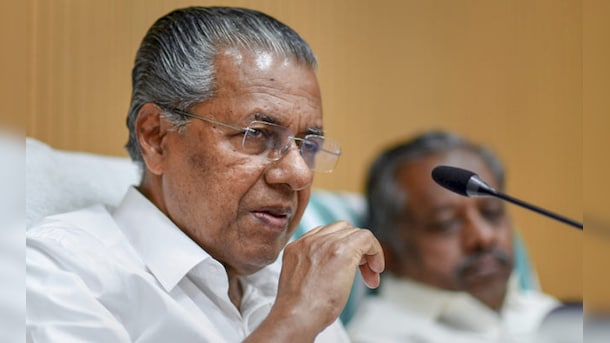
The LDF's campaign slogan, "Matt aarunde?" ("Who else is there?"), complete with towering portraits of Pinarayi Vijayan, was intended to project stability and a lack of alternatives. Instead, it projected an arrogance that voters found stifling.

The political landscape of Kerala has long been described as a pendulum, swinging rhythmically between the Left Democratic Front (LDF) and the United Democratic Front (UDF) every five years. That rhythm was broken in 2021, creating a temporary aura of invincibility around the Communist Party of India-Marxist (CPI-M) and leading many to believe that "continuity" could become the new norm.
But in 2026, the pendulum has not just swung back; it has shattered the clock. The UDF's decisive victory, securing 102 seats to the LDF's 35, is not a mere change of guard. It is a profound structural rejection of a particular style of governance and an ideological exhaustion that has left the Left decimated in its last Indian bastion.
At the heart of the LDF's defeat lies hubris, linked to a fundamental misreading of the Keralite psyche. The 2026 campaign was unlike any in the state's history, marked by an unprecedented centralisation of authority embodied in towering portraits of Chief Minister Pinarayi Vijayan across the state. The campaign slogan, "Matt aarunde?" ("Who else is there?"), was intended to project stability and a lack of viable alternatives. Instead, it projected an arrogance that the voters - and even many party supporters - found stifling.
A Rejection Of One-Man Rule
Kerala's democracy is inherently argumentative, decentralised, and pluralistic, which is why it uniquely involves a contest of multi-party coalitions on both sides. By attempting to convert a Cabinet-style government into a presidential cult of personality, the LDF alienated its own base and the neutral middle class alike. The "Captain" narrative, which served the party well during the existential anxieties of the COVID-19 pandemic, curdled over the last five years into a symbol of opacity and authoritarianism. The voters' response was clear: in a democracy, there is always "someone else". The rejection of one-man rule is a victory for the collective democratic spirit over the instincts of a Communist autocracy.
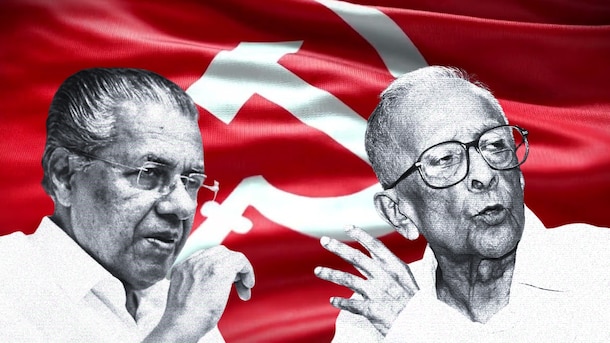
The scale of the Left's defeat - losing traditional strongholds that were once considered "impregnable fortresses" - points to a deeper malaise. The Communist movement in India has lost its vocabulary for the 21st century. The hammer and sickle, symbols of a noble struggle for land reform and labour rights in the 1950s, feel increasingly disconnected from the aspirations of the 2020s. Today's Kerala is defined by a globalised diaspora, a burgeoning gig economy, and a youth population that seeks digital entrepreneurship rather than state-sponsored protectionism.
The Hammer And Sickle Have Lost Their Relevance
When the LDF talked about "resistance against neoliberalism", the youth saw it as a barrier to the private investment required to create jobs at home. The result has been a tragic "brain drain" that has seen Kerala's best and brightest flee to the Gulf, Europe, and Southeast Asia, as well as to other Indian states, in quest of greater opportunities unavailable at home. The Left could offer them doles and kits, but it could not offer them a future. By failing to bridge the gap between their 20th-century ideology and 21st-century aspirations, the CPI(M) has found itself historically marooned. Even if the hammer and sickle remain in our history books, they have lost their relevance in our job markets.
Perhaps the most heartening aspect of this mandate is the state's continued refusal to succumb to communal polarisation. Despite intense efforts to inject divisive narratives into the campaign, the voters of Kerala remained focused on governance and social harmony. Even the BJP tried to focus on development rather than Hindutva, which may have helped them open their account with three seats in the 140-member Assembly.
The Real 'Kerala Story'
One "Kerala Story" from this election result should be noted by communalists nationwide: A Muslim-majority constituency, Thavanur, elected a Christian, VS Joy; another Muslim-majority constituency, Trikaripur, elected a Hindu, Sandeep Varier; a Hindu-majority constituency, Kalamassery, elected a Muslim, VE Abdul Gafoor; and a Christian-majority constituency, Kochi, elected a Muslim, Muhammed Shiyas. People voted for the political message of the candidate and the hopes they embodied, rather than judging them on the basis of their faith or community.
These results prove that the real "Kerala Story" is one of remarkable cross-community trust. When voters choose candidates regardless of the religious majority of their seats, it is a resounding slap in the face to those who wish to see India divided along religious lines. The UDF, through its inclusive candidate selection and its refusal to engage in soft-communalism, emerged as the true guardian of this secular fabric. It is no accident that all four winners in this "Kerala Story" were UDF candidates.
The UDF's Efforts
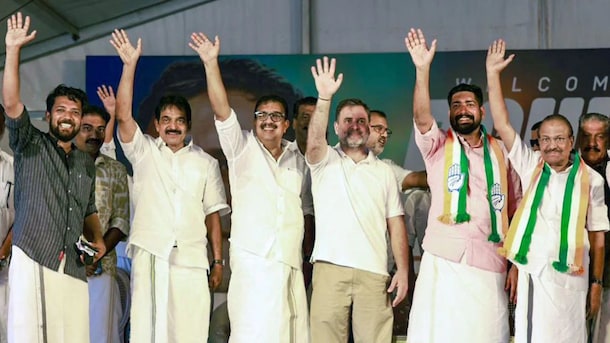
The UDF's path to victory was also a triumph of internal reform. For years, the Front was hampered by perceived factionalism. In 2026, however, the UDF presented a unified face and a synchronised message. The leadership displayed a level of discipline and strategic maturity that caught the LDF off guard. Even the inevitable disagreements within the Congress over ticket-distribution did not see any breakdown in unity; disappointed aspirants swallowed their differences to campaign for those they had internally opposed, and there was no open dissent, let alone any "rebel" candidacies. Ironically, the same was not true of the Left; as many as six Communist leaders fought against their former party's nominees as UDF-backed Independents, and three of them won in constituencies previously considered to be impregnable Communist bastions.
This cohesion allowed the UDF to focus on a positive agenda, moving beyond mere criticism of the incumbent to offering a roadmap for revival. The coordination between the Congress, the IUML, and other alliance partners ensured that there was no leakage of votes, reflecting a collective desire to save the state from economic ruin and continued LDF misgovernance. As many as 13 Ministers of the outgoing government bit the dust.
Now, The Hard Part
However, the UDF must realise that this victory is not just a reward; it is a heavy responsibility. Kerala is currently facing a crippling economic and social crisis. The state's debt is at an all-time high, and its revenue-generating capacity is struggling to keep pace with its high social spending. We are an ageing society with a dwindling working-age population, necessitating a radical rethink of our economic model.
The time for incremental changes is over. As I have written previously in this space, Kerala needs transformational governance that can:
- Modernise Infrastructure: Developing world-class connectivity without destroying our fragile environment.
- Revitalise Education: Matching our high literacy rates with high-employability skills that meet global standards.
- Foster Investment: Creating an "Investment-Friendly Kerala" that protects the dignity of the worker while empowering the innovator.
Kerala needs nothing less than a "1991 moment" that will reinvent the economy and our way of doing business. Growth, jobs and revenue-generation must be the new watchwords. The UDF victory must mean that the complacent days of "business as usual" are truly over.
The overwhelming 2026 mandate is a cry for help from a populace that feels the state is stagnating. The UDF has been given an extraordinary chance to lead this transformation. If they succeed, Kerala will not just be a model for social indicators but a powerhouse of economic dynamism and a beacon of hope for all of India. The Red Sunset in Kerala should mark the dawn of a new era of pluralism and progress. It is up to the new UDF government to ensure that it is nothing less.
(Shashi Tharoor has been a Member of Parliament from Thiruvananthapuram, Kerala, since 2009. He is a celebrated author and a former diplomat)
Disclaimer: These are the personal opinions of the author
-
Analysis | Wrong To Delay Vijay 'Sarkar', Two Leaves Must Blow The Whistle

This is a clear case - Vijay's TVK is the number one party by a mile in a hung verdict and needs to have the chance to prove its numbers on the floor of the house
-
Book Excerpt | 'Sir, Confirm Fire': The Story Of How India Downed The Very First Pak Jet In Op Sindoor
Group Captain Animesh Patni, a serving IAF officer, describes the very first launch of an S-400 surface-to-air missile from Adampur on May 7, which brought down a Pakistani jet.
-
Opinion | The Dam Breaks: Kerala Didn't Reject The Left, It Rejected What It Had Turned Into
As much as an anti-incumbency wave, the UDF's win is a sign of a 'moral correction' issued by voters against what the Left had become in its decade-long rule.
-
Opinion | The Vijay Paradox: How A 'Welfare State' Still Ended Up Dissatisfied
The TVK will have to go the extra mile to deliver the goods, over and above the DMK's slew of welfarist measures that were generally comfortable, but not enough. The voter simply said, 'Yeh Dil Maange More'.
-
Opinion | Congress' Biggest Challenge For Kerala? Not Letting It Go Down The Karnataka Way
The Congress has to ensure this does not end up becoming another Rajasthan or Karnataka-like leadership tussle. In neighbouring Karnataka, the Congress finds itself split down the middle.
-
Opinion | Mamata Banerjee Brought Down The Left, But Never Quite Learnt From Its Fall
Mamata took over the Left's playbook 15 years ago, but failed to rework it to craft a new politics. In the end, the people of Bengal got more of the same: musclemen, corruption, and bad governance.
-
Opinion | MK Stalin: The Strongman Who Underestimated His Opponent - And Paid The Price
The DMK ecosystem kept dismissing Vijay's supporters as "tharkuris", that is, "idiots". It's this short-sightedness they are now paying for.
-
Left Behind? Left Not In Power In Any State For 1st Time In 50 Years
When the first elections were held in the country in 1951-52, it was the Communist Party of India that had the highest number of seats among Opposition parties in the Lok Sabha.
-
Opinion | Self-Inflicted Wounds? How Mamata Became The Architect Of Her Own Collapse
For a leader who built her identity on being the "sole protector" of Bengali sub-nationalism and the provider of a sprawling welfare state, the transition to the Opposition benches will be devastating.