Opinion | Putin In India: Why A Fuming Europe Must Accept Its Problems Aren't Of India's Making
The initiative of the three European envoys to write an article in an Indian daily maligning Putin and Russia just before the Russian president's visit served no real purpose. It was diplomatically unwarranted.

A couple of days before Russian President Vladimir Putin's state visit to India, the accredited envoys of the UK, France and Germany in a joint article made a blistering attack against him and Russia over the Ukraine conflict, which a major Indian daily thought fit to carry.
India has received many sermons by the US and Europe on our relations with Russia after it intervened militarily in Ukraine. We were told we were on the wrong side of history in not condemning Russia in the UN or otherwise. Our position was not considered moral. We were asked to dilute our ties with Russia, including defence. Under Trump, the rhetoric against India acquired new proportions. We were accused of financing Russia's war against Ukraine and were held responsible for the latter's human losses. We were asked to cease buying Russian oil, and to induce us to do so, Trump imposed an additional 25% penalty tariffs on Indian exports to the US.
In Europe, too, India has been traduced for its position on the Ukraine conflict. At the Raisina Dialogue in April 2022, the President of the European Commission, Ursula Von der Leyen, slammed Russia and exhorted us to condemn it. The deeply anti-Russian EU Foreign Policy head, Kaja Kallas, has also often spoken against our neutral position. The UK's Elizabeth Truss as Foreign Secretary had urged us aggressively at the Raisina Forum in March 2022 to oppose Russia's invasion of Ukraine. Former UK Prime Minister Boris Johnson has been an unrelenting critic of Russia. Other European leaders gathered for the Raisina Dialogue in the past have called on India to reconsider ties with Russia because of its aggression against Ukraine.
Europe's Displeasure Isn't News
At various international security dialogues, including at the Munich Security Dialogue hosted by Germany, India's External Affairs Minister, S. Jaishankar, has been grilled on our position on Ukraine, and he has pushed back. At the G7 meetings, which India attends as an invitee, the European members express their virulent opposition to Russia's invasion of Ukraine, and do so at NATO meetings as well. UK's PM Keir Starmer, German Chancellor Friedrich Merz and French President Emmanuel Macron have been unsparing in their condemnation of Russia. India is well aware of all this.
In this background, the initiative of the three European envoys to write the article in question maligning Putin and Russia just before the Russian president's visit served no real purpose. The three knew that their article would not change anything on the ground, Putin was not going to be disinvited, and if India had rejected pressures at much higher political level in the West on its relations with Russia, an op-ed by them amounted to making a point for its own sake.
But what they did was diplomatically unwarranted. Their purpose was not to inform the Indian audience about their already well-known position on Russia and the Ukraine conflict, but to make a last-ditch effort to cast a shadow on Putin's visit. Going directly to the public through the media was a way to make the point that resentment in Europe against India's wooing of Putin remained, and that the Indian government had failed diplomatically to obtain the understanding of three major European powers for its policy towards Russia, with a connotation that this could impinge on efforts to build ever-closer India-Europe ties.
A Diplomatic Breach
At the professional level, one can assume that the three ambassadors, with their diplomatic experience, knew they were breaching diplomatic norms and that the government of India would look at this askance. But they may have felt that they would be able to deal with any fall-out, no doubt conscious of the importance these countries have in India's foreign policy. Europe is a major trade, investment and technology partner of India, besides a valuable partner in many other domains. In fact, Germany, the UK and France are India's biggest partners in Europe.
These three countries know the history of our relations with Russia and the importance this relationship has in the matrix of our foreign policy. Europe may have its problems with Russia and may feel strongly about them, but these are not of our making. If Europe has failed to forge a European security architecture since 1945, and this despite the collapse of the Soviet Union and the end of the Cold War, India is not responsible for that failure. The Ukraine conflict results from that political and security drift in Europe. Why then drag India into this European quarrel? All that is being imputed to Russia, namely, aggression, violation of sovereignty, changing borders by force, breach of international law, the UN charter and a rules-based order, can be objectively laid at the door of the US and Europe too.
Crossing A Line
As a general point, accredited diplomats are supposed to respect the host country's friendly relations with third countries. If such relations are seen as questionable for whatever reason, it is not for the accredited ambassador to express concern or opposition. That should come from the government of the ambassador's country. The accredited ambassador should, in order to be effective in his diplomatic work, avoid being seen as critical of the government of the country where he or she serves. There are, of course, cases where ambassadors do not observe these norms, but then they lose high-level access to the local government and lose their professional effectiveness.
India's reaction to the op-ed by the three ambassadors has been muted, with official sources calling what they did unusual and saying that giving advice on India's relations with third countries was unacceptable. In the larger interest of our ties with these countries, our decision not to raise the decibels on this provocation can be justified. Surprisingly, however, the spokesperson of the German Foreign Ministry has thought it fit to take issue with what we have said by asserting that what the German ambassador did was not interference but rather a presentation of the German position, which Germany does worldwide, and reiterate that Germany stands “fully behind our ambassadors”.
In India, we are aware of the increasingly aggressive anti-Russian German position on Ukraine expressed by its leaders virtually every day. Was there any pressing need then to remind India of the German position just before Putin's visit through their ambassador, except as a veiled protest against it? If Germany opposes Putin's visit to India, it should say so clearly. India can then respond appropriately.
(Kanwal Sibal was Foreign Secretary and Ambassador to Turkey, Egypt, France and Russia, and Deputy Chief Of Mission in Washington.)
Disclaimer: These are the personal opinions of the author
-
Why Doesn't Congress Boycott If Polls Are "Fixed"? Answer Lies Beyond Rahul Gandhi's "Distraction" Quip

The starkest demand for a boycott has come from outside the political Opposition, from the Cockroach Janta Party. But does a boycott help? Here's what research, examples, and expert analysis tell us.
-
'Sully' To Gimli, Sioux To Patna: When Pilots Got It Unbelievably Right
Captain Smit Machchhar fought off his co-pilot after being stabbed and opened the cockpit door, saving 174 people.
-
Opinion | Are Saudi Arabia And UAE Reuniting Again After 10 Years?
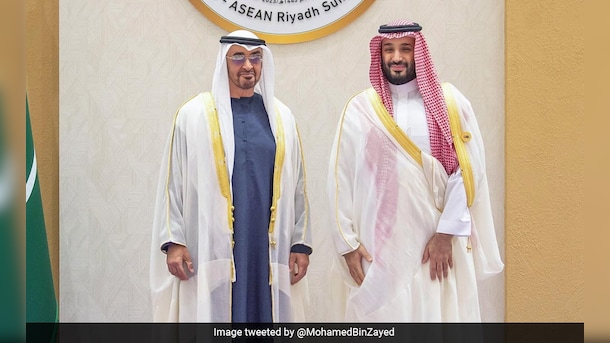
On Tuesday, the UAE's Vice President, Deputy Prime Minister and Chairman of the Presidential Court, Mansour bin Zayed, met Saudi Crown Prince Mohammed bin Salman.
-
Opinion | 'Lies, Damned Lies, Statistics': On The Controversy Around India's GDP Growth Figures
The debate is less about a single figure than about a decade-long erosion of trust in official statistics.
-
Opinion | Why India Cannot Keep 'Overestimating' Its Value To Washington
Some of India's value to Washington came from the tension between the US and China. That is changing now.
-
Opinion | India Has A 'Lobbying' Problem In Washington, And It Has Come Back To Haunt It
While the EU, Japan, the UK and South Korea secured quick deals, India's efforts were getting drained in prolonged negotiations and the wrong kind of lobbying.
-
India Is Getting Old Before Getting Rich, Will Turn 'Aged' In 16 Years: Moody's
Countries with the steepest fertility declines today will age the fastest in the coming decades. India's drop has been steep.
-
Opinion | Why Does Trump Want To Sell Arms To A US 'Adversary'? Inside His Strange Bargain
Trump's aides maintain that no such offer had been made. But the story points to a larger strategy
-
Opinion | The AI Boom Has Run Into A Big 'Debt' Trap Problem. Inside The 5% Danger Line
For most of the AI buildout's first two years, hyperscalers funded it the easy way: out of operating cash flow. That era is over.
-
Opinion | Iran To Saudi, Pakistan Is Now Fast Running Out Of Sides To Play
Pakistan's long history of playing all parties to its own benefit may have reached the end of its road.