Opinion | It Is The Best Of Times, It Is The Worst Of Times, For Pakistan
While Pakistan has always lived by its wits, this time, it faces the unpredictable, transactionalist Donald Trump, a dealmaker with a penchant for sudden surprises (ask Zelensky).
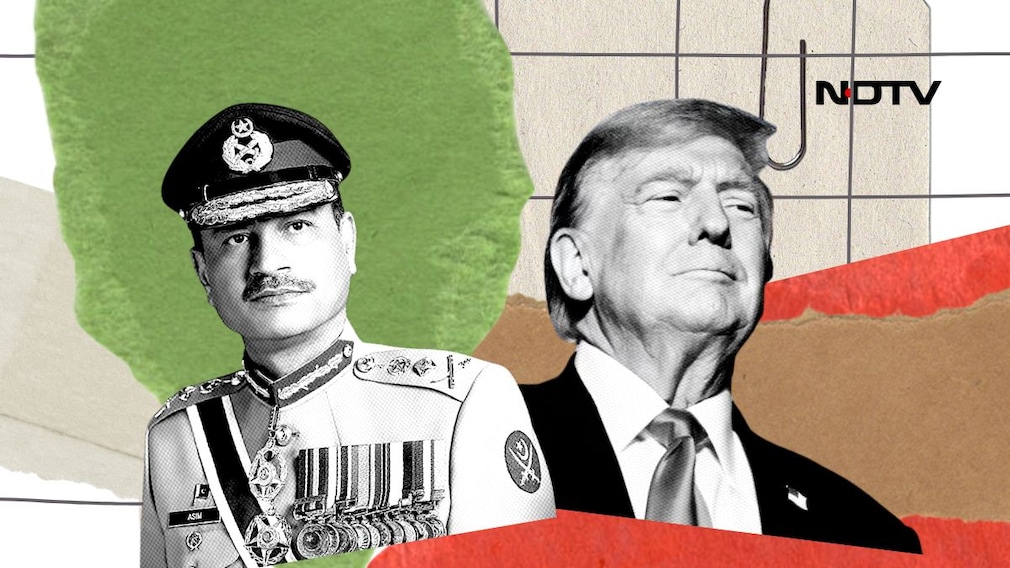
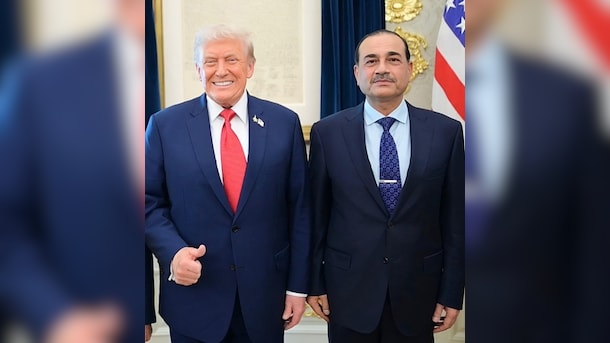
Pakistan Field Marshal Asim Munir's June 18 White House lunch hosted by US President Donald Trump offered plenty of hors d'oeuvres that we Indians need to munch and digest at leisure.
The visiting Pakistani dignitary is also scheduled to meet the Secretaries of State and Defence before concluding his five-day visit, which has been shrouded in secrecy and frequent redefinition of its agenda and objectives. He was first said to be invited to attend the US Army's 250th anniversary, which he did not eventually attend. Chances are that its real agenda is to set the terms of engagement to enable Pakistan to resume, all over again, America's usual "Dirty Work", albeit this time for a new objective: affecting a regime change in neighbouring Iran. Last-minute offer of an unprecedented White House lunch and the host's expression of effusive love for Pakistan and its Field Marshal are tell-tale signs that the two sides have agreed to pursue a comprehensive joint strategy on Iran, deemed important enough in Washington to risk riling New Delhi, at least in the short run.
A Strange Turn
Over the past two months, there have been many other straws in the air indicating the tailwinds for America's ties with Pakistan. While Trump and his team condemned the Pahalgam terrorist attack of April 22, they were deafeningly silent on Pakistan's culpability. While US Vice President JD Vance said on May 8 that the ongoing India-Pak hostilities were "none of our business", two days later, Trump peremptorily took credit for effecting a ceasefire between the belligerents "at the verge of a nuclear war" (he has repeated this claim despite India's stubborn denials). Meanwhile, Secretary of State Marco Rubio spoke to Gen Munir, the Chief of the Pakistani armed forces, ostensibly to discuss the ceasefire. A billion-dollar IMF (International Monetary Fund) bailout package for Pakistan was approved within hours of the May 10 ceasefire, ignoring New Delhi's strong reservations. In his June 10 House Committee testimony, the US Centcom Chief described Pakistan as "a phenomenal partner" in counter-terrorism. While many of these American pronouncements were accompanied by balancing remarks for India and Prime Minister Narendra Modi, these only show a reversion to the India-Pakistan re-hyphenation.
What's Behind These Words?
It does not take a genius to guess the broad likely contours of the deal are being stealthily negotiated (while pretending that the Field Marshal was miffed at being forced to cool his heels in a hotel) before the White House lunch. Trump's White House is currently fixated on Iran. Pakistan, with a 909-km-long border with that country, is most probably being offered an opportunity to become a "Frontline State" in return for the usual handsome rewards. For economically tattered and politically unstable Pakistan, this gratuitous offer is manna from heaven that it is in no condition to refuse. The ever-guileful Islamabad, however, is certain to drive a hard bargain: a long-term strategic partnership placing Islamabad near the fulcrum of the post-crisis Gulf security architecture with accompanying financial, military bailout and re-hyphenation with India.
In return, Pakistan would be expected to render help in reshaping Iran in several ways: in the short term, to provide a staging post for the American forces to operate in Iran to defang the latter's nuclear programme, and, over the long run, depending on the outcome of the Tehran regime change project, collaborate by seeding and sustaining an insurrection and/or keeping the Mullah regime off balance. Pakistan's staging role would be preferable to both Washington and the Gulf Arabs, who although host many American military bases, are loath to be subject to Iran's threatened wrath.
Not The First Time
Indeed, Rawalpindi GHQ has been the Pentagon's useful and profitable minion many times before. During the Cold War, military-run Pakistan was among the early opt-ins as a lynchpin to South West Asia's Western security architecture through SEATO (Southeast Asia Treaty Organization) and CENTO (Central Treaty Organization) against Communism. Islamabad was rewarded with Patton Tanks and Sabre jets, which were unabashedly used against India in the 1965 and 1971 conflicts.
Entry of the Soviet Union's Red Army into Afghanistan in 1979 was the second such opportunity, which made Pakistan a "Front Line State" for the West. Gen Zia ul Haq's dictatorship, then an international pariah for the execution of Prime Minister Benazir Bhutto, was quickly rehabilitated and made a staging post for a not-so-secret campaign by the US and some Gulf states to train and equip the Mujahideen fighters to bleed the invaders till the Russians finally withdrew in 1989. Pakistan not only milked the aid pipeline but also got F-16s and other military hardware. Even more importantly, Americans turned a blind eye to its covert nuclear weapon programme under the infamous Dr AQ Khan, as Islamabad was deemed too important an ally to worry about such trifling matters as nuclear proliferation to Libya, Iran and North Korea.
The Afghanistan Saga
Once the Mujahideen took over Afghanistan in 1992, the US quickly lost interest in Pakistan, much to the latter's chagrin. But soon thereafter, September 11 happened, giving Islamabad a third such opportunity to help the Pentagon stage an invasion to dislodge the same Islamic militants it helped bring to power less than a decade ago. Americans rediscovered, at their peril, the Pakistani duplicity in helping them but also nurturing Afghanistan-based "Taliban", al-Qaeda and other jihadists. This epoch lasted two decades, during which, once again, Pakistan was the base as well as a conduit for the massive US deployments in Afghanistan.
By this time, Pakistanis had mastered the art of being perfidiously transactional towards Americans. Their gains during two decades of US involvement in Afghanistan are put at nearly $50 billion. Islamabad pretended to support the American campaign against the Afghan Taliban but also secretly sustained the latter, to eventually gleefully claim a victory when the Taliban Emirate was re-established in Afghanistan in August 2022 as the US troops left the country. The US spent over $2.3 trillion and suffered over 2,400 dead soldiers while chasing al-Qaeda all over the country, when all the while, its supremo, Osama bin Laden, was holed up in a safe house near a large Pakistani cantonment apparently under ISI protection, until the US special forces got him in 2011.
'Project Iran' Isn't Easy
The proposed Iran project faces considerable odds. Firstly, the six-day-old Israeli Operation, 'Rising Lions', aimed at obliterating Iran's nuclear and missile capabilities, is not yet in its decisive stage, and despite staggering losses, the Islamic Republic, a system with staying power, is still standing and retaliating against Israel, whose capacity to wage a protracted war of attrition against a country ten times more populous over a thousand kilometres away is not infinite.
Secondly, Iran is ten times more populous to be a scaled-up model of the past US-Pakistani schemes for Afghanistan.
Thirdly, the Shia-majority Iran is socially very different from the Sunni-majority Pakistan to allow a natural soft landing. Pakistan becoming an American cat's paw could even unravel the former's delicate Shia-Sunni divisions. Relevant to note that Shia constitute around 15% of Pakistan's population and are sympathetic to Iran's Islamic Revolution. Socially, too, the sparsely populated common border is restive with mutual insurgencies: from the Balochistan Liberation Army in Pakistan to Jaish al-Adl, Sunni militants trying to secede from Iran. Their activities could complicate any calculus.
Further, unlike Afghanistan, Iran is not a landlocked country dependent on access to the sea via Pakistan.
A Bit Awkward For Both Trump And Pakistan
Last, but not least, there is hardly any ethnic or political love lost between Iranians and Pakistanis. Historically, Iranians have mostly looked westwards, and the contacts with the East have been few and far between. The total bilateral trade in 2024 was estimated to be only $2.4 billion. Moreover, on several occasions in the past, Pakistan sought to mediate in Iran's disputes with the West and the Gulf Arab states. But nothing came out of these gratuitous efforts, mainly because the Tehran power elite suspected glib-talking Pakistanis of being insincere and biased. A case in point was earlier this week, when an Iranian General cited Pakistani assurance to nuke Israel in case it used nuclear weapons against Iran, only to have the Pakistani defence minister flatly deny the same.
Rawalpindi GHQ's alacrity for working for the American regional agenda in past has had blowbacks for Pakistan's internal fabric, such as instability and insecurity due to illegal immigration, terrorism, gunrunning, rentier economy, and the army's political dominance to the detriment of democracy. The proposed collaboration on the Iran project this time is likely to invoke even more daunting specifics. Firstly, while Pakistan has always lived by its wits, this time, it faces the unpredictable, transactionalist Donald Trump, a dealmaker with a penchant for sudden surprises (ask Zelensky). Secondly, while anti-Communism and the Afghanistan conundrum had a national consensus in Pakistan, alignment against Iran can be very different, as it has the potential to split the society. In the same vein, an open collaboration with Israel and the US running amok against Iran is unlikely to make Islamabad popular in the Islamic Ummah. Thirdly, Pakistan's lurch from China to the US may lack elegance and credibility.
There would be blowbacks for the Trump presidency, too, from a direct invasion of Iran with Pakistani connivance, such as a loss of credibility about "not starting endless wars abroad", alienation of the over 5 million-strong Indian diaspora in the country, and loss of political synergy built with India.
What Does India Need? A Nimbler Diplomacy
What are the important takeaways for India from this slippery saga? Firstly, it attests to the correctness of our quest for "strategic autonomy" in the long run. Secondly, it exposes our naivety in putting inordinate faith in the Trump presidency, which has adopted a cynical 'run-with-the-hare-and-hunt-with-the-hounds' geopolitical approach anchored to short-term transactions and permanent narcissism. While we may not be a direct victim of Trumpian vicissitudes on China, Pakistan, Iran sanctions, or Ukraine, we suffer considerable collateral damage and have shown the right stiff upper lip needed to manage his whims.
It also calls for a reassessment of our strategic options in a notoriously dynamic world where predictive diplomacy is needed abroad instead of harping on age-old shared values. While there is no need to be as unprincipled as Pakistan, our diplomacy needs to be nimbler and less abrasive or prescriptive. We also need to consider the wisdom of the old Americanism: "You fool me once, shame on you; You fool me again, shame on me."
(Mahesh Sachdev is a retired Indian Ambassador. He currently heads Eco-Diplomacy and Strategies, a Delhi-based consultancy.)
Disclaimer: These are the personal opinions of the author
-
Opinion | Indian Firms Are Making Record Profits. Why Are Foreign Investors Still Leaving?

In the July to September quarter of 2026-27, the 50 companies in the Nifty 50 increased profit after tax by 27% over the same quarter of the previous year - the highest growth in 17 quarters.
-
Battle Of Two Babas: What's Behind Ramdev Versus Dhirendra Shastri?
Why Ramdev chose to publicly criticise Shastri soon after attending his much-publicised and well-attended Ram Katha in Uttar Pradesh for an earlier comment remains an interesting question.
-
Opinion | There Are 5 Reasons Iran Won't Drop A Dirty Bomb On The US - And One Reason It Might
Iran is entirely capable of building a dirty bomb - as are other modern states with access to industrial radioactive materials. But how far will it really go?
-
Opinion | Too Big To Fail, Too Connected To Fall: Why Trump Needed Jensen Huang
Rumours are that Trump's own business stakes in Nvidia have helped him rake in millions of dollars as the company's shares zoomed back up after the plunge that followed Huang's exit. But that's just one part of the story.
-
BJP's UP Seat-Sharing Test: Four Allies, Many Ambitions And A 50-Seat Puzzle
This time, the BJP has to accommodate all four partners, each with its own electoral ambitions and areas of influence across western and eastern Uttar Pradesh.
-
From 'Spy Affair' To 'Nothing Wrong' In 11 Days: What Brought Jensen Huang Back As Nvidia Boss
Nvidia's Jensen Huang admitted to an extramarital affair with Alice Huang, a woman who worked at his company's Hong Kong-based customer firm and is alleged to be a Chinese spy. That brought with it many investigations. But he seems to have weathered most of it for now, within days.
-
Between Nehru And Netanyahu, Rahul Gandhi Faces An Uncomfortable Question
The divergence has come to the fore after Rahul Gandhi endorsed maintaining strong ties with Israel, citing India's defence requirements and national interests.
-
Kunda's King And His Thakur Court: Raja Bhaiya's Big Power Play Before UP Polls
UP Elections 2027: The Ram Katha may have been about Lord Ram, but the political story unfolding in Kunda was about Raja Bhaiya.
-
The Hidden 'Water Cost' Of Agriculture: Comparing India With Major Economies
Traditional flood irrigation, which remains common across Indian farms, is a major reason. It has a water-use efficiency of just 35-40 per cent.