Opinion | Trump And His America Are Fast Losing Touch With Reality
What is the guiding logic of the rather brash turn in American foreign policy? It is all too easy to box Trump as an irrational player, but frankly, it is a bit of an analytical copout.
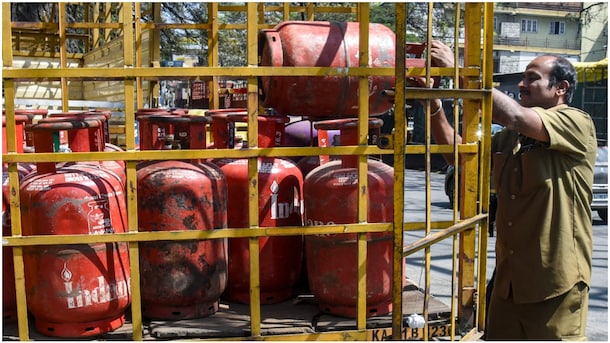
In Kalimpong, a small hilly town of West Bengal, the news of oil shortage seems to be spreading across the city. The petrol pump down the road from our Airbnb hasn't had any fuel supplies over the past forty-eight hours. Meanwhile, in faraway lands governments and international organisations are urgently releasing their strategic fuel reserves to temper down crude oil and gas prices.
How protracted will the fuel crisis in India and across the world be, is beside the point. The question worth asking is, when was the last time the application of a superpower's might resulted in household-level shortages across the world? China shutting itself down as the sole factory to the world is arguably the closest instance. But that was during a once-in-a-century pandemic.
How A President Got Carried Away
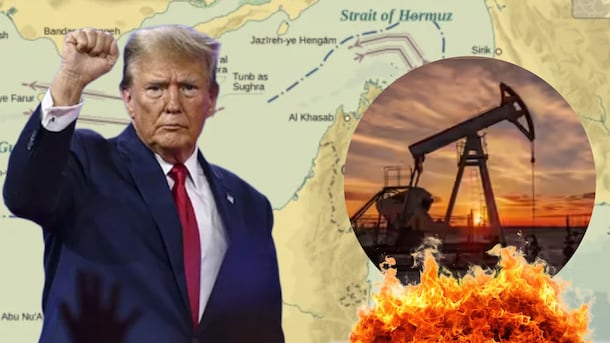
To even the most passive observers of foreign affairs, it is evident that US President Donald Trump has become significantly more casual when it comes to deploying American power abroad. From restricting access to American markets via astronomical tariffs to taking out the Venezuelan President to now attempting regime change in the Iranian Republic, there is a certain undertone in US foreign policy that harkens back to the unipolar moment.
Generally, it is during a unipolar world that a hegemon tends to get a bit carried away and overestimates its ability to bring about dramatic change at either the system-level or within specific nation-states. But here lies the paradox. The prevailing global balance of power is quite some distance away from such a distribution of power.
The current world can best be described as one tilting towards bipolarity, but with a few caveats. If security and economy are the central criteria, then the US is the dominant security power, while China is the key manufacturing and trading power. Now here come the caveats. While the US continues to be the only power capable of global power projection, the Chinese have accumulated adequate power to deny any serious notions of American security hegemony. Similarly, the scale, dynamism and the centrality of the US currency in the global economy mean that although China is the leading manufacturing power, America continues to be the financial hegemon.
Beyond Simple Explanations
Now, given the US no longer enjoys any semblance of pure hegemony, it begs the question, why exactly is the US behaving like a superpower does at the height of unipolarity? What is the guiding logic of the rather brash turn in American foreign policy? It is all too easy to box Trump as an irrational player, and frankly, it is a bit of an analytical copout.
Instead, a more compelling explanation is that the very design of the global balance of power, with all its intricacies, coupled with a generational populist leader in Trump, has created a sense of faux unipolarity in the American strategic mind.
Under actual unipolarity - what the US enjoyed from the end of the Cold War to arguably the Global Financial Crisis - the significant power differential that a hegemon enjoys made it conclude that it could use its instruments of statecraft to instill change beyond its borders.
Sometimes such conclusions are correct. The US-led Operation Desert Storm under the leadership of President HW Bush is a leading example of what a hegemon can achieve when it has monopoly over power. In a deft operation, the US-led coalition forced the Iraqi forces to withdraw from Kuwait, and more importantly, in almost record time. Unipolar moments also result in superpower delusions regarding its capacity to enforce change abroad. Such miscalculations were on display during the US' war efforts in Afghanistan and Iraq, all under a deluded notion of democracy promotion.
An Inflated Sense Of Self
However, unlike actual unipolarity, its faux counterpart is inherently a revisionist construct. Three interconnected features of today's geopolitical landscape help explain why the United States may have developed somewhat inflated perceptions of its relative power in the world.
First, although China has accumulated substantial hard power, it has shown no interest to be a global security provider of the variety the US and Great Britain were. Perhaps it never will. Second, the US with its unparalleled global security architecture and the most dynamic of all global economies, continues to be at the heart of global order, whatever is still left of it.
Finally, the complete capture of the annals of US power by a vehemently populist movement (MAGA) has meant that the US' sense of its own power has taken a rather severe revisionist turn. Adam Posen describes the role of the US in the post-war order as that of an insurer. China shows little interest in taking on that role, while a growing political current in the United States tends to overstate the country's relative power. Together, these trends appear to be pushing Trump toward believing he can pursue options that were arguably not even on the table just a few years ago.
In that sense, faux unipolarity is more dangerous than the actual one. During real unipolar systems, at worst, a hegemon might overestimate the efficacy of its instruments of coercion. But a superpower that falsely concludes that it's still the hegemon will not just miscalculate but will press for bolder and riskier ambitions, and, in turn, fail ever more splendidly. This is the genesis of the idea of TACO: Trump Always Chickens Out.
Losing Touch With Reality
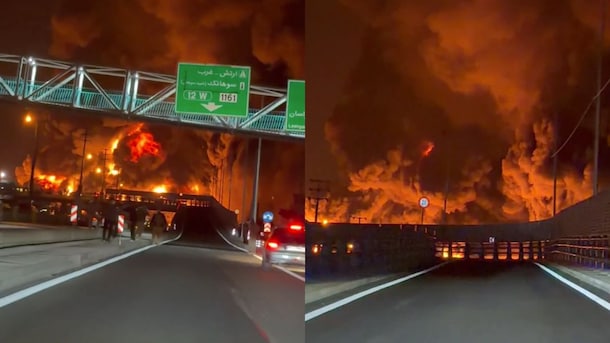
Raising US tariffs almost six-fold and thinking it won't result in a hike in inflation or lead to severe domestic political costs. Repeatedly threatening Russia to end the war without having any real capacity to compel Moscow into a meaningful negotiation. Attempting regime change in Iran without thinking through Tehran's capacity to respond and the disastrous ramifications for the oil markets.
These are all nothing but symptoms of a superpower that is rapidly losing touch with reality. Major foreign policy decision-making should be grounded in correctly estimating the first and second order effects of a decision. The thing is, all political entities create folklores and myths about themselves. Indulging in such mythmaking and buying into it are vastly different things. The US under Trump is drifting towards the later, which eventually compels it to backtrack.
Going ahead, we should expect Trumpian foreign policy to get even more unrestrained. But it won't always result in disastrous outcomes. The US is a behemoth of a superpower, and its abilities far outweigh most others. There were riskier foreign policy choices that Washington could have made in the preceding decades and achieved some of its long-standing objectives. Under Trump, it would no longer feel the need to err on the side of caution. As the brakes come off, there will be some generational successes. However, these will also be accompanied by some glorious foreign policy failures.
(The author is an Associate Fellow at ORF)
Disclaimer: These are the personal opinions of the author
-
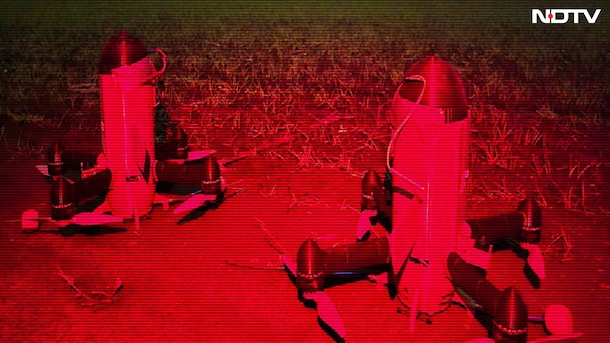
Game Of Drones: Ukraine's Sting Answer For US' Shahed Problem

The Iranian-designed Shahed-136 drone has become one of the most recognisable weapons of the modern battlefield.
-
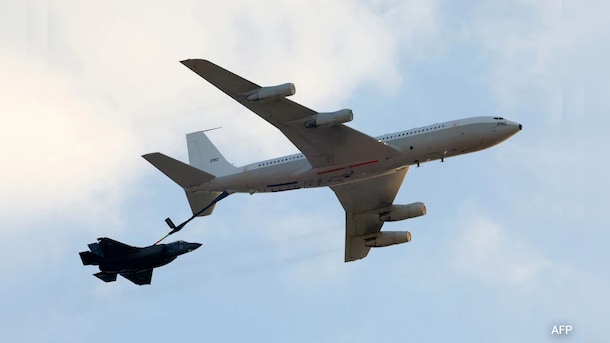
Opinion | Iran-Israel War, And What India Can Learn From The 'KC-135' Crash
Transparency doesn't just establish honesty; it denies the adversary the space to peddle the exaggerated claims we frequently see from Pakistan or China, where military losses erode state power.
-
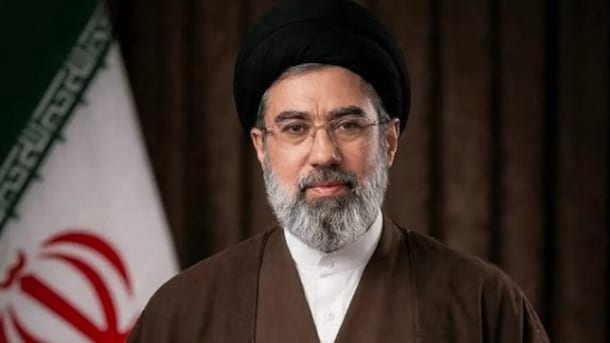
Opinion | Mojtaba's First Message Makes It Clear: Iran Won't Give An Easy 'Exit' To Trump
In Iran, the assassination of a Supreme Leader demands a response, a do-or-die response. Backing down would risk undermining Mojtaba's legitimacy at home and weakening his authority among the hardline institutions that support his regime.
-
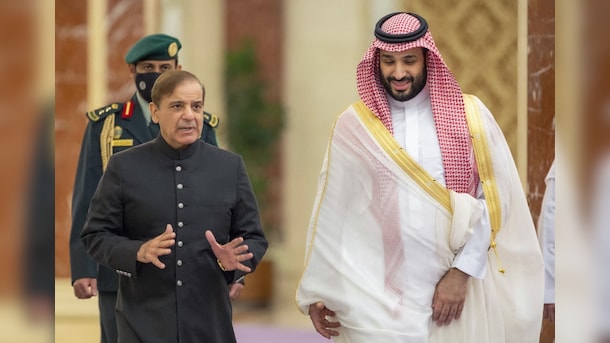
Opinion | What Happens If Saudi Arabia Really 'Asks' Pakistan To Go To War?
Since the beginning of the Iran-Israel war, questions have been raised about what role Pakistan would play on the side of the Saudis. The answer is getting murkier.
-
Oil Wars: How Iran's Hormuz Grip Is Bleeding Americans' Wallets
Tehran's response to US-Israel strikes that began Feb 28 was to target oil infrastructure in Gulf nations, an early and clear sign it is trying to force the US to answer questions from the global community about a cost-of-living crisis.
-
Opinion | The Real Winner Of Iran-Israel War Is Someone Trump Never Accounted For
The current crisis promises tens of billions of dollars to Russia in additional revenue. Here's how.
-
Opinion | Iran-Israel War, And The 'War Logic' Behind Bombing Oil Depots
The thinking presumably was that targeting economic interests may, in some sense, galvanise and mobilise the Iranian public against the current administration. But that didn't happen.
-
Opinion | Is Trump Starting To Regret Backing Netanyahu's Iran Gameplan?
Netanyahu may not mind the Iran war, as a prolonged conflict suits him politically. But for the US, it is fast shaping up to be a disaster.
-
Opinion | Amid Growing LPG Crisis, Why Your Piped Gas May Be The Real Winner
While LPG distribution falters amid the Hormuz crisis, PNG supplies to households in major cities continue largely uninterrupted. Will it last?
-
On Disagreement, Democracy: An Open Letter To Mani Shankar Aiyar - By Shashi Tharoor
Congress's Lok Sabha MP Shashi Tharoor responds to a recent "assessment" by Mani Shankar Aiyar of his positions - and 'character'.