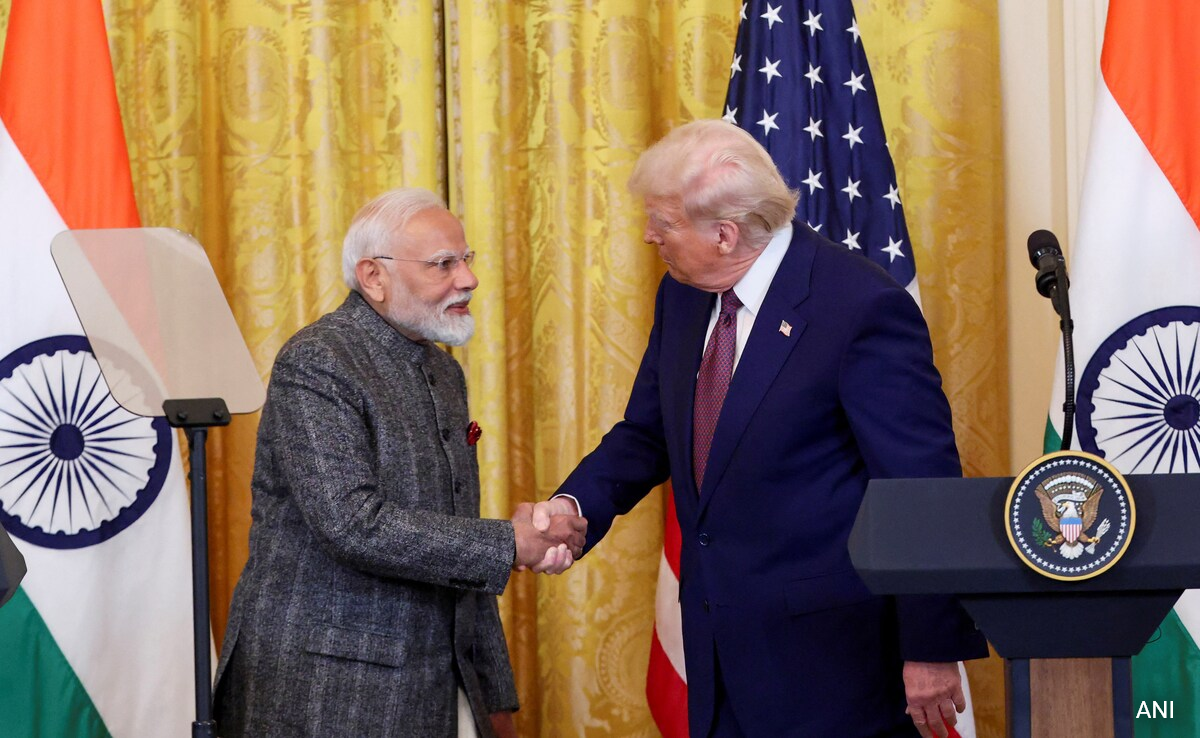


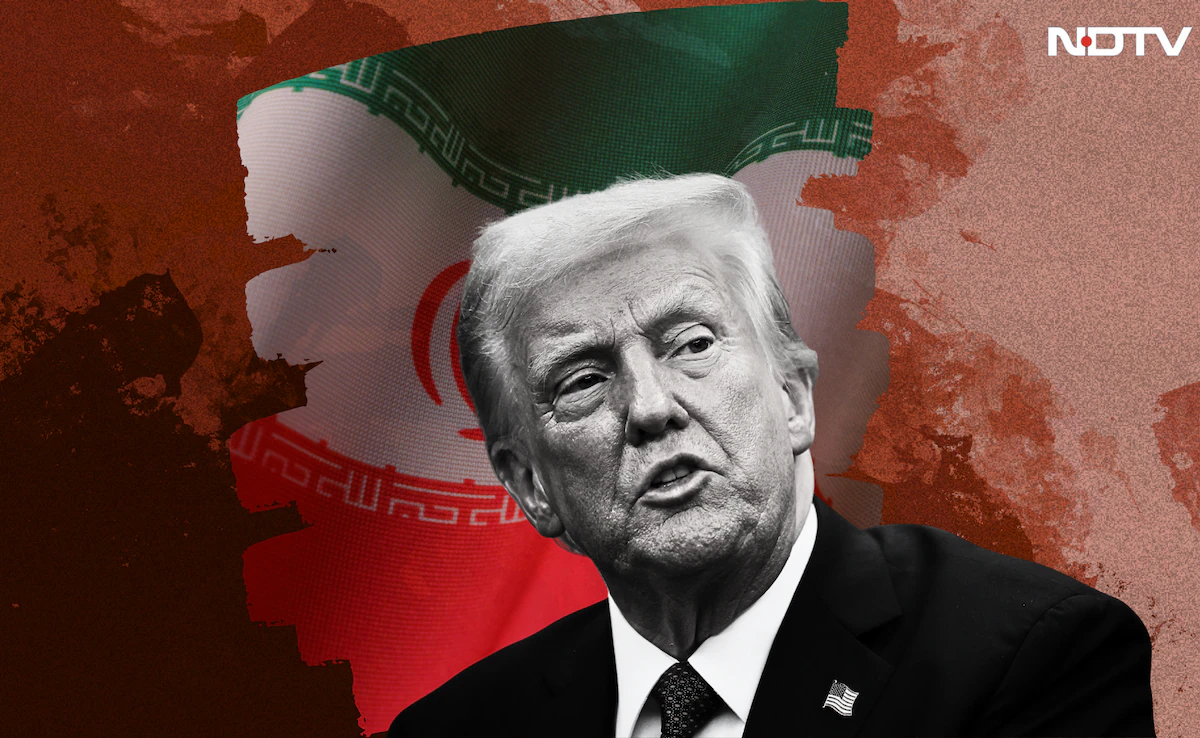

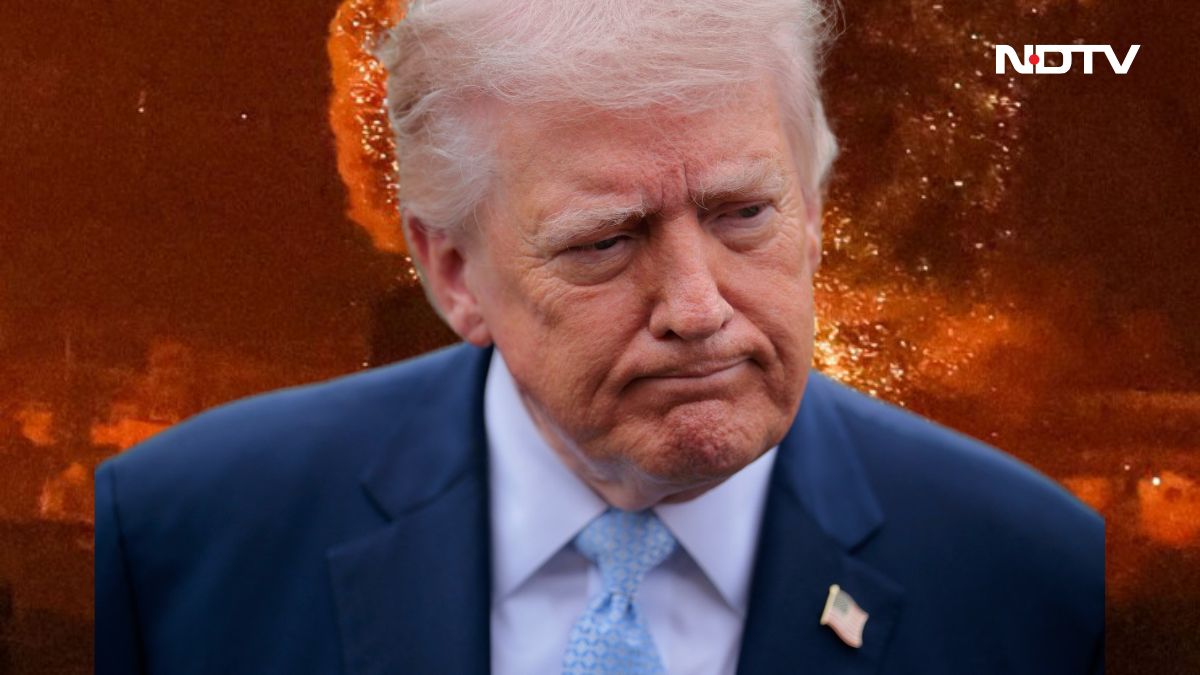







On March 23, just as the markets were due to open in America and the 48-hour deadline imposed on Iran to open the Strait of Hormuz was about to expire, US President Donald Trump made a surprise announcement. He pushed the 'pause button' on the strikes on Iran's energy and nuclear infrastructure for the next five days. While the markets responded positively to the declaration, Iran did not seem to share Trump's intent, stating that Iran has not been in any direct or indirect talks with the US. Israel, too, refrained from joining Trump in declaring a pause, with Israeli Prime Minister Benjamin Netanyahu stating that Israel will pursue aims that will best secure its own interests. Following the sudden announcement, there is a buzz that there could be a possible off-ramp on the cards.
Meanwhile, Iran and Israel continued their missile strikes overnight, even as the world waits with cautious optimism on Trump's sudden declaration.
The war in Iran is now in its fourth week, and despite the 'unilateral pause' by the US, there are no signs of an exit or a ceasefire. President Trump has repeatedly boasted of complete achievement of the war objectives, complete destruction of Iran, 100% decimation of Iranian armed forces, and has said that the US is considering 'winding down' its campaign in the region. Yet, the war continues unabated. In fact, with every passing day, the scope of the conflict is enlarging, and the threat that it poses not only to the region but the entire global community is becoming more serious and severe.
What are these new threats? How is the escalation matrix rising rapidly? What are the possibilities towards a negotiated end to this war? Is there a possibility of an off-ramp soon?
The Three Initial Objectives
When the US and Israel launched the pre-emptive strikes into Iran on February 28, there were basically three declared objectives.
- One, heavy punishment on the Iranian leadership, its military, infrastructure and economy, to an extent where Iran will find it very difficult to fight back. As a result, either the regime will come down on its knees or the people will come out to the streets to protest against and overthrow the regime.
- Two, the destruction of its ballistic missile programme, which is considered an existential threat
- And three, Iran should never ever be able to build a nuclear weapon and, therefore, complete destruction of its nuclear programme.
As a result, in the first few days, Israel and the US conducted decapitating strikes into Iran. Iran's Supreme Leader was assassinated on Day One in a targeted strike. Plus, in a series of targeted assassinations, over 40 high-ranking officials, including military commanders, were taken out. Having established total air dominance, the campaign thereafter took out Iran's weapon depots, missile silos and mobile launchers in a bid to completely degrade Iran's missile capability. The strikes on gas fields and oil depots were next, aimed to cripple Iran economically.
Going by that, the campaign should have been over in a couple of days. But contrary to the expectations (grossly miscalculated), Iran is still standing and giving a tough fight. Plus, with every new engagement, Iran is hitting back harder and deeper, expanding the scope of conflict to an extent that makes an early off-ramp very difficult.
The Strait of Hormuz
The biggest escalation has been the closure of the Strait of Hormuz, a vital choke point and a crucial lifeline to global energy. Despite the fact that the Strait has not been physically mined, the announcement of its intention by Iran, following up with strikes on a few oil tankers, has well and truly scared the shipping companies as well as insurance. In the absence of either of them being willing to take the risk, ships cannot transit the Strait. Although some countries like India and China have been successful in getting conditional passage to their tankers, the narrow sea passage remains closed for global traffic, and, obviously, the war cannot end in such a flux. Militarily and diplomatically, it will be very difficult for the US to call off its campaign without a clear resolution of this issue.
Realising the fact that opening the Strait of Hormuz is an essential prerequisite to ending the war, Trump issued a warning to Iran on March 21 that, if the Strait of Hormuz is not open for transit by March 23, the US-Israel combo will take out Iran's energy and power grids. Iran has reacted sharply to the threat, stating that if its energy grid is hit, it will hit the energy grids and desalination points across the region.
With the Gulf countries almost completely dependent on clean drinking water from these plants, it can create a humanitarian crisis if Iran goes ahead with the threat. It is perhaps partly due to this reason that Trump had to call for a 'pause' to re-examine the possibilities and repercussions of going ahead with this threat.
The Nuclear Threat
Although nuclear sites have been bombed in the initial phase of the war, it seems that Iran is now no longer ready to tolerate any more unilateral strikes on its nuclear plants. Accordingly, following an American strike on the Natanz Nuclear Plant on March 20, Iran did the impossible. It successfully hit the Southern Israel town of Dimona, where the highly protected and secretive nuclear research facility is located. The fact that Iranian missiles could penetrate through the multilayered defence and strike Dimona has added another layer of escalation to this conflict. Although Iran did not hit the nuclear site as such, any further escalation could result in an Iranian missile hitting the Dimona nuclear plant. If that happens, not only will there be a serious risk of radiation leak, but a possibility of the conflict witnessing the exercise of tactical nuclear weapons - a final act of desperation by Israel or the US, unable to rein in Iran - cannot be ruled out.
Whither The 'Off-Ramp'?
Most inputs from the US indicate that President Trump is looking for an early exit. Having been coaxed into the war by Israel, he had definitely not bargained for a prolonged conflict nor such a strong response from Iran. However, unlike the previous occasion in June 2025, when he could call off the war after America's B-2 Bombers bombed the nuclear sites in Iran, this time it won't be easy. There are reports that the US is exploring a plan where special forces could be landed on the Kharg island of Iran to take control over the country's ability to export oil and gas. There are also media reports that suggest that the US is preparing 3,000 to 5,000 Marines for a deliberate land operation in Iran, primarily to secure the 440 kg of Uranium enriched to 60%, still in Iran's safe custody. It is considered a threat both by the US and Israel, as it is feared that Iran could speed up efforts to make a nuclear weapon if it has the enriched uranium.
The other important factor in an early exit is Israel and Iran. For Israel, this war can end only when it has achieved its principal objective of regime change. With Mojtaba Khamenei now the Supreme Leader, Israel faces an option worse than what it was with Ali Khamenei at the helm.
A War Of Dignity
The other objective, of complete destruction of Iran's missile capability, is looking more and more unrealistic with every passing day, as Iran fires more lethal, faster and technologically superior missiles, many of them hitting their targets and creating huge damage and destruction in Israel. The nuclear threat, too, remains alive in Israel's perception, at least till the 440 kg of enriched Uranium is recovered.
For Iran, too, this war is no longer another episode of death and destruction, which leaves open the possibility of yet another conflict in the region in the future. The ongoing air and missile strikes have caused unprecedented destruction in Iran. Its Supreme Leader and top leadership have been eliminated, its navy and air force totally destroyed, its nuclear sites, oil and gas fields and depots have been bombed repeatedly. Plus, there have been large civilian casualties, including the tragic death of over 160 girls in a school in Tehran in an American Tomahawk missile strike. For Iran, too, this war is thus a war to the finish. It wants its dignity to be restored, its right to nuclear enrichment recognised under the provisions of the Non-Proliferation Treaty (NPT), economic sanctions lifted and iron-clad assurances that the US and Israel would not initiate another conflict.
Israel's Limited Options
The war is scaling new thresholds of escalation with every passing day. The threats of targeting water desalination plants and continued closure of the Strait of Hormuz are not only extracting human and economic cost from the region but the entire world. The only hope is that President Trump latches onto any semblance of victory from which he can exit. Israel, in its current state, will not be able to continue the war if the US withdraws. Netanyahu's appeal to the world, asking other nations to join Israel in its war, is an admission that it will not be able to finish the job on its own.
Iran, meanwhile, is alert and waiting to respond to any new threat that is posed to it, in a battle where mere survival of the regime would be a victory.
(The author is a retired Army officer and a senior research consultant at Chintan Research Foundation)
Disclaimer: These are the personal opinions of the author


