Opinion | Islamabad Talks: Iran Seems To Have Figured Out A Crucial Thing About Trump
Why Iran waits out every 'threat' by the US - no matter how grave.
The US and Iran agree that there is a ceasefire now on. But they have different takes on its terms and what they have actually agreed to. Hopefully, those differences will be sorted out by the time the two sides meet at the negotiating table in Islamabad on Friday. But there is no real guarantee that that will, indeed, happen.
While the US has gone ahead with preparations for a delegation led by Vice President JD Vance to reach Islamabad, Iran has made it clear that its team, composed of Parliament Speaker Mohammed Bagher Ghalibaf and Foreign Minister Syed Abbas Araghchi, will not participate in talks if the Lebanon issue is not sorted out.
Lebanon Deadlock
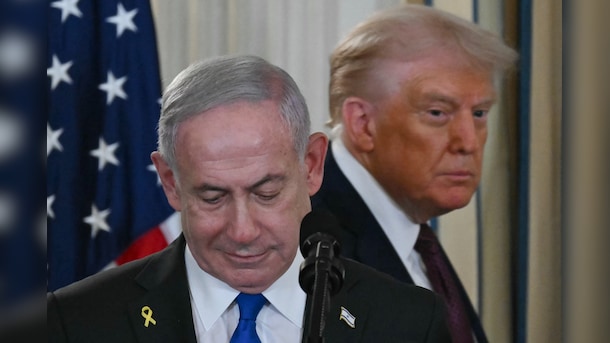
The intensification of the Israeli bombing of Lebanon has emerged as a major issue. Pakistan Prime Minister Shehbaz Sharif's statement announcing the ceasefire had made it clear that Lebanon was very much part of the deal. But the Israelis refused, and after a Netanyahu phone call to Trump, the latter changed tack and accepted that the war in Lebanon was a "separate skirmish", giving a green light to Israel. For his part, the chief US negotiator, Vice President JD Vance, says that the Israelis have agreed not to attack Lebanon during the duration of the talks. Under US pressure, Netanyahu has said Israel will negotiate with Lebanon, but not observe a ceasefire.
In a tweet, Araghchi said that the terms of the ceasefire, as outlined by Pakistan Prime Minister Sharif, were clear and included Lebanon. He said the choice for the US was clear - "ceasefire or a continued war via Israel. It cannot have both".
The Duo That Doesn't Keep Its Word
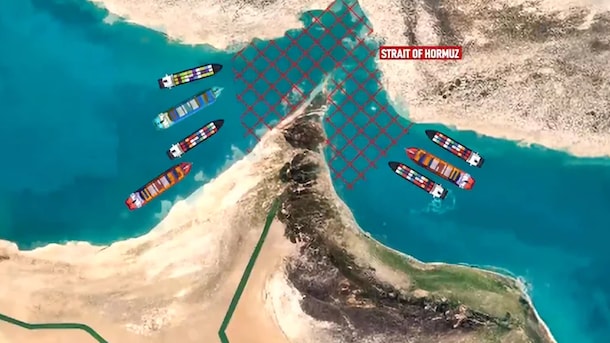
The Iranians are probably not too surprised since the United States and Israel have by now developed a reputation for going back on their word. But for Iran, the relationship with Hezbollah is fundamental to its security concept, and it is unlikely to accept freezing them out of the negotiations. Even so, the Iranian approach is cautious and is primarily centred around regulating traffic through the Straits of Hormuz to signal to the world the consequences of diplomatic failure and a return to fighting.
But this is not the only issue. At the time of the ceasefire, Trump had noted that the US had received Iran's ten-point proposal "and (we) believe it is a workable basis on which to negotiate". But later in the day, he said that he didn't refer to the Iranian ten-point proposal, but rather to the US 15-point proposal that Iran had earlier rejected.
Trust Nothing
As it is, his acceptance of the Iranian ten-point plan was curious considering that the plan, which had not been formally released as yet, demands a virtual capitulation by the US. Iranian officials say that it includes a guarantee that Iran won't be attacked again, a lifting of US sanctions, the introduction of a $2 million fee for ships transiting Hormuz and so on. There is no mention of nuclear or missile controls by Iran.
But the very fact that the ceasefire came as it did hours before Trump had threatened to begin the total destruction of Iranian civilisation tells its own story. For once, Trump blinked. He had to cope with the fact that someone had said "No" to him.
Looking back, what we see is a pattern of empty threats by Trump. The first was on March 21, when he threatened to obliterate Iranian targets unless the Straits of Hormuz were opened in 48 hours. The last was the one on Tuesday (April 7) when Trump warned that "a whole civilization will die tonight" if no deal was reached and threatened massive strikes on Iranian bridges and power plants by 8 pm US eastern time.
But 90 minutes before the deadline, Trump announced the two-week ceasefire to facilitate negotiations under Pakistani auspices.
Trump's Dithering Continues
Trump's vacillations have not ended. On April 8, when asked about Iran charging a toll to go through Hormuz, Trump said, "We're thinking of doing it as a joint venture. It's a way of securing it - also securing it from lots of people. It's a beautiful thing."
A day later, he tweeted that there were reports that Iran is charging fees from tankers going through the Strait: "They better not be and, if they are, they better stop now."
Let us be clear on one thing: the way things work, there will be a new paradigm operating now. If and when the negotiations resume, Trump will have to accept that there are limits to the efficacy of American military power in US-Iran diplomacy. The US can still threaten and inflict grave damage, but whether that enables it to achieve its goals is doubtful. Iran's resilience speaks for itself.
US Has The Military, Not The Political Acumen
This is shaping up to be a classic confirmation of the US military's ability to win battles but lose wars. This has been primarily an outcome of Washington's inability to effectively combine military capacity with political acumen. Trump had been outplayed in almost every measure. Despite the steady torrent of "news" from the Central Command (CENTCOM) of the success of the US-Israeli bombing campaign and the degradation of the Iranian ability to resist, the reality has been Iran's steady and credible resistance in the form of a steady drumbeat of missile and drone strikes on Israel and the Gulf allies of the US.
On the other hand, Iran has displayed genuine politico-military skill in handling the Hormuz situation. The Strait had always been open, but there is little doubt that they represented Iran's brahmastra. The Iranians immediately used it to control their traffic and sent a signal to the global community of their ability to do so.
The Winner And The Wild Card
Pakistan was the big winner in the process. It may not have been a mediator in the true sense of the term, but it was definitely an important conduit and even a catalyst in the developments. Many, especially in India, felt that it lacked the heft to pull off such a complex feat, but at the end of the day, it did avert a potential disaster in Iran, and now it carries both the burden and the credit of facilitating the Iran-US dialogue.
Israel remains the wild card here. It cannot be too happy at the turn of events. It actually wants "civilizational erasure". Most observers say that the war itself was on account of Trump blindly following the Israeli agenda - something he seems to be doing even now, as is indicated by his Lebanon stance. It remains to be seen whether Israel employs its formidable leverage in the coming days to undermine the negotiations. If so, the US will be a loser, as will the rest of the world.
(The writer is a Distinguished Fellow, Observer Research Foundation, New Delhi)
Disclaimer: These are the personal opinions of the author
-
Opinion | Three Things May Happen At The End Of The 14-Day Ceasefire

Will Iran and Israel continue to clash, with Trump supporting the latter from the outside?
-
Opinion | Over 1 Lakh US Troops Are Stationed In Europe. What Happens If They Leave?
The question now troubling many Europeans is, if Iran can strike American bases in the Gulf, could Russia do the same, or inflict even greater damage, on American bases in Europe?
-
Opinion | What Happens To Oil Prices If Iran Really Starts Charging A Hormuz 'Toll'?
Iran has not agreed to reopen the Strait, but to allow passage via coordination with its Armed Forces. What would that really mean?
-
Opinion | The Real Reason China Stayed 'Quiet' About Its US-Iran Ceasefire Role
Beijing may have opted for a very quiet entry into the mediation, with Pakistan apparently fronting the whole exercise.
-
Opinion | India Sits Atop 500 Million Tons Of Gold Ore. Why Isn't It Being Mined? - By Shashi Tharoor
We mine a pittance - barely one and a half tons a year - while draining our foreign exchange reserves to import hundreds of tons annually from mines in Australia, Ghana, and Peru.
-
Opinion | How Iran Ceasefire Helps Pakistan Fix A 10-Year-Old 'Mess' With Saudi
In more ways than one, Pakistan has redeemed itself from a fallout it had with its Gulf patrons exactly a decade ago.
-
Why Lebanon Was Excluded From Ceasefire Plan
Created by the IRGC during the Lebanese Civil War, the Hezbollah, a Shiite Muslim movement, gained its moniker - 'the Resistance' - by fighting Israeli troops occupying southern Lebanon till 2000.
-
Opinion | The 'Munir Doctrine' That Drove Pak's US-Iran Brokering Project
The spate of calls, social media messaging, and diplomatic efforts from Pakistan in recent weeks, especially involving PM Shehbaz Sharif and Field Marshal Asim Munir, raises many questions.
-
Opinion | War Ally To Mere Bystander: Is This The Loneliest Day For Netanyahu?
Israel, the US's closest partner in the region and which lured Trump to take on Iran, was ultimately a mere spectator to the ceasefire agreement.