Opinion | Is The Gulf Now Questioning Its US Ties - And The American 'Guarantee'?
Doubts are bound to follow if even the US, the mightiest of the militaries and with 13 major military bases in the region, could not protect it against only one opposing nation - Iran.
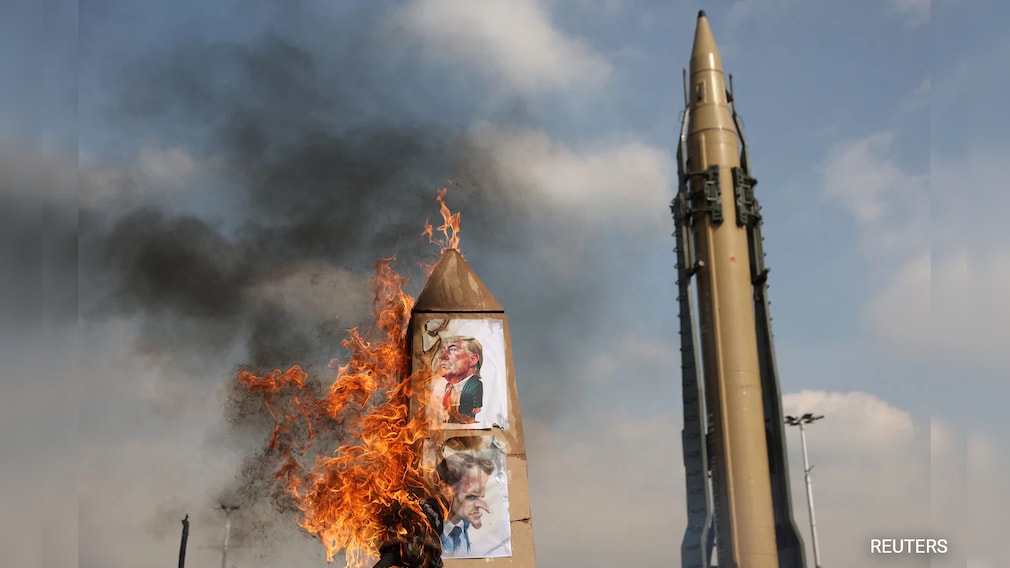
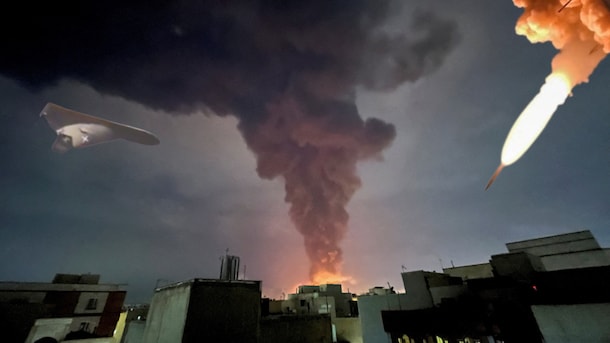
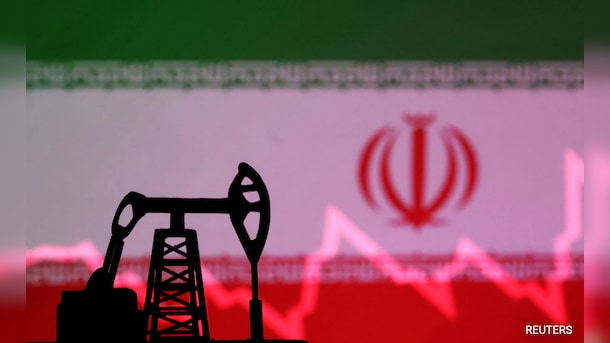
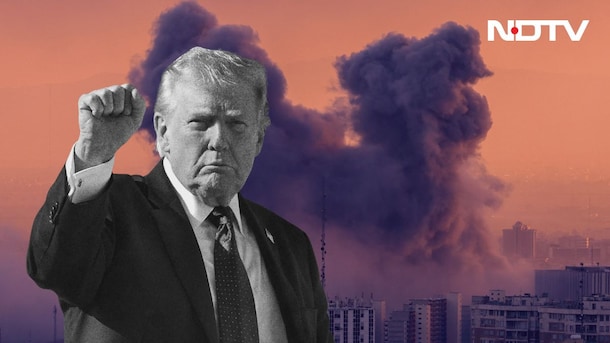
The war in Iran, unleashed through pre-emptive strikes by the US and Israel on February 28, is well into its second week, and there are no signs of either side giving up soon. Contrary to expectations, Iran has hit back hard and refused to buckle under the tremendous pressure exerted on it. The targeted assassination of its Supreme Leader and over 40 top military commanders has only strengthened its resolve to fight back. Over the past 12 days, not only has Iran hit back at Israel, but it has also successfully targeted a number of American military bases and assets across the region. These attacks, coupled with strikes on critical energy infrastructure like oil depots, oil fields, gas fields and perhaps the most critical, closure of the Strait of Hormuz, have sent the entire region into a spiral.
People are asking tough questions, especially on the ineffectiveness of the regional security apparatus as well as the security guarantees of America that it has been promising the region for over decades. Many are questioning the whole logic of it, while others are already looking at alternative security options for the future.
Why has it happened? Why are Gulf nations so helpless and unable to secure their land against Iranian attacks? What are the options to ensure foolproof security in the region, going forward? Tough questions that will be debated long after the war is over. For understanding the current security dynamics and why it has failed, there is a need to fully understand the Gulf Security Architecture.
How It All Started
The security arrangement in the Gulf goes back to the security umbrella provided by the British till the late 1960s. Thereafter, it was the US that took over the responsibility with the articulation of the Nixon Doctrine in 1969, which called on US allies to contribute to their own security with the aid of American security assistance. The ''Twin Pillars policy" was a natural outgrowth of it. It incorporated twin pillars in the form of Saudi Arabia and Iran to ensure the security of the Persian Gulf.
This policy, however, fell apart after the Iranian revolution, which took away one critical pillar (Iran) of the policy. At his 1980 State of the Union Address, in reaction to the 1979 Iranian revolution, President Jimmy Carter had assured the region, stating, "An attempt by any outside force to gain control of the Persian Gulf region will be regarded as an assault on the vital interests of the US, and such an assault will be repelled by any means necessary, including military force."
Also Read | Why Russia's Putin May Be The Biggest Winner Of Trump's Iran War
Following it, the Gulf Cooperation Council (GCC) was created in 1981 to bring together countries of the region against the perceived threat from two enemies: Iran, an ideological enemy, and Iraq, a belligerent power. The birth of GCC was thus based on two major pillars - fear and exclusion (of Iran and Iraq). In its construct, however, the GCC chose to ignore the geographical and geopolitical realities of the region. Iran and Iraq, geographically, cover almost the entire northern coast of the Persian Gulf, are critical links towards the Levant, Central Asia and South Asia, and are huge reservoirs of natural resources.
Post-Iraq World
After the Iraq war in 1991, the US reinforced its military presence in the region through the establishment of permanent bases. The Fifth Fleet HQ moved to Bahrain in 1995, while the Al Udeida base in Qatar was set up in 1996; the US CENTCOM relocated to it in 2003. Continuing its security presence in the region, the US introduced the Cooperative Defense Initiative (CDI) in 1999, a plan for the integration of the defence forces of the GCC, Egypt, and Jordan, and to coordinate intelligence-sharing between them. In May 2006, the US launched the Gulf Security Dialogue (GSD) for the promotion of intra-GCC and GCC-US cooperation to meet common perceived threats.
Many years later, at the US-GCC Summit in Riyadh in May 2017, an 'Arab NATO' or 'Middle East Strategic Alliance' (MESA) was also mooted, which would have included nations of the GCC, plus Egypt and Jordan. However, it failed to take off due to the diplomatic blockade on Qatar in June 2017. At the GCC Summit at Jeddah on July 16, 2022, which included the US (President Joe Biden), Egypt, Iraq and Jordan, another assurance was made on collective security, with the leaders reiterating to "confront all activities that threaten the region's security and stability". And, most recently too, after the Israeli missile strike into Doha targeting the Hamas leadership in September 2025, the US had assured iron-clad security guarantees to Qatar, akin to Article 5 of the NATO Charter.
However, all the past efforts and assurances have come to nothing as the US has failed to protect the Gulf countries from the ongoing strikes from Iran. Also, the GCC has proved to be ineffective in ensuring collective security in the region, over the past many decades due to a lack of committed organic resources and a lack of a common vision.
What Are The Options?
The current war has exposed the deep fragilities of the security system in the region. There is a need for a serious review and rethink.
Only two options exist. One, the region continues to depend on the US or any other external player to provide it security. However, if even the US, the mightiest of the militaries and with 13 major military bases in the region, could not protect it against only one opposing nation, Iran, then the chances of any success through this model in the future are suspect.
The second option is to review and reform the integral regional architecture. It may be recalled that in March 2023, Saudi Arabia and Iran had signed a peace deal, brokered by China. Around the same time, there was a wave of reconciliation among the Arab countries in the region. Egypt reached out to Turkey and Syria to reconcile relations. Qatar and Bahrain also announced the restoration of diplomatic relations. Plus, Syria was re-admitted into the Arab League in April 2023, after 11 years of expulsion.
Also Read | Iran's Endurance Strategy Amid War With US, Israel
Later, when the war in Gaza broke out and Iran joined the conflict, two things stood out distinctly in the region. First, many Gulf nations permitted the use of their airspace to the US and Israel in attacking Iran, but the latter did not strike back at the Arab countries. Second, during the '12-Day War' in which Israel struck Iran - pre-emptively sabotaging the nuclear talks between Iran and the US - most of the nations stood in solidarity with Iran in its fight to safeguard its territorial integrity. Also, Iran did not block the Strait of Hormuz in any manner during that conflict.
A Reckoning For Others
What is the lesson from it? From the current conflict as well as the '12-Day War', it is apparently clear that, unlike many previous perceptions, Iran poses a threat to the region only when the region poses a threat to it. If the countries in the region had refused to permit the US and Israel to use their land and air to strike at Iran, it might not have struck the targets in the region.
Going forward, it is clear that any security arrangement should take into account the failures of the past and consider the strategic circumstances that exist today. Such a 'common security framework' should be based on a 'cooperative security model' and based on the relative security of an actor vis-à-vis the others. The idea is that all states will find greater relative security through obligations to limit military rivalries rather than through attempts to gain dominance. Such a model also seeks a local power equilibrium such that no single power can outweigh a combination of the others.
The new structure will have to be more inclusive in nature (Iran, Iraq and some others therefore need to be a part of it), have inbuilt cooperative and confidence-building mechanisms, recognise the role of external players and have a region-wide method of dealing with conventional and asymmetric threats and have a collective response mechanism.
Obviously, the GCC in its present form would have to perish the moment Iran and Iraq (the two threats on which it was created) are incorporated in the new structure. But the reality of the security requirements dictates such a step. Imagine a South Asian Association of Regional Cooperation (SAARC) representing South Asian concerns without India or Pakistan (this is in no manner arguing that SAARC has been a successful regional model).
Looking Ahead
A right-sized, well-intended and organic security structure is the need of the hour for the region. Given the deep-rooted mistrusts, ideological conflicts and regional rivalries, it is a difficult task. However, the choice to ignore and move forward is simply not there. While the ultimate aim may be ambitious, the challenge is to at least bring all players to the table. Also, the inclusion of states like Iran, Iraq, and Egypt, along with Jordan, Syria and Lebanon, would help dispel doubts and also act as a counterbalancing force in the region.
There will be teething problems, the framework might eventually fail, but an attempt needs to be made. It is not important how the structure evolves 10-20 years down the line, but how a common platform is created where all stakeholders can shed their mutual suspicions and mistrust and come together.
(The author is a retired Army officer and a senior research consultant at Chintan Research Foundation)
Disclaimer: These are the personal opinions of the author
-
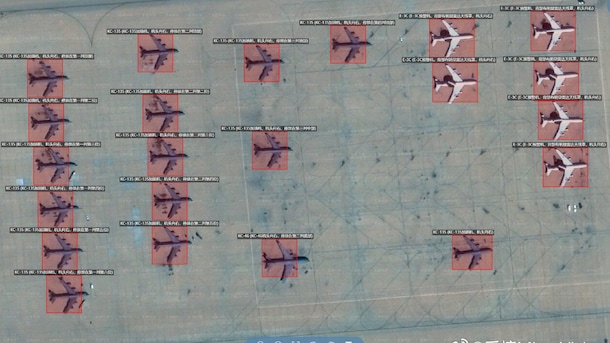
China's Eyes In Space Exposed US War Machine Before 1st Bomb Fell In Iran War

The pictures showed aircraft parked on runways, transport planes arriving at desert airfields and carrier decks crowded with fighters somewhere in the Mediterranean. Yet each image carried an unusual level of detail -- not in English, but in Mandarin.
-
Opinion | The Country That Buys 90% Of Iran's Oil Is Still Not Panicking. Here's Why
Beijing has spent two decades preparing to answer: what happens when the Strait of Hormuz closes?
-
With Missiles Carrying 1,000 kg Explosives, A New Tactical Phase For Iran
Iran dropped a bombshell on Sunday after a senior Revolutionary Guard commander vowed to only launch missiles with explosives of 1,000kg or more
-
The Beast Of Kandahar: How One Captured Drone Changed Modern Warfare
One December day in 2011, a Sentinel mission ended in a moment that would reshape the global drone arms race. Instead of returning to its base in Afghanistan, the Sentinel landed inside Iran.
-
Trump Started War Against Iran. He's Still Figuring Out How It Ends
The US-Israel campaign began with coordinated strikes in Tehran and the killing of Iran's Supreme Leader Ayatollah Ali Khamenei on the first day.
-
Opinion | A $10 Billion Threat: How Exposed India Really May Be To Middle East's Oil Crisis
Every $10 increase in the price of Brent crude could widen India's current account deficit by roughly 0.3 to 0.4% of GDP, translating into over USD 10 billion in additional import expenditure.
-
Opinion | Iran-Israel War And The Limits Of India's 'Strategic Autonomy'
India needs to figure out how to manage the fallout of the Middle East crisis without letting strategic autonomy start to look like a slogan.
-
Opinion | Can A Gen Z-Influencer-Rapper PM Really 'Change' Nepal?
Observers say it's high time the former mayor evolved and grew, as well as became more mature, diplomatic and friendly with journalists, opponents and, most importantly, friendly neighbours like India and China.
-
Opinion | This Parliament Session, Watch What Is 'Expunged'
Is mentioning Donald Trump or Epstein unparliamentary? Are the surnames of India's two richest families unparliamentary proper nouns?