Opinion | Is Pakistan's 'BFF' Season With Trump Over?
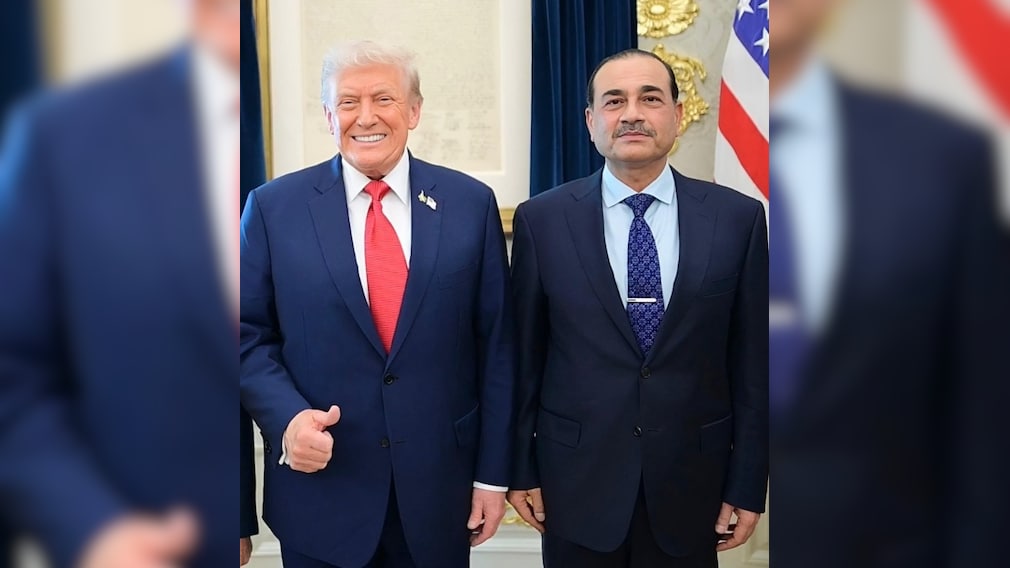
Pakistan hosted its high-profile Pakistan Minerals Investment Forum 2026 (PMIF26) on November 12-13, bringing together international mining experts, investors, policymakers, financial institutions and others to explore investment opportunities in the country's mineral resources and attract international investments. Along with Prime Minister Shehbaz Sharif, Deputy Prime Minister and Foreign Minister Ishaq Dar, there was also the ubiquitous presence of the Chief of the Army Staff, Field Marshal Asim Munir.
Pakistan is indeed a mineral- and resource-rich country. But those are also the places embroiled in major insurgencies. To put it in perspective, around the same time that the PMIF26 was taking place, gunmen were attacking police officers conducting an operation against illegal gold mining in northwestern Pakistan, with 10 officers and 18 fighters killed in the ensuing violence. The Pakistan Taliban claimed the attacks. This is the reality of Pakistan.
Yet, it has been strutting around, stitching up pacts and deals under its elevated Field Marshal Asim Munir, thanks to the patronage provided by US President Donald Trump. That is why, like much of the world, Pakistan too waited with bated breadth. It may now have to battle a new headache as the Democrats won overwhelmingly in both houses of Congress. According to reports, Pakistan's leadership spent nearly two years building close ties and personal alignment with President Donald Trump's administration. Who can forget the spectacle of Shehbaz Sharif literally grovelling before Trump and fawning over him in the Oval Office during the Board of Peace meeting, which it joined, praising his leadership and nominating him for the Nobel Peace Prize post Operation Sindoor. European leaders in the room were visibly in discomfort while Pakistanis called out Sharif's grovelling. All that may now be rendered futile as Trump becomes a lame duck President.
For decades, the Democrats have traditionally been more inclined towards India while putting Pakistan under greater scrutiny for its terror links. It was under the Obama administration that Osama bin Laden was captured in a secret raid by US navy seals in an operation they did not even care to inform Pakistan about, because of the latter's duplicity. In the larger scheme of things, most Democrats viewed Pakistan through the prism of its relations with China or regional security.
Trump on the other hand feted Asim Munir, calling him his "favourite Field Marshal ", hosting him in the White House even as relations with India nosedived. Simultaneously, the President 's family and close associates entered into a number of deals with Pakistan's military leadership, particularly involving mineral and cryptocurrency agreements. Pakistan has also signed an agreement to redevelop Manhattan's Roosevelt Hotel and placed a limited drone order with Powerus, which has investments by members of Trump's family. Many of these deals are sure to come under scrutiny under the Democrats.
More importantly, the Trump administration approved the sale of advanced technology and upgrades for Pakistan's F-16 fighter planes worth approximately $ 686 million. According to analysts, the significance of this is that it extends the operational life of Pakistan's most capable western platform by 15 years. And this after the US pressured India into buying more arms from it. Defence Minister Rajnath Singh had, in fact, taken up this issue with his American counterpart Pete Hegseth on the sidelines of the ASEAN Defence Ministers' meet in the Philippines in October this year.
However, Islamabad is still awaiting a response to its much larger request for a $10 billion facility from the US Treasury.
Of course, Pakistan has been quiet about the midterm results so far. Its official stance has been that the results will not affect Islamabad-Washington relations, with officials stressing that ties with the United States will continue regardless of which party is in power. Nevertheless, the carefully built strong personality oriented relations that were cultivated by Pakistan's leadership, especially its military leadership, and the access to the White House is sure to be whittled down significantly.
Most importantly, there is a widespread understanding that any Democratic administration is bound to apply pressure on the Sharif-Munir government to set free their political opponent, Imran Khan, who was ousted from power much like Bangladesh's Sheikh Hasina was, and on human rights inside the country. In fact, a part of the Republican losses in the midterms have been attributed to the fact that many in the Pakistani diaspora in the US who had voted for the Republicans in 2024 had shifted their allegiance to the Democrats, disillusioned by Trump's strong embrace of Munir and the total neglect of the flailing democratic process and human rights situation in Pakistan. Hence, Democrats will be honour-bound to rake up these issues, all of which had been sidelined by the Trump administration. In fact, Michigan Senator-elect Abdul El-Sayed (whose wife is of Indian origin) has publicly questioned American military assistance to Pakistan, even in the runup to the elections.
Yet, India should not place too much hope in this.
First, the Democrats have, on occasion, stood by Pakistan, even if it was out of necessity - for instance, in relation to Afghanistan or for America's counter-terrorism strategy. In 2019, the Obama administration authorised $1.519 billion assistance to Pakistan to effectively fight terrorism and extremist outfits. The Imran Khan government was unconstitutionally ousted during the Biden administration, which pledged to work together with the new Shehbaz Sharif government.
Trump's embrace of his favourite field Marshall has driven Pakistan's mediation efforts between the US and Iran. While the Islamabad agreement ultimately fell through, leading to renewed conflict, Pakistan's mediation efforts may still be required by the Democrats. In which case, they may still want to work with the current administration in Islamabad. Iran, where some voices have expressed doubts about Pakistan's true intentions, may be willing to go along with this.
Nevertheless, whatever constraints and compulsions the Democrats may have with regards to Pakistan, it looks like Pakistan's ‘BFF' moment in Washington is set to end soon.
(The author is a senior journalist)
Disclaimer: These are the personal opinions of the author
-
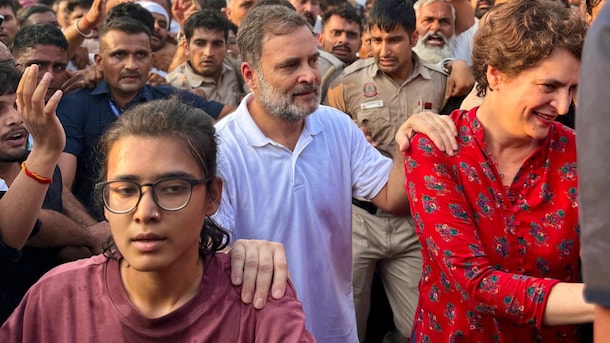
Between Nehru And Netanyahu, Rahul Gandhi Faces An Uncomfortable Question

The divergence has come to the fore after Rahul Gandhi endorsed maintaining strong ties with Israel, citing India's defence requirements and national interests.
-
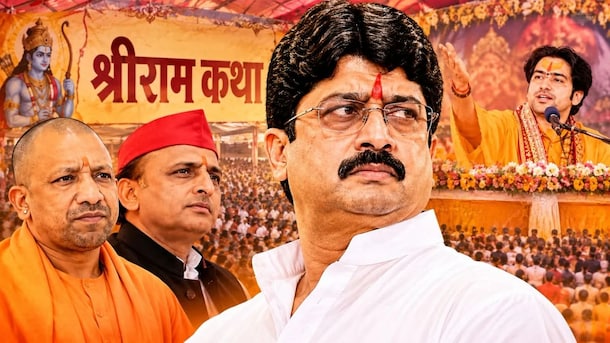
Kunda's King And His Thakur Court: Raja Bhaiya's Big Power Play Before UP Polls
UP Elections 2027: The Ram Katha may have been about Lord Ram, but the political story unfolding in Kunda was about Raja Bhaiya.
-
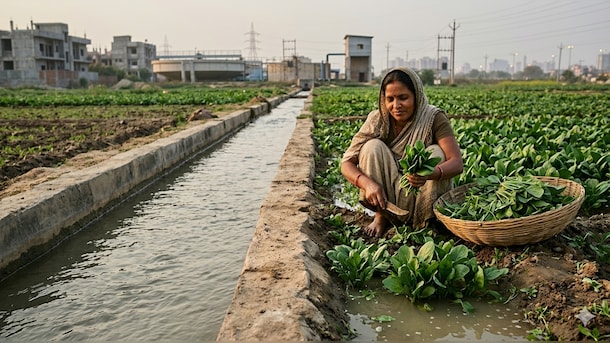
The Hidden 'Water Cost' Of Agriculture: Comparing India With Major Economies
Traditional flood irrigation, which remains common across Indian farms, is a major reason. It has a water-use efficiency of just 35-40 per cent.
-
Blog | DPS MMS To Instagram: The Cost Of Irresponsible Men
On International Men's Day, it is worth having a conversation that isn't always comfortable for men.
-
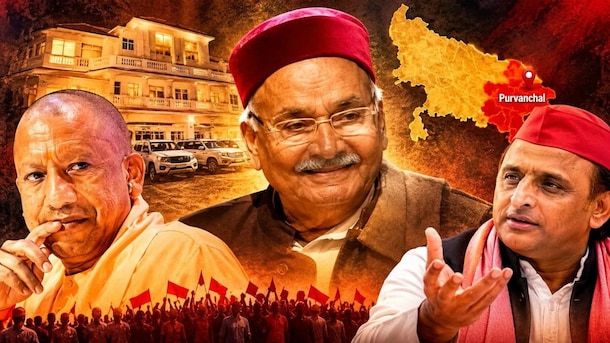
Real-Life Mirzapur? Story Of UP's Tiwari Haata That Akhilesh Yadav Visited
The Samajwadi Party chief's pit stop at the Tiwari Haata in Gorakhpur carried considerable political significance ahead of the UP elections
-
The Name Is Bond. Emo Bond. Robert Pattinson Inherits 007 With Feelings
The internet has already given the new James Bond a nickname. It is a joke, but it touches on the oldest question for the "cool" spy franchise: How much is he allowed to feel?
-
Buying Property For Investment? 6 Factors To Check Beyond Price
For anyone buying property as an investment, the real question is not simply how much the property costs. It is how much money it can generate.
-
Is Buying Home In A Small Town Smarter Than In A Metro? Here's The Math
According to Knight Frank's H1 2026 Affordability Index, the EMI-to-income ratio stood at 69% in Mumbai and 67% in the National Capital Region.
-
Samajwadi Seat Talks: The UP-Size Gap Between Congress' Rhetoric and Reality
UP Election 2027: Seat-sharing negotiations are rarely easy. More so when they involve a regional force determined to guard its turf and a national party desperate to regain lost ground.
-
Cyber Outages: The Attack That Has No Name
Banks, flights and the world's office mail failed four times in five days, each time without an attacker. The world spends $247 billion a year on locks