Opinion | Iran May Be Doing With Its Nukes What Another 'Rogue' Regime Did 20 Years Ago
A rogue state got away with its nuclear weapons programme decades ago, defying all sanctions. Iran may be going down the same path.
Six months after Iran signed the 2015 nuclear deal with the Obama administration and five other major powers, the Russian ship Mikhail Dudin departed the Islamic Republic, carrying 12.5 tonnes of Iran's enriched uranium. The removal of 97% of Iran's total enriched uranium without firing a single bullet was President Obama's biggest foreign policy achievement. The move left the Islamic country with too little uranium to make a bomb. But Donald Trump, who became US president a year later, called the deal "horrible", "one-sided", and the "worst in history", and pulled the US out of the agreement in 2018, ignoring the UN watchdog IAEA's conclusion that Tehran was complying with its provisions.
The US withdrawal from the 2015 landmark agreement with Iran, the Joint Comprehensive Plan of Action (JCPOA), appears to be Trump's worst decision, one that could haunt the United States forever. The deal, backed by all five permanent members of the UN Security Council, plus Germany, was a major US success story. For Iran, the JCPOA marked a significant departure from its nuclear doctrine, under which weaponisation had been an option for decades.
Today, Trump has helped revive that option with potentially more dangerous implications.
Hardliners in Iran, particularly the commanders of the Islamic Revolutionary Guards Corps (IRGC), had been furious with the moderate President Hassan Rouhani for signing the JCPOA. But they could not protest much, as the Supreme Leader, Ayatollah Khamenei, had backed him in the hope that the country would be free of sanctions, which, in turn, would revive the economy and end their isolation. It was Khamenei who had prevented Iran's nuclear scientists from crossing the threshold to produce a weapon. He wrongly believed that merely having the capability to produce a nuclear weapon would be a deterrent.
Trump's Desperation
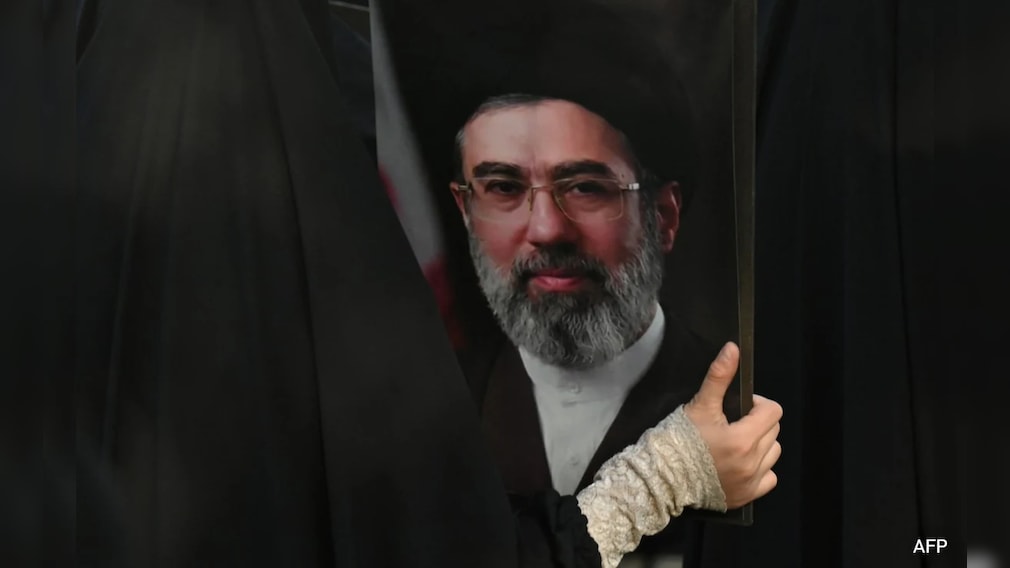
Trump is now desperate to secure an agreement with Iran over its nuclear programme. He has promised to negotiate a better deal than Obama's, but his decision to withdraw from the JCPOA and to join Israel's war in June last year and again this year has made such an achievement nearly impossible. Iran has flatly rejected Trump's demand to surrender its stockpiles of enriched uranium. On April 30, Iran's Supreme Leader, Ayatollah Mojtaba Khamenei, said in a written statement that the Islamic Republic will protect its "nuclear and missile capabilities" as a national asset. "Ninety million proud and honorable Iranians inside and outside the country regard all of Iran's identity-based, spiritual, human, scientific, industrial and technological capacities - from nanotechnology and biotechnology to nuclear and missile capabilities - as national assets, and will protect them just as they protect the country's waters, land and airspace," he said.
There are fears in the US and Israel that Trump may end up with a much weaker nuclear deal in their desperation to end the war of their "choice", or, worse, go forward with an agreement that leaves the nuclear issue unresolved. Even if Washington manages to sign a deal with Tehran, there is no guarantee the Iranians will abide by it, given the changed circumstances and Trump setting a precedent of reneging on agreements. There is a strong possibility that Iran's rulers will now follow the North Korean example and vigorously pursue a nuclear weapons programme, for which there appears to be significant support in the country.
How Iran Built Its Nuclear Programme
Iran's former President Ali Akbar Rafsanjani, who helped Khamenei become the Supreme Leader in 1989, was in favour of weaponisation. In an interview in 2015, Rafsanjani admitted that Iran had decided to build a nuclear weapon during the war with Iraq, with help from Pakistan. "We were at war, and we wanted to have such an option for the day our enemies wanted to use nuclear weapons. This was our state of mind," Rafsanjani, who was Commander in Chief during the war, had told Iran's Etemad newspaper.
Rafsanjani also revealed in that interview that Pakistan had provided Iran with 4,000 second-hand first-generation centrifuges, along with the designs. The father of Pakistan's nuclear bomb, AQ Khan, with a green light from the then-military ruler, General Zia ul-Haq, helped build Iran's nuclear programme. China also helped Iran drill very deep wells to mine uranium, according to Rafsanjani.
Rafsanjani's government developed what is known as the 'AMAD' plan, which established a roadmap for a nuclear weapons programme. By 2003, Iran was preparing to conduct a cold test of a nuclear explosive. But then the plan was exposed, prompting the Islamic regime to abandon it under pressure from the United States and other powers. Even after ditching the AMAD plan in 2003, Iran continued nuclear enrichment but remained on the edge and never crossed the weapons threshold. It only tried to use that as leverage to negotiate a deal with the US.
The North Korean Playbook
North Korea also sought Pakistan's help to develop its nuclear weapons programme. But unlike Iran, Pyongyang used diplomacy as cover to pursue the programme. It signed the Agreed Framework deal with the Clinton administration in 1994 and a multinational agreement in 2005. On both occasions, it initially froze a part of its programme, even dismantled some of its nuclear facilities, secured some sanctions relief, but secretly continued its goal of making atomic weapons.
Whereas in Iran, Ayatollah Khamenei didn't allow his scientists to build a bomb, North Korea's Supreme Leaders, Kim Il Sung, Kim Jong Il, and now Kim Jong Un, have been determined to build a nuclear arsenal at any cost. Both Iran and North Korea were signatories to the Nuclear Non-Proliferation Treaty (NPT). But while Iran is still contemplating whether to leave it, Pyongyang withdrew from it in 2003 and exploded a nuclear device three years later. Since then, it has conducted numerous tests and vastly expanded its nuclear arsenal. It now has nuclear bombs and delivery systems capable of reaching even the United States.
By assassinating Ayatollah Khamenei, the US and Israel have made it easier for Iran to adopt the North Korean model and cross the nuclear threshold. Khamenei's son, Mojtaba, the new Supreme Leader, is believed to be close to the IRGC. As events since the war have shown, hardliners and the IRGC are running the show in Iran and are more likely to agree with the North Korean logic that the only safeguard against a future invasion is a nuclear deterrent. A large section of Iran's population is now also believed to be in favour of having nuclear weapons for that reason.
Iran's Revised Policy May Already Be Underway
After Trump's withdrawal from the JCPOA in May 2018, Iran didn't completely cease its cooperation with the IAEA. But, the agency said, it stopped fully implementing its commitments a year after Trump's move. Just before Trump left office in 2021, Iran began enriching uranium to 20%, which is enough to make a heavy crude bomb. The 2015 Agreement allowed enrichment only up to 3.67%.
After a suspected Israeli attack on its Natanz nuclear plant in April 2021, Iran further decided to increase enrichment to 60%, raising alarm in Tel Aviv and Washington. Enrichment up to 90% sufficient to make a regular nuclear weapon. The then President, Joe Biden, tried to persuade Iran to reduce enrichment, but it didn't comply, even though it continued to talk to his officials about a deal. Significantly, Iran also stepped up uranium mining operations. Iran's operational uranium mining sites doubled to 14 between 2021 and 2025, according to the IAEA.
Trump has often referred to Iran's enriched uranium as nuclear dust, implying it was turned into a powder following his attacks on Iran's three main nuclear sites last year. Although his claim that these sites were completely destroyed has been disputed, the so-called dust contains more than 450 kg of uranium enriched to 60%, buried in the rubble of the sites. But this is only a fraction of Iran's total stockpile of enriched uranium.
Iran's Unspoken Enriched Uranium
According to the IAEA, Iran's total enriched uranium stockpile was 9,874.9 kg, or about 10 tonnes, when Israel launched its war on June 12, last year. The agency's September 2025 report quoted these figures, based on information provided by Iran. This uranium stock is reported to be at various enrichment levels, which has been built up since Trump pulled out of the JCPOA. Between June 2025 and this February, when the current war began, the stockpile is likely to have risen further and is now estimated to be touching about 11 tonnes. This means Iran has enough uranium to make 100 bombs, according to experts. Neither Trump nor his aides have spoken about this.
The IAEA inspectors were forced to leave Iran last June - not because Tehran expelled them, but because Israeli and American attacks made their presence unsafe in the country. After the war, Iran also officially suspended its cooperation with the agency. It's not unlikely that it could already be working on a new nuclear facility to increase enrichment levels from its stockpile. Iran's mountainous terrain provides sufficient cover to hide underground activities from US satellites. A day after last year's attacks by Israel and the US, Tehran was scheduled to inform the IAEA about a new nuclear facility in a meeting. But it no longer feels obliged to disclose that. The dominance of hardliners in the country and the new Supreme Leader's latest statement suggest it may be heading in that direction.
The war that began two months ago has demonstrated Iran's missile capabilities and delivery systems. Despite Israel's targeted killings of Iran's nuclear scientists, there's no shortage of knowledge and nuclear know-how in the Islamic Republic. It has certainly come a long way since it abandoned its AMAD plan 23 years ago. Building a nuclear arsenal would not be difficult if Iran chooses to do so and follows the North Korean example. Trump may boast that the US has all the cards over Iran, but the reality appears to be the exact opposite.
(Naresh Kaushik is a former editor at the BBC and Associated Press. He is based in London)
Disclaimer: These are the personal opinions of the author
-
NDTV Exclusive - Inside Meta's Child Safety: Current Systems Miss Nuance, New AI Under Test

The tech giant disclosed that it is developing a new generation of AI models to strengthen enforcement against child sexual exploitation on Facebook and Instagram.
-
Opinion | The Story Of 'SH-15', Pakistan's New Chinese Guns, Now Along India's Borders
Pakistan has reportedly deployed nearly 250 Chinese-made SH-15 wheeled self-propelled howitzers along sectors facing India.
-
Explained: Why Meta Is Under Fire Over Child Sexual Abuse Content
Meta chief Mark Zuckerberg apologised to the Indian government over child sexual abuse material, deepfake content and operational lapses. Here's what triggered the controversy and why it could reshape the debate over platform accountability and 'safe harbour' protections in India.
-
Opinion | Bankipur, And Why The Most Dangerous Voter Is The One Who Thinks Again
Bankipur is like the NOIDA of Uttar Pradesh. Its voter list isn't like the rest of Bihar. Which is why one must be careful in declaring Kishor's win a phenomenon - yet. But then, there's the power of the voter...
-
Russia's 'Human Safaris' Are Bringing Terror To Ukraine's Frontline Cities
Kherson is among the first places where Russian forces began using short-range FPV drones against civilians. Equipped with live-streaming cameras, the aircraft allow operators to observe targets in real time and make decisions moments before impact.
-
Opinion | Prashant Kishor May Just Be Playing Two Games At Once In Bihar
The Jan Suraaj is neither a 'BJP-lite' option for disaffected upper-caste voters, nor is it an RJD alternative for Muslims. It is, in fact, both things at once, in the same seat, in the same election.
-
Opinion | Inside The Cabinet Drama That Has Shaken The Congress In Karnataka
Siddaramaiah's decision to 'boycott' the swearing-in ceremony because of a perceived 'insult' is a story in itself.
-
Opinion | The Panic In Rawalpindi: Why Pakistani Generals Suddenly Sound So Afraid
Lectures on governance and usual accusations against India aside, the truth is that Pakistani generals are fast losing their grip on the country.
-
Opinion | Bankipur Is Prashant Kishor's Stinging Comeback. But It Is Also The End Of His 'Excuse'
Kishor's ideological flexibility helped make him a successful strategist, but it remains a political vulnerability.
-
As AI Takes Jobs, Could It Also Create A New Generation Of Entrepreneurs?
The job market has already begun feeling the impact of AI as companies automate more tasks and rethink hiring. However, India Inc and global industry captains believe the AI disruption could mean spawning a new wave of entrepreneurs.