Opinion | The Country That Buys 90% Of Iran's Oil Is Still Not Panicking. Here's Why
Beijing has spent two decades preparing to answer: what happens when the Strait of Hormuz closes?
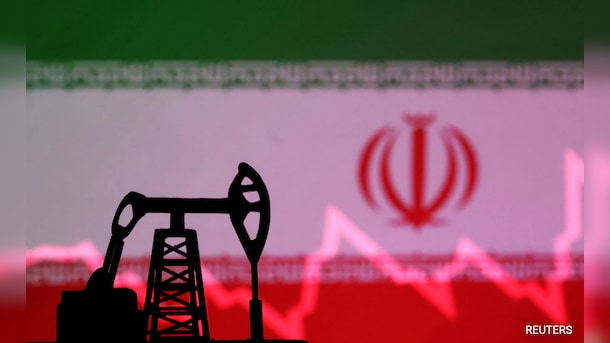
In Suetonius's Life of Vespasian, the emperor's son, Titus, complained that his father was taxing the city's urine collectors. Vespasian held a gold coin to Titus's nose: does this smell? Pecunia non olet. Money has no smell. For the better part of a decade, China has purchased Iranian crude, which is sanctioned by the West, sold at a discount, frequently relabelled "Malaysian blended oil" to avoid scrutiny. This has been done without apparent discomfort at the provenance. Iran accounted for roughly 13% of China's seaborne crude imports in 2025 (Kpler). The discount was the point. The smell, if there was one, was acceptable.
The war that began on February 28, when US and Israeli jets struck Iran, has not changed the underlying logic. It has, however, changed the arithmetic considerably. In eight days, it has produced the sharpest oil price shock since Russia's 2022 invasion of Ukraine, rattled stock markets across three continents, pushed governments towards emergency reserve releases, and posed a question that Beijing had spent two decades preparing to answer: what happens when the Strait of Hormuz closes?
A Panic-Stricken World
Holmes, in A Scandal in Bohemia, observed that it is a capital mistake to theorise before one has data. The data are now available. Brent crude surged approximately 50% in eight days, touching $119.50 a barrel on Monday, the highest in four years. West Texas Intermediate moved in lockstep, briefly hitting $119.48. Both retreated to around $105 after the Financial Times reported that G7 finance ministers were convening an emergency call to discuss coordinated reserve releases.
The average American petrol price rose from $2.98 to $3.45 a gallon in a single week. Iran has brought the Strait of Hormuz to an effective halt. Around 20% of global crude normally transits it, along with 30% of Europe's aviation fuel and 20% of global LNG. Iraq, the UAE and Kuwait have cut production. Tankers sit fully loaded with nowhere to go.
The International Monetary Fund's (IMF) formula for such a shock is quite simple. If grim, every sustained 10% rise in oil prices produces a 0.4% rise in global inflation and a 0.15% reduction in global economic growth. Oil is up 50%. Japan's Nikkei fell as much as 7%. South Korea's KOSPI plunged 8%. US equity futures shed nearly 2%. Qatar's energy minister warned the war could "bring down the economies of the world". Iran's Revolutionary Guard has threatened $200 a barrel if attacks on energy infrastructure continue.
The IEA's Job
The International Energy Agency (IEA) was created in 1974, born directly from the Arab oil embargo, to provide a buffer precisely for emergencies of this kind. Its 32 members collectively hold 1.24 billion barrels of public strategic stocks, plus a further 600 million barrels in industry reserves, covering over 140 days of net imports for member countries. The US and Japan, between them, account for roughly 700 million barrels of that total. G7 ministers on Monday discussed releasing 300 to 400 million barrels in a coordinated operation. This would be the sixth such release in 52 years, which tells you something about how serious the situation is and how rarely they reach for this particular lever.
There is a domestic comedy running alongside the geopolitical tragedy in the US. Trump, who campaigned relentlessly on the cost of living, posted on Truth Social that the oil price spike was "a very small price to pay for U.S.A. and World Safety and Peace" and that "ONLY FOOLS WOULD THINK DIFFERENTLY". Keynes, in A Tract on Monetary Reform (1923), wrote that "in the long run we are all dead". He was making a point about macroeconomic patience. Trump's long run, measured against a petrol price that rose 47 cents in a week, appears to be quite short.
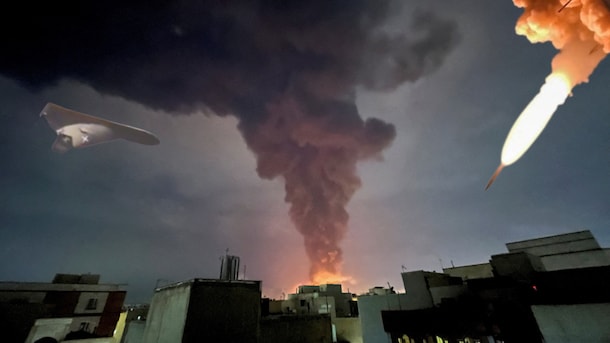
A Trump advisor, speaking to Axios, offered an interesting take. "The president doesn't like the attack. He wants to save the oil. He doesn't want to burn it." The attack in question was Israel's strikes on 30 Iranian fuel depots in a single Saturday operation, which the US military had not anticipated in either scope or number, reportedly prompting a message between allies not suitable for this publication. The depots produced fires visible for miles and a toxic black rain over Tehran. Tacitus, writing of Rome's campaigns in Britain, recorded the line that has survived two millennia, " ubi solitudinem faciunt, pacem appellant", ie, they make a wasteland and call it peace. Lewis Carroll's Humpty Dumpty, in Through the Looking-Glass, explained the semantics: "When I use a word, it means just what I choose it to mean - neither more nor less." When Trump says "temporary", he means something. What, exactly, markets have declined to believe.
China's Enviable Position
China is, in a phrase one analyst used without apparent irony, "materially exposed but more flexible". The flexibility first. China holds an estimated 1.1 to 1.4 billion barrels in strategic and commercial reserves, approximately 140 days of import demand, nearly double the level of a decade ago.
The US Energy Information Administration noted in February that Beijing had been expanding stockpiles by roughly one million barrels a day through 2025. The structural insulation runs deeper than reserves. Nomura's chief China economist estimates that Hormuz oil accounts for only 6.6% of China's overall energy consumption. China's EV revolution has displaced over one million barrels per day of implied oil demand. More than half of new passenger vehicle sales are now new-energy vehicles. Oil and gas make up only 4% of China's power mix, compared with 40 to 50% for many Asian economies. Renewables accounted for 80% of China's new electricity demand in 2024. By 2030, Beijing aims to raise the total non-fossil share of total energy to 25%.
Iran's principal export terminal, Kharg Island, capable of loading seven million barrels a day, and carefully left untouched by US and Israeli jets, who have their own reasons for restraint, continues to load supertankers. The majority flows to China. For now.
But It Still Has Other Concerns
The exposure, however, runs well beyond energy. From 2019 to 2024, China invested $89 billion directly into the Middle East (Eurasia Group). Its Middle East loan portfolio doubled to 10% of its global total by 2023. Chinese banks are part-funding Qatar's North Field East LNG terminal, which was incidentally struck last week. Chinese companies own and operate terminals at Haifa Port in Israel and Khalifa Port in the UAE. China is the region's largest desalination investor, with projects in Saudi Arabia, the UAE, Oman and Iraq, infrastructure now being systematically targeted. Cosco has halted bookings through the Strait. Maersk has suspended critical routes. Baidu paused robotaxi services in the Emirates. More than 3,000 Chinese nationals have been evacuated from Iran. In 2025, China's Middle East exports grew nearly twice as fast as its exports to the rest of the world, the UAE had become its fastest-growing car market, and Saudi demand for Chinese steel had doubled. The Middle East is considered the biggest growth potential for China. All of this is now in the line of fire.
Iran, it should be said, depends on China more than China depends on Iran. Over 80% of Iran's exports go to China (Kpler). Blocking the Strait of Hormuz for any length of time hurts Iran as much as it hurts others. As much as 70% of Iran's non-oil trade passes through ports that depend on the strait. The threat of $200 oil is a threat Iran also makes against itself.
Into Putin's Arms?
For China, the lasting consequence of this war is unlikely to be the price shock but the strategic direction it now has little choice but to accelerate. Russia already supplies 20% of China's crude, its single-largest source. Chinese oil majors have been increasing Russian shipments quietly for weeks. CNPC is restarting a mothballed refinery in Dalian specifically to handle greater Russian volumes. The Power of Siberia 2 pipeline (Russian gas through Mongolia into China, expected by the early 2030s) is likely to be built sooner.
Needless to say, China is slightly in a weak position. Moscow can now push Beijing to pay higher prices for Russian oil and gas. The war on Iran, whatever its military outcome, appears set to push the world's second-largest economy further into the arms of Russia.
The IEA reserve system, built in 1974 to keep the lights on in a crisis, was designed for exactly this. It was not designed for a world in which one of the largest consumers of oil is not a member, holds its own buffer of 1.4 billion barrels, has spent two decades preparing for supply disruption, and regards the emergency as an opportunity to deepen a pre-existing alliance. Pecunia non olet, Vespasian told his son. Money has no smell. In Beijing, the accountants are at work. The arithmetic, at least, is familiar.
(The author was with the Economic Advisory Council to the Prime Minister)
Disclaimer: These are the personal opinions of the author
-
With Missiles Carrying 1,000 kg Explosives, A New Tactical Phase For Iran

Iran dropped a bombshell on Sunday after a senior Revolutionary Guard commander vowed to only launch missiles with explosives of 1,000kg or more
-
The Beast Of Kandahar: How One Captured Drone Changed Modern Warfare
One December day in 2011, a Sentinel mission ended in a moment that would reshape the global drone arms race. Instead of returning to its base in Afghanistan, the Sentinel landed inside Iran.
-
Trump Started War Against Iran. He's Still Figuring Out How It Ends
The US-Israel campaign began with coordinated strikes in Tehran and the killing of Iran's Supreme Leader Ayatollah Ali Khamenei on the first day.
-
Opinion | A $10 Billion Threat: How Exposed India Really May Be To Middle East's Oil Crisis
Every $10 increase in the price of Brent crude could widen India's current account deficit by roughly 0.3 to 0.4% of GDP, translating into over USD 10 billion in additional import expenditure.
-
Opinion | Iran-Israel War And The Limits Of India's 'Strategic Autonomy'
India needs to figure out how to manage the fallout of the Middle East crisis without letting strategic autonomy start to look like a slogan.
-
Opinion | Can A Gen Z-Influencer-Rapper PM Really 'Change' Nepal?
Observers say it's high time the former mayor evolved and grew, as well as became more mature, diplomatic and friendly with journalists, opponents and, most importantly, friendly neighbours like India and China.
-
Opinion | This Parliament Session, Watch What Is 'Expunged'
Is mentioning Donald Trump or Epstein unparliamentary? Are the surnames of India's two richest families unparliamentary proper nouns?
-
Regime Change, Uranium Stockpile, And The US Dilemma To Invade Iran
US Defence Secretary Pete Hegseth has declined that US troops were already on the ground in Iran.
-
Tale Of Two Protests: How Balen Shah Trumped In Nepal, But Bangladesh's Students' Party Failed
The protests in Bangladesh and Nepal, countries that are separated by the narrow Siliguri corridor, had the same goal - replacing the existing system.