Opinion | Why This Is The Most 'Deceptive' Point Of The US-Iran War - Yet
Beneath the 'lull' you see today being packaged as a thaw, the war is expanding insidiously.
A month into the war in West Asia, the crisis has entered its most deceptive phase. Talks are now visible. Peace is not. Every hint of talks briefly steadies markets, but the underlying crisis remains unchanged. Hormuz remains under pressure, Israel and Iran are still exchanging fire, and Washington is adding military weight even as it talks of negotiations. For India, this is now an inflation risk, a shipping risk, and a supply-chain risk.
This is not peace approaching. It is coercive bargaining under continuing fire. Every side is trying to improve its position before the next move. Three things matter now: the battlefield, the bargaining gap and the economic squeeze.
By the first two, peace remains distant. By the third, the cost of prolonging the war is becoming unmistakable, and the pressure for de-escalation is harder to ignore.
The Battlefield
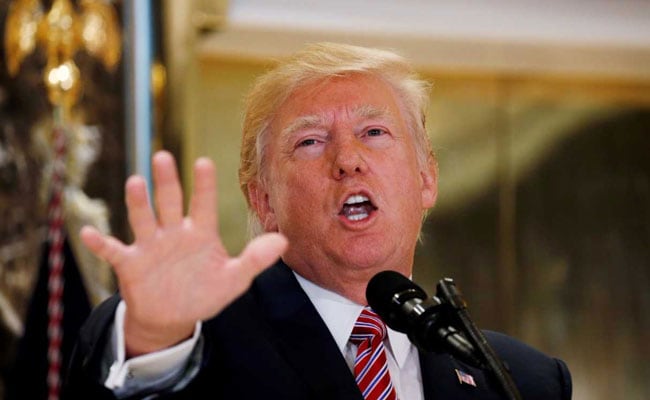
Start with the battlefield. On March 23, the United States postponed planned strikes on Iranian energy infrastructure for five days. On March 26, President Donald Trump extended that pause by another 10 days, until April 6. This was not a ceasefire. It paused one part of the war, not the war itself. It applied only to energy installations, not to the wider conflict.
At the same time, the first contingent of US Marines has already arrived in the region, and the Pentagon is weighing additional troop deployments from the 82nd Airborne. That is not winding down. When a war pauses one set of targets while moving fresh forces into theatre, it is not ending, but recalibrating.
The bargaining gap is just as wide. Washington still wants Iran pushed back hard, with an end to enrichment, tighter missile limits, stricter curbs on proxies, and the reopening of Hormuz.
Tehran is answering in equally hard terms, demanding guarantees against future attacks, compensation for wartime losses, and terms that preserve its leverage in Hormuz, while refusing to trade away what it sees as its main deterrent.
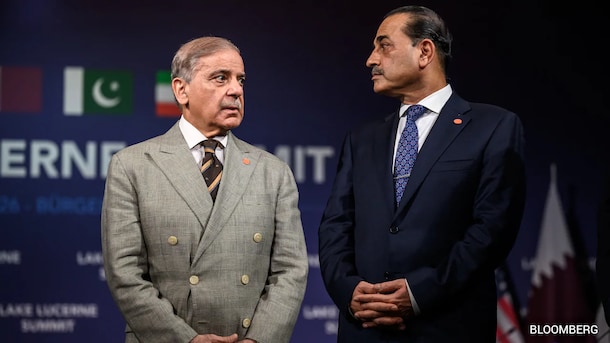
For now, Pakistan, Egypt, and Turkey matter more as channels than as mediators between adversaries that still distrust direct talks. The channels exist, but there is still no common ground.
The Ever-Growing Split
Israeli thinking remains sceptical that Iran will accept the terms on offer. It wants any arrangement to preserve freedom for future pre-emptive action. In the Gulf, there is no single line. Some capitals want the fighting to end quickly because of the damage to trade and energy flows. Others insist that a mere ceasefire is inadequate and that any settlement must durably weaken Iran's missile, drone, proxy, and shipping leverage. The split is plain. Some want a ceasefire now. Others want one only after Iran is left weaker than before.
Lebanon is no longer a side theatre. Israel is now openly discussing a security zone up to the Litani River and tying the return of displaced Lebanese to security in its north. Tehran, for its part, wants the Lebanon front folded into any ceasefire. That means even if Washington and Tehran seek to expand the present pause, Israeli action in Lebanon could still determine whether the conflict broadens, freezes, or begins to ease.
Houthi missile fire on Israel raises the prospect of a wider conflict. More worrying still, it puts Bab al-Mandab and the Red Sea back in play even as Hormuz and the Gulf remain under strain.
Money Is The Matter
Economics is now the strongest argument for de-escalation. Oil has stayed above $100 a barrel. Gas markets have been hit even harder, with Asian LNG prices far above pre-war levels. Urea prices have jumped sharply, with Middle East export prices up about 40% from before the war, and fertilizer costs could rise much further if Hormuz disruption persists. This is when the shock starts moving through the wider economy. Higher fuel, freight, and fertilizer costs feed directly into agriculture, food inflation, aviation, chemicals, plastics, and factory input prices. When war begins to hit harvests, household budgets, and manufacturing margins at the same time, the case for de-escalation grows stronger.
India should read this without illusion. The issue is no longer simply imported oil. It is the full supply chain: energy, fertilizer, shipping, industrial inputs, inflation, and the safety of Indians in the Gulf. New Delhi has already had to secure shipping passage, reassure the public on fuel and gas availability, and cut excise duties to cushion domestic prices. For India, stepping the war down is not just a foreign policy preference, but an economic need. India should, therefore, back any sequenced approach that first reduces violence, opens up shipping and then tackles the larger questions of missiles, nuclear constraints, and regional order.
So, is this pause leading to peace? Not yet. It is leading to a more crowded and more anxious bargaining phase. There are more channels, more urgency, and more fear of the economic consequences of another month like this one. The battlefield is still active, the troop build-up continues, the Houthis have widened the war, and markets remain sceptical that a ceasefire is close.
West Asia is not moving into peace. It is moving into a harsher calculation, one in which the strategic returns from continued war are beginning to shrink while the economic costs keep spreading. Enough, perhaps, for a pause. Not yet for peace.
(The writer was a Permanent Representative of India to the UN and now serves as Dean, Kautilya School of Public Policy)
Disclaimer: These are the personal opinions of the author
-
Why Doesn't Congress Boycott If Polls Are "Fixed"? Answer Lies Beyond Rahul Gandhi's "Distraction" Quip

The starkest demand for a boycott has come from outside the political Opposition, from the Cockroach Janta Party. But does a boycott help? Here's what research, examples, and expert analysis tell us.
-
'Sully' To Gimli, Sioux To Patna: When Pilots Got It Unbelievably Right
Captain Smit Machchhar fought off his co-pilot after being stabbed and opened the cockpit door, saving 174 people.
-
Opinion | Are Saudi Arabia And UAE Reuniting Again After 10 Years?
On Tuesday, the UAE's Vice President, Deputy Prime Minister and Chairman of the Presidential Court, Mansour bin Zayed, met Saudi Crown Prince Mohammed bin Salman.
-
Opinion | 'Lies, Damned Lies, Statistics': On The Controversy Around India's GDP Growth Figures
The debate is less about a single figure than about a decade-long erosion of trust in official statistics.
-
Opinion | Why India Cannot Keep 'Overestimating' Its Value To Washington
Some of India's value to Washington came from the tension between the US and China. That is changing now.
-
Opinion | India Has A 'Lobbying' Problem In Washington, And It Has Come Back To Haunt It
While the EU, Japan, the UK and South Korea secured quick deals, India's efforts were getting drained in prolonged negotiations and the wrong kind of lobbying.
-
India Is Getting Old Before Getting Rich, Will Turn 'Aged' In 16 Years: Moody's
Countries with the steepest fertility declines today will age the fastest in the coming decades. India's drop has been steep.
-
Opinion | Why Does Trump Want To Sell Arms To A US 'Adversary'? Inside His Strange Bargain
Trump's aides maintain that no such offer had been made. But the story points to a larger strategy
-
Opinion | The AI Boom Has Run Into A Big 'Debt' Trap Problem. Inside The 5% Danger Line
For most of the AI buildout's first two years, hyperscalers funded it the easy way: out of operating cash flow. That era is over.