Opinion | Pakistan, And The One Big Difference Between 'Broker' And 'Mediator'
Neither Washington nor Tehran appears willing to invest Pakistan with the political capital required for mediation.
In the shifting geopolitics of West Asia, crises often produce unlikely intermediaries. The latest round of confrontation - sparked by US and Israeli strikes on Iran last month - has once again underscored this pattern. As the conflict stretches into its second month, raising the spectre of a wider regional conflagration, Pakistan has emerged as an improbable diplomatic conduit between Washington and Tehran. This development is neither accidental nor entirely surprising; it reflects a convergence of geography, necessity, and ambition that has long shaped Islamabad's external engagements.
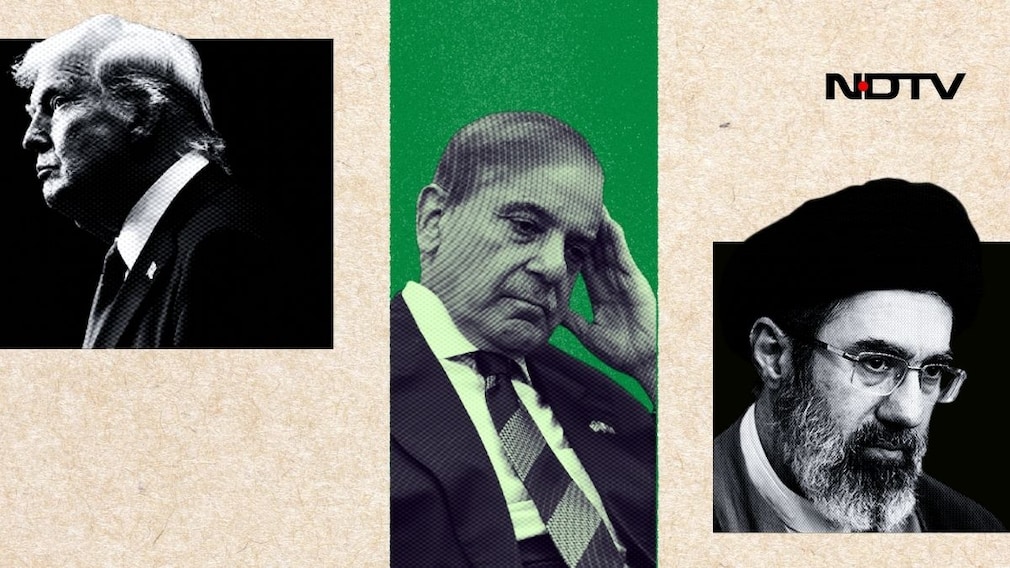
Acting as a back-channel facilitator, Islamabad has transmitted messages between the United States and Iran, reportedly conveying a detailed American proposal aimed at de-escalation. Simultaneously, its leadership - Prime Minister Shehbaz Sharif and Army Chief Field Marshal Asim Munir - has engaged in calibrated shuttle diplomacy, maintaining parallel lines of communication with US President Donald Trump and Iranian President Masoud Pezeshkian. Foreign Minister Ishaq Dar's public acknowledgement of Pakistan's intermediary role, alongside coordination with key regional actors such as Turkey, Egypt, and Saudi Arabia, signals a deliberate attempt to position the country at the centre of ongoing diplomatic efforts.
Geographical Concerns
At one level, Pakistan's activism is rooted in geography. Sharing a nearly 1,000-kilometre border with Iran, it occupies a space that no Gulf intermediary can replicate. While states like Oman and Qatar have historically played facilitative roles, their own vulnerability in the present conflict constrains their utility. Pakistan, by contrast, combines proximity with a degree of insulation, enabling it to sustain discreet engagement channels. This geographic reality is reinforced by security concerns in Balochistan, a province that straddles the Iran-Pakistan border and remains susceptible to insurgent activity. Any prolonged instability across the border risks exacerbating militancy and triggering refugee inflows - outcomes Islamabad can ill afford.
Balancing US And Iran
Yet geography alone does not explain Pakistan's emergence as a mediator. Equally significant is its ability to maintain working relationships with competing actors. Islamabad's ties with Washington have witnessed a modest revival under the Trump administration, facilitated by economic cooperation and a renewed strategic dialogue. At the same time, Pakistan's engagement with Tehran has remained steady, underpinned by pragmatic border management and mutual sensitivities. Its close defence partnership with Saudi Arabia and the Gulf monarchies - exemplified by recent security arrangements - further enhances its regional relevance. Crucially, Pakistan's lack of diplomatic relations with Israel, shaped by its longstanding position on Palestine, renders it a more acceptable interlocutor in Iranian eyes. This combination of relationships, while not unique, provides Islamabad with a degree of diplomatic flexibility that few others currently possess.
Concerns At Home
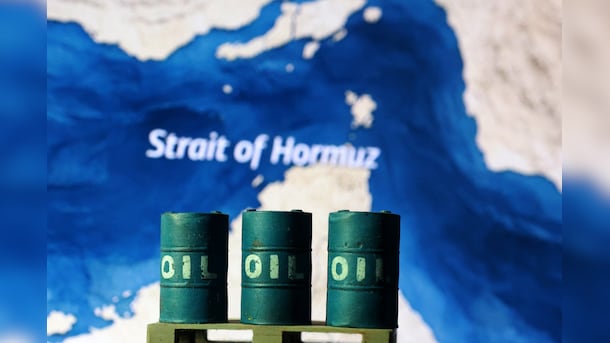
The imperative to mediate is also driven by hard economic and domestic considerations. Pakistan's dependence on energy imports routed through the Strait of Hormuz exposes it acutely to disruptions in the Gulf. The recent spike in global oil prices, already translating into significant domestic cost increases, underscores the fragility of its economic situation. Equally critical are remittance flows from millions of Pakistani workers in the Gulf, which constitute a vital pillar of the national economy. A protracted conflict threatens both energy security and financial stability, raising the risk of internal unrest.
Domestic socio-political dynamics add another layer of urgency. Pakistan's sizable Shia population maintains deep cultural and religious ties with Iran, making developments there resonate internally. Reports of unrest following the killing of Iran's Supreme Leader illustrate the potential for sectarian tensions to intensify. In this context, mediation is less an exercise in altruism than a strategy of damage limitation - an attempt to insulate the domestic arena from external shocks.
Obstacles Remain
However, the constraints are formidable. The structural mistrust between the United States and Iran remains the single greatest impediment to meaningful progress. Public denials from Tehran regarding the scope of engagement, coupled with Washington's shifting positions, highlight the fragility of the process. Israel's opposition to any arrangement perceived as insufficiently restrictive of Iran's capabilities further complicates the diplomatic landscape. Additionally, Saudi Arabia's own strategic calculations, reportedly favouring sustained pressure on Tehran, introduce tensions into Pakistan's balancing act, given their close security ties.
Pakistan's domestic limitations cannot be overlooked either. Economic fragility, political contestation, and ongoing security challenges along its western frontier constrain its ability to sustain prolonged diplomatic engagement. Moreover, its leverage is inherently limited; lacking the economic incentives or coercive instruments available to major powers, Islamabad must rely primarily on persuasion and access. The indirect nature of the current talks, conducted through intermediated channels rather than direct negotiations, further reduces the prospects for rapid breakthroughs.
Just A Broker?
Pakistan's current role should be better understood not as that of a trusted mediator shaping outcomes, but as a transactional broker managing communication. The distinction is critical. A genuine mediator commands confidence, can nudge compromise, and helps define the contours of a settlement. A broker, by contrast, merely transmits messages, facilitating contact without fundamentally influencing intent. Islamabad, for all its access, remains closer to the latter.
Neither Washington nor Tehran appears willing to invest Pakistan with the political capital required for deeper mediation. The United States continues to rely on its own strategic calculus, while Iran's intermittent denials of engagement underscore its reluctance to legitimise any external intermediary. Key regional actors, particularly Israel and Saudi Arabia, are not aligned behind Pakistan's efforts, further limiting its credibility as a consensus-builder. In such a fractured environment, access does not translate into authority.
Pakistan's leverage, therefore, is procedural rather than substantive. It can keep channels open, reduce misperceptions, and perhaps prevent inadvertent escalation. But it lacks the capacity to shape red lines or bridge the ideological and strategic divide between the protagonists. Its involvement is driven as much by compulsion as by choice, an exercise in crisis management rather than conflict resolution, and is unlikely to yield any long-term strategic dividends to Pakistan.
(Harsh V Pant is Vice President for Studies at Observer Research Foundation, New Delhi.)
Disclaimer: These are the personal opinions of the author
-
Opinion | How Iran Has Pierced The One 'Shield' That Protected America For 30 Years

In the past, US campaigns in Iraq, Afghanistan and Libya were conducted against relatively weak air defences. That has not turned out to be the case with Iran, puncturing the long-held myth of America's 'indomitable' air power.
-
Eagle Down: How US Carried Out Precision Search And Rescue Op In Hostile Iran
How the United States transformed a tactical failure into a narrative of national resolve.
-
Opinion | 450 Missile, 2,000 Drone Attacks Later, Why Is UAE Still Not Fighting Iran?
The UAE is Iran's second-largest trading partner and also home to roughly half a million Iranians. Why, then, has it absorbed more fire than any other Gulf state?
-
In Numbers: How Has India Kept Fuel Prices Low Even As Europe Sees 70% Spikes?
India imports 88% of its crude. Why then is it not seeing massive price hikes for fuel and LPG? Inside the unique strategy it's following...
-
Opinion | India Just Decided To Let Chinese Capital In Again. But There's A Catch
In March 2026, India eased regulations that had restricted Chinese capital in local companies, in a development that marks New Delhi's cautious approach towards capital flows from Beijing.
-
Trump's Iran 'Knocked Out' Claim Blown Up By US Intel On Missiles, Drones
Donald Trump claimed this week the war would end in two to three weeks as he threatened to send Iran back to the Dark Ages. But based on these reports the fighting is far from over, even if US President wants to push a contrary narrative.
-
Opinion | Rs 30 Petrol Hike To Currency Crisis, What Oil At $150 Can Really Do To The World
At $125 per barrel, petrol and diesel retail prices will need to rise by Rs 8-14 per litre. At $150 - which experts think is now likely - these figures could touch Rs 26-30 per litre.
-
Opinion | The Problem With Trump's Fantasy Of A 'Crippled' Iran
Even a relatively insulated US economy cannot entirely escape the ripple effects of sustained disruptions in one of the world's most critical energy corridors.
-
Opinion | Trump's Iran War Is About To Become Someone Else's Problem Soon
Start alone, end alone - that may be the harshest lesson for Trump as he now tries to dash for the door in Iran.