Opinion | Mojtaba's First Message Makes It Clear: Iran Won't Give An Easy 'Exit' To Trump
In Iran, the assassination of a Supreme Leader demands a response, a do-or-die response. Backing down would risk undermining Mojtaba's legitimacy at home and weakening his authority among the hardline institutions that support his regime.
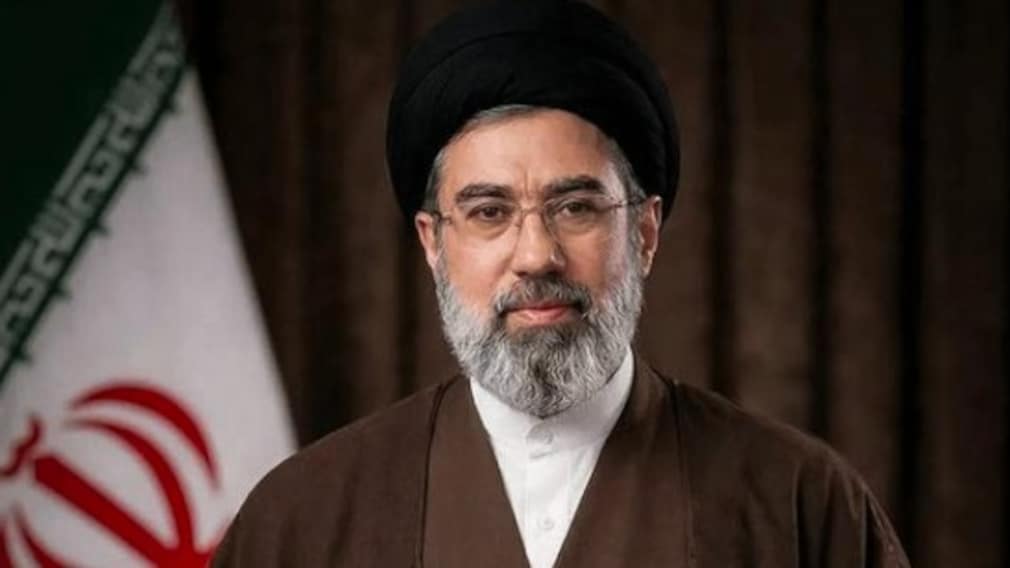
The appointment of Mojtaba Khamenei as Iran's new Supreme Leader was effectively Iran's slap in the face to US President Donald Trump and Prime Minister Benjamin Netanyahu, who had insisted that Iran's next leader should somehow meet their approval. Delusional? Without a doubt. The message from Iran was loud and clear: Iran's leadership will be decided in Tehran, not in Washington or Tel Aviv.
For weeks, rhetoric from Washington suggested that the US believed it could reshape Iran's political future through force. President Trump had even mused publicly about influencing who might succeed Ayatollah Ali Khamenei, who was assassinated by US-Israeli forces in the first wave of attacks on Iran. That illusion collapsed the moment Iran's clerical establishment closed ranks and elevated Mojtaba Khamenei to the most powerful position in the Islamic Republic.
In effect, the message from Tehran was, 'You do not decide Iran's leadership. We do.'
The sudden emergence of Mojtaba Khamenei from relative obscurity has profound geopolitical implications, not just in the Middle East but across the world. His appointment marks a hardening moment for Iran and perhaps for the wider Middle East.
The First Signal From Tehran
There are reports that the new Supreme Leader was injured in the attacks that killed his father, along with several members of his family, including his wife, mother and sister. He has yet to make a public appearance. That absence prompted Israeli Prime Minister Benjamin Netanyahu to mock him publicly (at a press conference yesterday) and even hint at possible action against him, similar to what happened to his father.
But on Thursday, Iranian state television broadcast a statement attributed to Mojtaba Khamenei. It was read out by a presenter rather than delivered by him personally. Whether this was due to security concerns or injuries sustained during the attacks remains unclear.
But the message itself left little room for doubt. Iran, he said, would avenge the blood of its martyrs. And the country would continue to use the "lever" of blocking the Strait of Hormuz. That single phrase immediately captured the attention of governments and markets around the world. Roughly a fifth of the world's oil supply passes through the narrow waterway that is the Strait of Hormuz. By invoking the possibility of closing it, Mojtaba Khamenei was delivering a stark strategic reminder: Iran may be under attack, but it still holds powerful levers capable of imposing immense economic costs on its adversaries.
The Long Memory of War
Mojtaba Khamenei belongs to a generation shaped by conflict and siege. Born in 1969, he grew up in the aftermath of Iran's 1979 revolution and came of age during the brutal Iran-Iraq war. That war remains etched deeply in Iran's collective political psyche. The conflict lasted eight years and claimed hundreds of thousands of lives. It was also fought with the open support of Western powers for Saddam Hussein's Iraq.
For Iran's leadership, the lesson from that period was clear: in moments of existential crisis, the country must rely primarily on its own resilience. This historical memory explains much of Iran's worldview today. Iranian leaders often interpret external pressure not as limited tactical manoeuvring but as part of a broader attempt to dismantle the Islamic Republic.
The assassination of Ali Khamenei has reinforced that perception dramatically. If the US and Israel believed the killing of Iran's Supreme Leader would weaken the regime or open the door to internal collapse, the early signs suggest they were highly mistaken and perhaps poorly advised by their intel-heavy advisers. Instead, it has strengthened the narrative of resistance - even 'martyrdom' - that has sustained the Islamic Republic for decades.
The Hardening Of Tehran's Stance
The elevation of Mojtaba Khamenei suggests that Iran's leadership is preparing for a long-term confrontation, a fight to the end, if you like. Unlike reformist figures who occasionally emerged in Iran's political system, Mojtaba is widely viewed as closely aligned with the Islamic Revolutionary Guard Corps, perhaps the most important organisation in Iran today. The Revolutionary Guard has long advocated a strategy of resistance and deterrence against external pressure. It emphasises asymmetric warfare, proxy alliances and economic leverage.
Mojtaba's first statement already reflects this thinking. The reference to the Strait of Hormuz signals that Iran intends to remind the world of the strategic costs of continued attacks. Broadly speaking, the new Supreme Leader is unlikely to grant Trump the easy exit that some of his policymakers are quietly hoping for.
In Iran's political culture, the assassination of a supreme leader demands a response, a do-or-die response. Backing down quickly would risk undermining Mojtaba's legitimacy at home and weakening his authority among the hardline institutions that underpin the regime. For that reason, Iran under his leadership is most likely to pursue a calibrated strategy of retaliation - not necessarily a direct conventional war with its adversaries, but a series of actions designed to impose pressure and demonstrate resilience. Therefore, under him, the so-called axis of resistance, such as the Houthis, Hezbollah and Hamas, will continue to get Iran's material and personnel support
The End of Illusions
The appointment of Mojtaba Khamenei, therefore, marks more than a succession within Iran's political hierarchy. It symbolises the beginning of a potentially more dangerous phase in the confrontation between Tehran, Washington and Tel Aviv.
We all know that external force rarely produces the political outcomes that its architects imagine. Instead, it often strengthens the very forces it sought to weaken. In Tehran today, the rise of Mojtaba Khamenei embodies precisely that dynamic. A leader - a hardliner - thrust into power by crisis, hardened by war, and now determined to demonstrate that Iran will not bend under pressure. The only way out would have been to surrender or go for a ceasefire. But under Mojtaba Khamenei, this is unthinkable. Instead, Iran is likely to make its retaliation harder and more painful. We can already see, despite heavy censorship, pictures of destruction in Tel Aviv, Jerusalem, Dubai, Qatar, Kuwait and Saudi Arabia
A Region on Edge
Iran's neighbours are watching the unfolding crisis with growing anxiety. Mojtaba Khamenei's warning on Thursday that countries hosting US forces could become targets places them in a deeply uncomfortable position.
In the longer term, Mojtaba's hardline posture could reshape the regional balance of power. Gulf states may increasingly hedge their bets between Washington and Tehran rather than aligning fully with one side. Israel may face a more entrenched Iranian strategy built around proxies and asymmetric warfare. American military bases in the region could become persistent pressure points, while any attempt to weaken or fragment Iran could instead push the country into a prolonged cycle of confrontation with the West.
Come what may, my view is that Iran will never surrender under Mojtaba Khamenei's command, as demanded by Trump and Netanyahu. The geopolitical consequences of that determination are only beginning to unfold. And the world may soon discover that destroying a government is far easier than reshaping a civilisation or making the region an island of peace and prosperity.
Disclaimer: These are the personal opinions of the author
-
Gyanesh Kumar Has An Immunity Pin. Why A Petition Says He Can't Use It

The Opposition wants the Chief Election Commissioner prosecuted for alleged manipulation of voter rolls, but a 2023 law stands in the way. A petition in the Supreme Court now says the law has a gap.
-
Opinion | Is The World Staring At A Big Stock Market Crash - And Recession? 5 Uneasy Signs
On Wednesday, the US bond market recorded its worst day since Trump's "Liberation Day" tariffs rattled markets in April 2025. The 30-year US Treasury yield topped 5.43%, putting it on track for its highest close since 2004.
-
Form 6 For New Voters: When A Small Change Triggered A Big Row
In July 2026, the online version of Form 6 on the ECI's ECINet portal was modified to include a new declaration.
-
Opinion | Saudi Arabia's China Turn Has Begun - After Learning Much The Hard Way
Leaning on China just makes sense for the Saudis right now. The question is, can its other great 'ally' stomach it?
-
Opinion | Bihar Assault, Hisar Marriage Ban: Who'll Stop The Guardians Of Indian 'Culture'?
Why exactly does the sight of a young couple seeking a bit of alone time somewhere tend to particularly provoke a certain kind of Indian men?
-
Opinion | The Trump-Xi Summit, And India's Many Worries Of Its Own
Washington and Beijing may have chosen coexistence over confrontation. For India, that could be both a relief and a warning.
-
Opinion | China Claims It Has Cut Troops At The Indian Border. But The Math Doesn't Add Up
The reduction likely has more to do with the deployment along the LAC than the total strength active in the region
-
Opinion | China Is No Longer Waiting For Trump To Set The Rules. And He Knows It
America's old diplomatic tricks with China won't work any longer. Because China has changed, and so has its ambitions.
-
Opinion | As UN Interviews Its Next Chief, The Interviewers Have Some Explaining To Do
On the panel sit governments whose wars, vetoes, and unpaid dues have helped make the organisation ineffective.