Is The Dreaded 'Dahiya Doctrine' Guiding Israeli Actions In Iran, Gaza, Lebanon?
Why do civilian areas and infrastructure repeatedly become part of Israeli action? An 'unofficial' but well-used military approach may be the reason.
Close your eyes for a moment and imagine this: millions of people in South Delhi are told to leave their homes overnight and move across the Yamuna to East Delhi. The warning is stark. Stay, and your life is at risk. But even the escape is dangerous. The bridges you must cross could be bombed at any moment. It sounds unthinkable in the calm, peaceful bubble of South Delhi, doesn't it?.
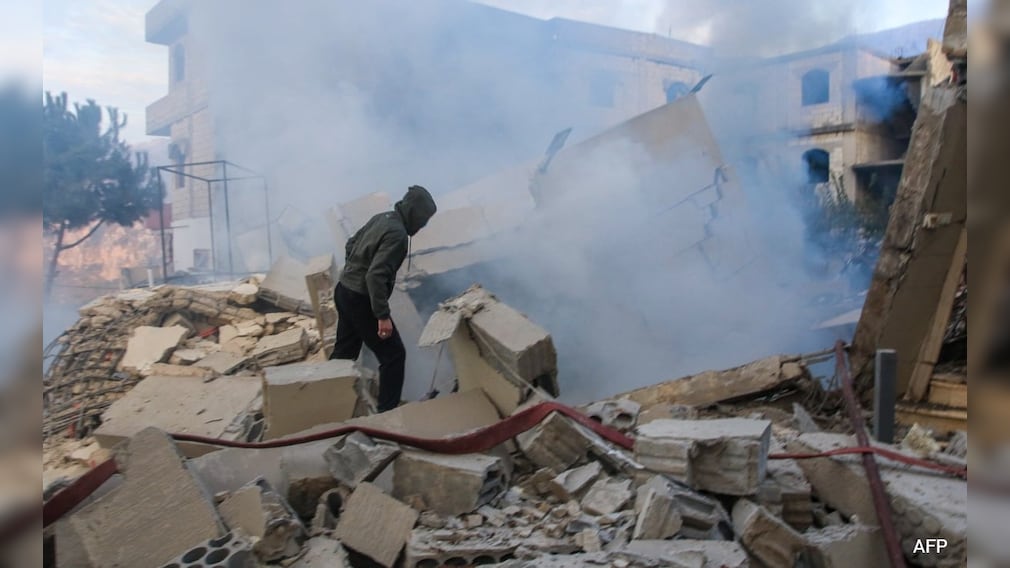
And yet, this is exactly what has been unfolding in Lebanon. More than a million people fled southern Lebanon as Israeli strikes intensified. Entire communities are being uprooted, families carrying what little they can, uncertain not just of where they are going, but whether they will get there safely
A few days ago, that danger was captured in a moment that felt almost like a scene from a Hollywood war movie in its suddenness. British journalist Steven Sweeney, reporting for the Russian outlet RT, was covering the mass exodus while standing on a bridge over a river. In a dramatic 17-second video clip, a missile strikes the bridge. The screen shakes violently. For a brief, chilling moment, neither the reporter nor his cameraman is visible, leaving viewers fearing the worst.
They survived, miraculously, with minor injuries. But the aftermath has sparked fresh controversy. Sweeney, who was clearly identifiable in a flak jacket marked "Press", has accused Israel of deliberately targeting him. He says he was documenting what he described as the "forced displacement of one million people" when the strike occurred. Israel has said civilians were warned, but Sweeney disputes this, alleging that the attack was an attempt to silence journalists reporting from the ground. The Russian government has also claimed it was a deliberate targeting of Russian TV journalists.
War Spilling Into Civilian Life
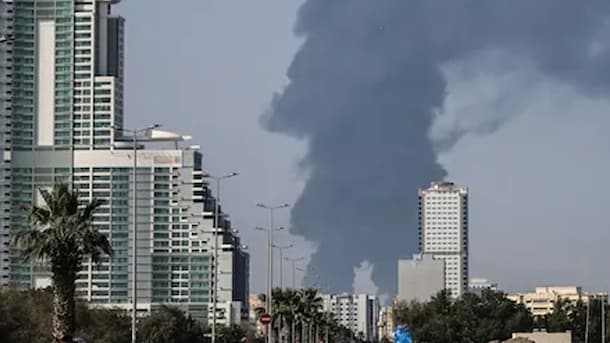
Theatres of war are generally seen on frontlines and in trenches. But not in Lebanon. Not in Iran. And, to be honest, not even in Israel. As Israel's fury with Hezbollah in Lebanon and its war with Iran intensify, and as both its adversaries respond with missiles fired into Israel, the battle lines are expanding into civilian life and destroying it.
Across Iran, for example, the scale is striking. Housing complexes, medical facilities, schools, shops, and even heritage sites, have been hit. According to the Iranian Red Crescent, more than 67,000 civilian sites were struck, including 498 schools and 236 health facilities, until 18 March.
Lebanon's misery appears equally bad, if not worse.
In the midst of this widening destruction, a difficult question comes to mind: Is there a method behind this madness? Why do civilian areas and infrastructure repeatedly become part of the battlefield? Is this incidental or strategic? Those who have covered the Israeli-Palestinian bloody conflicts for years know what it is. They call it Israel's dreaded 'Dahiya doctrine'.
What Is the Dahiya Doctrine?
It is certainly, as far as we know, not a formally written policy, but a widely discussed Israeli military approach. At its core is the idea of using overwhelming, often disproportionate force, including against infrastructure, in areas where hostile groups operate. It takes its name from the Dahiya suburb of Beirut, heavily bombed during the 2006 war with Hezbollah, the Iran-backed militia group. The destruction there became a reference point for future military thinking.
Former Israeli general Gadi Eisenkot later articulated the logic clearly: in future conflicts, areas from which Israel is attacked would face intense destruction. The aim was deterrence - making the cost of conflict so high that it discourages future attacks. In simple terms: hit hard enough that the message cannot be ignored.
Why Israel Uses It
From Israel's perspective, this approach is shaped by the nature of its adversaries. Groups like Hezbollah and Hamas are often accused by Israel of operating within civilian areas, blending into urban environments. Israeli officials argue that the battlefield is embedded within civilian spaces. They say that a clear separation between military and civilian targets is often impossible. They also claim that strong, decisive force is needed to avoid prolonged conflict.
It is said that the strategy is built around three goals: deterrence, speed and pressure. Deterrence sends a message across the region. Speed aims to shorten wars. Pressure, more controversially, seeks to raise the cost of conflict for the environment in which armed groups operate. Civilian casualties, which often run into thousands, are just collateral damage and can't be helped.
The Legal and Moral Fault Line
For obvious reasons, this approach has been widely criticised. International humanitarian law is based on two key principles: distinction and proportionality. Civilians and civilian objects must be protected. Even when attacking military targets, civilian harm must not be excessive. Human rights bodies argue that the scale of destruction and deaths witnessed in places like Gaza, Lebanon, and now Iran, raises serious concerns.
Israel, however, rejects the accusation that it deliberately targets civilians as a way of collective punishment. Its position rests on three main points:
- It acts in self-defence. The Gaza operations by Israel began as a result of the brutal Hamas attack inside Israel, killing over 1200 people, including 800 civilians in October 2023
- Targets are chosen based on military necessity. It could expand to civilian areas. Like the IDF has put its boots on the ground in Southern Lebanon, which it believes is a military necessity because the missile attacks often come from southern Lebanon, a stronghold of Hezbollah
- Civilian harm results from militants operating within populated areas. Israel often accused Hamas of operating from inside hospitals in Gaza. These allegations have not yet been proven. But most hospitals have been flattened in Gaza
In this view, responsibility is shared, if not shifted, towards those who embed military activity among civilians. Supporters argue that Israel faces unique threats and cannot be judged by conventional standards. Critics respond that the law exists precisely for difficult situations, not easy ones.
Iran appears to have become the Dahiya Doctrine's latest target. But then Iran seems to be following an eye-for-an-eye policy, relying solely on its stockpiles of drones and missiles. It's doing it out of desperation, for its survival, as it is being attacked by the world's two deadliest militaries.
The most disturbing question remains unexplained. When 67,000 civilian sites are hit in under three weeks, is it collateral damage or design? When infrastructure collapses, is it necessity or punishment? The Dahiya Doctrine sits at the centre of this debate. Surely not as a formal rulebook, but as a way of understanding how force is applied. Nearly two decades after a Beirut suburb gave it its name, the doctrine still shapes how wars are interpreted and judged in the Middle East.
(Syed Zubair Ahmed is a London-based senior Indian journalist with three decades of experience with the Western media)
Disclaimer: These are the personal opinions of the author
-
Blog | The Dantewada Massacre, And What India Needs To Do To Stay Maoist-Free

In 2010, I was Assistant Chief of the Air Staff controlling transport aircraft and helicopters, and on April 6 that year had to arrange An-32 aircraft to carry coffins of 75 CRPF jawans.
-
Opinion | How Iran Has Pierced The One 'Shield' That Protected America For 30 Years
In the past, US campaigns in Iraq, Afghanistan and Libya were conducted against relatively weak air defences. That has not turned out to be the case with Iran, puncturing the long-held myth of America's 'indomitable' air power.
-
Opinion | The Quiet 'Upheaval' Within US Military Over The Iran War
General Randy George's ouster carries echoes of a similar episode in 2003, in the run-up to the Iraq war. But much more is happening within the US military, courtesy Hegseth.
-
How Iran Sucker-Punched Trump Into 'Escalation Trap' 'Hellhole'
Trump is now under pressure, not just from allies but also within; the President's approval rating is the lowest it has ever been with mid-term elections in November.
-
Eagle Down: How US Carried Out Precision Search And Rescue Op In Hostile Iran
How the United States transformed a tactical failure into a narrative of national resolve.
-
Opinion | 450 Missile, 2,000 Drone Attacks Later, Why Is UAE Still Not Fighting Iran?
The UAE is Iran's second-largest trading partner and also home to roughly half a million Iranians. Why, then, has it absorbed more fire than any other Gulf state?
-
In Numbers: How Has India Kept Fuel Prices Low Even As Europe Sees 70% Spikes?
India imports 88% of its crude. Why then is it not seeing massive price hikes for fuel and LPG? Inside the unique strategy it's following...
-
Opinion | India Just Decided To Let Chinese Capital In Again. But There's A Catch
In March 2026, India eased regulations that had restricted Chinese capital in local companies, in a development that marks New Delhi's cautious approach towards capital flows from Beijing.
-
Trump's Iran 'Knocked Out' Claim Blown Up By US Intel On Missiles, Drones
Donald Trump claimed this week the war would end in two to three weeks as he threatened to send Iran back to the Dark Ages. But based on these reports the fighting is far from over, even if US President wants to push a contrary narrative.
-
Opinion | Rs 30 Petrol Hike To Currency Crisis, What Oil At $150 Can Really Do To The World
At $125 per barrel, petrol and diesel retail prices will need to rise by Rs 8-14 per litre. At $150 - which experts think is now likely - these figures could touch Rs 26-30 per litre.