Opinion | Inside The '$500 Billion' Iran War Bill No Economist Is Talking About
The disruption is not only about oil, and it was never only about oil.
In 1916, as Europe was converting its young men into statistics, an American economist named JM Clark sat down to ask a question nobody in power wanted answered: what, precisely, does a war cost? Not the spiritual cost, not the civilisational cost, not the kind measured in widows and orphans. He meant money. His answer, published in the Journal of Political Economy, was careful and devastating. Direct costs were only the beginning. The real damage lay in what he called the indirect costs. The production foregone, the trade disrupted, the capital consumed and never replenished. War was the single most efficient mechanism humanity had devised for destroying wealth.
One hundred and ten years later, we are still learning this lesson. We are, as a species, slow students.
On February 28, 2026, the United States and Israel began strikes on Iran. By the end of six days, the Pentagon had spent $11.3 billion. Not allocated. Not requested. Spent. By week two, the White House's own National Economic Council revised the figure to $12 billion, presented as a routine accounting update. The war was, officials noted, "proceeding on schedule". Nobody appeared to find the phrase alarming. War has acquired the cadence of project management. It runs at approximately $900 million a day.
The $12 billion is the smallest number in the ledger.
Only The 'Direct' Costs
It is what economists call the direct, visible, immediate fiscal cost. It does not include the aircraft carriers repositioned from the Indo-Pacific, whose depreciation was already on the books. It does not include the veterans who will spend the next thirty years negotiating with a disability system not designed to receive them. And it does not include what is happening right now in the Strait of Hormuz, which is the figure that should unsettle every government on earth, including all those who did not choose this war.
Through that narrow passage flows roughly a fifth of the world's oil, a fifth of global liquefied natural gas, 22% of globally traded urea, 24% of aluminium, 33% of helium, and 45% of sulphur. Iran, whose navy has lost more than 50 ships to American strikes, retains virtually all of its mine-laying craft. The economic war compounds daily even as the military contest winds down. This is not incidental. It is a deliberate strategy.
Brent crude stood at $72 a barrel on February 27. By mid-March, it had crossed $106. After Iran struck Qatar's Ras Laffan industrial complex on the night of March 18, Brent briefly touched $113, an 83% rise since the start of the year. US natural gas jumped 6.5% in a single session. European gas prices rose to EUR 54 per MWh.
The Ras Laffan Catastrophe
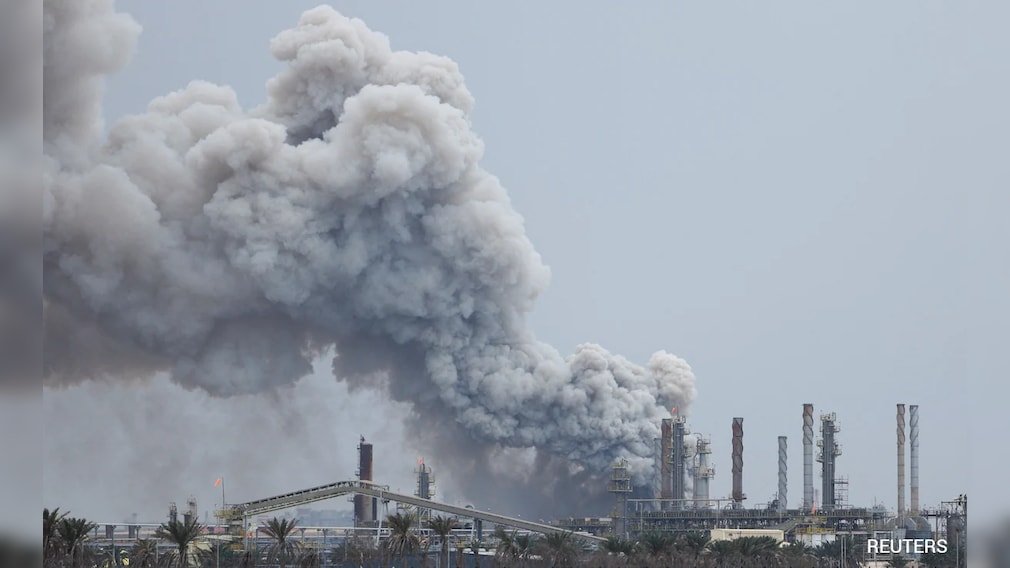
The Ras Laffan strikes deserve a paragraph of their own, because they are unlike anything else in this ledger. Iran fired five ballistic missiles at the complex: four were intercepted, one struck. Hours later, a second attack set fires that Qatari civil defence teams spent the night containing. QatarEnergy reported "sizable fires and extensive further damage" to several of its LNG facilities.
Ras Laffan covers 295 square kilometres, roughly one-third the area of New York City. It is home to Shell's $18 billion Pearl GTL plant, QatarEnergy's LNG export terminals, and multiple gas-related installations whose total construction cost, in 2011 dollars, was $70 billion. It accounts for roughly a fifth of global LNG supply. The critical detail, often missing from the coverage, is that production had already been halted weeks earlier after an Iranian drone attack prompted QatarEnergy to declare force majeure on deliveries. The missile damaged a facility whose reconstruction timetable is now measured not in weeks but in seasons. With oil, governments can release buffers. With LNG, the loss is immediate, structural, and without offset.
The Wealth That Won't Be Created
The deeper damage extends below the surface. Ras Laffan sits atop Qatar's North Field, one half of the world's largest natural gas reservoir. The other half is Iran's South Pars field. Israel struck South Pars. Iran struck Ras Laffan. The reservoir they share (9,700 square kilometres, approximately the size of Qatar itself) now has damaged extraction and export infrastructure on both sides of its border. On the list of the world's 25 largest natural gas fields, this single reservoir holds roughly 40% of their combined recoverable reserves. It is nearly six times larger than the second-biggest field on earth. And it is only 10% depleted. As much as 90% of the gas remains underground. It will remain there, inaccessible, for at least a decade while surface facilities are rebuilt on both sides. Clark would have a word for this. He called it 'indirect cost', the production foregone, the capital consumed, the wealth that will not be created.
LNG prices rose 60% after the initial drone strike on Qatar. That complex is now shut. Helium production (Qatar alone had been producing 17 tonnes per day at Ras Laffan, a third of global supply) has ceased. There are no ready substitutes for helium. Semiconductor fabrication, which depends on it for cooling supermagnets, is beginning to feel the constraint. South Korean chipmakers are already reporting shortages. This is not a disruption to one sector. It is a disruption to the supply chain that manufactures the physical substrate of the modern economy.
Just Days Of Jet Fuel Left
The Economist's modelling of fuel stocks, drawing on Kpler shipping data, is the kind of number that belongs in a war communique rather than a commodities note. If the Strait of Hormuz remains blocked, Oceania will have exhausted 80% of its jet fuel within 36 days. Africa within 23. Asian countries outside China, Japan, and South Korea will be critically short of petrol within 12. Right now, 125 product tankers (five percent of the global fleet) are trapped inside the Gulf with nowhere to go.
The disruption is not only about oil, and it was never only about oil. The Gulf, by accident of geology, has become the processing hub for an interlocking web of industrial inputs. When its factories close, the consequences cascade through industries that have nothing to do with hydrocarbons. Urea is up 35% since the war began, and up 70% over the preceding three months. Sulphur is up 40%. The most telling image from The Economist's commodity analysis is this: Iranian steel billets, the unfinished intermediate product, are now trading dearer than the finished hot-rolled coil. It is as though raw dough has become more expensive than a baked loaf. Supply chains, when they invert this way, do not self-correct overnight. Restarting idle refineries and smelters (which operate at extreme temperatures and pressures) takes months. The knock-on effects on metal processing could persist well into 2027.
Where The Hormuz Really Takes You
Then there is the human geography of the crisis, which does not distribute itself along the lines of the decisions that caused it. More than 80% of the oil and LNG that transited Hormuz in 2024 was bound for Asia. Japan sources 95% of its crude from the Middle East, 70% of it through Hormuz. South Korea buys 70% of its oil from the region. The South Korean won has approached 1,500 to the dollar, its weakest since 2009. Japan's Nikkei 225 slid 3% on the morning of the Ras Laffan strikes alone. Seoul has launched a 100 trillion won stabilisation package. India's rupee has fallen to a record low. In Pune, municipal authorities have suspended gas-fired cremations for want of LPG, asking families to use the electric crematorium instead. Bangladesh has closed its universities. Pakistan has introduced a four-day workweek. These are not macroeconomic abstractions. They are the texture of what $900 million a day of war looks like from the receiving end.
In America, petrol has risen 30% in a month. The national average crossed $3.79 a gallon. Diesel topped $5 for the first time since the Ukraine war. Higher gasoline prices function as a regressive tax. Lower-income households spend a larger share of their income on energy. The K-shaped economy bends further. The upward arm rises on the profits of oil majors and defence contractors. The downward arm descends, silently, at the petrol pump. Meanwhile, copper (the metal that prices global growth) has lost all its year-to-date gains, falling from a record above $14,500 a tonne in January to near $12,200. The Bloomberg Magnificent 7 Index is down less than 2% since the war began.
Much, Much Worse Than The 1970s
Goldman Sachs estimates that a two-month conflict could cause GDP to contract by double digits in Bahrain, Kuwait, and Qatar, with declines of roughly 8% in the UAE and about 5% in Saudi Arabia. The Gulf states have spent a decade building themselves into global logistics hubs, financial centres, and technology platforms. Iran's targeting strategy is explicitly designed to destroy that diversification. There are reports that Tehran was calibrating its rate of missile fire deliberately, spending its arsenal slowly enough to sustain pressure, not rapidly enough to exhaust it. Iranian attacks are down 88% in volume from the start of the conflict. But they are increasingly aimed at economically important targets. Tehran does not need to win the battlefield. It needs only to keep the Strait closed, the LNG terminal dark, and the oil price elevated long enough for someone else's winning coalition to demand an exit.
Here is where Clark's framework becomes indispensable, and where the structural indictment must be made. The current disruption to global oil supply is, by the International Energy Agency (IEA) own measure, roughly twice the disruption the world suffered in the 1970s oil shocks. The world economy is more energy-efficient now (the ratio of oil consumption to GDP has fallen 70% since the 1973 crisis) but the breadth of commodity disruption has no modern precedent. This is not an oil shock. It is a supply-chain shock to the industrial economy, arriving on top of a pandemic, a Ukraine war, a tariff round, and an inflation cycle that central banks spent two years trying to contain.
Back To A Debt Crisis?
Sustained energy price increases will force central banks to reverse course. Before the war, traders expected rate cuts. Now, European Central Bank rate hikes are being priced in. Rates markets are showing bear flattening across G-10 curves (tightening financial conditions even as growth fades), a combination that has historically weighed on risk assets. If the conflict continues for another five weeks, Goldman estimates euro-area inflation could rise by nearly a full percentage point. The worst-case scenario is a combination of economic slump and rising interest rates that bursts asset bubbles and produces a debt crisis of the kind last seen in 2008.
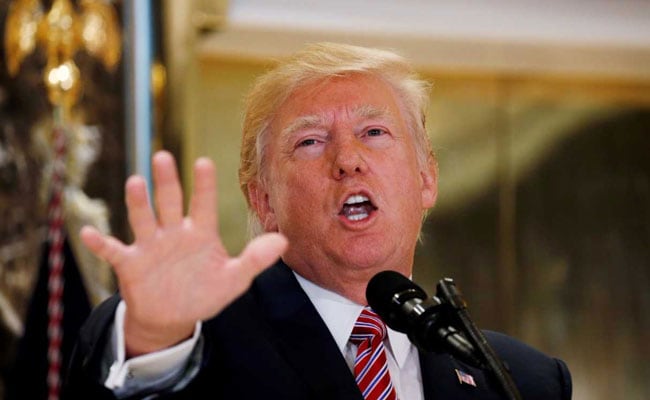
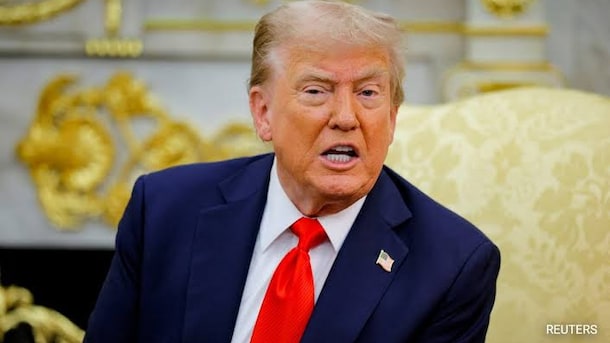
There is a particular irony in the Truth Social post that appeared after the Ras Laffan strike. The US President described South Pars as "extremely important and valuable", acknowledged he did not want to authorise further destruction "because of the long-term implications that it will have on the future of Iran", and then threatened to "massively blow up the entirety of the South Pars Gas Field". The commander-in-chief of the world's most powerful military was publicly calculating costs (in all-capitals, between threats) on a social media platform. Clark, who spent his career trying to force this calculation on decision-makers before they acted, would have found the timing instructive, if not the medium.
In Money Terms - Purely
Now, the prediction, which economists are reluctant to offer. If the conflict extends to six months, the eventual US fiscal cost (direct expenditure plus the three-to-five multiplier that post-conflict recovery literature consistently finds) exceeds $500 billion. Global aggregate damage, including projected GDP contractions across Asia and Europe and the long-tail fertiliser disruption that will reduce the 2026 harvest before a single economist models it, is measured in the low trillions. Iraq and Afghanistan, initially budgeted at a few hundred billion, ultimately cost (when veterans' care, debt service, and the intelligence operations they made necessary were included) over $8 trillion. The Gulf War of 1991 lasted 43 days and cost, in today's money, $102 billion. The current conflict has already passed its third week. There is no credible exit timeline.
And that is before accounting for the reservoir. The $70 billion facility at Ras Laffan will not appear on any war budget. Its reconstruction will not feature in the Pentagon's accounting updates. The LNG that will not flow from the world's largest gas field will not be modelled in any single fiscal document. It will appear, eventually, in the energy bills of households in Japan, South Korea, and Germany, paid by people who did not vote for this war and cannot name the field that once supplied their gas.
A subsequent Truth Social post, published as this piece was going to press, announced that the United States and Iran had held “very good and productive conversations” and that strikes on Iranian power plants and energy infrastructure would be postponed for five days, “subject to the success of ongoing meetings.” A ceasefire of five days, conditional and revocable, does not reopen the Strait of Hormuz, does not restart the LNG terminals at Ras Laffan, does not reflate the harvest that will go under-fertilised this spring, and does not return the 125 product tankers trapped inside the Gulf to their routes. Clark's indirect costs do not pause with the missiles. They compound on their own schedule.
What Clark identified in 1916, and what every subsequent generation has rediscovered too late, is that war costs are systematically underestimated at the moment of decision. The people who authorise the strikes are not the people who will pay the disability claims, retire the debt, replant the fields that went under-fertilised in the spring of 2026, or rebuild the gas terminals on the shores of a 9,700-square-kilometre reservoir that is 90% full and temporarily unreachable. The costs are concentrated in time and distributed in persons. These populations never overlap.
Clark, writing in 1916 as the Somme was being prepared, concluded his paper with a remark that has not aged. The real cost of war is not what it takes from the treasury. It is what it takes from the future.
We are, as yet, still computing that number. The bill will arrive long after the press briefings have stopped.
(The author was with the Economic Advisory Council to the Prime Minister)
Disclaimer: These are the personal opinions of the author
-
Congress Falls Back On A Fullback: Where Pargat Singh Fits In The Punjab Poll Play

Vijay Inder Singla, a Hindu face, was reportedly the frontrunner before the Congress replaced one Jat Sikh with another as its Punjab unit chief. How far does such arithmetic work in the state's politics? Pargat's appointment holds some of the answers.
-
Why Doesn't Congress Boycott If Polls Are "Fixed"? Answer Lies Beyond Rahul Gandhi's "Distraction" Quip
The starkest demand for a boycott has come from outside the political Opposition, from the Cockroach Janta Party. But does a boycott help? Here's what research, examples, and expert analysis tell us.
-
'Sully' To Gimli, Sioux To Patna: When Pilots Got It Unbelievably Right
Captain Smit Machchhar fought off his co-pilot after being stabbed and opened the cockpit door, saving 174 people.
-
Opinion | Are Saudi Arabia And UAE Reuniting Again After 10 Years?
On Tuesday, the UAE's Vice President, Deputy Prime Minister and Chairman of the Presidential Court, Mansour bin Zayed, met Saudi Crown Prince Mohammed bin Salman.
-
Opinion | 'Lies, Damned Lies, Statistics': On The Controversy Around India's GDP Growth Figures
The debate is less about a single figure than about a decade-long erosion of trust in official statistics.
-
Opinion | Why India Cannot Keep 'Overestimating' Its Value To Washington
Some of India's value to Washington came from the tension between the US and China. That is changing now.
-
Opinion | India Has A 'Lobbying' Problem In Washington, And It Has Come Back To Haunt It
While the EU, Japan, the UK and South Korea secured quick deals, India's efforts were getting drained in prolonged negotiations and the wrong kind of lobbying.
-
India Is Getting Old Before Getting Rich, Will Turn 'Aged' In 16 Years: Moody's
Countries with the steepest fertility declines today will age the fastest in the coming decades. India's drop has been steep.
-
Opinion | Why Does Trump Want To Sell Arms To A US 'Adversary'? Inside His Strange Bargain
Trump's aides maintain that no such offer had been made. But the story points to a larger strategy