Opinion | The $2 Trillion Wipeout: How The Market Exposed Gold's Biggest Lie
In a world defined by 4% yields, algorithmic liquidity, and leveraged balance sheets, the traditional assumption that war automatically benefits gold no longer holds.
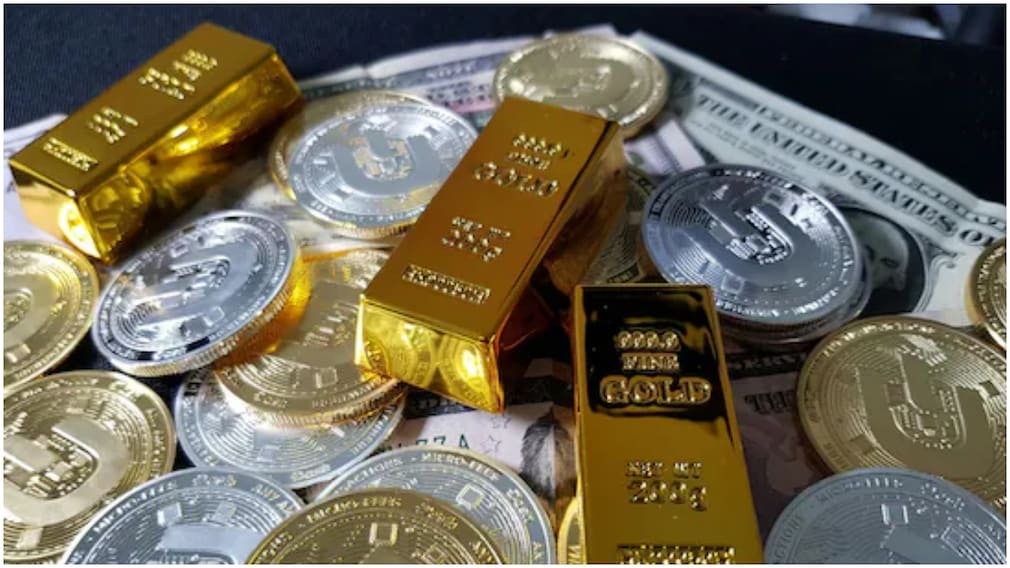
A recent collapse of gold and silver prices, erasing nearly $2 trillion in market value within hours, appears to defy macroeconomic logic but should not be read as some market anomaly. It can be better understood as a structural inflexion point on how volatile markets are eroding trust and faith in secured instruments of investment.
When geopolitical logic allows a surge in safe-haven demand amid one of the sharpest military escalations in West Asia- seen in decades, precious metals witnessed a violent sell-off. This inversion of historical behaviour signals a deeper transition: the displacement of geopolitics by monetary liquidity as the primary driver of global asset prices.
From War Premium to Rate Shock
The immediate trigger was geopolitical. The February 28 US-Israel strikes on Iranian infrastructure, combined with threats to disrupt the Strait of Hormuz, which carries nearly 20% of global oil and LNG flows, pushed Brent crude above $119 per barrel, a surge of around $50 per barrel.
Historically, such conditions would generate a "gold-to-war" rally. Instead, markets processed the shock through a different channel. Rising energy prices fuel inflation, prompting expectations of tighter monetary policy; this drives up real interest rates, increasing the opportunity cost of holding non-yielding assets like gold and consequently exerting downward pressure on its price.
This transmission mechanism reflects a regime shift. Oil no longer drives gold directly; it operates through central bank reaction functions. Elevated crude prices reinforced expectations of a "higher-for-longer" rate environment, effectively neutralising gold's inflation-hedge appeal. Empirically, the divergence was stark: gold fell approximately 3.8% intraday despite escalating conflict, silver declined over 7%, reflecting both financial and industrial stress, gold posted consistent weekly declines throughout the escalation period.
The safe-haven function did not merely weaken; it failed under conditions where it should have been strongest.
Yield-Bearing Safety Replaces Gold
The more fundamental driver lies in the transformation of global monetary conditions. The nomination of Kevin Warsh as Federal Reserve Chair introduced a credible expectation of aggressive quantitative tightening and sustained policy rigidity. Markets rapidly repriced. American 10-year yields rose to around 4.3% (more than half a year high), 30-year yields approached 4.8%, signalling long-term inflation persistence, rate hike probabilities re-entered forward curves for late 2026.
This redefined the concept of safety.
Gold, a non-yielding asset, must now compete against sovereign instruments offering 4-5% nominal returns. The opportunity cost is no longer theoretical - it is quantifiable and immediate.
Safety has shifted from "store of value" to "store of value with yield".
In such a regime, even geopolitical crises fail to offset the gravitational pull of real returns. Capital allocation becomes a function of yield differentials, not fear.
The Mechanics of Collapse
While macro conditions explain direction, they do not explain velocity. The scale of the $2 trillion wipeout reflects market structure fragility, particularly the role of leverage. The 2025 rally during which gold rose over 60% was accompanied by elevated speculative positioning (over 60,000 COMEX long contracts in silver) and record ETF inflows of around 4,000 tonnes, as well as increased use of leveraged derivatives and algorithmic strategies. When prices began to correct, the system transitioned from equilibrium to cascade - technical breakdown below key levels ($4,708 Fibonacci; $4,400 psychological), margin calls on leveraged positions, forced liquidations across futures and ETFs, liquidity withdrawal, creating "air pockets" in order books. Exchanges amplified the process; margin requirements for silver were raised by over 15%, forcing additional deleveraging.
This produced a classic liquidity vacuum: prices collapsed not because of new information about fundamentals, but because balance sheets were forced to contract simultaneously.
Silver, with trading volumes less than one-fifth of gold, exhibited even greater fragility, plunging 36% intraday, the largest drop on record. Its dual identity as a financial and industrial metal compounded the decline, as oil-driven recession fears triggered expectations of demand destruction.
The Failure of De-Dollarisation
If gold failed as a safe haven, the question is where capital migrated. The answer reinforces a long-standing but often contested reality: the primacy of the US dollar system. During the crisis, the DXY index rose broadly, capital flowed into US Treasuries, combining liquidity with yield, and dollar strength exerted additional downward pressure on gold prices.
This dynamic reveals a structural asymmetry. In periods of stress, investors require not just safety, but liquidity at scale. Only the US financial system provides both. The implication is clear: each crisis that tests the system continues to reinforce dollar hegemony, not weaken it.
The "de-dollarisation" narrative, while relevant in the long term, was temporarily suspended under the weight of immediate liquidity needs.
From Metals to Tech and Back
The metals collapse cannot be viewed in isolation. It coincided with broader cross-asset deleveraging, including the February 2026 "SaaSpocalypse", which wiped out nearly $1 trillion in technology valuations within a week.
This interconnection is critical.
Gold often functions as a liquidity buffer within institutional portfolios. When algorithmic strategies triggered "basket liquidation" across equities, metals were simultaneously sold to meet margin requirements. Volatility indicators (VIX futures) steepened sharply, ETF redemptions accelerated across asset classes, systematic funds executed synchronised global sell orders.
The result was synchronised cross-market stress, compressing reaction times and amplifying volatility.
Institutional Accumulation vs Retail Exit
Despite the sell-off, underlying demand dynamics reveal an important divergence: Central banks purchased over 1,000 tonnes of gold in 2025, out of which 95% of central banks surveyed expect to increase reserves. Additionally, retail investors drove most ETF outflows during the crash.
For institutional actors, the correction represents a price adjustment, not a thesis failure. For retail participants, it triggered capitulation. This divergence suggests that while financial positioning is volatile, strategic demand remains intact.
The March 2026 metals collapse marks a transition in how global markets process uncertainty.
Three structural shifts emerge. Firstly, monetary conditions now dominate geopolitical signals. Second, leverage and market structure amplify volatility beyond fundamentals. And third, the US dollar system remains the ultimate crisis anchor.
Gold has not lost its intrinsic value. What has changed is its relative position within the hierarchy of safe assets. In a world defined by 4% yields, algorithmic liquidity, and leveraged balance sheets, the traditional assumption that war automatically benefits gold no longer holds.
The $2 trillion wipeout was not a failure of gold. It was a repricing of what "safety" means in modern finance and crisis management.
[Deepanshu Mohan is Professor of Economics and Dean, O.P. Jindal Global University, and a Visiting Professor at the London School of Economics. Saksham Raj is a research analyst in CNES, O.P Jindal Global University.]
Disclaimer: These are the personal opinions of the author
-
Why Doesn't Congress Boycott If Polls Are "Fixed"? Answer Lies Beyond Rahul Gandhi's "Distraction" Quip

The starkest demand for a boycott has come from outside the political Opposition, from the Cockroach Janta Party. But does a boycott help? Here's what research, examples, and expert analysis tell us.
-
'Sully' To Gimli, Sioux To Patna: When Pilots Got It Unbelievably Right
Captain Smit Machchhar fought off his co-pilot after being stabbed and opened the cockpit door, saving 174 people.
-
Opinion | Are Saudi Arabia And UAE Reuniting Again After 10 Years?
On Tuesday, the UAE's Vice President, Deputy Prime Minister and Chairman of the Presidential Court, Mansour bin Zayed, met Saudi Crown Prince Mohammed bin Salman.
-
Opinion | 'Lies, Damned Lies, Statistics': On The Controversy Around India's GDP Growth Figures
The debate is less about a single figure than about a decade-long erosion of trust in official statistics.
-
Opinion | Why India Cannot Keep 'Overestimating' Its Value To Washington
Some of India's value to Washington came from the tension between the US and China. That is changing now.
-
Opinion | India Has A 'Lobbying' Problem In Washington, And It Has Come Back To Haunt It
While the EU, Japan, the UK and South Korea secured quick deals, India's efforts were getting drained in prolonged negotiations and the wrong kind of lobbying.
-
India Is Getting Old Before Getting Rich, Will Turn 'Aged' In 16 Years: Moody's
Countries with the steepest fertility declines today will age the fastest in the coming decades. India's drop has been steep.
-
Opinion | Why Does Trump Want To Sell Arms To A US 'Adversary'? Inside His Strange Bargain
Trump's aides maintain that no such offer had been made. But the story points to a larger strategy
-
Opinion | The AI Boom Has Run Into A Big 'Debt' Trap Problem. Inside The 5% Danger Line
For most of the AI buildout's first two years, hyperscalers funded it the easy way: out of operating cash flow. That era is over.