Opinion | The $2 Trillion Wipeout: How The Market Exposed Gold's Biggest Lie
In a world defined by 4% yields, algorithmic liquidity, and leveraged balance sheets, the traditional assumption that war automatically benefits gold no longer holds.
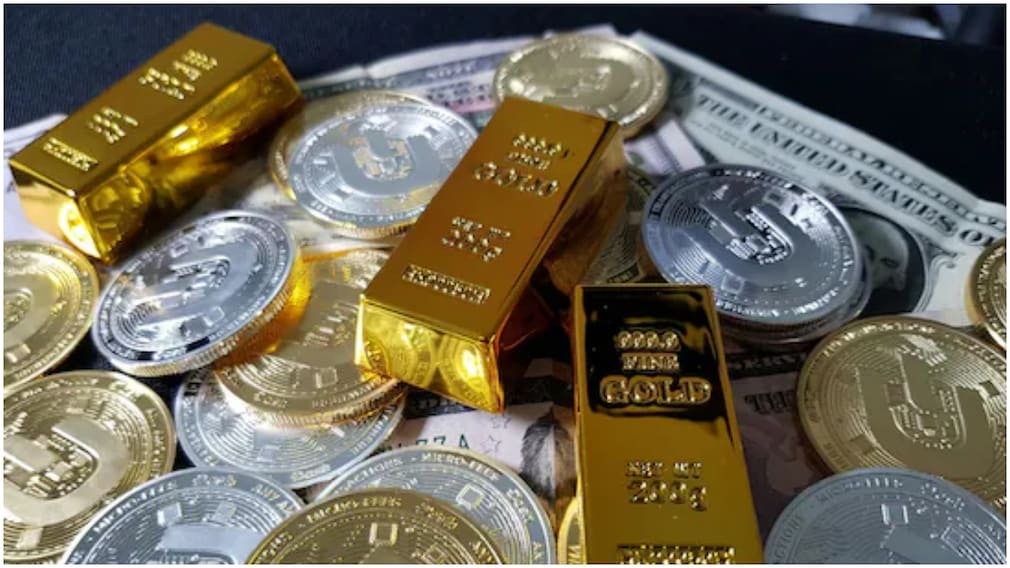
A recent collapse of gold and silver prices, erasing nearly $2 trillion in market value within hours, appears to defy macroeconomic logic but should not be read as some market anomaly. It can be better understood as a structural inflexion point on how volatile markets are eroding trust and faith in secured instruments of investment.
When geopolitical logic allows a surge in safe-haven demand amid one of the sharpest military escalations in West Asia- seen in decades, precious metals witnessed a violent sell-off. This inversion of historical behaviour signals a deeper transition: the displacement of geopolitics by monetary liquidity as the primary driver of global asset prices.
From War Premium to Rate Shock
The immediate trigger was geopolitical. The February 28 US-Israel strikes on Iranian infrastructure, combined with threats to disrupt the Strait of Hormuz, which carries nearly 20% of global oil and LNG flows, pushed Brent crude above $119 per barrel, a surge of around $50 per barrel.
Historically, such conditions would generate a "gold-to-war" rally. Instead, markets processed the shock through a different channel. Rising energy prices fuel inflation, prompting expectations of tighter monetary policy; this drives up real interest rates, increasing the opportunity cost of holding non-yielding assets like gold and consequently exerting downward pressure on its price.
This transmission mechanism reflects a regime shift. Oil no longer drives gold directly; it operates through central bank reaction functions. Elevated crude prices reinforced expectations of a "higher-for-longer" rate environment, effectively neutralising gold's inflation-hedge appeal. Empirically, the divergence was stark: gold fell approximately 3.8% intraday despite escalating conflict, silver declined over 7%, reflecting both financial and industrial stress, gold posted consistent weekly declines throughout the escalation period.
The safe-haven function did not merely weaken; it failed under conditions where it should have been strongest.
Yield-Bearing Safety Replaces Gold
The more fundamental driver lies in the transformation of global monetary conditions. The nomination of Kevin Warsh as Federal Reserve Chair introduced a credible expectation of aggressive quantitative tightening and sustained policy rigidity. Markets rapidly repriced. American 10-year yields rose to around 4.3% (more than half a year high), 30-year yields approached 4.8%, signalling long-term inflation persistence, rate hike probabilities re-entered forward curves for late 2026.
This redefined the concept of safety.
Gold, a non-yielding asset, must now compete against sovereign instruments offering 4-5% nominal returns. The opportunity cost is no longer theoretical - it is quantifiable and immediate.
Safety has shifted from "store of value" to "store of value with yield".
In such a regime, even geopolitical crises fail to offset the gravitational pull of real returns. Capital allocation becomes a function of yield differentials, not fear.
The Mechanics of Collapse
While macro conditions explain direction, they do not explain velocity. The scale of the $2 trillion wipeout reflects market structure fragility, particularly the role of leverage. The 2025 rally during which gold rose over 60% was accompanied by elevated speculative positioning (over 60,000 COMEX long contracts in silver) and record ETF inflows of around 4,000 tonnes, as well as increased use of leveraged derivatives and algorithmic strategies. When prices began to correct, the system transitioned from equilibrium to cascade - technical breakdown below key levels ($4,708 Fibonacci; $4,400 psychological), margin calls on leveraged positions, forced liquidations across futures and ETFs, liquidity withdrawal, creating "air pockets" in order books. Exchanges amplified the process; margin requirements for silver were raised by over 15%, forcing additional deleveraging.
This produced a classic liquidity vacuum: prices collapsed not because of new information about fundamentals, but because balance sheets were forced to contract simultaneously.
Silver, with trading volumes less than one-fifth of gold, exhibited even greater fragility, plunging 36% intraday, the largest drop on record. Its dual identity as a financial and industrial metal compounded the decline, as oil-driven recession fears triggered expectations of demand destruction.
The Failure of De-Dollarisation
If gold failed as a safe haven, the question is where capital migrated. The answer reinforces a long-standing but often contested reality: the primacy of the US dollar system. During the crisis, the DXY index rose broadly, capital flowed into US Treasuries, combining liquidity with yield, and dollar strength exerted additional downward pressure on gold prices.
This dynamic reveals a structural asymmetry. In periods of stress, investors require not just safety, but liquidity at scale. Only the US financial system provides both. The implication is clear: each crisis that tests the system continues to reinforce dollar hegemony, not weaken it.
The "de-dollarisation" narrative, while relevant in the long term, was temporarily suspended under the weight of immediate liquidity needs.
From Metals to Tech and Back
The metals collapse cannot be viewed in isolation. It coincided with broader cross-asset deleveraging, including the February 2026 "SaaSpocalypse", which wiped out nearly $1 trillion in technology valuations within a week.
This interconnection is critical.
Gold often functions as a liquidity buffer within institutional portfolios. When algorithmic strategies triggered "basket liquidation" across equities, metals were simultaneously sold to meet margin requirements. Volatility indicators (VIX futures) steepened sharply, ETF redemptions accelerated across asset classes, systematic funds executed synchronised global sell orders.
The result was synchronised cross-market stress, compressing reaction times and amplifying volatility.
Institutional Accumulation vs Retail Exit
Despite the sell-off, underlying demand dynamics reveal an important divergence: Central banks purchased over 1,000 tonnes of gold in 2025, out of which 95% of central banks surveyed expect to increase reserves. Additionally, retail investors drove most ETF outflows during the crash.
For institutional actors, the correction represents a price adjustment, not a thesis failure. For retail participants, it triggered capitulation. This divergence suggests that while financial positioning is volatile, strategic demand remains intact.
The March 2026 metals collapse marks a transition in how global markets process uncertainty.
Three structural shifts emerge. Firstly, monetary conditions now dominate geopolitical signals. Second, leverage and market structure amplify volatility beyond fundamentals. And third, the US dollar system remains the ultimate crisis anchor.
Gold has not lost its intrinsic value. What has changed is its relative position within the hierarchy of safe assets. In a world defined by 4% yields, algorithmic liquidity, and leveraged balance sheets, the traditional assumption that war automatically benefits gold no longer holds.
The $2 trillion wipeout was not a failure of gold. It was a repricing of what "safety" means in modern finance and crisis management.
[Deepanshu Mohan is Professor of Economics and Dean, O.P. Jindal Global University, and a Visiting Professor at the London School of Economics. Saksham Raj is a research analyst in CNES, O.P Jindal Global University.]
Disclaimer: These are the personal opinions of the author
-
Gyanesh Kumar Has An Immunity Pin. Why A Petition Says He Can't Use It

The Opposition wants the Chief Election Commissioner prosecuted for alleged manipulation of voter rolls, but a 2023 law stands in the way. A petition in the Supreme Court now says the law has a gap.
-
Opinion | Is The World Staring At A Big Stock Market Crash - And Recession? 5 Uneasy Signs
On Wednesday, the US bond market recorded its worst day since Trump's "Liberation Day" tariffs rattled markets in April 2025. The 30-year US Treasury yield topped 5.43%, putting it on track for its highest close since 2004.
-
Form 6 For New Voters: When A Small Change Triggered A Big Row
In July 2026, the online version of Form 6 on the ECI's ECINet portal was modified to include a new declaration.
-
Opinion | Saudi Arabia's China Turn Has Begun - After Learning Much The Hard Way
Leaning on China just makes sense for the Saudis right now. The question is, can its other great 'ally' stomach it?
-
Opinion | Bihar Assault, Hisar Marriage Ban: Who'll Stop The Guardians Of Indian 'Culture'?
Why exactly does the sight of a young couple seeking a bit of alone time somewhere tend to particularly provoke a certain kind of Indian men?
-
Opinion | The Trump-Xi Summit, And India's Many Worries Of Its Own
Washington and Beijing may have chosen coexistence over confrontation. For India, that could be both a relief and a warning.
-
Opinion | China Claims It Has Cut Troops At The Indian Border. But The Math Doesn't Add Up
The reduction likely has more to do with the deployment along the LAC than the total strength active in the region
-
Opinion | China Is No Longer Waiting For Trump To Set The Rules. And He Knows It
America's old diplomatic tricks with China won't work any longer. Because China has changed, and so has its ambitions.
-
Opinion | As UN Interviews Its Next Chief, The Interviewers Have Some Explaining To Do
On the panel sit governments whose wars, vetoes, and unpaid dues have helped make the organisation ineffective.