Opinion | Not China, Not Russia: Why Is Pak Suddenly Everywhere In US-Iran 'Talks'?
A number of countries, including Turkey and Egypt, not to mention Russia, have been pressing Washington to end the war. But none is keen to get directly involved. Why Pakistan?
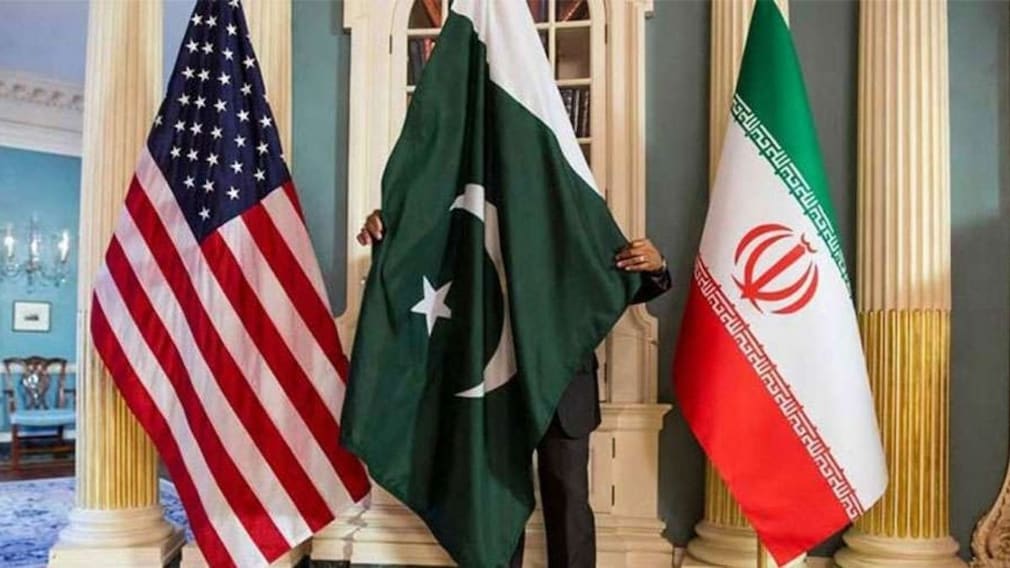
It seems nothing can stop Pakistan's power play even as it battles Afghanistan and multiple internal crises. The news that Washington routed the 'peace' deal via Islamabad has most Pakistanis themselves puzzled, and not a little apprehensive. After all, the ebullient Trump may change his mind at any minute, and trifling with Iran, or even reaching out to it, is fraught with danger.
But what is clear is that Pakistan is certainly reaching out, and that too publicly. If this succeeds, the key actors will claim a victory in the region and in the Muslim world. In fact, it may be anything but.
That's the stuff of details.
Too Many People Talking
First, the facts as reported. The Financial Times reported that Field Marshal Asim Munir had reached out to Trump proposing Pakistan as the "venue" for talks. This was on March 23, at about the same time that Trump announced the ‘five-day' pause. These two events may not be directly connected, since a number of countries, including Turkey, Egypt, not to mention Russia, have been pressing Washington to end the war. However, none is very keen to get directly involved. Turkey, for instance, has its own Shia population that might get restive if talks are held on its territory. In short, Pakistan may well be the fall guy.
At the same time, Pakistan Prime Minister Shahbaz Sharif was talking to Iranian President Masoud Pezeshkian. Not surprisingly, the Chinese also reached out to persuade Iran to pitch for peace. On March 25, the Prime Minister was briefing the Saudis, while Pakistan's Foreign Minister, Ishaq Dar, was talking again to his counterparts in Turkey, also reaching out to Iraq recently in an effort to get the Ummah united to end the war.
That's a lot of people talking almost at the same time. The big takeaway for the political leadership was, however, that President Trump 'reposted' Shehbaz Sharif's tweet welcoming and supporting 'ongoing' efforts to end the war. That was when Tehran denied that there was anything at all in the pipeline. But Pakistan has much to gain from peace in the region.
Riyadh Demands Compliance
First, there is that troublesome Saudi-Pakistan 'Strategic Mutual Defence Agreement', signed in September last year, which specifically promised that Pakistan would stand by Riyadh if it was attacked. Though labelled 'Mutual', Saudis are hardly capable of standing by Pakistan in a war; but they could certainly provide the money, which made the whole deal attractive to Pakistan - which, in any case, was already providing training and even manning much of the Saudi Armed Forces, besides getting access to the best of US weapons that money could (literally) buy.
But with the first drone attacks - either intended or mistaken - that hit the kingdom, the Saudis summoned the Field Marshal, with Defence Minister Prince Khalid posting pointedly that the two had discussed the attacks "and the measures needed to halt them within the framework of our Joint Strategic Defence Agreement". The Field Marshal would have quailed at the thought of standing against a neighbouring Shia power - and Iran is a power, make no mistake.
But it seems Munir would have had its answer ready. On March 1, thousands of Shia youth went on a rampage in Karachi, even entering American embassy premises, with this continuing at other locations till the next day. For a country that has been able to stop even its majority Sunni protests, despite the public decision to deploy to Gaza - and mysteriously then stage massive protests when pressure came to deploy following the peace accord - this violence, particularly the total failure to protect foreign embassies, was inexplicable. At any rate, Shia anger would certainly have crept into the conversation as a highly limiting factor. If Riyadh was displeased, the next best thing would have been to stop the war itself.
A Crisis Uninterrupted
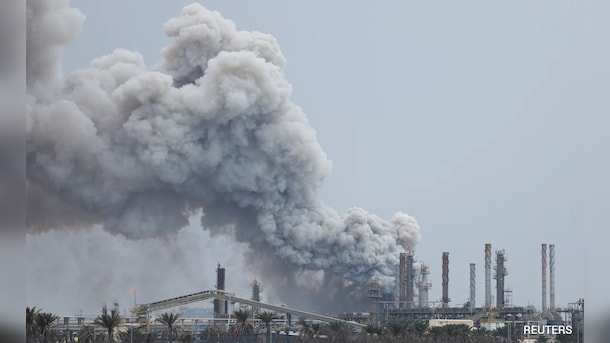
Second, an end to the war is entirely in Pakistan's interest. The country imports 99% of its LNG from Qatar. After the Iranian attack on Ras Laffan, and Oman being hit, too, reports indicate serious disruption in the country. Petrol pump owners began rationing as panic buying started, but the government has rather imaginatively instituted an app for a subsidised fuel quota system aimed at providing targeted subsidies to low-income users, primarily two- and three-wheelers.
Meanwhile, indigenous gas reserves continue to decline, while a circular debt of PKR $3.2 trillion has been reported. In other words, there was already a gas crisis, and the war has made it far worse.
Through all this, the smuggling of oil and LNG through the Iran border continues, though at higher prices. Legal trade also continues uninterrupted through Taftan, Mand, Panjgur and elsewhere, according to officials from the Gwadar Chamber of Commerce and Industry (GCCI). The Iran lifeline, therefore, continues, and it's in Islamabad's vital interest to see that it stays that way. Petrol prices have already risen by 200%. Any bombing or assistance to the US will freeze even this trickle.
Iran's Defiance
The key is whether all this is being backed by Iran. The 15-point peace plan, which has not been publicly released, will certainly include a complete cessation of all nuclear activity, removal of fissile material, and, according to reports, the end of all proxies like Hezbollah and Hamas and a missile programme for self-defence. Notably, Washington has offered the lifting of sanctions, assistance in developing Iran's civilian nuclear programme, including at the Bushehr nuclear plant, and entirely removing the "snapback" mechanism, which automatically reimposes international sanctions on Iran for failing to comply with nuclear commitments. Iran has rejected this, demanding, not unreasonably, a guarantee against further attacks - which raises the question as to who will provide such guarantees against an unpredictable and aggressive US.
Iran also demands that attacks against its proxies cease immediately, a demand that is not likely to find much favour in any capital. But its demand that it should be granted the right to levy fees on transit of the Strait of Hormuz, just as Panama does for its eponymous canal, and Egypt does on the Suez, is justifiable. The US, nonetheless, has its own plans for the Hormuz and its control. A 'joint' control is being talked about, but other countries upstream would want a piece of that.
Growing Chorus For Pakistan
Recently, Malaysian Prime Minister Anwar Ibrahim threw his weight behind Islamabad, describing moves to de-escalate as a "constructive" step toward de-escalating "acute regional danger". Meanwhile, Bangladesh, Sri Lanka, the Philippines, Myanmar and Thailand are among those who have begun instituting restrictions on energy use, among Asian nations. Almost all of Europe opposes the war, and Germany's Chancellor Friedrich Merch has said emphatically that this was not Europe's war, and that it was never even consulted. Azerbaijan, which has suffered from Iran's drone attacks in March, naturally supports Pakistani efforts, as does Egypt, which also has a hand in this push, given that it has relations with Israel. It also seems that the whole plan was initiated through Saudi backing - which gives the operation considerable weight as compared to Pakistan going it alone.
In that sense, this is Pakistan offering its services while pussyfooting on the defence deal. But the point is this: a success by Islamabad will earn it the gratitude of a multitude of countries, particularly in the Islamic world.
What This Means For India
All this would be to the good, even for India, which has also been hit by the crisis. In an ideal world, Delhi would have cheered on Pakistan's efforts for peace. But this is not an ideal world. In fact, it's at its most dangerous yet. Abdul Basit's entirely insane statement that Pakistan should not think twice in attacking Mumbai and Delhi if the US attacked Pakistani sites - this after the Directorate of National Intelligence also identified Pakistani nuclear weapons as a source of danger - reveals a new learning curve from the Iran war. If Teheran can attack neighbours in reprisals, so can Islamabad. This conveniently overlooks the point that all of these neighbours harbour US bases and troops. But that's Pakistani logic.
Separately, the world has seen a huge and unprecedented tolerance towards war, and the unchecked use of missiles and drones against civilian populations. In short, a rise in its position in the Islamic World and in US circles may well embolden a mercurial state like Pakistan to provoke India into 'aggression', particularly at a time when the Field Marshal comes under internal threat from within his own forces. Delhi has to look sharp and bone up its military might in the coming months.
Ironically, it is a continuation of the war that will restrain Pakistani adventurism. Wars cannot, after all, be fought with empty fuel tanks. Besides, any further hike in petroleum prices from the present PKR 589 per litre may just lead to Munir himself being asked to go home and grow turnips.
Tara Kartha is a former Director, National Security Council Secretariat
Disclaimer: These are the personal opinions of the author
-
Is The Dreaded 'Dahiya Doctrine' Guiding Israeli Actions In Iran, Gaza, Lebanon?

Why do civilian areas and infrastructure repeatedly become part of Israeli action? An 'unofficial' but well-used military approach may be the reason.
-
Trump's Iran Ceasefire Gamble Ignites Netanyahu's Strike Fury
Israel fears a premature ceasefire announced by Trump could derail its goal to dismantle Iran's nuclear missile programmes, prompting Netanyahu to order a 48-hr strike surge.
-
Why Mohammad Ghalibaf Could Be A Critical Cog In Trump's Iran Project
Born to Kurdish-Persian parents in 1961 near Mashhad, a Shiite pilgrim hub in Iran's northeast, Ghalibaf is an expert in human and political geography, who married Zahra Sadat Moshir in 1982 - their wedding officiated by Khomenei - and has three children.
-
Opinion | Inside Iran's 'Leader-Proof' War Machine, Designed To Absorb Every Blow
In Iran, key actors have long performed a 'bridging role', whether by design or by chance, in determining Tehran's domestic and foreign policies
-
Opinion | What Iran Might Really Demand From Trump Before It Backs Down
The proposed framework, if it indeed mandates the physical removal of enriched uranium, possibly with external facilitation, marks a significant escalation in demands compared to earlier nuclear agreements.
-
Opinion | The $2 Trillion Wipeout: How The Market Exposed Gold's Biggest Lie
In a world defined by 4% yields, algorithmic liquidity, and leveraged balance sheets, the traditional assumption that war automatically benefits gold no longer holds.
-
Opinion | Exit Denied? Why Iran Won't Make It This Easy For Trump To 'Pause' The War
The escalation matrix has risen rapidly, and Iran may be in no mood to give Trump the early exit he seems to be seeking so desperately now.
-
Before Drones Flew Over The Gulf, Praying Mantis Followed An Iran Mine Strike
Operation Praying Mantis was the culmination of a decade of escalating tension and proxy warfare across the Middle East. The operation redrew the balance of power in the Gulf.