
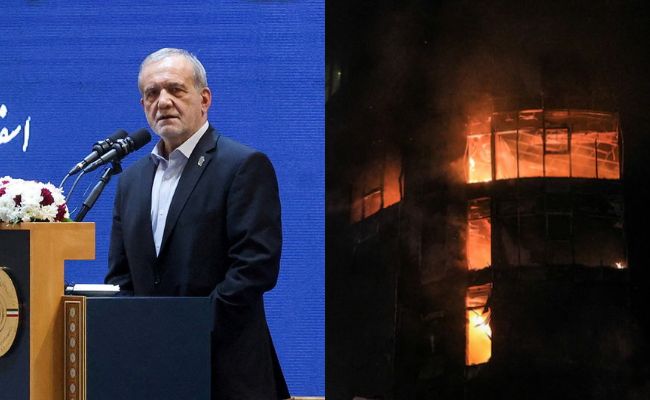







On February 28, Israel and the US launched a coordinated pre-emptive military strike against Iran. In retaliation, Iran launched ballistic missiles and kamikaze drones targeting Israeli military assets and US bases stationed across West Asia. The Chinese Foreign Ministry "strongly condemned the strikes", with Foreign Minister Wang Yi characterising the "assassination" of Iranian Supreme Leader Ali Khamenei as a "blatant killing of a sovereign leader, a severe violation of international law, and an unacceptable attempt at regime change". Beijing also urged an immediate halt to military operations and advised its citizens to evacuate Iran.
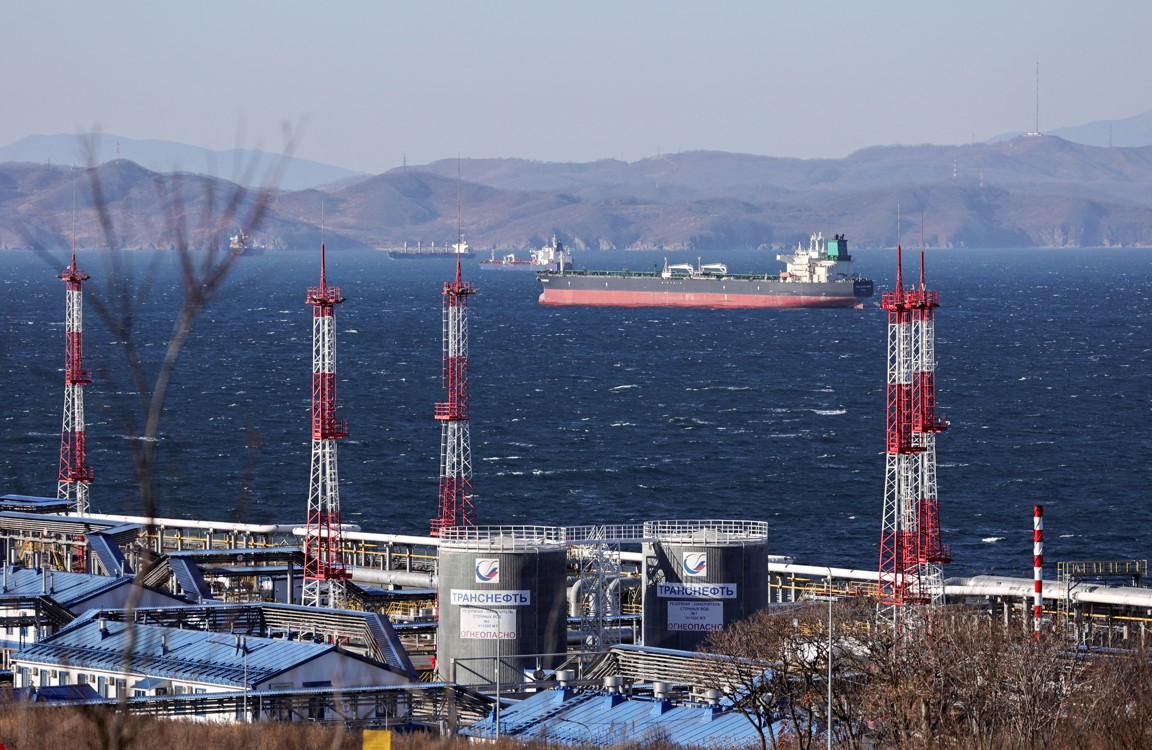
Perhaps the most important pillar of the China-Iran relationship is the hydrocarbon trade. China absorbs approximately 80% of Iran's oil exports. The defence ties are a distant second in vitality, given that Beijing's approach to arming Tehran has been cautious.
But What Are China's Actual Stakes In The War?
Iran has been subject to a variety of international arms embargoes, from Australia, the US and the European Union (EU) placing stringent bans on the export and supply of arms and related material to Iran, to the UN Security Council approving a snapback provision allowing pre-JCPOA (Joint Comprehensive Plan Of Action) sanctions on Iran to come back to life in August 2025. In this regard, China has broadly refrained from violating such embargoes (even though most of them are unilateral).
But, rising regional tensions following the 'Twelve-Day War' in June last year between Israel and Iran have led to a modest surge in Sino-Iranian military cooperation. For Beijing, selling Tehran arms at a moderate rate is killing two birds with one stone. It helps in securing a steady flow of heavily discounted crude oil, and in creating a persistent distraction for the US in West Asia without committing Chinese troops on the ground.
What Iran's Defence Imports From China Look Like
Tehran seems to have recently purchased and deployed advanced Chinese surface-to-air missile (SAM) batteries, including the HQ-9, HQ-16, and the highly mobile HQ-17AE short-range air defence systems. These systems have so far provided little help in defending Iran's nuclear facilities and leadership compounds from American-Israeli strikes. Conversely, China's YLC-8B anti-stealth radars have, so far, performed better, though much more hindsight is necessary. Their low-frequency operation reportedly allowed Iranian commanders to track incoming stealth assets further out than previous Russian-made systems, though they ultimately failed to prevent some significant fatalities.
Beyond defensive systems, Iran's acquisitions from China intends to expand on offensive weaponry. Most notably, recent reports indicate that Iran is finalising a deal to purchase Chinese CM-302 supersonic anti-ship cruise missiles - speculations around which China has declared as "untrue". Boasting a range of nearly 290 kilometres and the ability to fly low and fast to evade shipborne radar, the CM-302 can target US aircraft carriers and naval vessels operating in the Persian Gulf and Arabian Sea. Additionally, unnamed officials are informing curious ears that Beijing has stepped in to fill supply chain gaps left by a strained Russian defence industry, delivering loitering munitions (kamikaze drones) to Tehran to restock its depleted drone fleets for retaliatory strikes.
Apart from these unconfirmed arms transfers, the US Department of War's 'China Military Power Report' said in December 2025 that Chinese satellite firms, like Chang Guang Satellite Technology Co., have been supporting Iran's Islamic Revolutionary Guards Corps (IRGC) and Houthi militants in Yemen by providing them intelligence, while another company, MinoSpace Technology Co., has reportedly been in conversations with Tehran to provide it with satellite support.
Before that, in September 2025, the US Treasury Department's Office of Foreign Assets Control (OFAC) added eight Chinese firms in the designated category for supplying dual-use components and military-grade equipment to the Houthis as "procurement fronts" and for aiding the Houthis in their "commercial procurements" from China. Beijing, of course, has denied the connections, though it is highly probable that such a barter exists, simply because of the precedented nature of Chinese dealings with other conflict-ridden regions. In exchange, the Houthis likely guarantee safe passage for Beijing's naval task forces in the Red Sea and the Gulf of Aden.
Training Together, But For What?
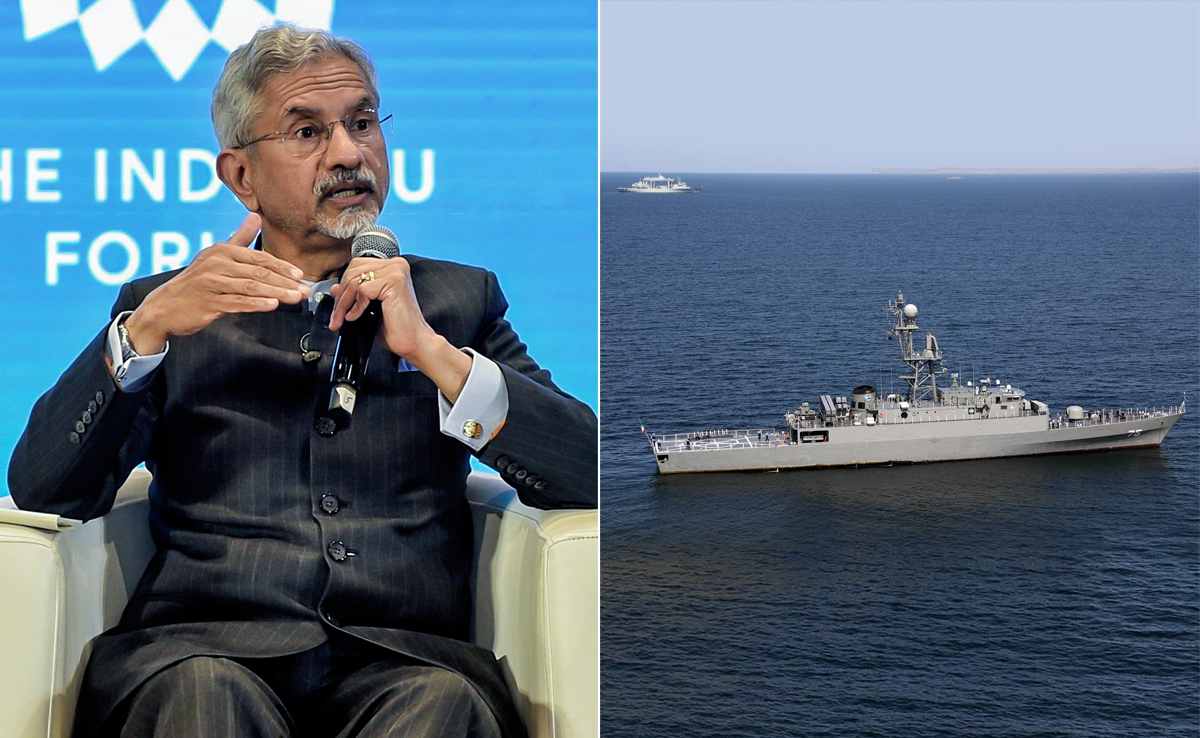
Also prominent in the China-Iran relationship is the joint military exercises component. For the sixth time in February 2026, China, Iran and Russia conducted a combined naval exercise in the Strait of Hormuz. Before that, in March 2025, the three forces conducted naval drills in the Gulf of Oman. The goal of these drills is to project the ability to exercise military muscle in regional seas, without necessarily indicating Beijing's willingness to weaponise the maritime chokepoints.
In all of this, it is important to note that China officially refrains from highlighting any military partnership with Iran, referring to itself as a "responsible major power". Beijing's strategy in West Asia is fundamentally risk-averse. It has benefited from the region's status quo and is aware of the tremendous costs the US has borne in its entanglements with the Middle East and North Africa region. Consequently, while Beijing values Iran as a defence partner and a crucial node for energy security, it neither seems to officially support Tehran's nuclear armament programme, nor does it aim to go to war over Iran.
(Anushka Saxena is a China Studies Research Analyst with the Takshashila Institution's Indo-Pacific Studies Programme)
Disclaimer: These are the personal opinions of the author


