Opinion | Iran And The Actual Questions India Should Be Asking About IRIS Dena Storm
The Iranian ship was our invitee, took part in our Fleet Review, and its personnel paraded before our President. As hosts, this put some moral burden on us to express our regrets at the tragedy that befell those who were earlier our guests.
It is unfortunate that the political controversy in India over government's failure to express condolences over the political assassination of Iran's Supreme Leader Ali Khamenei got out of control.
The opposition took the opportunity provided by the government's initial silence on the issue to attack it politically for losing our moral voice and succumbing to US pressure, etc. In defence, the ruling party justified its silence by pointing at Khamenei's record of anti-Indian positions on the Babri Masjid demolition, the revocation of Article 370, the Delhi riots, and generally on the treatment of Muslims in Kashmir.
An Unfortunate Debate
This was an entirely needless internal political debate. The issues involved transcend party politicking in any country. But the political polarisation in India has corroded the national consensus on foreign policy that once existed.
It would be relevant to point out that India has been traduced in the West by governments, think tanks, the media, academic circles, human rights organisations, even the UN Human Rights Commission, on all the issues that Khamenei reproached us with. An international campaign against us has been promoted on these minority-related issues by western circles. The US has figured prominently in this, in the State Department's annual reports on human rights or religious freedoms.
Yet, we have, quite rightly and pragmatically, not allowed all this to affect our overall relationship with the US and other western countries, which have many positive aspects too. Khamenei and Iran, on the other hand, have not campaigned against us on these issues or promoted anti-Indian international narratives to tarnish our image. Within the Organisation of Islamic Cooperation (OIC), Saudi Arabia and Turkey have been most vocal on these issues, while even those close to us, such as the UAE and Oman, or friendly countries like Egypt or Iraq, have not entered reservations to the OIC resolutions.
Credit Where Due
India has state-to-state ties with Iran. In 2003, when Atal Behari Vajpayee was Prime Minister, Iranian President Mohammed Khatami was the Chief Guest at our Republic Day celebrations. In September 2020, our Defence Minister made an official visit to Iran. In January 2024, External Affairs Minister S. Jaishankar visited the country. Prime Minister Narendra Modi made a state visit to Iran in May 2016, while the Iranian President Hassan Rouhani came to India on a state visit in February 2018. In the joint statement issued on the occasion of Rouhani's visit, apart from noting "the mutually beneficial ties between the two countries were based upon the strong foundations of the two millenia old cultural and civilisational connect", it was also stated that the "Indian side reaffirmed its support for full and effective implementation of the Joint Comprehensive Plan of Action (JCPOA), which has been endorsed by the UN Security Council and is crucial contribution to the non-proliferation framework and international peace, stability and security".
Khamenei's Death Is A Dangerous Precedent
Ali Khamenei did not die a natural death. He was assassinated in an act of total violation of international law and the UN Charter. His close family members were also killed, which made the lawless act worse on humanitarian grounds. The assassination of the Supreme Leader of a sovereign state, more so without any declaration of war, sets a terrible precedent. Such assassination of political leaders of weaker countries with which powerful states have differences must not be normalised.
One hopes that with the Indian Foreign Secretary visiting the Iranian embassy in New Delhi to sign the Condolence Book opened on Khamenei's death, the political controversy in India will be put to rest. It has been announced that Jaishankar has spoken to the Iranian Foreign Minister, and the former has done well to publicise on X his meeting with the Iranian Deputy Foreign Minister, who is participating in the Raisina Dialogue. The political messaging is clear.
The IRIS Dena Controversy
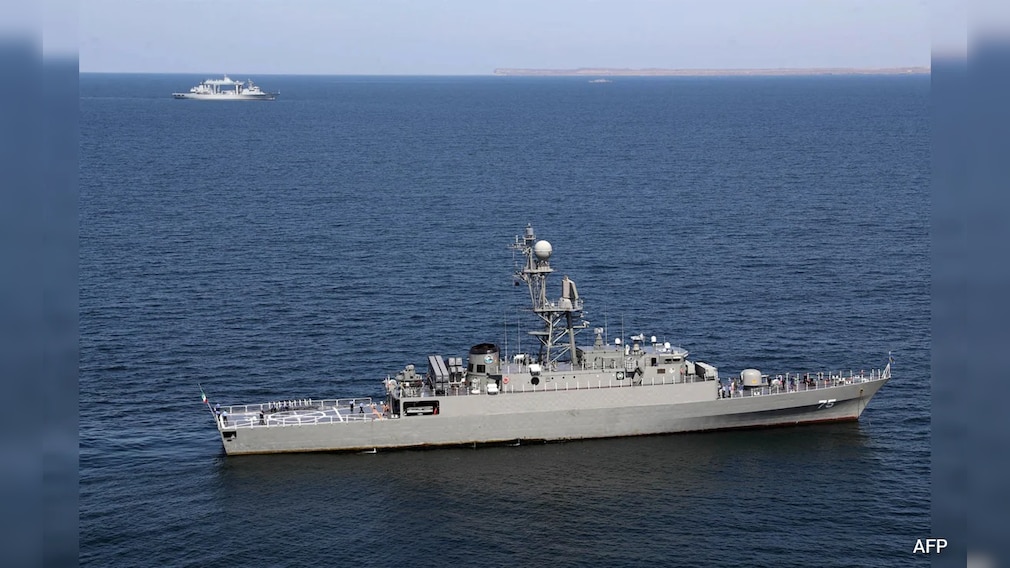
On the heels of the Khamenei-related controversy, another has arisen over the US submarine attacking and sinking close to Sri Lanka waters an Iranian frigate that was returning home after participating in the biennial Milan (means meeting or confluence) exercise organised by the Indian Navy. India, of course, had no political or military responsibility for this sinking of the Iranian warship. The irony is that the warship had participated in an exercise aimed at increasing maritime understandings and cooperation and building camaraderie between navies operating in the Indian Ocean in the interest of peace, stability, freedom of navigation, openness, inclusiveness, and addressing shared threats.
India, as the major maritime power in the Indian Ocean, has taken many initiatives to reduce threat perceptions and foster collaboration in these waters with initiatives such as SAGAR (Security and Growth for All in the Region) introduced by PM Modi Modi in 2015. In March 2025, he introduced the MAHASAGAR concept (Mutual and Holistic Advancement for Security and Growth Across Regions), with a focus on fostering collaborative, sustainable, and secure maritime growth across the Global South and Indian Ocean region (IOR).
In this larger context, for the US to bring war into the Indian Ocean in waters so close to India is antithetical to India's Indian Ocean peace strategy. The US was invited to the Milan exercise but withdrew its warship at the last minute. It limited its participation to its powerful P8 Poseidon maritime surveillance aircraft. The US was aware of the participation of the Iranian frigate and no doubt tracked its movement with its surveillance aircraft, which enabled the its submarine to position itself close to Sri Lanka and sink the vessel.
A Moral Burden
The Iranian ship was our invitee, took part in our Fleet Review, and its personnel paraded before our President. As hosts, this put some moral burden on us to express our regrets at the tragedy that befell those who were earlier our guests. If the ship had been sunk near the Iranian coast, the situation would be different. As this was done by the US in our vicinity and the US got the opportunity because of the Milan exercise, ignoring this aspect was bound to raise questions about the reasons for our reticence.
Keeping in mind the sensitivities of our ties with the Trump administration, if we wanted to avoid making a statement at the political level, that of the Defence Ministry, commiserating the tragedy, this could have been done at the professional level by the Indian Navy expressing condolences for the grievous loss of lives, without attributing any responsibility on any one. It can be argued that we have been remiss in not doing the least we could do at the human level.
(Kanwal Sibal was Foreign Secretary and Ambassador to Turkey, Egypt, France and Russia, and Deputy Chief Of Mission in Washington.)
Disclaimer: These are the personal opinions of the author
-
"We Don't Have 5 Years": Celebrated American General Sounds Alarm On War

Former CIA Director David Petraeus says the drone war in Ukraine has made traditional manoeuvre warfare obsolete, and that armies which do not overhaul themselves within a year risk being left behind
-
Can't Save Enough For A Home Down Payment? 3 Ways To Build Your Fund
Down payment is only part of the money a buyer needs. Stamp duty, registration, moving expenses and furnishing can add to the upfront cost.
-
Opinion | Jamnagar, Rubio, And Why The US Wants India To 'Obey', Not Negotiate
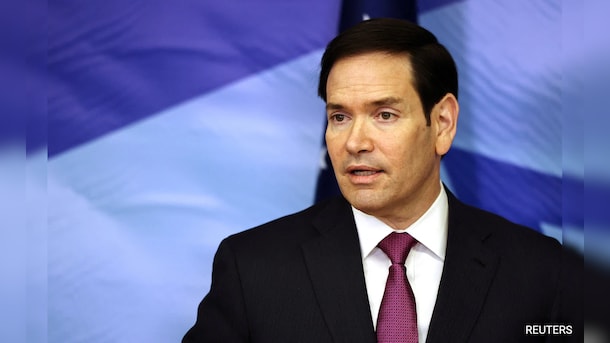
Marco Rubio's dash to Jamnagar was driven by Trump's hope that India could do something about the shortage of diesel that the world is experiencing and thereby help his mid-term performance. But why the punishing policies then?
-
Opinion | Why China Is Producing More, Selling Cheaper - And Still Not Getting Anywhere
More capital, more capacity, more elaborate technology, and steadily less profit to show for any of it. That's what's happening to China now.
-
Opinion | A Jolt For Trump? How The US May Be Staring At A 'Blue' Wave
Evidence now points firmly to a Democratic majority in the House. The only real surprise is the Senate
-
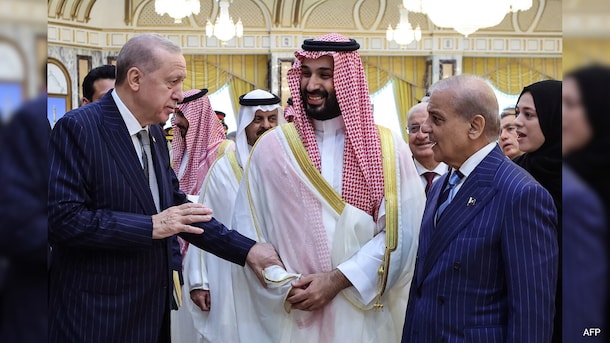
Opinion | Why The Saudi-Pak-Turkey Defence Pact May Actually Be An 'Intel' Network
Rather than a NATO-like construct, the Mecca pact may evolve to become something like the West's Five Eyes alliance.
-
The Real Story Of France's Unrest Is Getting Lost In A Storm Of Online Lies
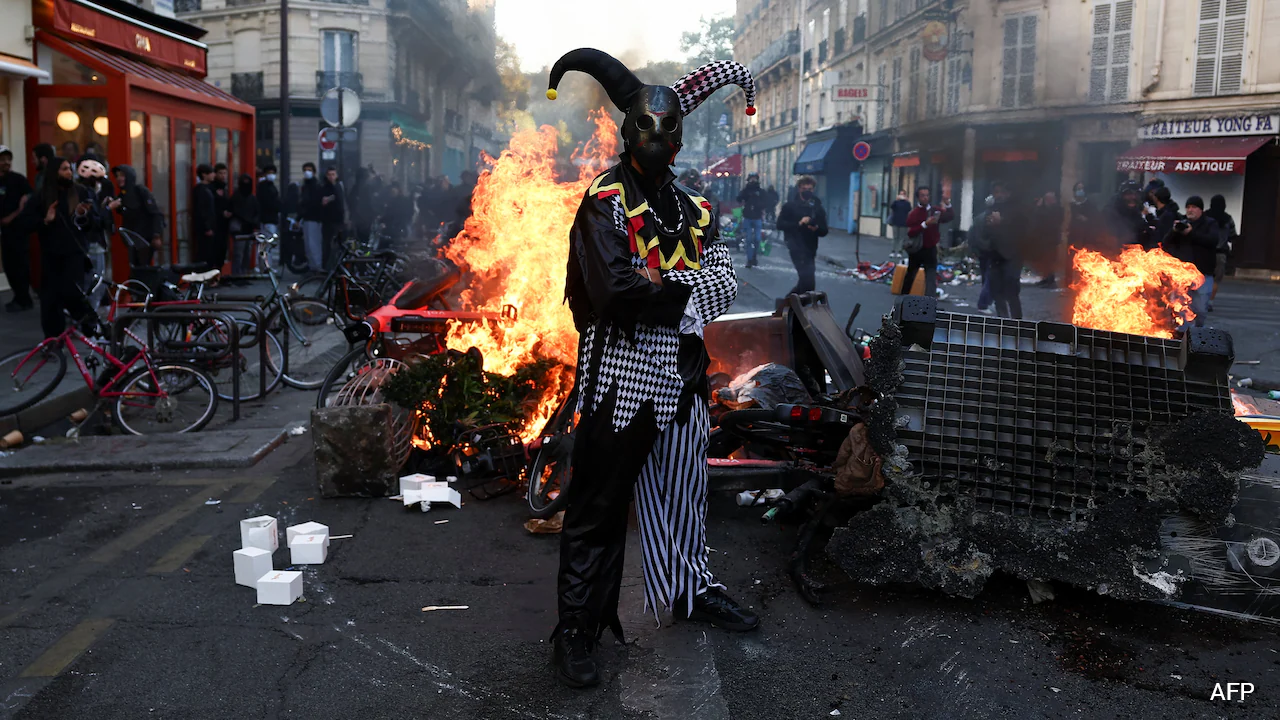
A man cosplaying Napoleon on the streets, looting at luxury fashion stores like Dior, France is currently confronting one of its most serious episodes of civil unrest in years.
-
Opinion | The Last Bet? What Trump's 'Mother Of All Bombs' Could Actually Do To Iran
Can an MOAB deliver a decisive blow to Iran that may force it to surrender immediately, as Japan did after Hiroshima and Nagasaki in World War 2?
-
Hit Songs, Empty Pockets: The Hidden Math Behind India's Viral Music Boom
Over 80,000 brands and five lakh creators in India make branded content. The opportunity is worth around Rs 1,500 crore.