In Data: How US-Iran War Changed After First 48 Hours? What Strike Patterns Reveal
Remove the first 48 hours from the data, and the war looks entirely different.
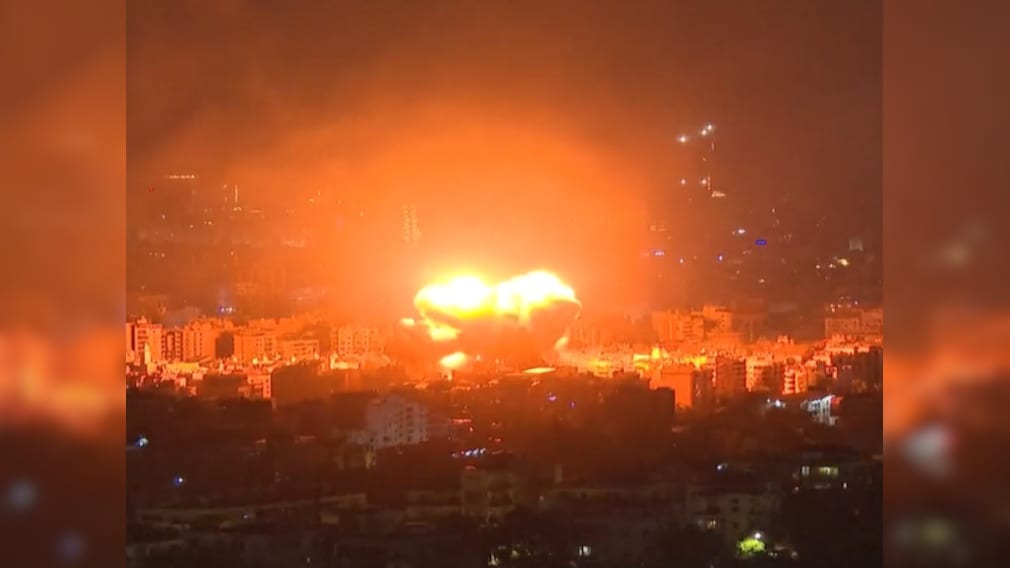
On the first day, it looked like a war of overwhelming force.
Missiles and drones surged across the Gulf, with Kuwait and the United Arab Emirates absorbing hundreds of strikes in a matter of hours. The charts capturing those opening hours are stark: towering spikes that dwarf everything that follows. For many observers, the conclusion seemed obvious - Iran had unleashed a dramatic opening salvo, and then the intensity quickly faded.
But that reading depends on a single assumption: that Day 1 is the right benchmark. It isn't. Remove the first 48 hours from the data, and the war looks entirely different.
What emerges instead is not a decline, but a pattern; a campaign that stabilises, repeats and adapts. The initial barrage, it turns out, was not the war itself, but the announcement.
The Illusions Of Decline
The charts below show a combined view of attacks across the UAE, Saudi Arabia, Kuwait and Bahrain. Kuwait spikes to nearly 400 launches. The UAE follows close behind. Then the lines collapse.
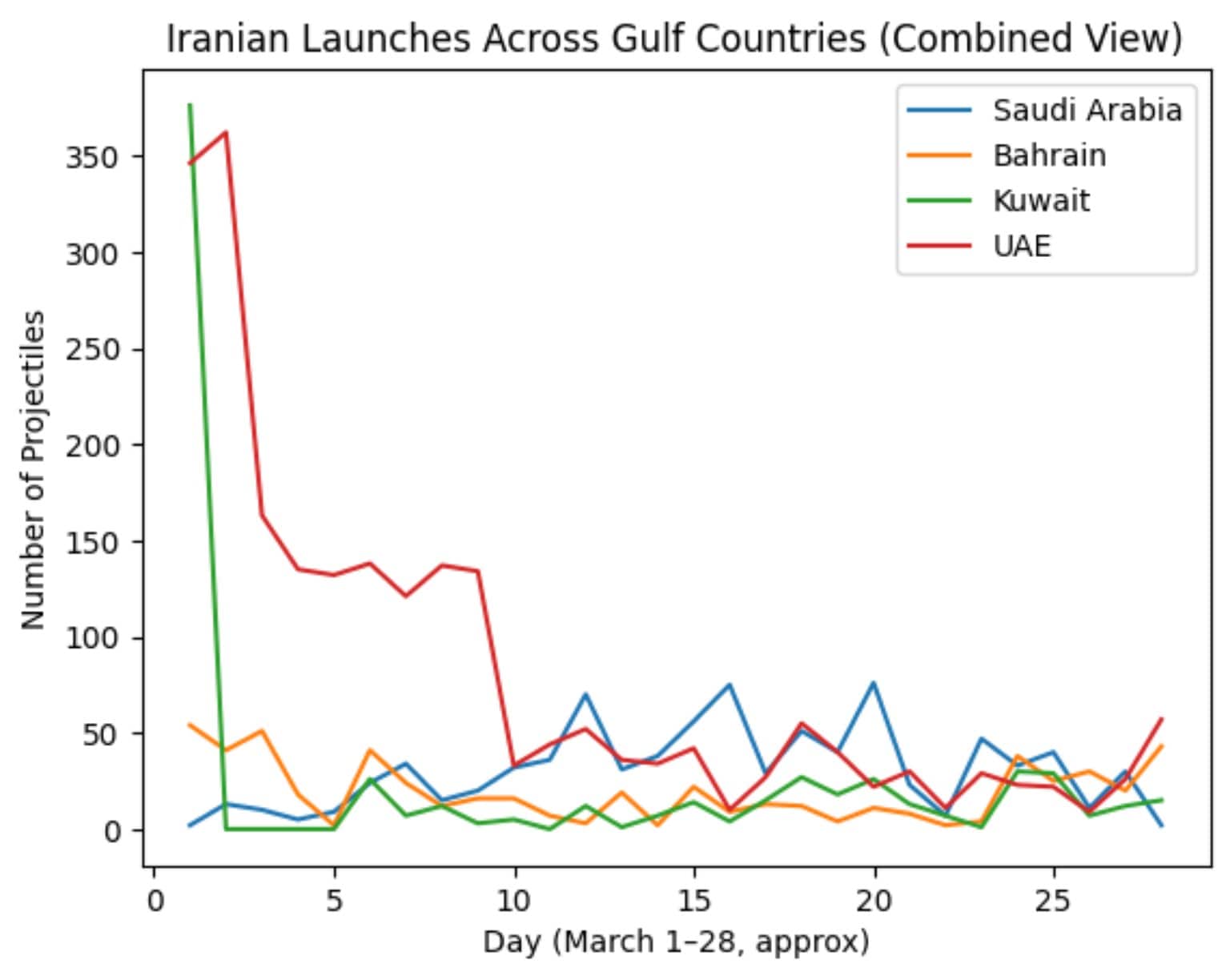
At a glance, it resembles a story of escalation followed by exhaustion. But this is a classic statistical distortion. When one extreme event dominates a dataset, everything else appears insignificant by comparison. In reality, the opening strike functions less as a baseline and more as an outlier; a deliberate shock designed to establish presence, disrupt defences, and shape perception.
Once that outlier is removed, the rest of the campaign comes into focus.
A War That Settles, Not Ends
In the below adjusted view, where the first two days are excluded, the lines do not fall to zero. They oscillate.
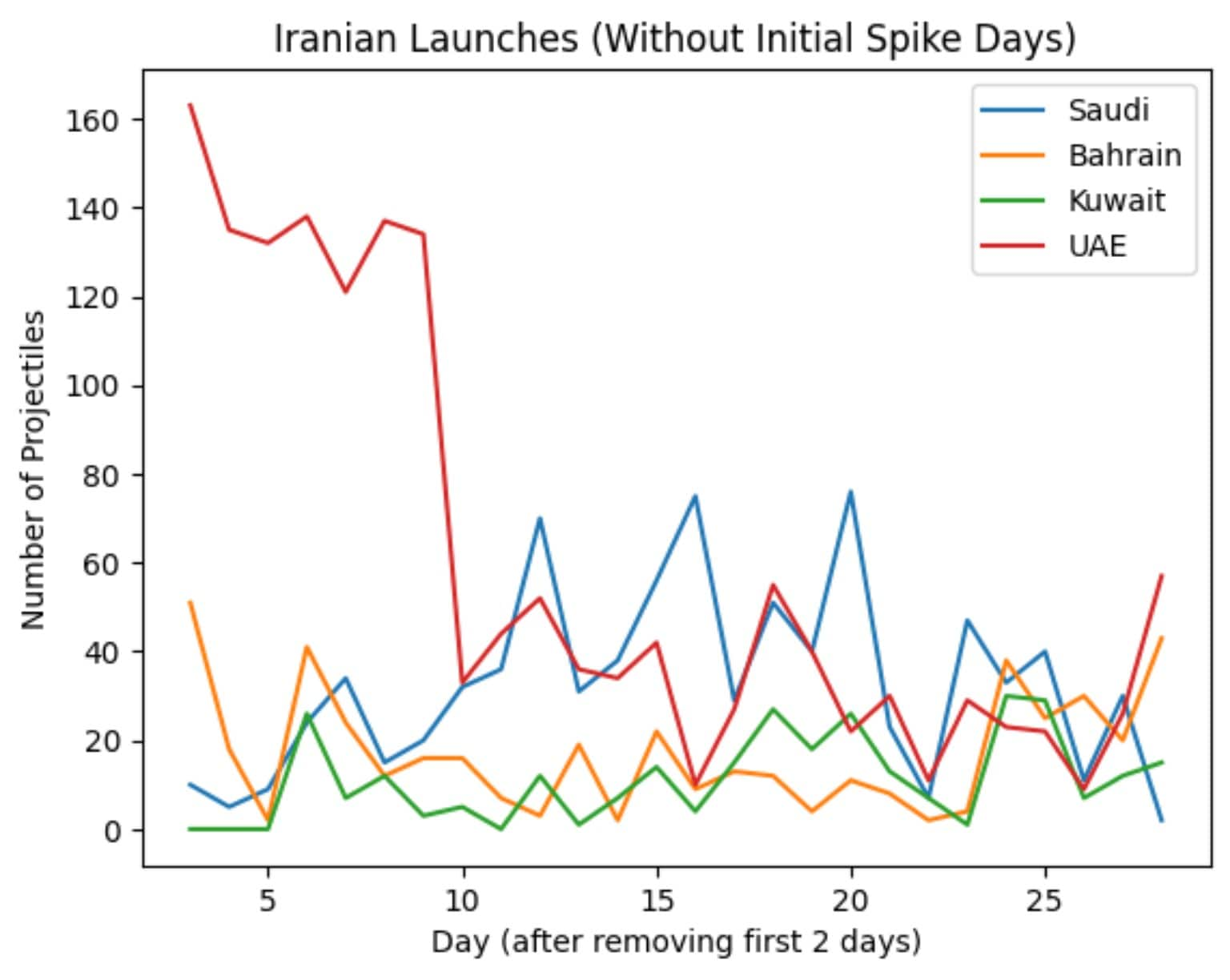
Attacks continue across all four countries. The UAE remains consistently active, though at lower levels than its initial spike. Saudi Arabia, which appeared secondary in the opening phase, emerges as a major theatre in the middle of the campaign, with repeated peaks. Bahrain and Kuwait, while lower in volume, show periodic bursts rather than silence.
The key change is conceptual. The conflict shifts from looking like a single event to looking like a system. This is reinforced by the rolling-average chart, which smooths out daily volatility. After the opening drop, the trend stabilizes. It does not collapse. Instead, it settles into a band of sustained activity; a level of pressure that appears calibrated to be maintained over time.
In military terms, this is the difference between a blitz and a campaign.
The Rhythm of the Strikes
The next layer of analysis: Autocorrelation. This indicated whether something happening today is likely to happen again after a few days - in other words, whether there's a repeating pattern over time. Thus, it asks a simple question. Do these attacks follow a pattern? The answer is yes.
The data shows that high-activity days are likely to be followed by other high-activity days. More importantly, it reveals repeating signals roughly every two to four days. In practical terms, that suggests a cycle. A burst of attacks, a brief pause, and then another burst.
For a lay observer, the pattern might feel intuitive. For analysts, it is significant. It indicates that the campaign is not reactive or random, but structured. Each wave likely reflects a sequence: targeting, execution, assessment and recalibration, before the next wave begins.
This is not how a force behaves when it is losing momentum. It is how a force behaves when it is managing it.
Measuring The Tempo Of The War
The War Tempo Index compresses multiple variables: volume, momentum and geographic spread into a single line.
If the war had truly faded after the first strike, the index would show a sharp peak followed by a steady decline. Instead, it shows multiple peaks.
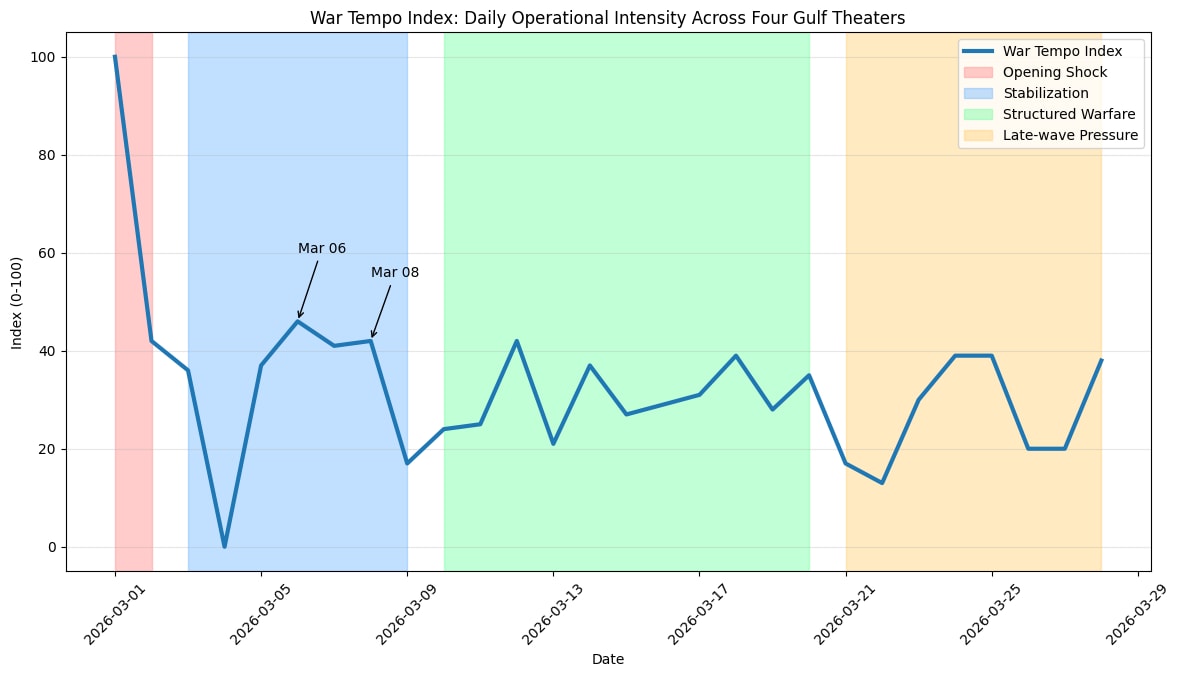
There is the initial shock, but also renewed surges in early March, another set of peaks in mid-March, and continued activity into the final week of the month. The intensity fluctuates, but it repeatedly returns.
This is the defining feature of the campaign, persistence. Not constant escalation, but sustained presence.
A Regional Pattern, Not Isolated Strikes
Perhaps the most revealing insight comes from examining how these peaks align across countries.
On some days, multiple countries experience peak activity simultaneously. On others, peaks occur within a 24-hour window of each other. The coordination matrices show that while exact same-day alignment is inconsistent, near-synchronous activity is common.
This suggests a campaign that is coordinated but not rigidly synchronised. Instead of launching identical strikes across all theatres at once, the pattern appears staggered, a rolling wave moving across the region.
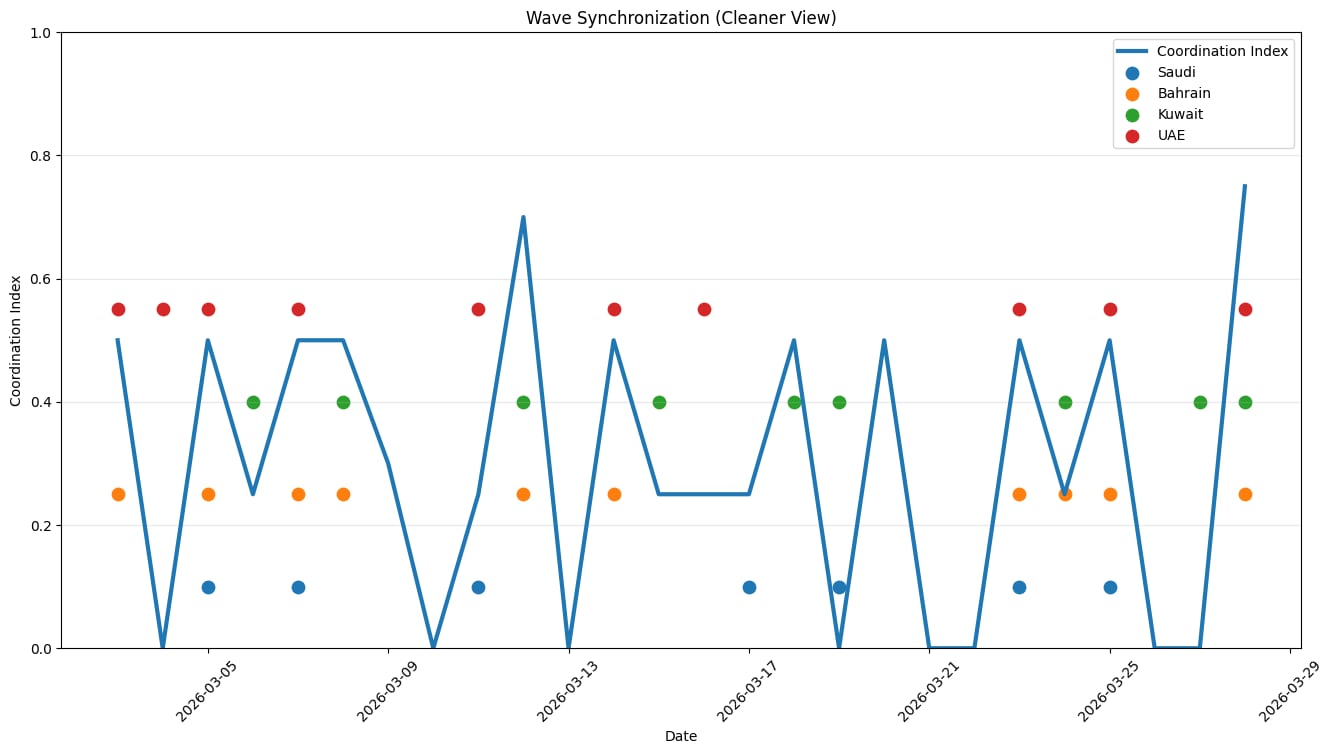
It is a subtle distinction, but an important one. Perfect simultaneity is not always operationally optimal. Staggering allows for flexibility, reduces predictability and maintains continuous pressure across multiple fronts.
In effect, the region is not experiencing separate conflicts. It is experiencing different phases of the same one.
Different countries, different roles
Viewed through this lens, each country's pattern begins to make sense.
Kuwait's massive spike on Day 1, followed by relative quiet, suggests a strategic signalling role; a high-impact opening strike, likely tied to its military significance, rather than sustained targeting.
The UAE's pattern is different. It absorbs a heavy initial blow and continues to face consistent, if lower-level, pressure. This aligns with its position as an economic and logistical hub, where disruption carries broader consequences.
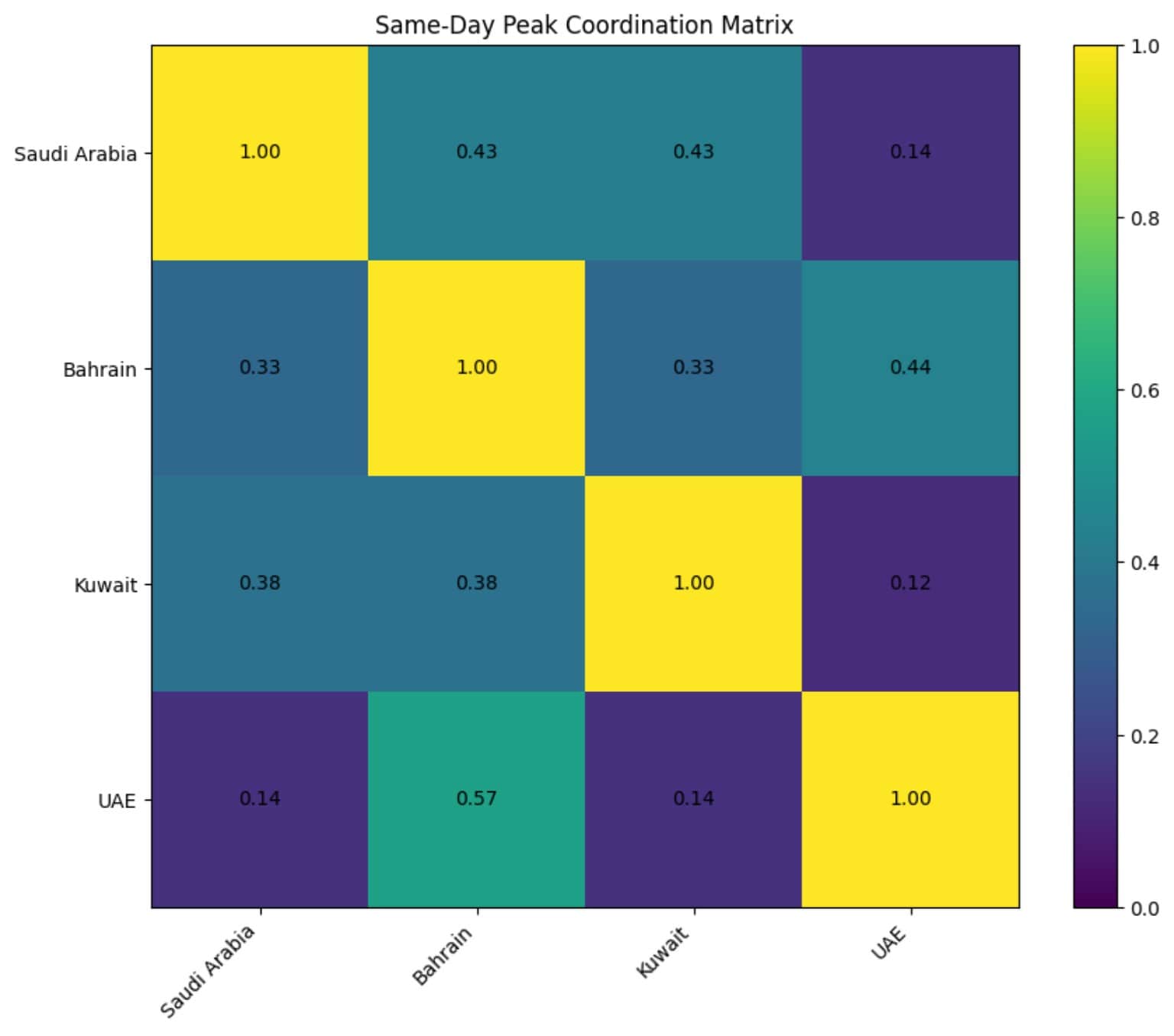
Same-Day Matrix: This shows how often two countries are attacked at the same time — higher values mean they are hit together more frequently. UAE and Bahrain stand out as the most synchronized on the same day, while UAE and Kuwait are rarely hit together. (Legend: 0-1 is the probability index)
Saudi Arabia emerges later, with repeated mid-phase peaks. Rather than being the primary target at the outset, it becomes central to the campaign as it evolves.
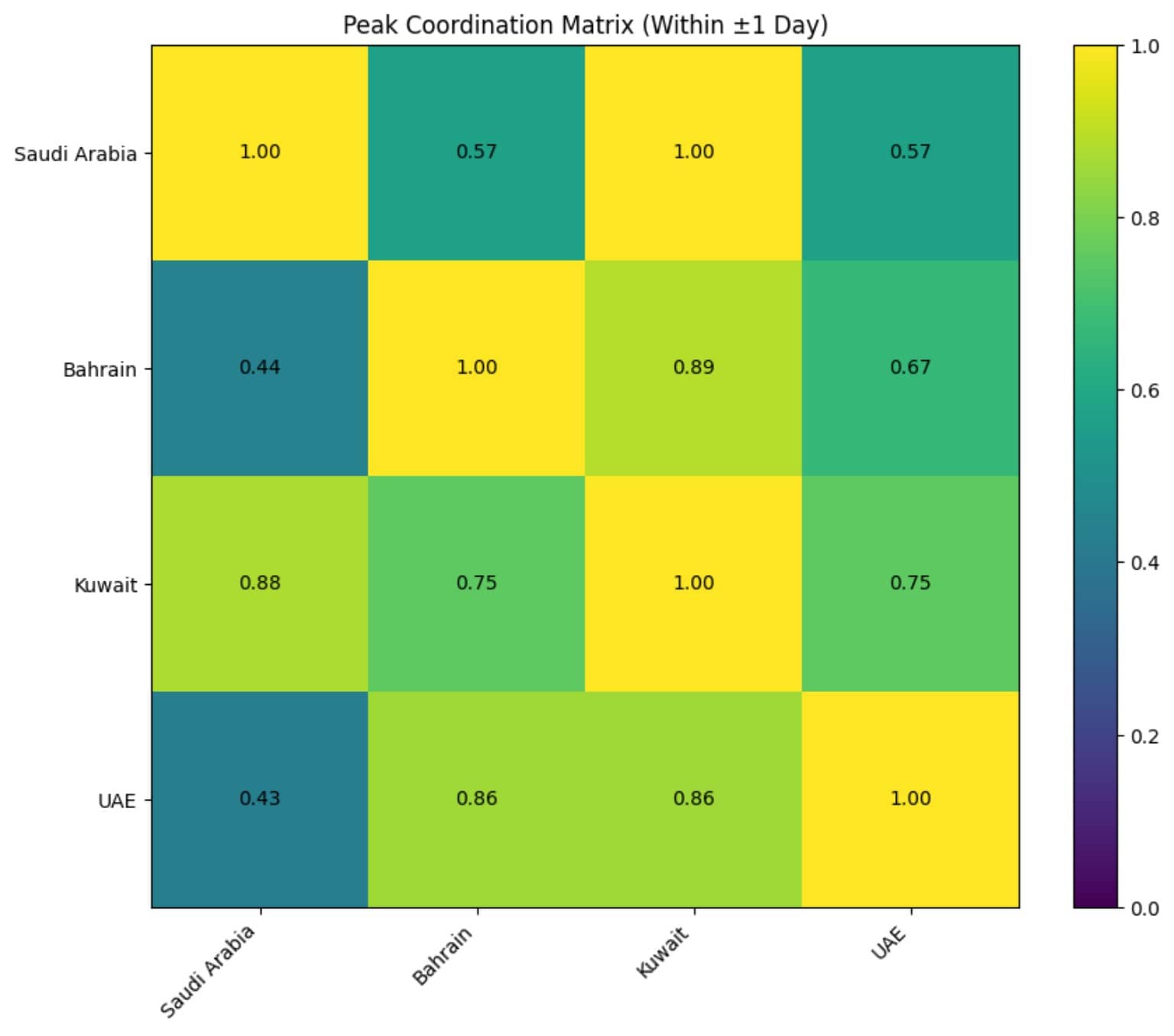
±1 Day Matrix: This shows coordination even if attacks happen within a day of each other, not exactly at the same time. Here, strong links across almost all countries reveal a staggered, wave-like pattern of attacks moving across the region. (Legend: 0-1 is the probability index)
Bahrain, with its lower volumes and periodic spikes, appears to function as a signalling theatre, which seems less about sustained pressure and more about strategic messaging. These are not random variations but differentiated roles within a single operational framework.
Adaptation On Both Sides
The evolution of the campaign also reflects a broader dynamic: adaptation.
On the defensive side, interception rates improved over time. Publicly reported figures from the UAE indicate high success rates, including several days where incoming attacks were fully intercepted. As defences became more effective, the cost of maintaining high-intensity missile strikes increased. This is something we covered in our previous story.
On the offensive side, the response appears to have been a shift in method. The campaign transitions from missile-heavy shock to drone-dominated persistence: a cheaper, more sustainable approach that enables continued pressure without exhausting resources.
Looking at the data together, it challenges the most common narrative about the conflict. The war did not peak and fade, but transformed. After the opening strike that was designed to shock, the campaign was designed to last. This could be a blueprint for how modern regional conflicts may increasingly be fought: not through a single decisive moment, but through sustained, coordinated waves. The first explosion may have been the loudest, but it was not the most important.
(Data compiled from February 28 to March 28 based on official numbers from Saudi Defence Ministry, Bahrain Defence Force, Kuwaiti Army, and the UAE Ministry of Defence)
Disclaimer: These are the personal opinions of the author
-
Opinion | Rs 30 Petrol Hike To Currency Crisis, What Oil At $150 Can Really Do To The World

At $125 per barrel, petrol and diesel retail prices will need to rise by Rs 8-14 per litre. At $150 - which experts think is now likely - these figures could touch Rs 26-30 per litre.
-
Opinion | The Problem With Trump's Fantasy Of A 'Crippled' Iran
Even a relatively insulated US economy cannot entirely escape the ripple effects of sustained disruptions in one of the world's most critical energy corridors.
-
Opinion | Trump's Iran War Is About To Become Someone Else's Problem Soon
Start alone, end alone - that may be the harshest lesson for Trump as he now tries to dash for the door in Iran.
-
What Happens If Iran War Actually Ends In 2 Weeks: The Challenges Ahead
Trump said the war could end in two weeks sans a deal to re-open the Hormuz. Analysts say it could take six to weight weeks more for oil flows to normalise, with each extra week of fighting adding seven to 14 days of recovery.
-
Opinion | Why 2 Gulf States Want Iran War To Continue - Even As They're Battered By It
If Trump withdraws from this war, the UAE, Saudi Arabia and other Gulf countries would be left to face the music alone, with an angrier, fiercer, and possibly more vengeful Iran.
-
Opinion | Why A 'Defeat' Is Now Essential For The Disoriented Left In Kerala
Power and arrogance have turned the Left in Kerala into what it once fought against. It now needs to lose its last bastion to cleanse itself of its maladies.
-
Opinion | On April Fools' Day, A Reality Check For US, Iran And The World
The paradox is this: Iran wins simply by surviving, while the US must achieve a far more overwhelmingly convincing result to claim success.
-
Opinion | Pakistan, And The One Big Difference Between 'Broker' And 'Mediator'
Neither Washington nor Tehran appears willing to invest Pakistan with the political capital required for mediation.
-
Houthis Threaten Strait No 2 As Iran War Expands. What It Means For India
Yemen's Houthi rebels have opened a second front in the Iran war, threatening Bab al-Mandab just as the Strait of Hormuz comes under pressure, and squeezing one of the world's most important oil corridors from both ends.
-
Europe Split Over Trump's Iran War, Spain Leads Defiance
Europe is sharply divided on how to view fighting in West Asia and subsequent pressure on the global energy trade, which has seen fuel and gas prices increases worldwide.